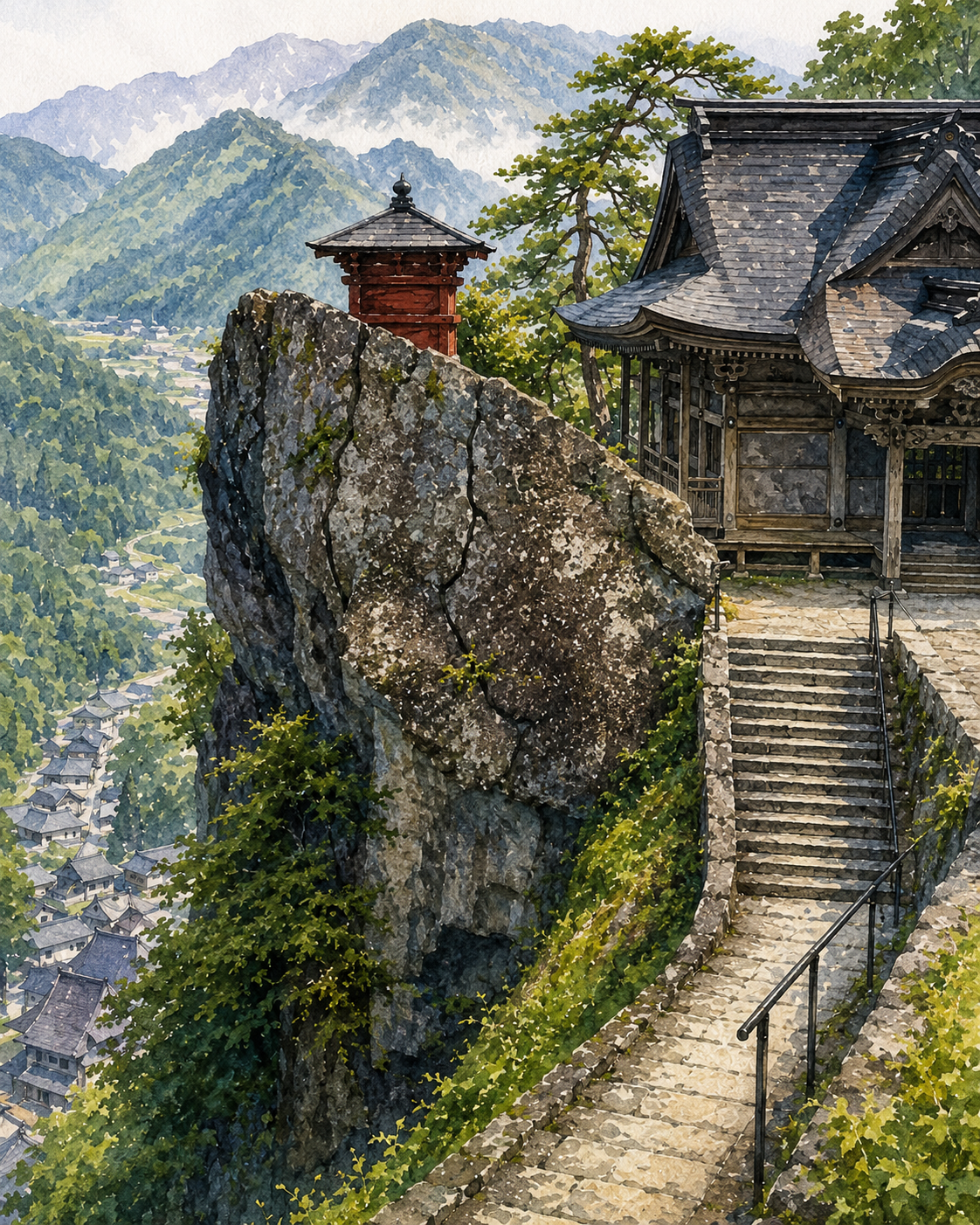
The Stone Remembers Every Ascent
Critique
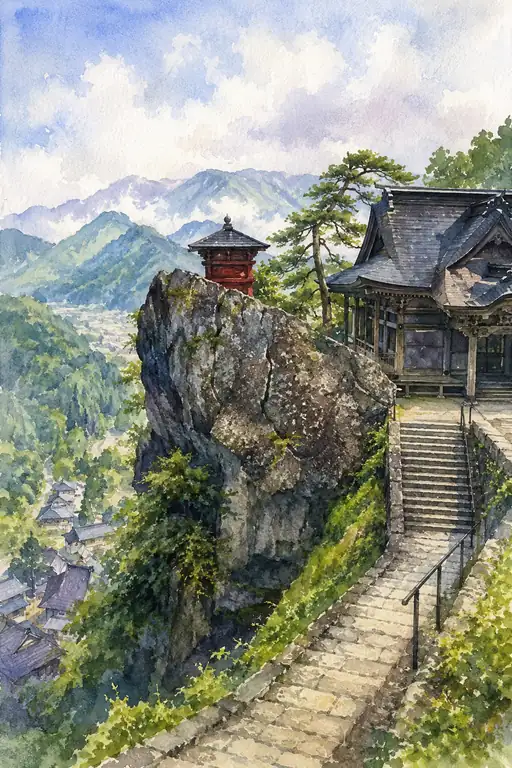
Introduction In clear mountain light, a giant rock, red shrine, and old hall appear at close range. The rock divides valley from stairs, placing viewers on a precipitous route while preserving tension within brightness. Description The central boulder has a slanted crown, dark cracks, pale weathering, moss, and plants. A red-brown shrine stands behind. At right, the hall displays black tiles, curved gables, carving, and a timber veranda. Stone paving and rails climb upward. Village roofs, roads, and fields descend left before green peaks and blue-gray ranges. Analysis The rock makes footing more immediate than panorama. Diagonal steps guide vision to the hall, while the sloping crest points toward the shrine. Gray, green, and blue are punctuated by one red focus. Detail decreases from stone and wood through village to distant mountains. Roof and ridge profiles echo one another. Interpretation and Evaluation Buildings and route follow natural fissures, revealing design subordinate to terrain. Practical rails support the continuation of pilgrimage. The shrine fixes prayer at a dangerous height. Simultaneous temple and village views keep sacred and domestic realms spiritually connected despite vertical separation. Clear weather reveals the site's material specificity. Conclusion Rock and architecture receive equal attention, so neither nature nor culture becomes secondary. Light across individual steps measures ascent; the falling valley measures its cost. Red shrine, dark roof, and white cloud organize complexity. Pine and shrubs maintain living continuity through cracks. Danger, clarity after arrival, and protective devotion share a lucid composition.
Same Subcategory
Similar Artworks
 Under the Cloud, the Sacred Door
 A Shrine Held Between Clouds
 A Lone Vermilion Glow on Yamadera's Cliff Edge
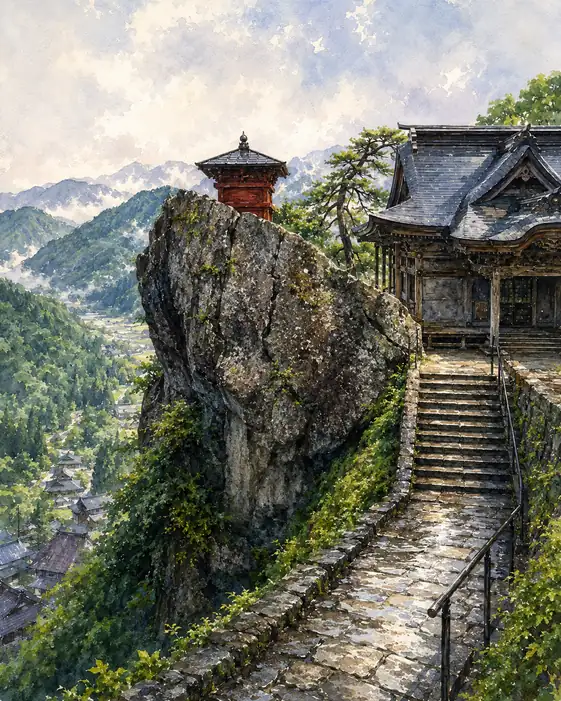 The Mountain Grants a Narrow Path
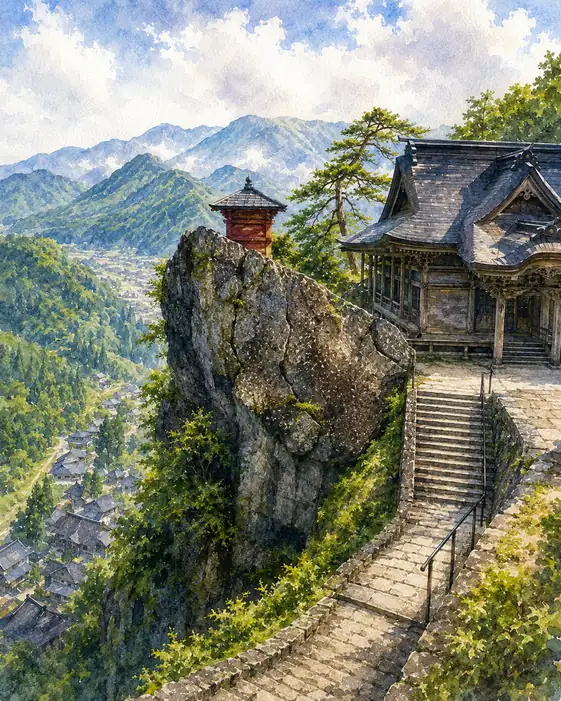 Where the Valley Learns to Pray
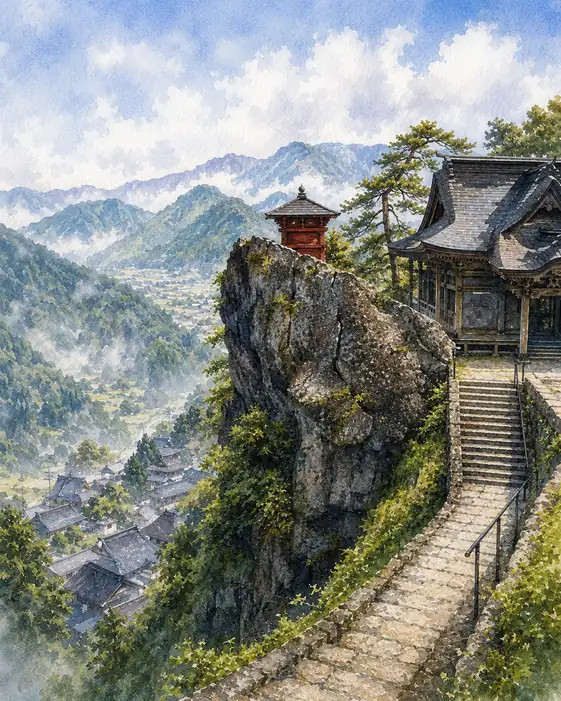 Where Prayer Rests on Stone
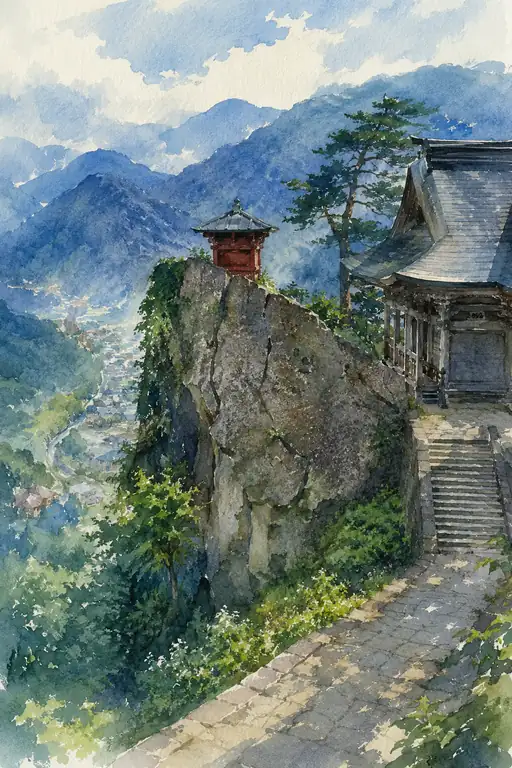 At the Edge Where Prayer Dwells
 The Mountain Leaves No Easy Prayer
 Every Roof Is Another Prayer
 Faith Finds a Foothold in Stone