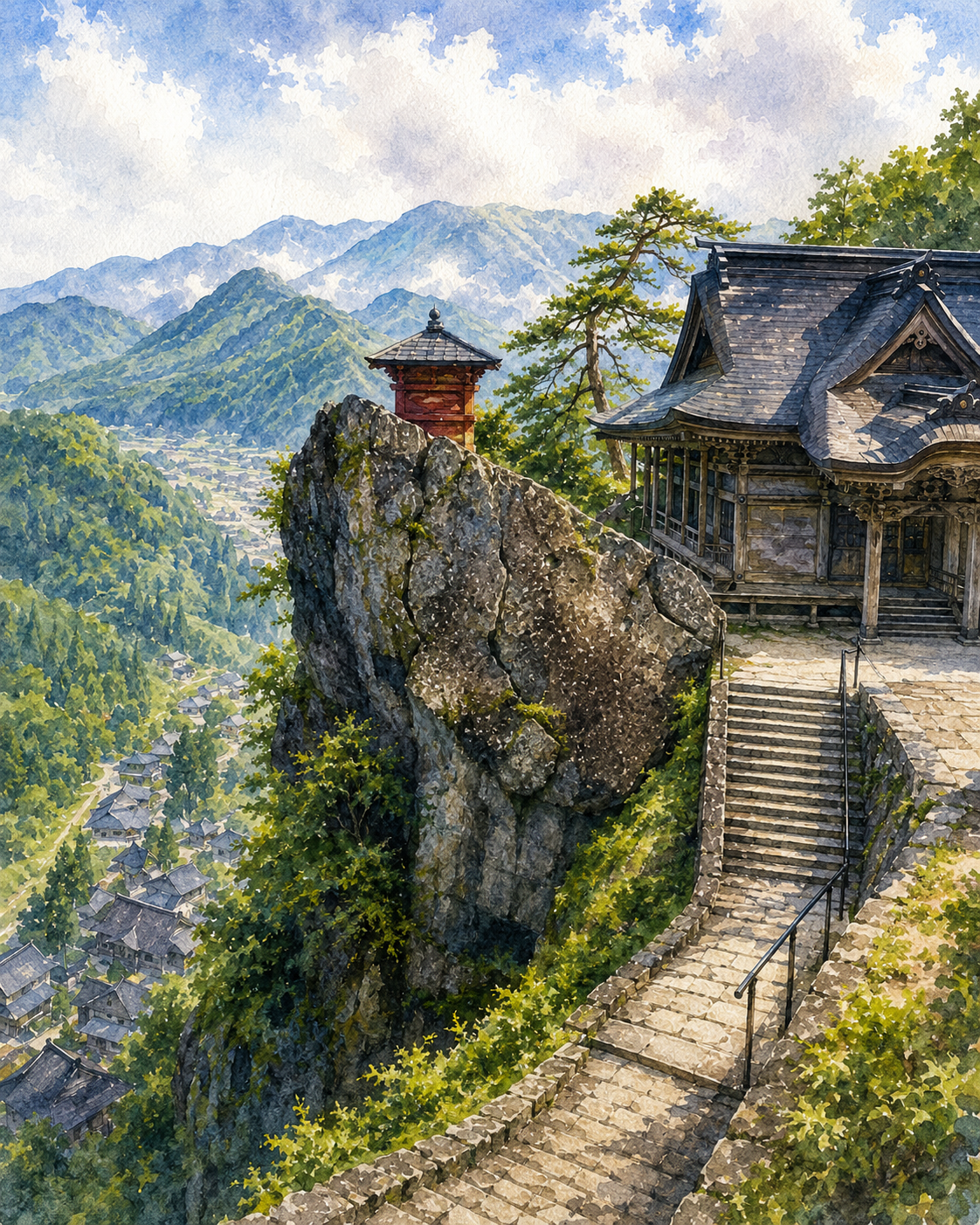
Where the Valley Learns to Pray
Critique
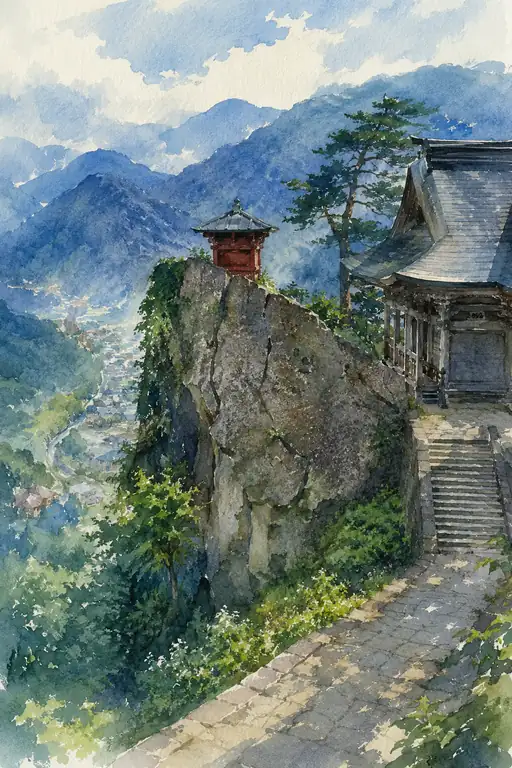
Introduction Beneath a bright summer sky, a mountain temple, red shrine, and giant rock overlook a wide valley. Stairs lead upward at right while a village spreads far below, joining remote sacred ground with inhabited land. Description A fissured gray-brown pinnacle stands centrally, marked by pale mineral spots, moss, and shrubs. Behind it appear a red square shrine and dark pyramidal roof. The hall at upper right has layered gables, curved eaves, columns, and carved beams in sunlight. Narrow stone steps climb beside black rails. Gray village roofs, fields, green hills, and blue ranges recede beneath large white cloud. A pine links building and sky. Analysis The rock divides architectural foreground on the right from valley distance on the left. Diagonal stairs lift vision into the hall's roof curves. Clear greens and blues create openness, punctuated by red and black. Detail decreases from rock to houses to pale mountains, producing depth. Broad cloud provides rest above the complex land. Interpretation and Evaluation Though removed in height, the temple shares an axis with the village and can seem to watch over it. Geological duration precedes devotion; maintaining buildings beside the rock shows habitation grounded in respect. Bright weather emphasizes the breadth gained after ascent without erasing danger. Pine and moss mediate among stone, timber, and living nature. Conclusion Panorama relieves the boulder's pressure and makes the sanctuary open rather than enclosed. Steps lead upward while the village draws the gaze back down, establishing movement between sacred and ordinary. Precise eaves and irregular cracks treat human order and natural formation equally. The small red shrine marks their meeting. Height, clarity, and protective attention remain balanced.
Same Subcategory
 Rain Writes the Old Approach
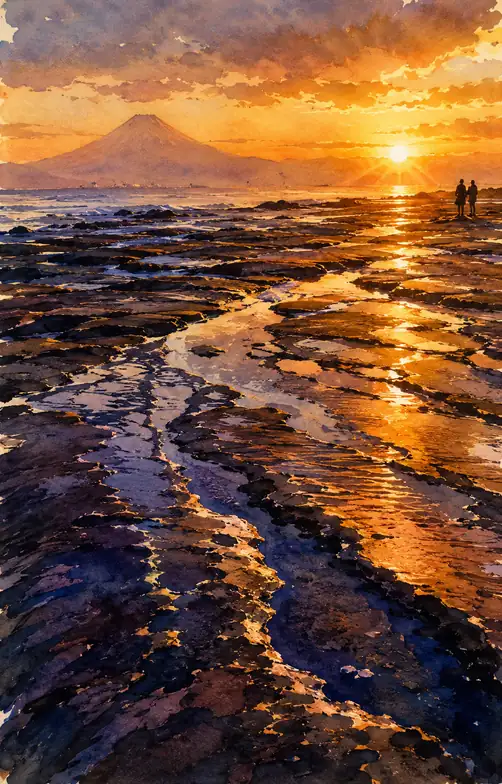 We Stood Where the Sun Became Water
Similar Artworks
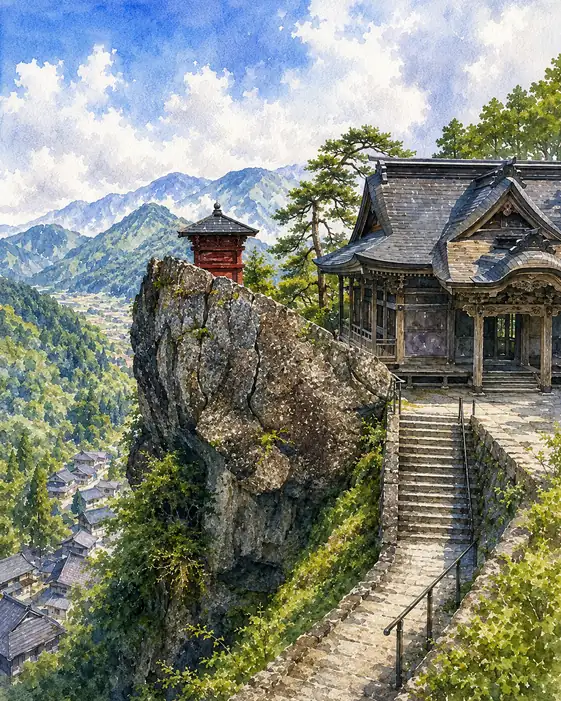 Under the Cloud, the Sacred Door
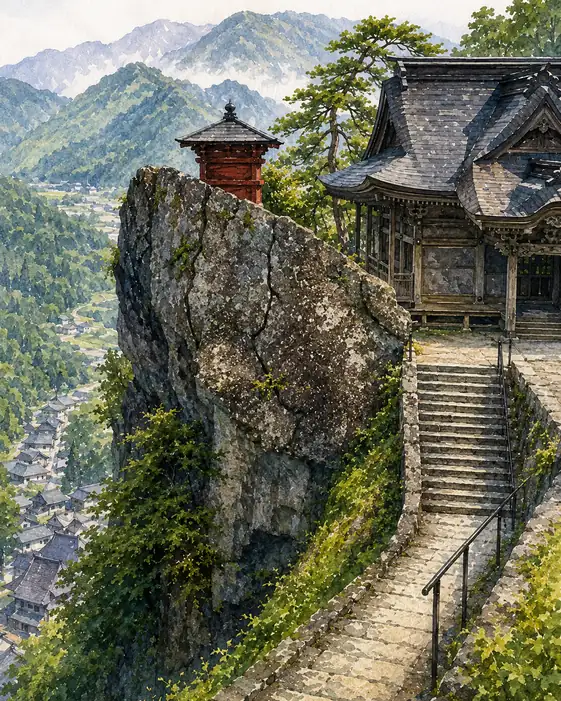 The Stone Remembers Every Ascent
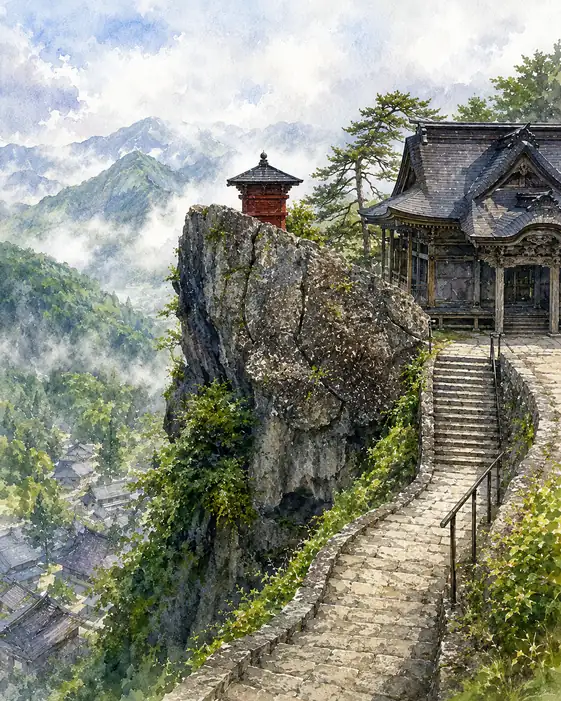 A Shrine Held Between Clouds
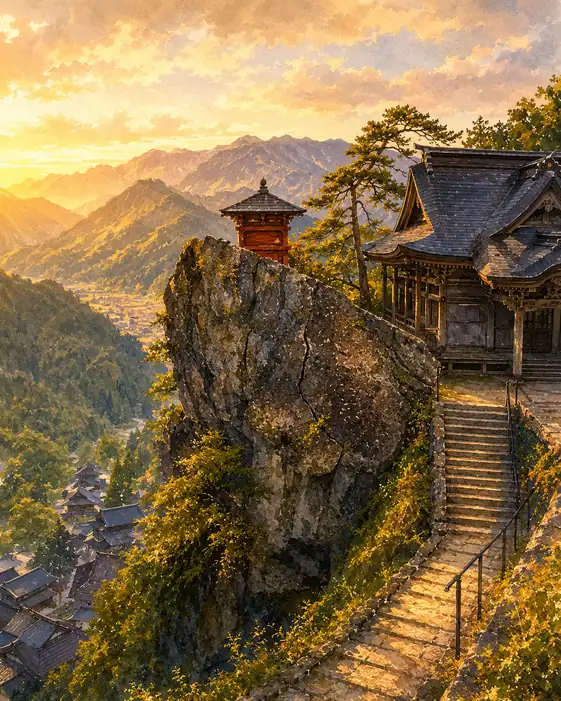 A Lone Vermilion Glow on Yamadera's Cliff Edge
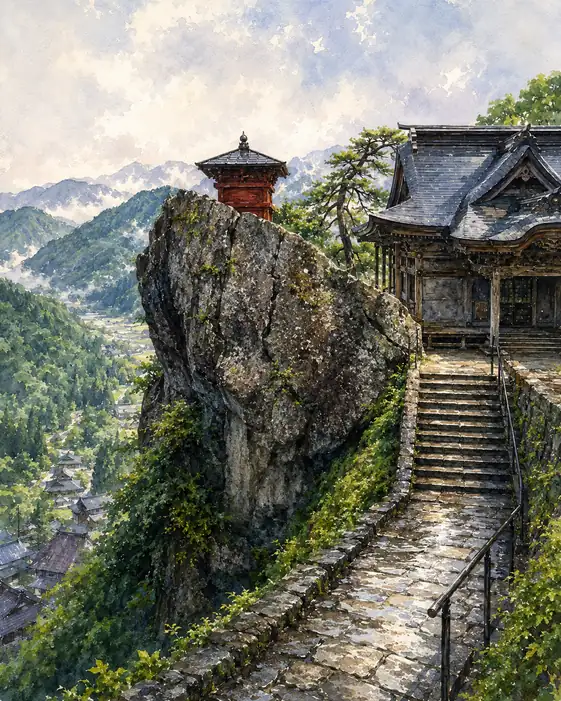 The Mountain Grants a Narrow Path
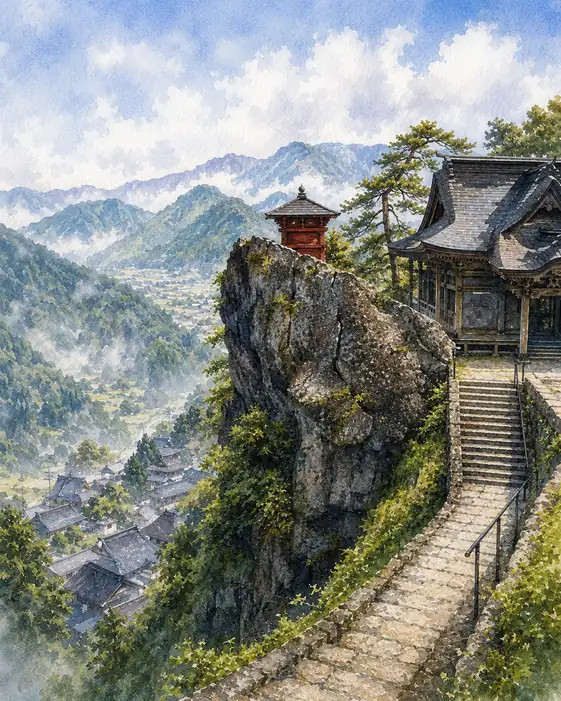 Where Prayer Rests on Stone
 At the Edge Where Prayer Dwells
 The Mountain Leaves No Easy Prayer
 Every Roof Is Another Prayer
 Faith Finds a Foothold in Stone