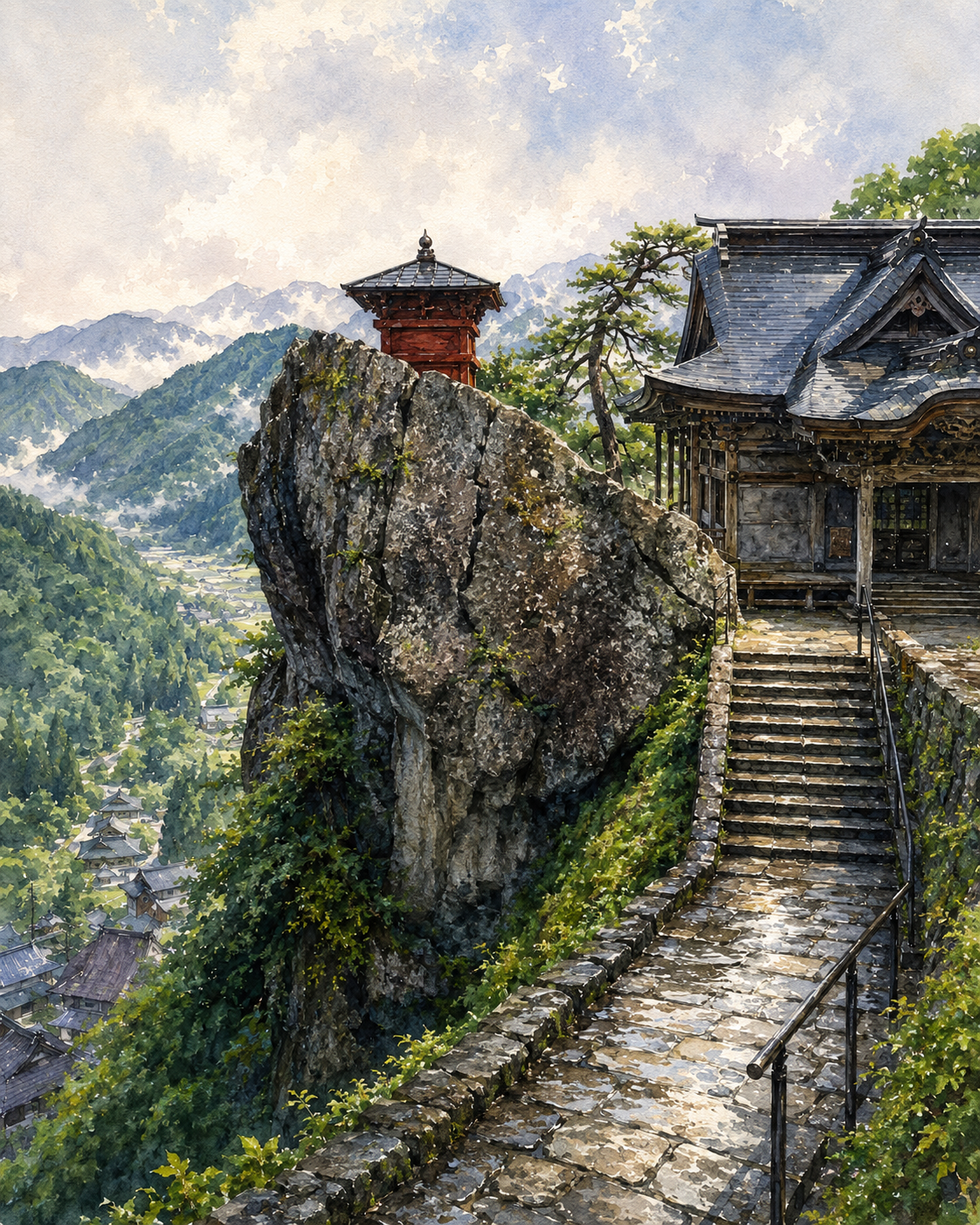
The Mountain Grants a Narrow Path
Critique
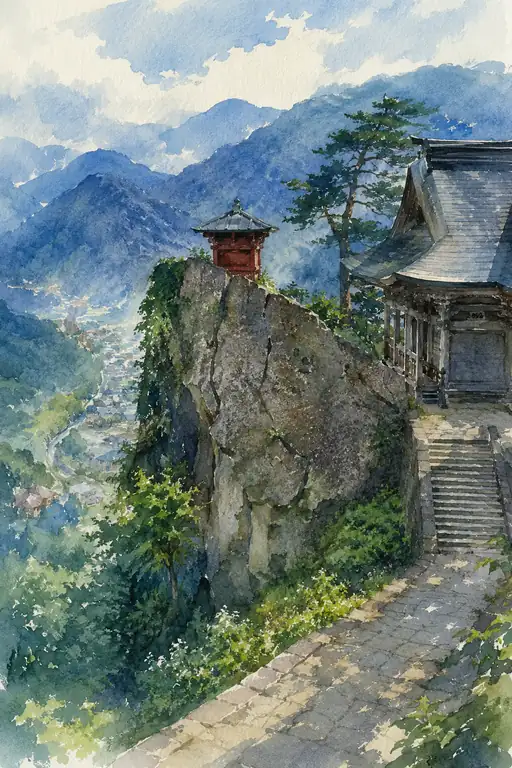
Introduction A huge rock is viewed at close range, partly hiding a red shrine and mountain hall. Steps rise from the viewer's feet while a village drops away at left, making weight and elevation physically immediate. Description The dark gray boulder occupies nearly half the image, detailed with cracks, pale spots, moss, and plants. A red-brown shrine and black roof emerge above it. At upper right, a hall displays tiled roofs, curved eaves, carved beams, and shadowed doors. Paving and stairs climb beside iron rails. Tiny roofs lie in the valley, beyond which green slopes, mist, and snow-streaked peaks continue beneath pale sky. Analysis The close monolith pushes architecture right and view left. Diagonal steps cross its vertical mass and create tension. Within gray and green, red becomes the single warm focus. Rough rock, precise timberwork, and pale mountains distinguish material and distance. Thin rails oppose human scale to geological bulk. Interpretation and Evaluation Because rock hides the temple, architecture seems to occupy terrain's limited permission rather than dominate it. The route upward requires cautious progress and withholds a complete destination. The red shrine appears precarious yet protected, concentrating prayer. Retaining the village prevents sacred height from becoming fully detached from ordinary life. Conclusion Rock comes before panorama, making difficulty tactile. Cracks, moss, wet steps, and aged wood record weathering and care. A path rising right against a valley falling left makes altitude bodily imaginable. Bright sky reduces enclosure without denying severity. Close composition powerfully presents modest architecture persisting beside immense nature.
Same Subcategory
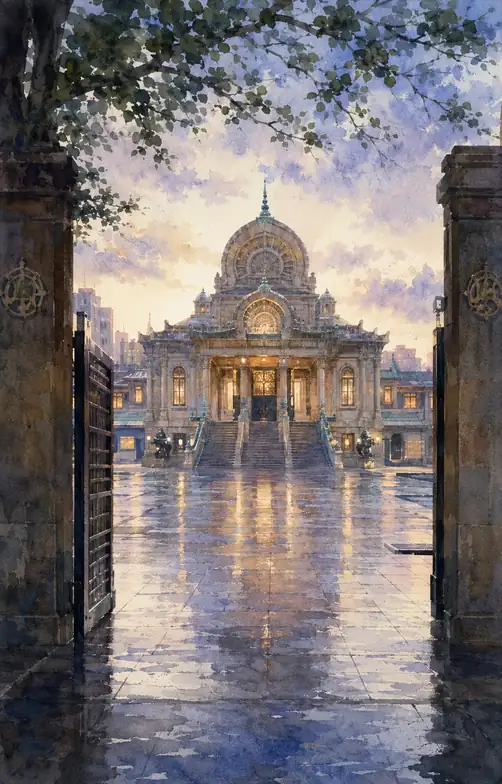 Another Sanctuary Beneath the Gate
Similar Artworks
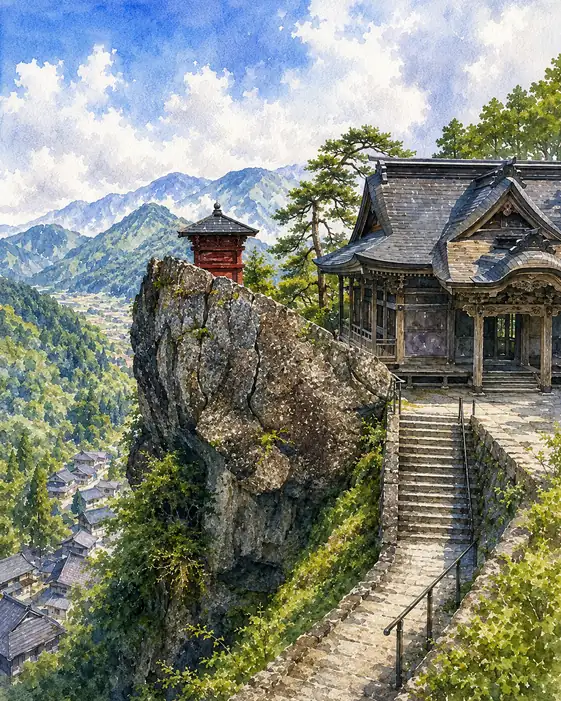 Under the Cloud, the Sacred Door
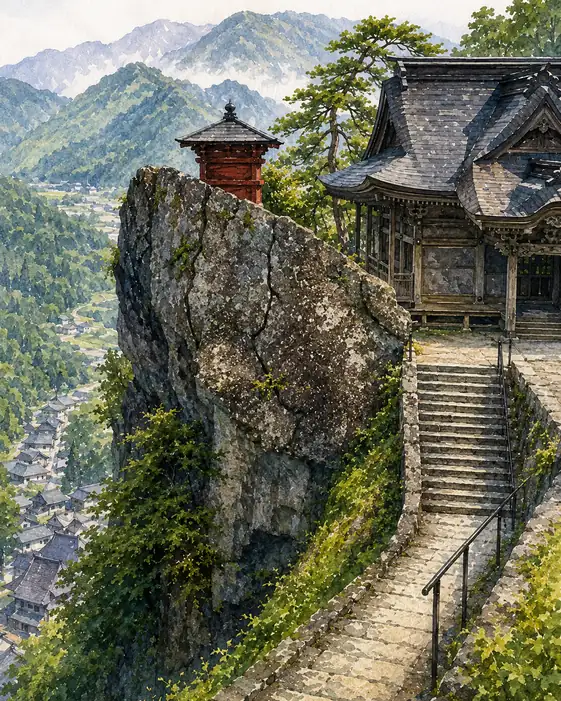 The Stone Remembers Every Ascent
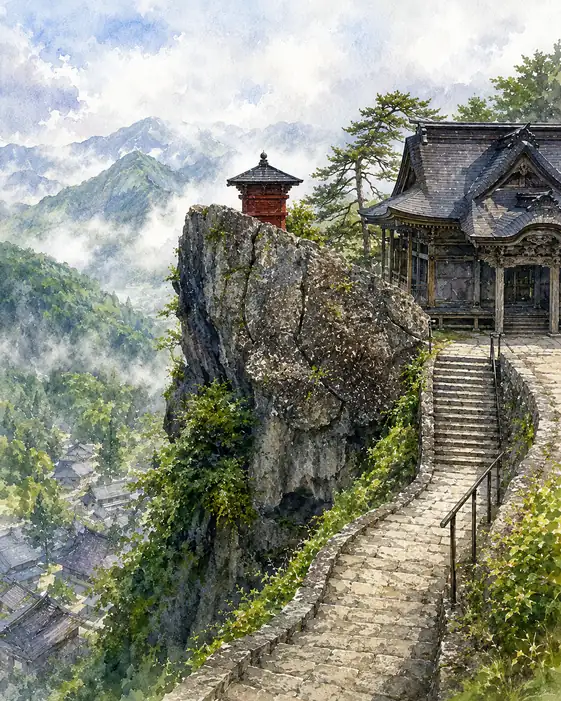 A Shrine Held Between Clouds
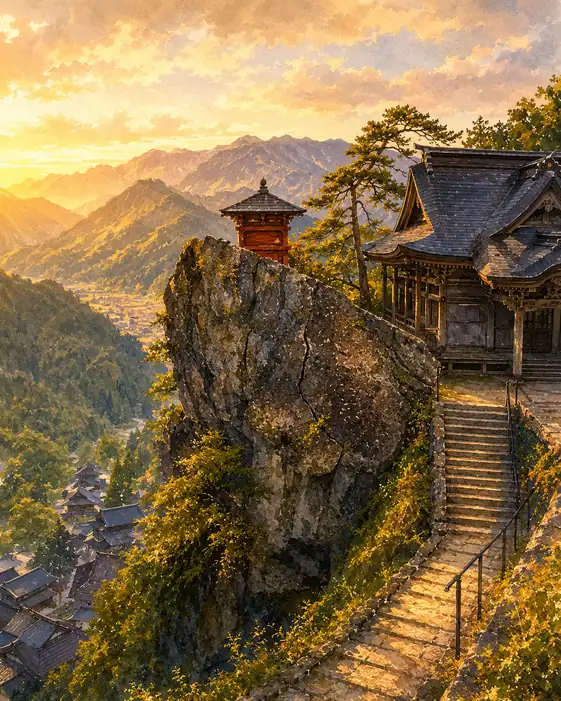 A Lone Vermilion Glow on Yamadera's Cliff Edge
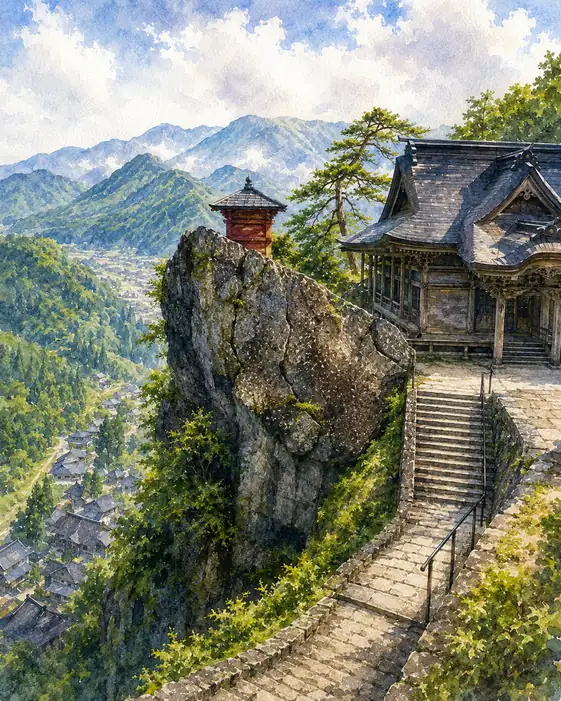 Where the Valley Learns to Pray
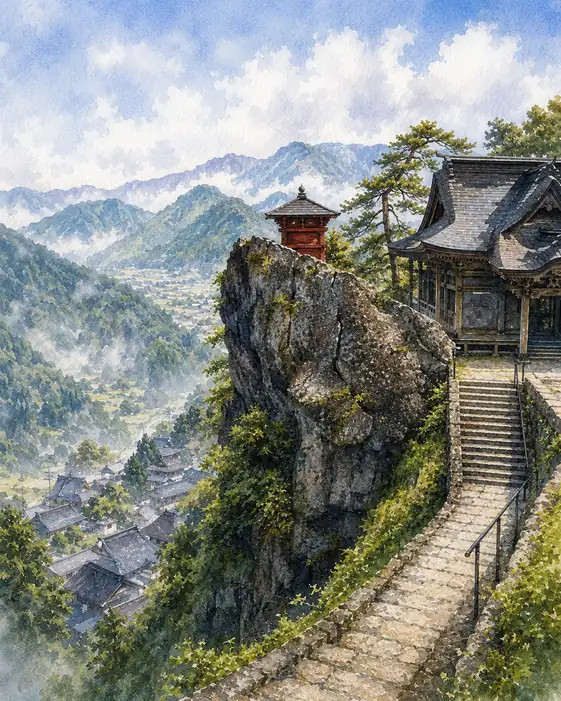 Where Prayer Rests on Stone
 At the Edge Where Prayer Dwells
 The Mountain Leaves No Easy Prayer
 Every Roof Is Another Prayer
 Faith Finds a Foothold in Stone