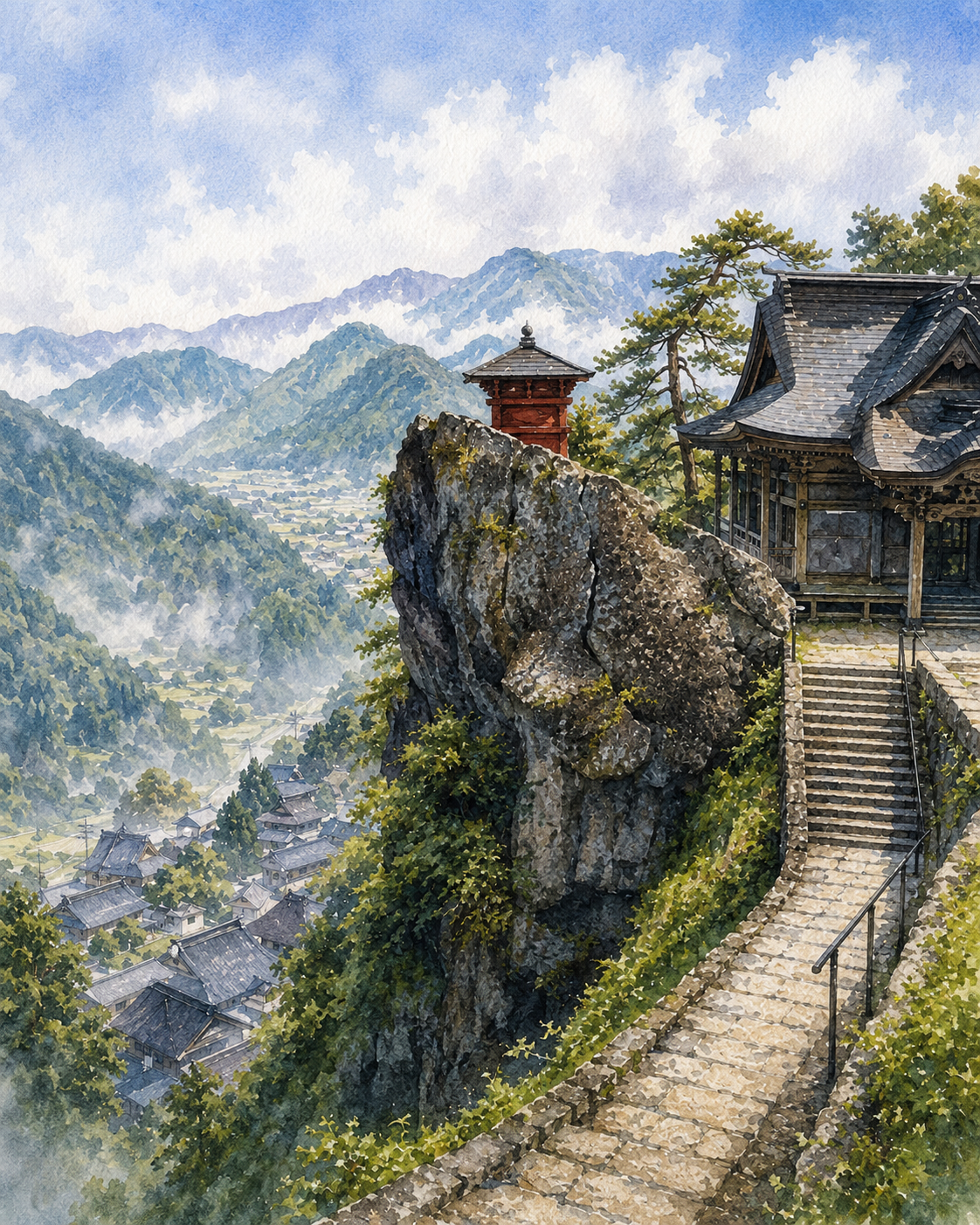
Where Prayer Rests on Stone
Critique
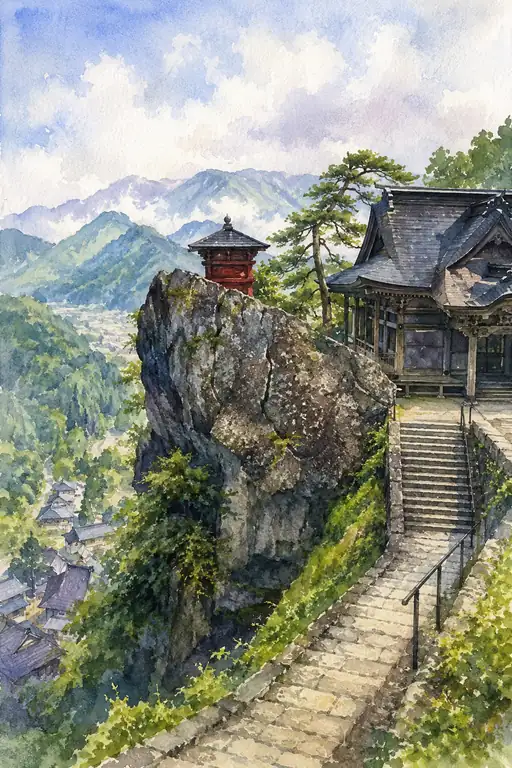
Introduction A mountain temple and small red shrine cling to a sheer rock above a vast valley. Stone steps on the right and settlement far below express extreme height, physical difficulty, and release after ascent. Description A fissured gray-brown monolith rises centrally, with the red square shrine near its summit. At upper right, a dark tiled hall shows curved eaves and intricate timberwork, reached by stairs from the foreground. Moss, shrubs, and a wind-shaped pine occupy the rock. Gray-roofed houses and fields gather deep below. Green peaks, mist, and blue mountains continue beneath bright cloud. Analysis The rock forms a vertical axis balanced by diagonal stairs and an opening valley. Detailed, high-contrast foreground forms dissolve into pale blue-green layers, clarifying depth. Red provides a small focal point that lifts vision. Hard textures of stone, steps, and roof contrast with soft cloud and mist. Valley houses establish scale. Interpretation and Evaluation Rock and temple almost merge, showing devotion accepting rather than denying difficult terrain. The staircase makes spiritual approach bodily labor. Settlement below suggests ordinary life; the high shrine suggests withdrawal and reflection, yet path and gaze keep them connected. Weathered timber and stone make sublimity a maintained place rather than an abstraction. Conclusion Steps, rails, roofs, plants, and houses make ascent convincing rather than merely spectacular. The monolith supplies weight, while the open left view releases breath. Red shrine and dark hall inscribe prayer within nature. Blue layers show the world continuing beyond arrival. Hardship, architectural adaptation, and daily life form one quiet vertical narrative.
Same Subcategory
 Dawn Finds the City Beneath Clouds
 One Blossom Before the Threshold
Similar Artworks
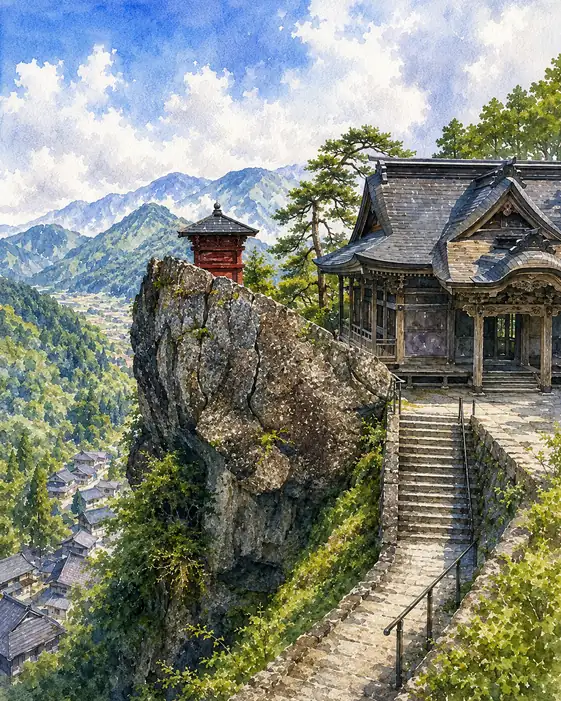 Under the Cloud, the Sacred Door
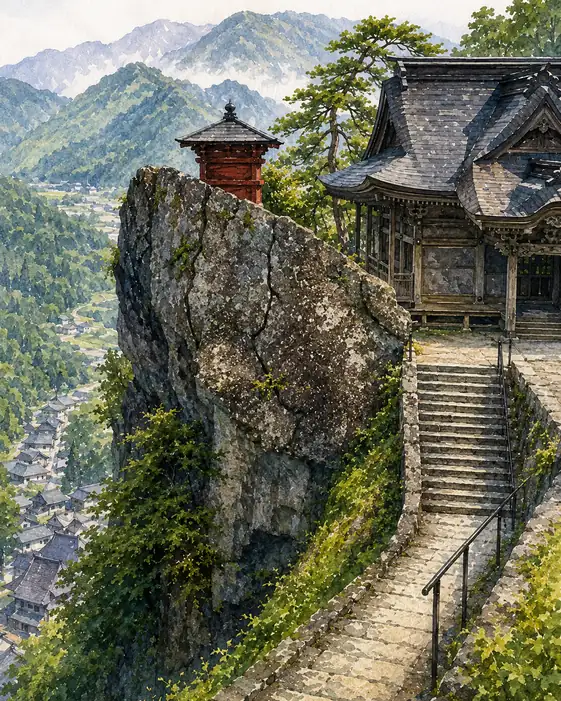 The Stone Remembers Every Ascent
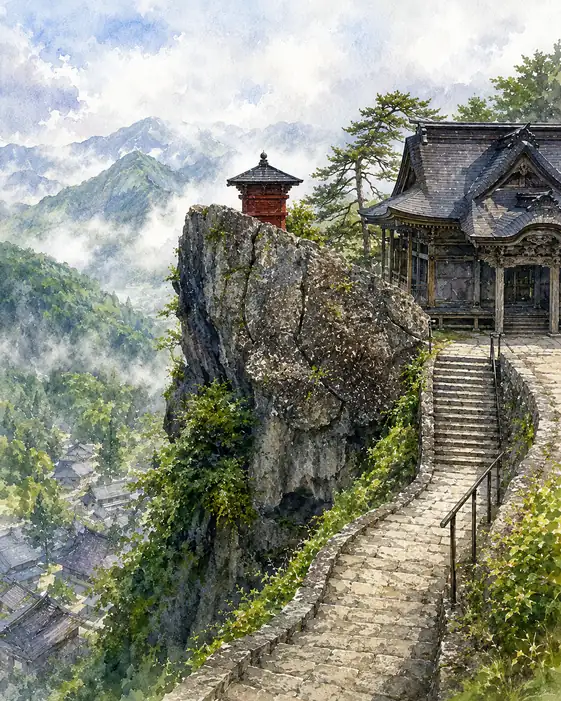 A Shrine Held Between Clouds
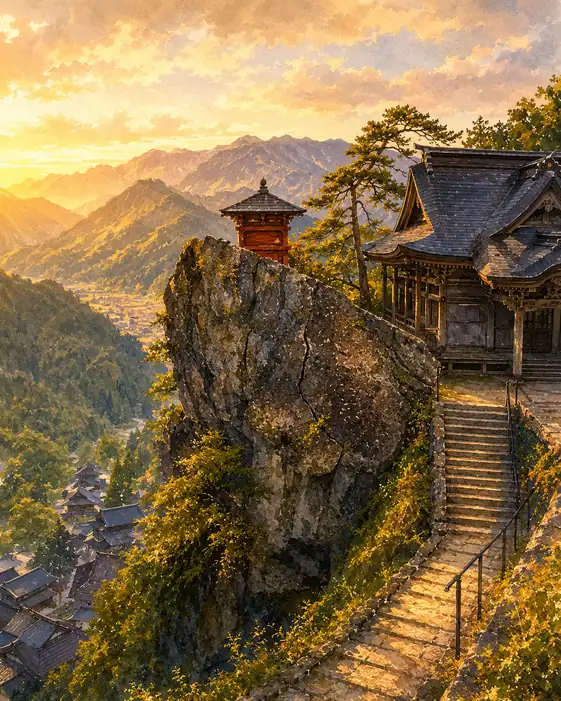 A Lone Vermilion Glow on Yamadera's Cliff Edge
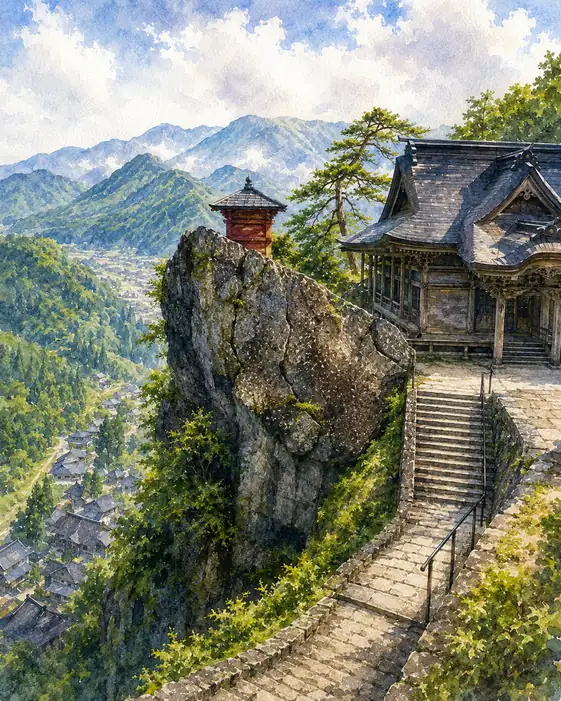 Where the Valley Learns to Pray
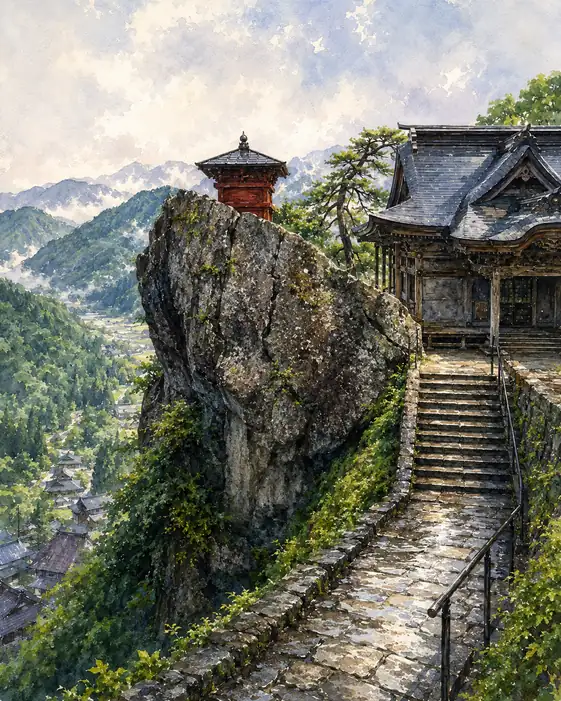 The Mountain Grants a Narrow Path
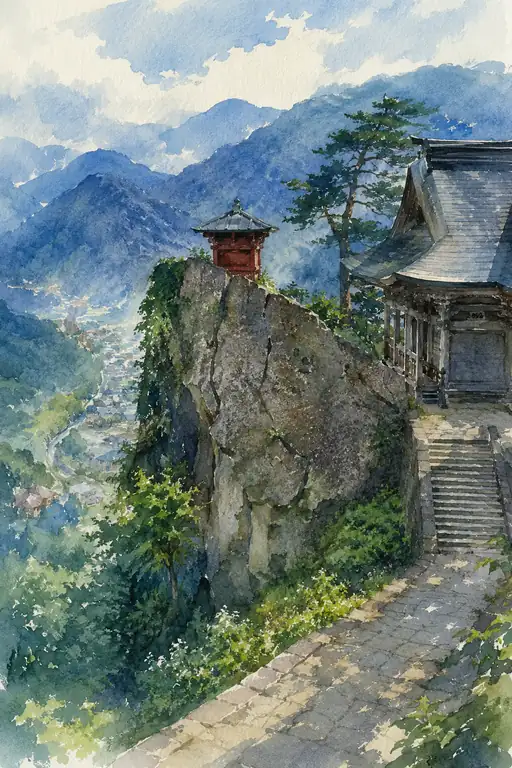 At the Edge Where Prayer Dwells
 The Mountain Leaves No Easy Prayer
 Every Roof Is Another Prayer
 Faith Finds a Foothold in Stone