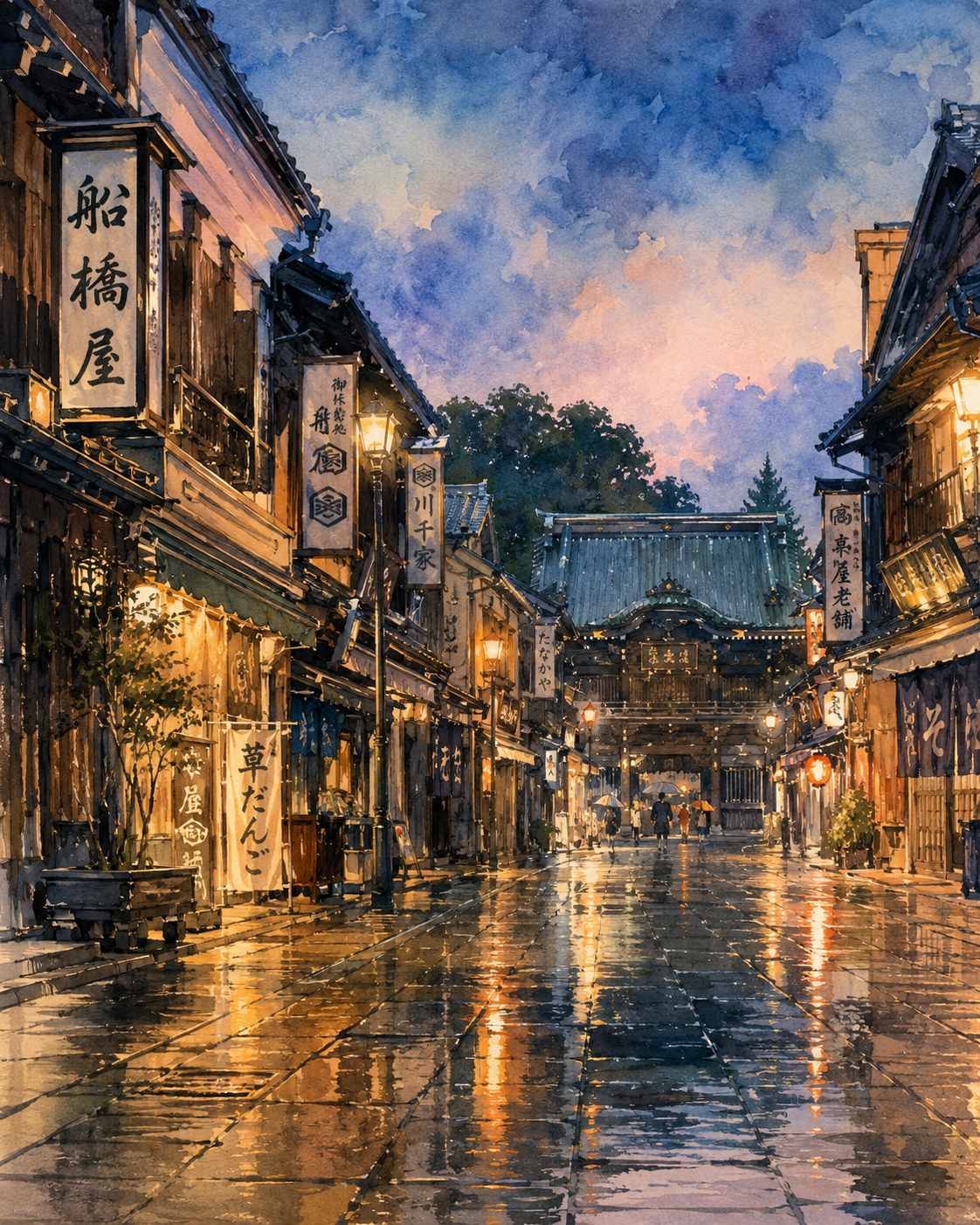
Rain Writes the Old Approach
Critique
Introduction A rain-wet temple town leads between illuminated shops toward a great gate at twilight. Everyday commerce and a sacred route coexist along one street, joined by reflections after rain. Description Two-story timber shops with tiled roofs and latticework crowd both sides. Vertical signs, curtains, lamps, and displayed goods identify particular businesses and foods. A large gate with blue-gray roof and heavy woodwork closes the distance, approached by several umbrella-bearing figures. Wet paving reflects orange shop light and blue sky. Indigo clouds mix with peach near the horizon. Analysis Perspective formed by both rows leads directly to the gate. Scale diminishes from large foreground signs to small walkers, emphasizing street length. Warm lamps against cool violet-blue atmosphere clarify post-rain time. Repeated vertical signs organize complex façades and echo elongated reflections. Unequal light and varied signage preserve the diversity of an active town. Interpretation and Evaluation The approach is sacred, yet sweets, meals, and souvenirs line it, showing how worship and livelihood historically support one another. Rain reduces traffic but doubles signs and lamps across the ground, making urban memory visible twice. Tiny umbrella figures remain open to identification. Interior lights prevent the older streetscape from becoming nostalgic scenery without present life. Conclusion Temple monument and intimate shops share one legible spatial structure. Wet paving amplifies illumination into a route from viewer to gate. Readable signs and curtains establish locality, while broad sky gives dense buildings room to breathe. Peach beneath storm cloud signals both evening and improving weather. Devotion, trade, walking, and climate combine in a townscape rich with continuing life.
Same Subcategory
 A Spire Gathering the Rainlight
Similar Artworks
 Lamps Lead Toward the Temple
 The Long Climb Through Rainlight
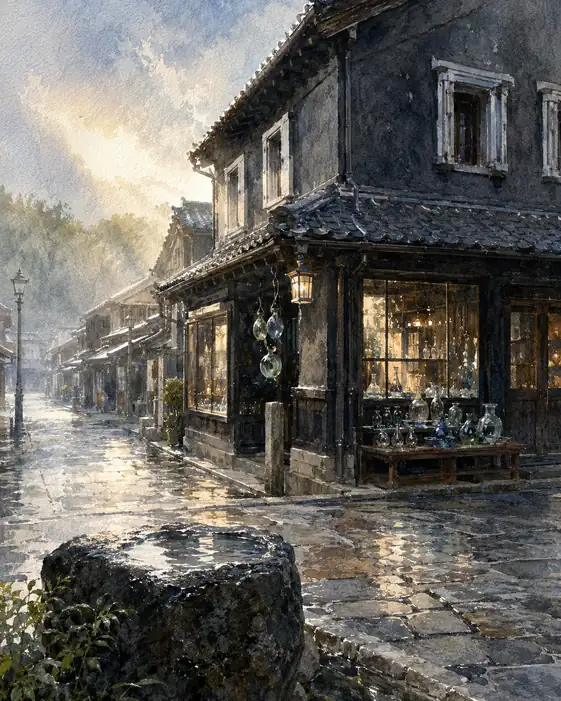 After the Rain, Glass Remembers Light
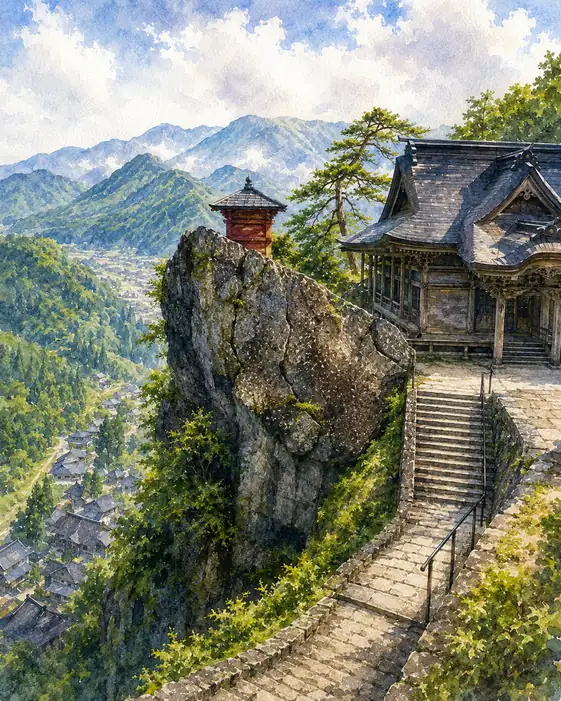 Where the Valley Learns to Pray
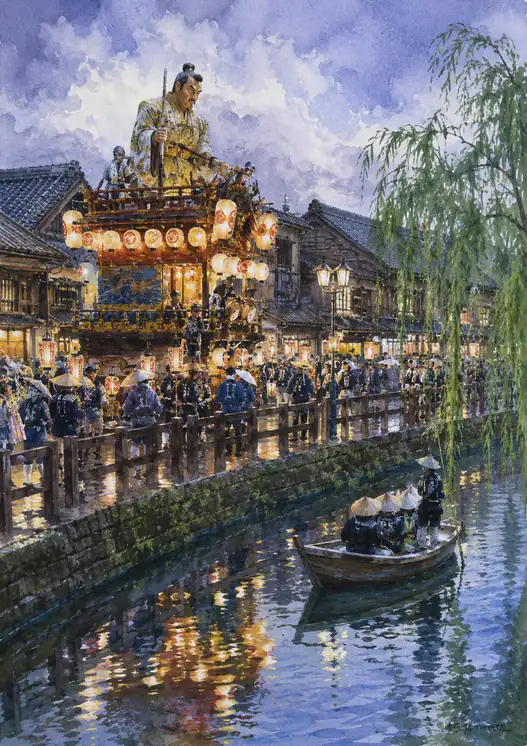 Festival Seen from the Water
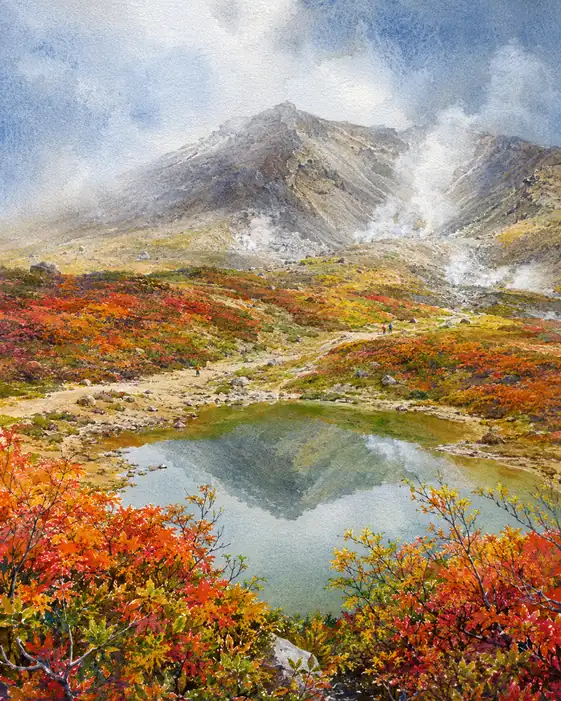 Between Steam and Still Water
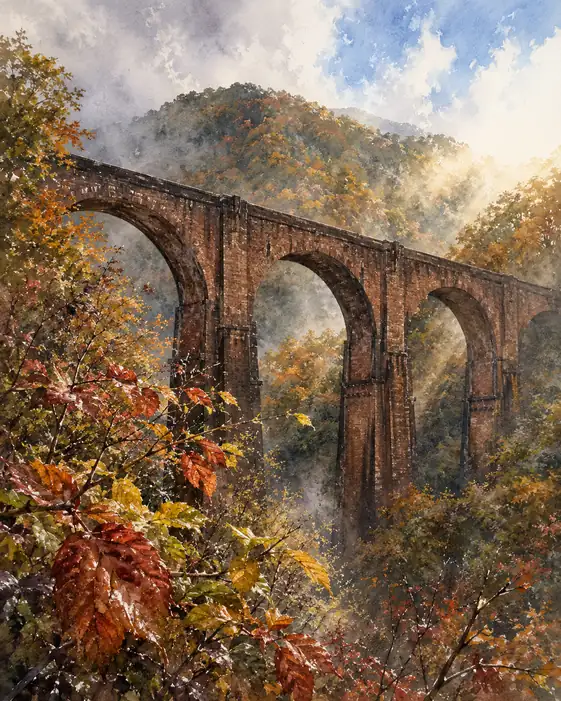 Arches Holding the Mountain's Memory
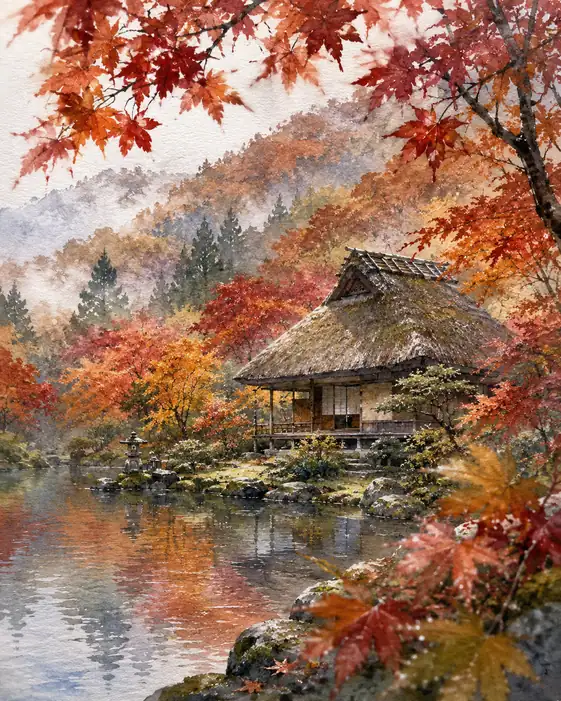 A House Where Autumn Returns
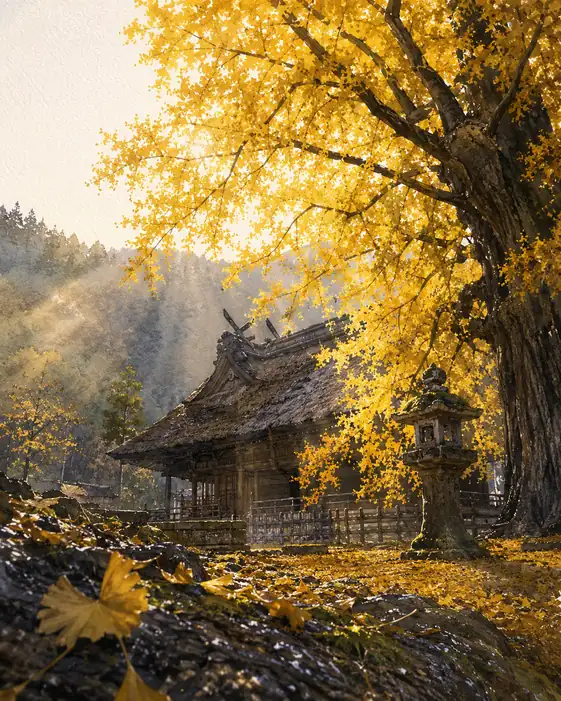 Beneath the Golden Guardian
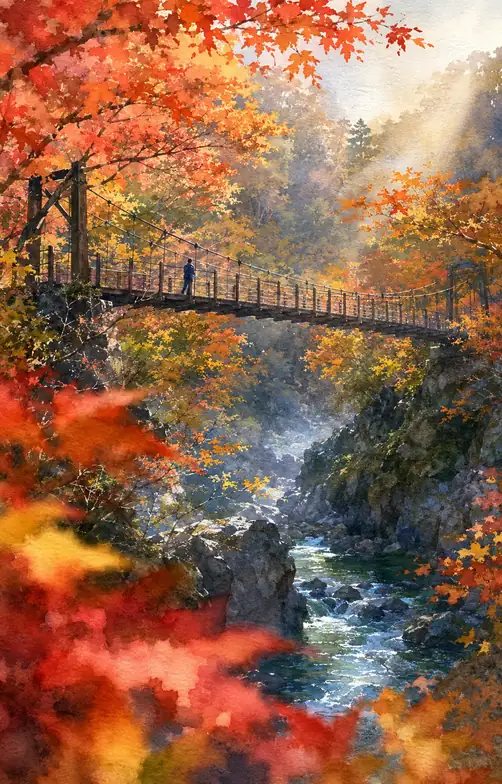 One Pause Above the Burning Valley