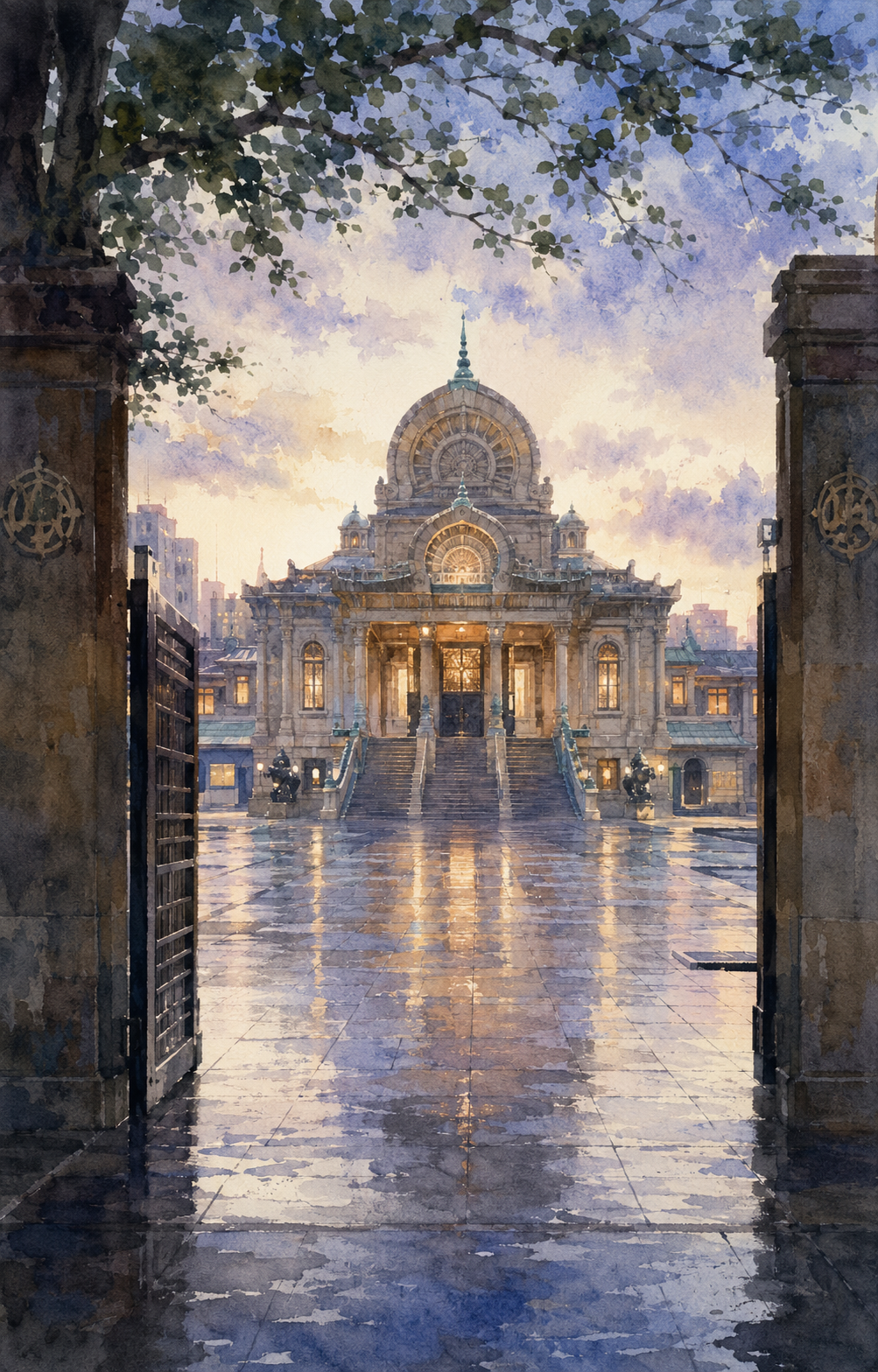
Another Sanctuary Beneath the Gate
Critique
Introduction Beyond a rain-wet gate, a monumental stone temple appears frontally. Gate, court, stairs, and entrance align into a clear passage inward. Cool twilight and warm interior light combine solemnity with welcome. Description Heavy gateposts and dark doors frame the foreground beneath spreading branches. The symmetrical building beyond layers columns, arched windows, sculpture, and a large semicircular roof. Broad stairs rise toward three entrances glowing gold. Rainwater on the stone court reflects lamps and blue-violet sky in long vertical trails. Modern buildings remain faintly visible behind the historic structure. Analysis A frame within the frame and strong perspective focus attention on the central doorway. Branches and one open door gently disturb strict symmetry. Cool gray-blue against yellow-orange distinguishes exterior rain from interior warmth. Reflection extends the architectural axis toward the viewer, creating a luminous route from gate to stairs. Detailed masonry balances the diffuse atmospheric sky. Interpretation and Evaluation The open gate is both physical entrance and symbolic boundary between routine and contemplation. Light above the stairs suggests arrival, while the empty court makes visitors conscious of their own pace. Washed stone evokes purification, and reflection produces a second sanctuary at ground level. Retaining the city shows history and devotion within contemporary life. Conclusion Successive thresholds lead viewers gradually toward the building. Stone and water, old ornament and city, blue evening and gold lamps unite several times and sensations. Foreground darkness intensifies the center, while foliage lends life to masonry. Light reaching the viewer's feet creates connection even from outside. Sacred architecture becomes a quiet invitation rather than a forbidding monument.
Same Subcategory
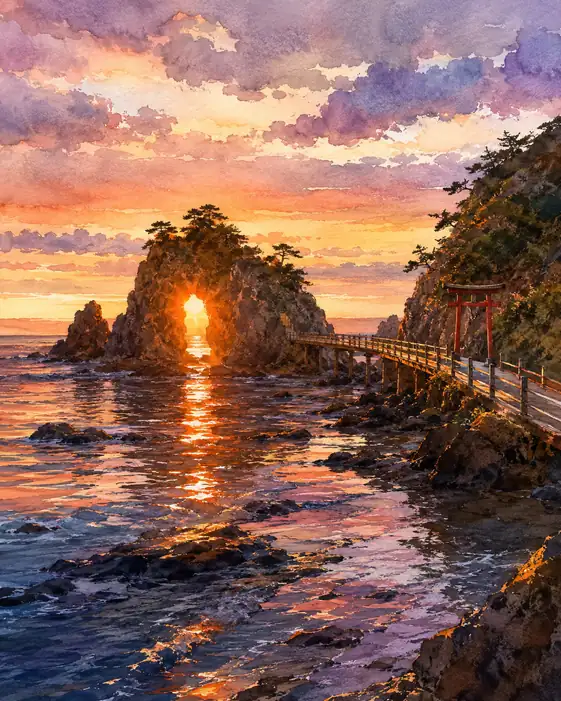 The Sun Passes Through the Sacred Rock
Similar Artworks
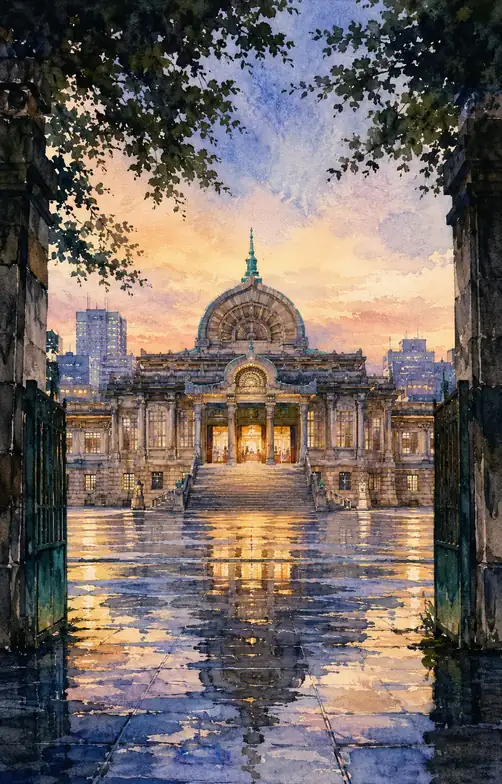 The Gate Opens onto Evening
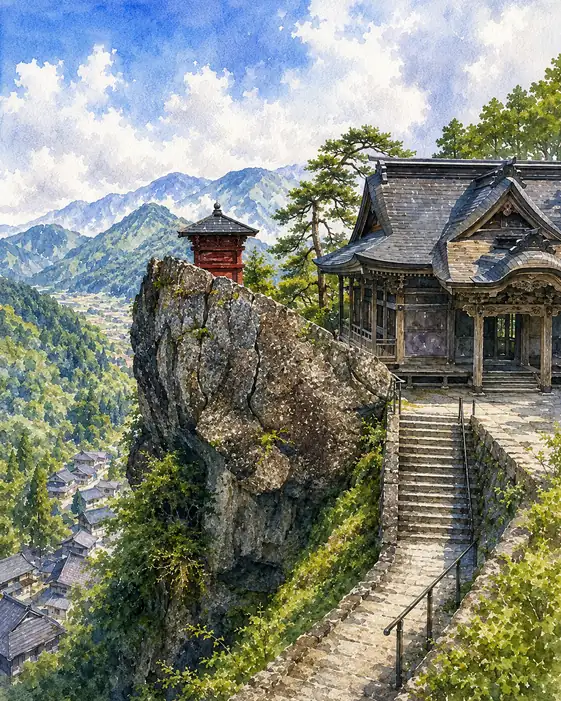 Under the Cloud, the Sacred Door
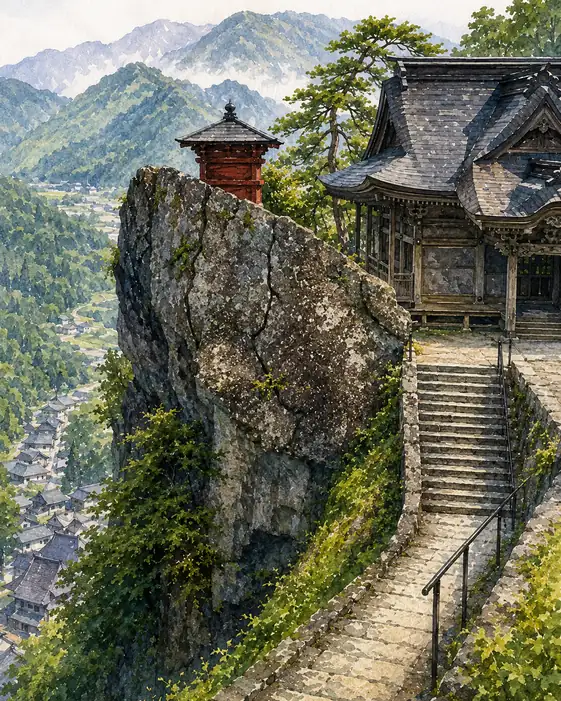 The Stone Remembers Every Ascent
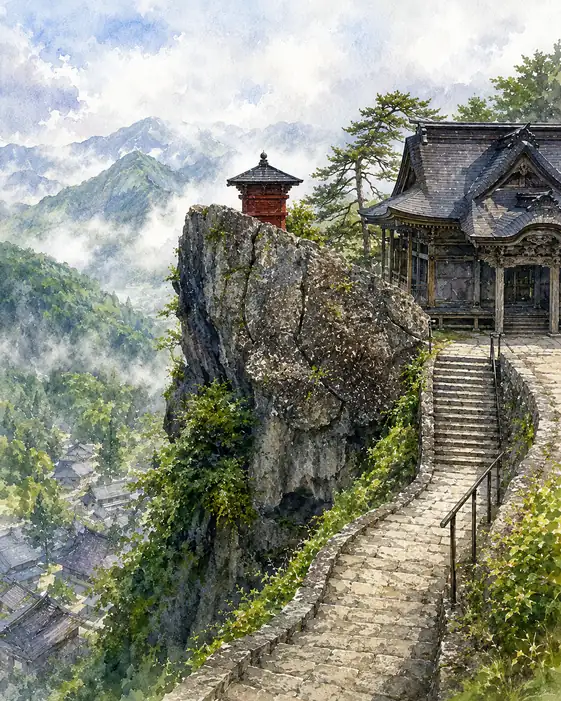 A Shrine Held Between Clouds
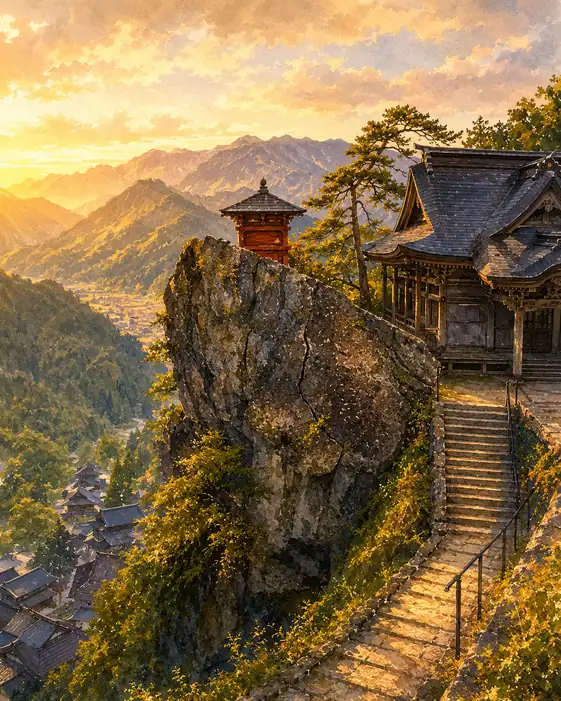 A Lone Vermilion Glow on Yamadera's Cliff Edge
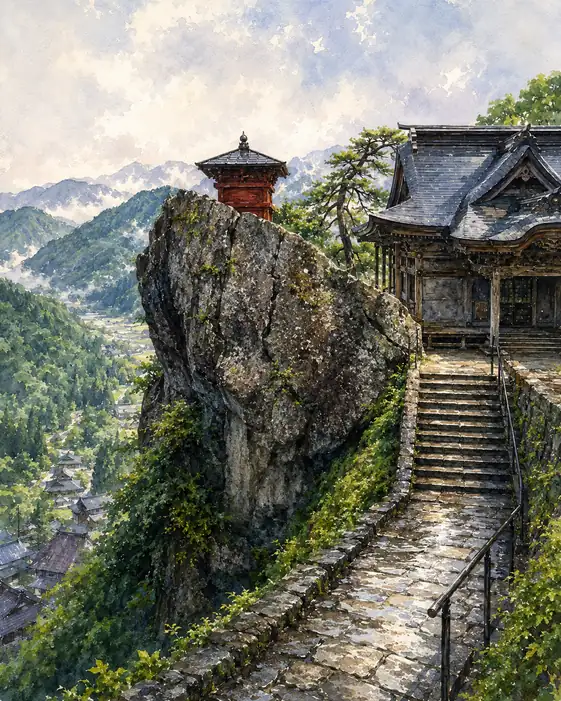 The Mountain Grants a Narrow Path
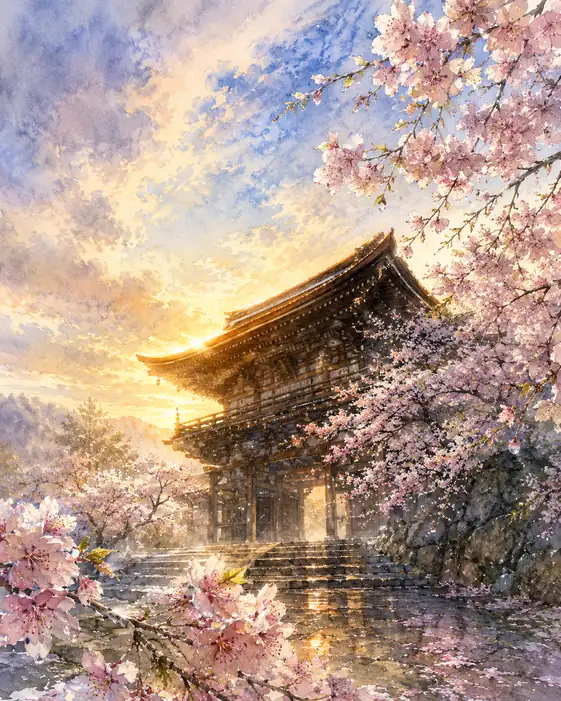 Spring Knocks on the Ancient Gate
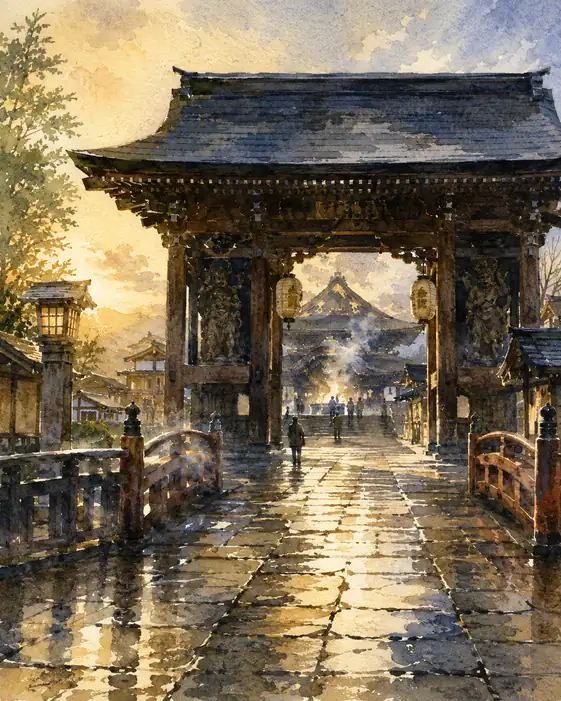 Beyond the Gate, Incense and Dawn
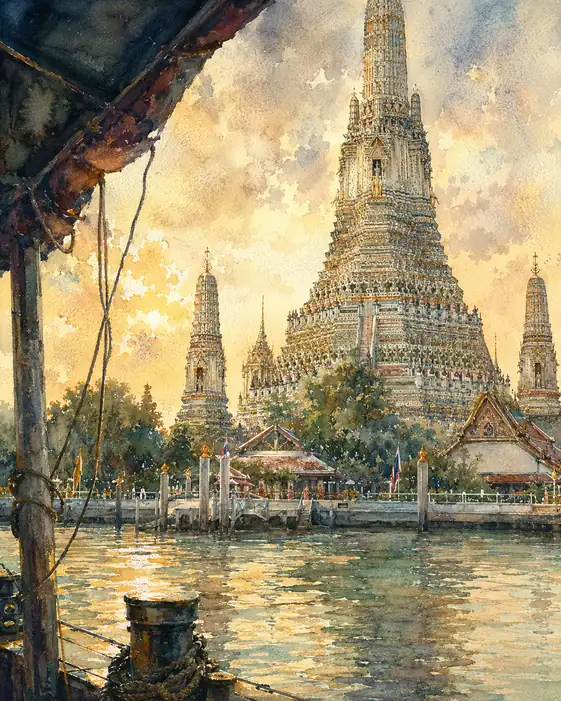 Where Prayers Reflect in Gold
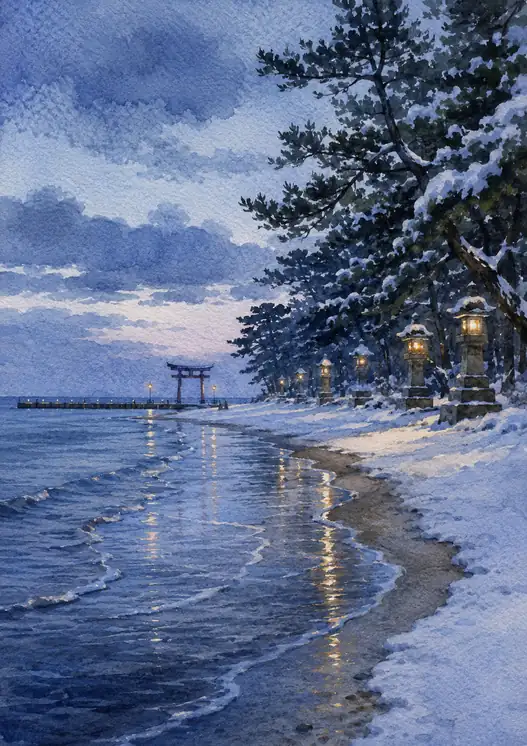 Lanterns Waiting at Winter's Edge