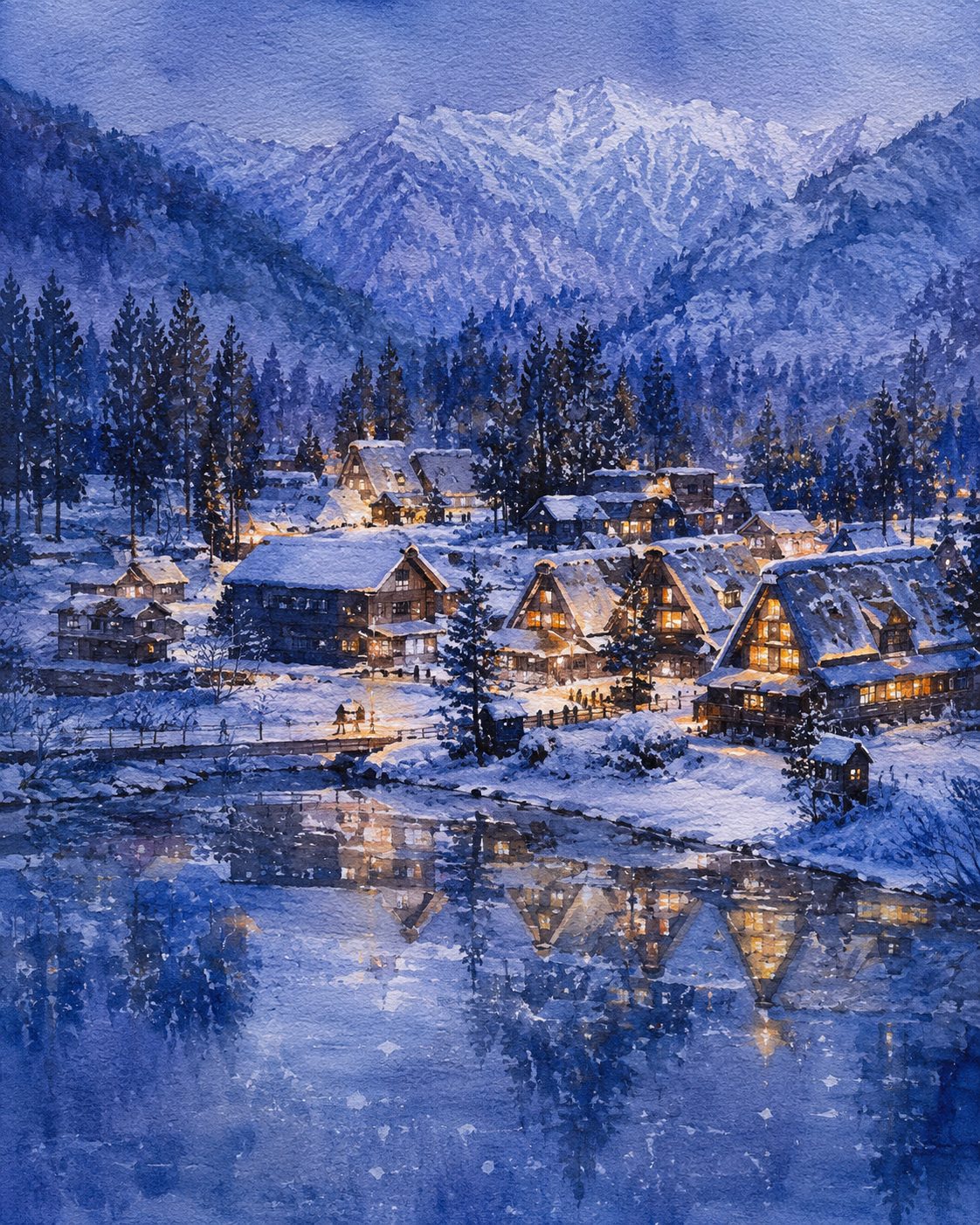
Warm Windows Beneath the Snow Peaks
Critique
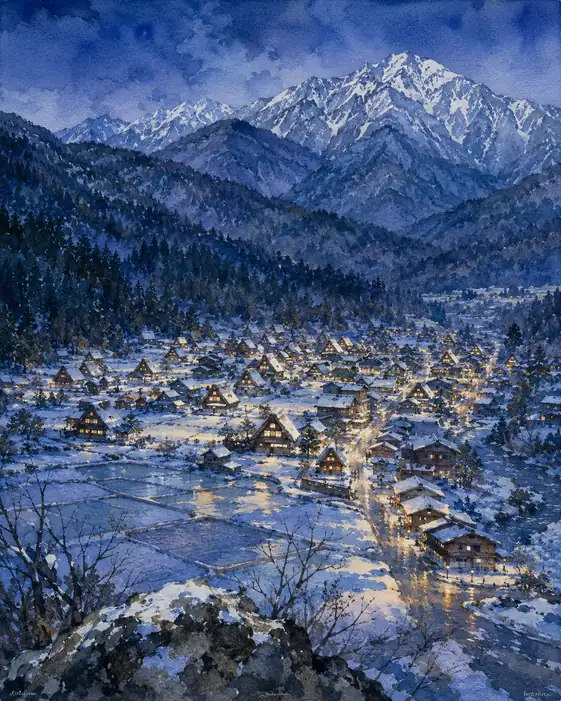
Introduction A snowbound village of steep thatched houses rests beneath blue twilight and warm windows. Mountains rise behind, while water reflects the settlement below. The scene conveys domestic warmth and knowledge shaped by severe climate. Description Large and small houses occupy the middle ground, their pitched roofs, roads, and fields thick with snow. Yellow-orange light leaves windows and entrances and continues along paths. Dark conifers enclose the village before a blue-violet mountain range streaked with snow and rock. Foreground water, perhaps partly frozen, mirrors roofs and lamps. Snowflakes scatter across a uniformly deep sky. Analysis Water, village, forest, and mountains form horizontal layers of depth. Repeated roof triangles and their reflections establish geometric rhythm. Restricted orange lights against pervasive blue make cold and habitation immediately legible. Bright houses at center right balance darker buildings and forest on the left. Detailed ridges contrast with softened reflection, distinguishing solidity from afterimage. Interpretation and Evaluation Steep roofs embody practical adaptation to snow, and their repetition records a shared environmental history. Window light is evidence of life resisting exterior cold. Mountains can protect the village or isolate it, adding productive ambiguity. Wavering reflected houses approach memories or folk tales. Human presence is conveyed effectively through architecture and light rather than prominent figures. Conclusion The snowy region is not reduced to white; varied blues, brown timber, and orange light construct a complex lived space. Roof triangles echo mountain peaks, visualizing architecture learned from terrain. Reflection adds quiet breath, while falling snow keeps weather present. Distant severity and small lamps make communal life appear fragile and resilient at once. The winter landscape regards place and adaptation with calm respect.
Same Subcategory
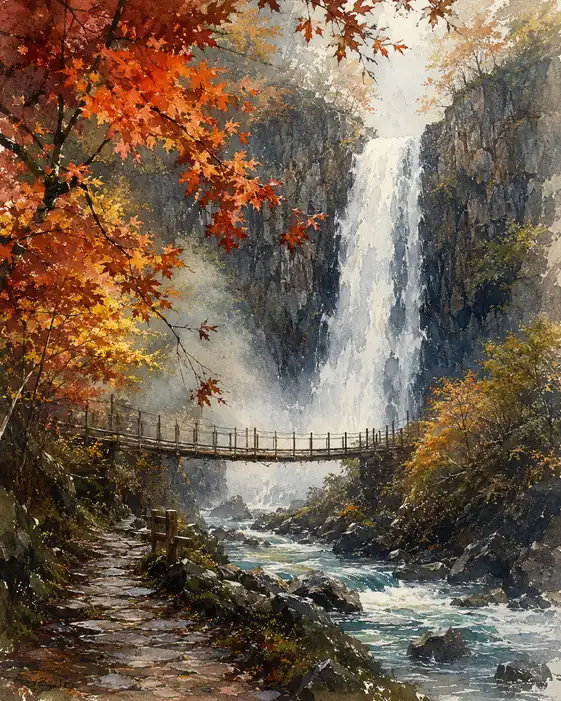 A Bridge Before the Roaring White
Similar Artworks
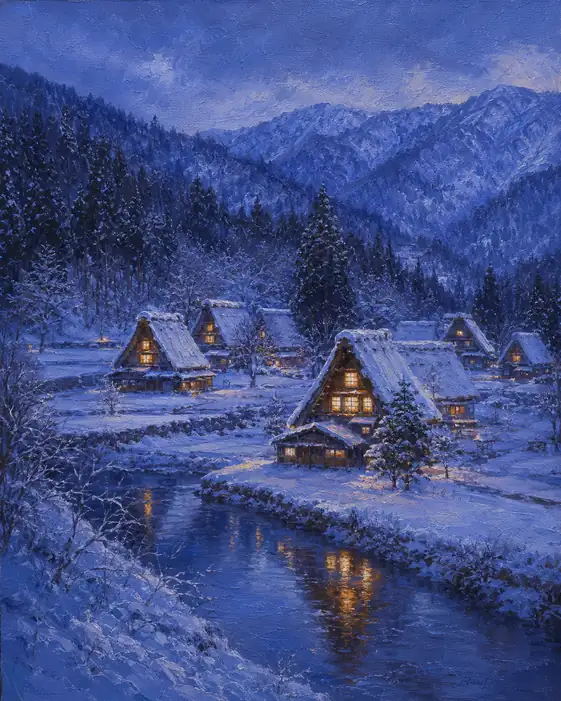 Winter Keeps the Hearths Afloat
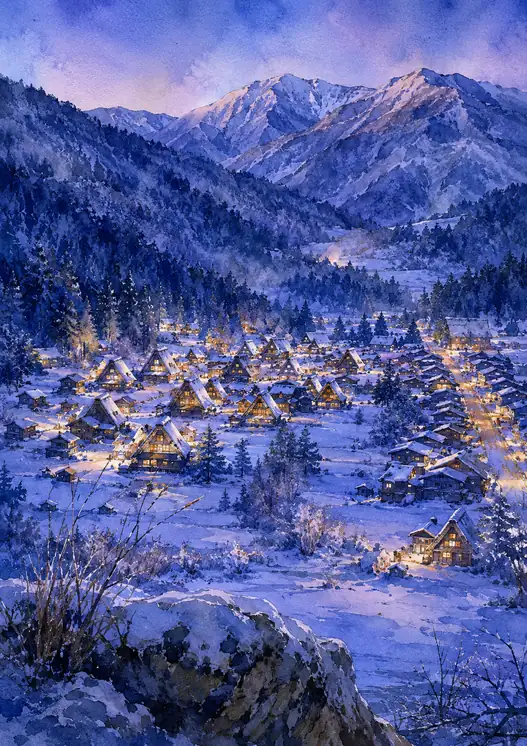 The Village Keeps One Ember
 A Thousand Roofs Holding Warmth
 Fuji Drinks the Springs
 Where Clear Water Holds the Sacred Peak
 Two Towers Hold the Sunset
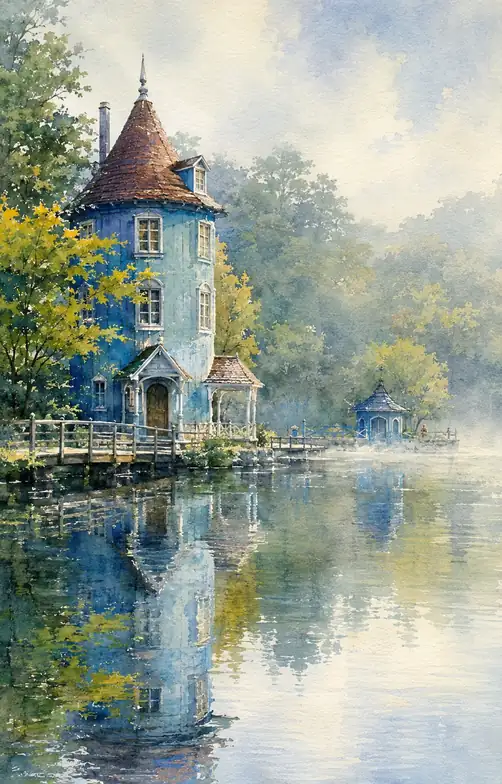 Blue House in the Morning Mist
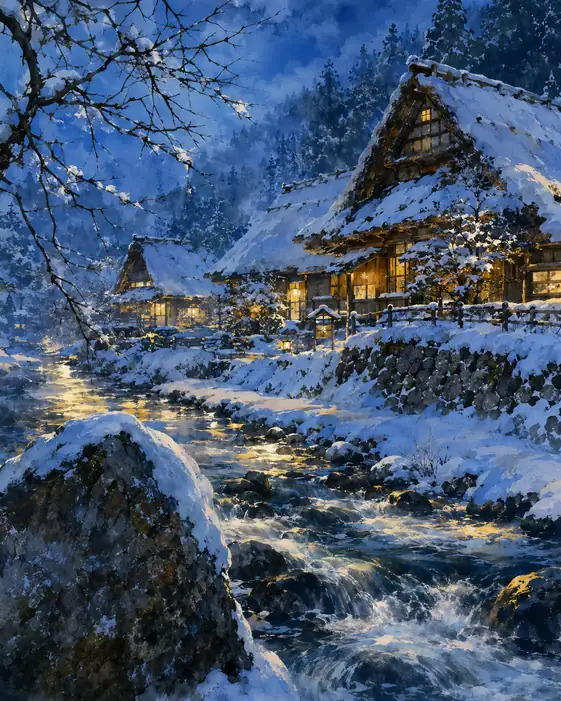 The River Carries the Lights Home
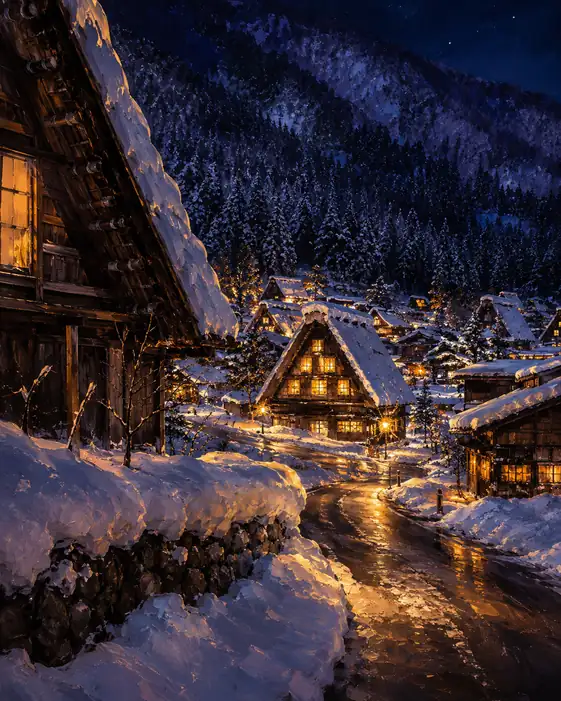 The Snow of the Heike Upon Roofs of Prayer
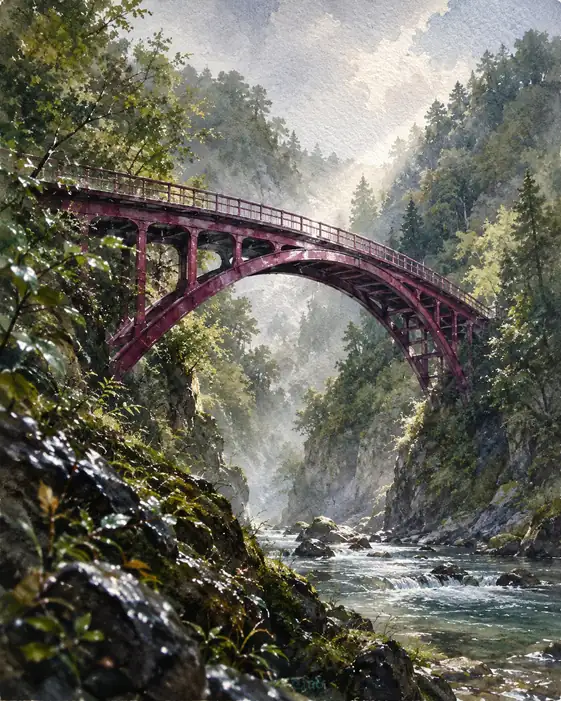 The Curve That Crossed the Mist