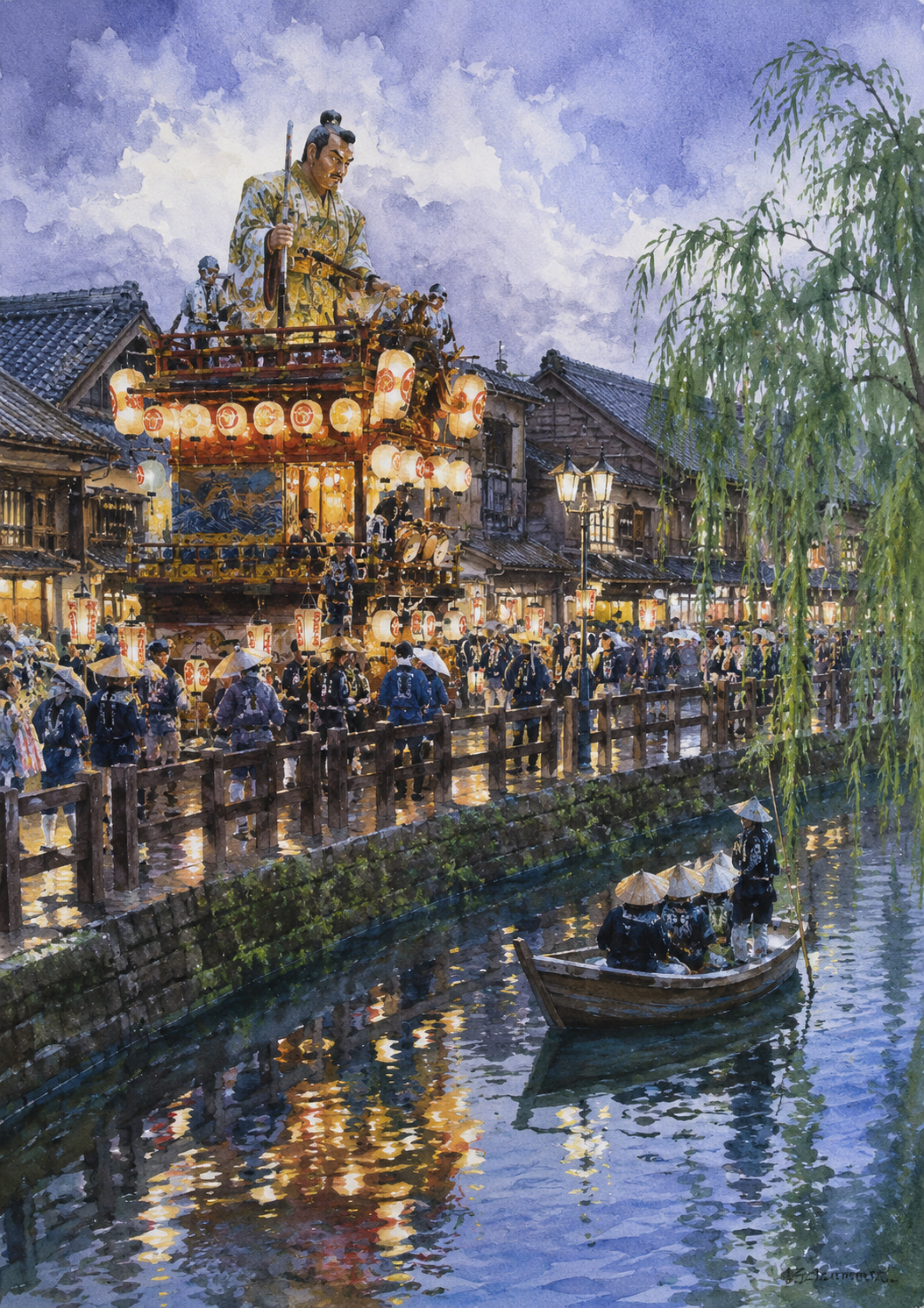
Festival Seen from the Water
Critique
Introduction A festival float proceeds beside a rainy canal as boat passengers and people on the bank share the event. Lanterns, water, and willow turn the town into a stage. Description At left, a two-level float supports a huge warrior figure above red rails, round lanterns, musicians, and drums. Participants in dark coats and woven hats crowd the wet street. A wooden boat carries several similarly dressed figures at lower right. Willow branches descend toward the canal, and tiled townhouses continue into the distance. Yellow lights glow beneath a blue-violet rainy sky. Analysis The float's vertical height intersects the horizontal canal and crowd. Dense lights at left balance the willow's green mass at right, with open water between. Isolating the figure against sky establishes hierarchy; repeated lanterns distribute rhythm downward. Warm lamps contrast with cool rain, connected by reflections. The foreground boat demonstrates that water as well as street belongs to the festival. Interpretation and Evaluation The warrior visualizes inherited heroic narrative, while musicians, pullers, and witnesses provide the actual force carrying tradition forward. Rain could obstruct celebration, yet umbrellas, wet stone, and wavering light make it more intimate and memorable. Boat passengers observe from another route, expressing the layered character of a waterside town. Collective action matters more than any single individual. Conclusion Float, houses, canal, willow, weather, and people make the festival an activity of the whole place. Lantern light branches through crowd and water, joining darkness into community. Quiet boat motion and dense procession establish different speeds. Soft willow foliage tempers the warrior's rigid monumentality. Tradition appears not as a preserved object but as something people continue to move through a rainy night.
Same Subcategory
Similar Artworks
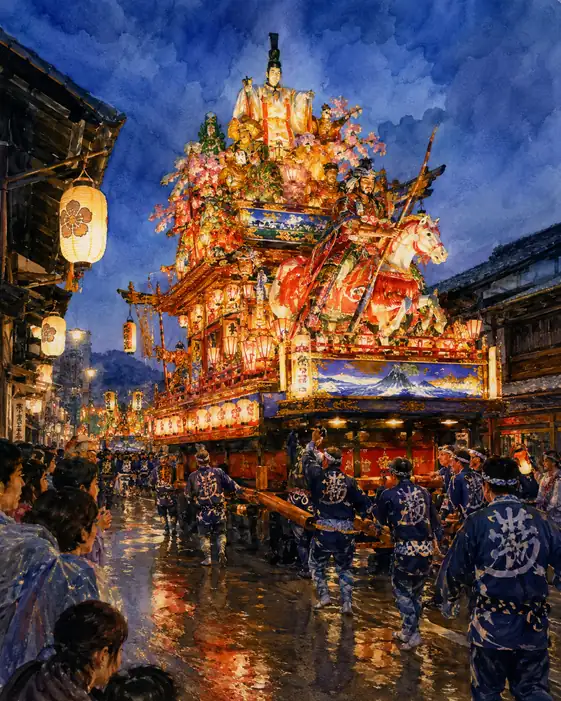 The City Blooms into a Festival
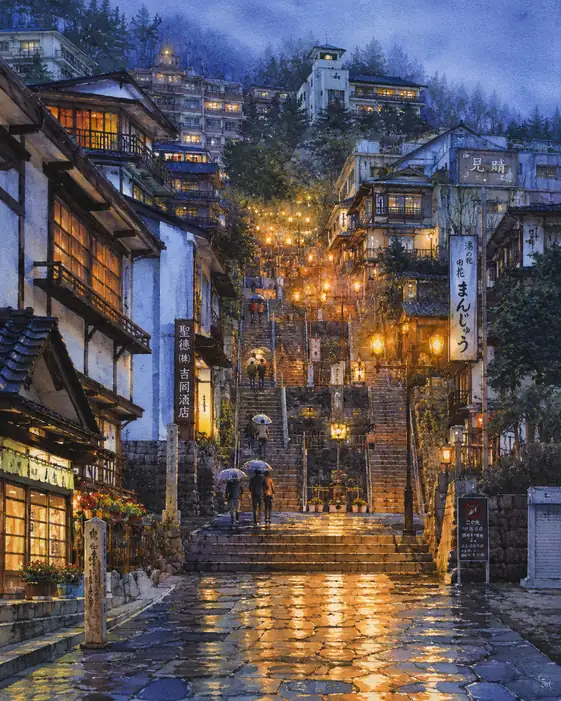 The Long Climb Through Rainlight
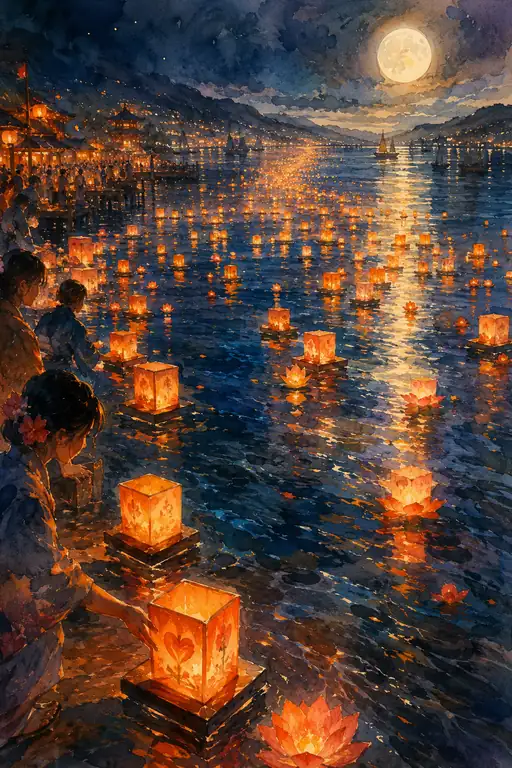 Guiding Our Hearts Home
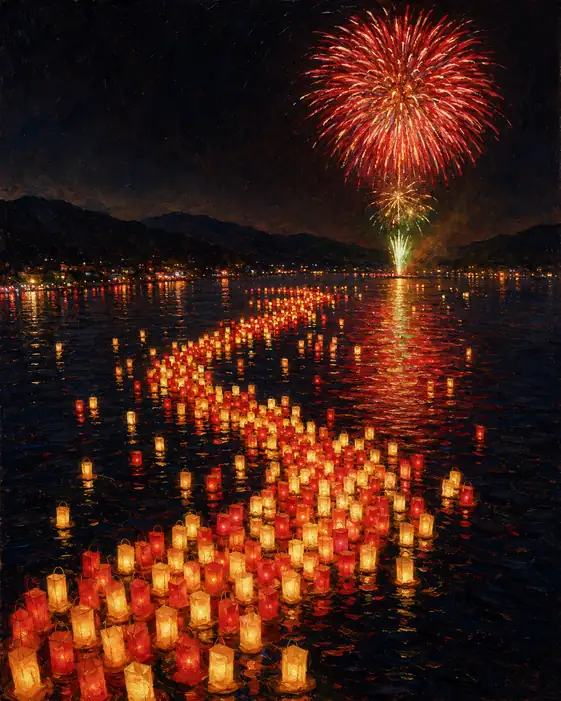 Scarlet Fireworks and the Flow of Light
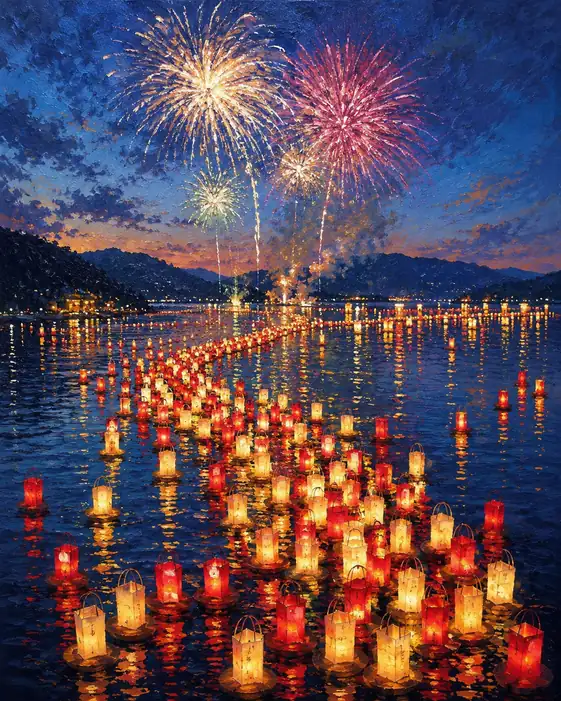 River of Lanterns and Summer Fireworks
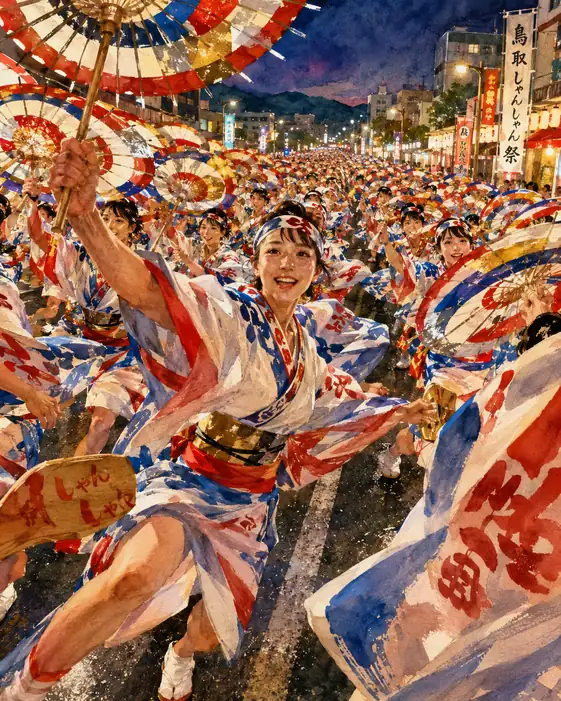 Joyful Whirl of the Shan-Shan Umbrellas
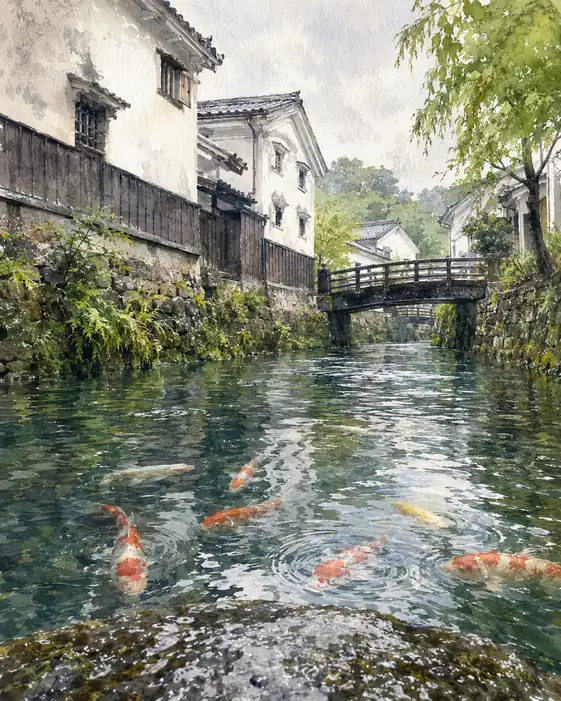 Red Dreams Beneath White Walls
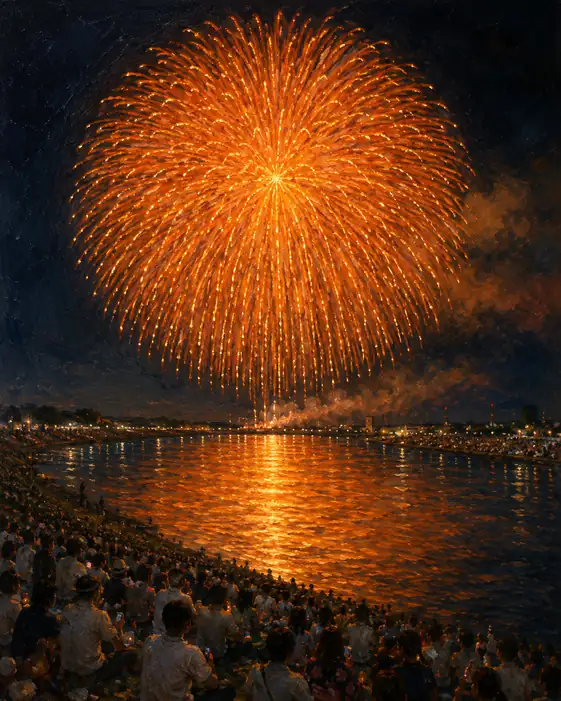 The River Holds the Fallen Sun
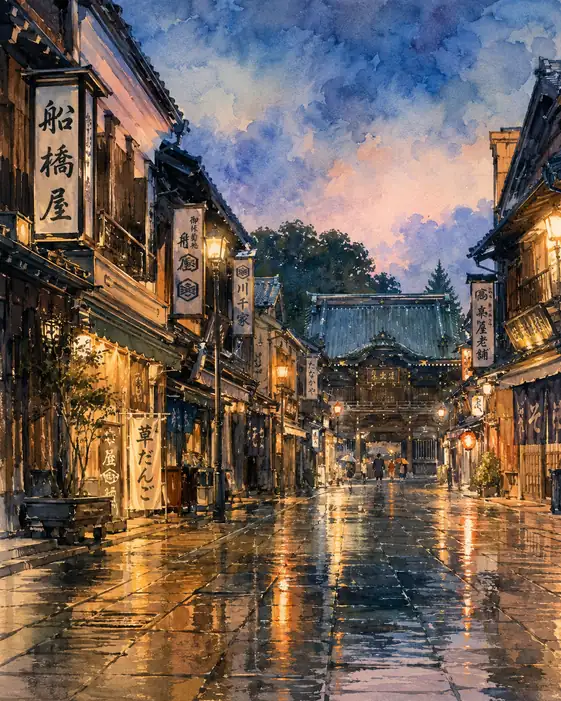 Rain Writes the Old Approach
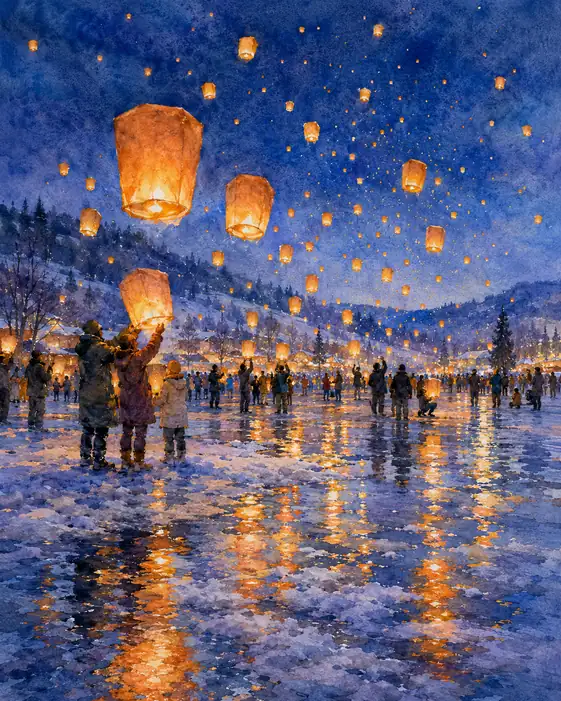 Lanterns Returning to the Winter Sky