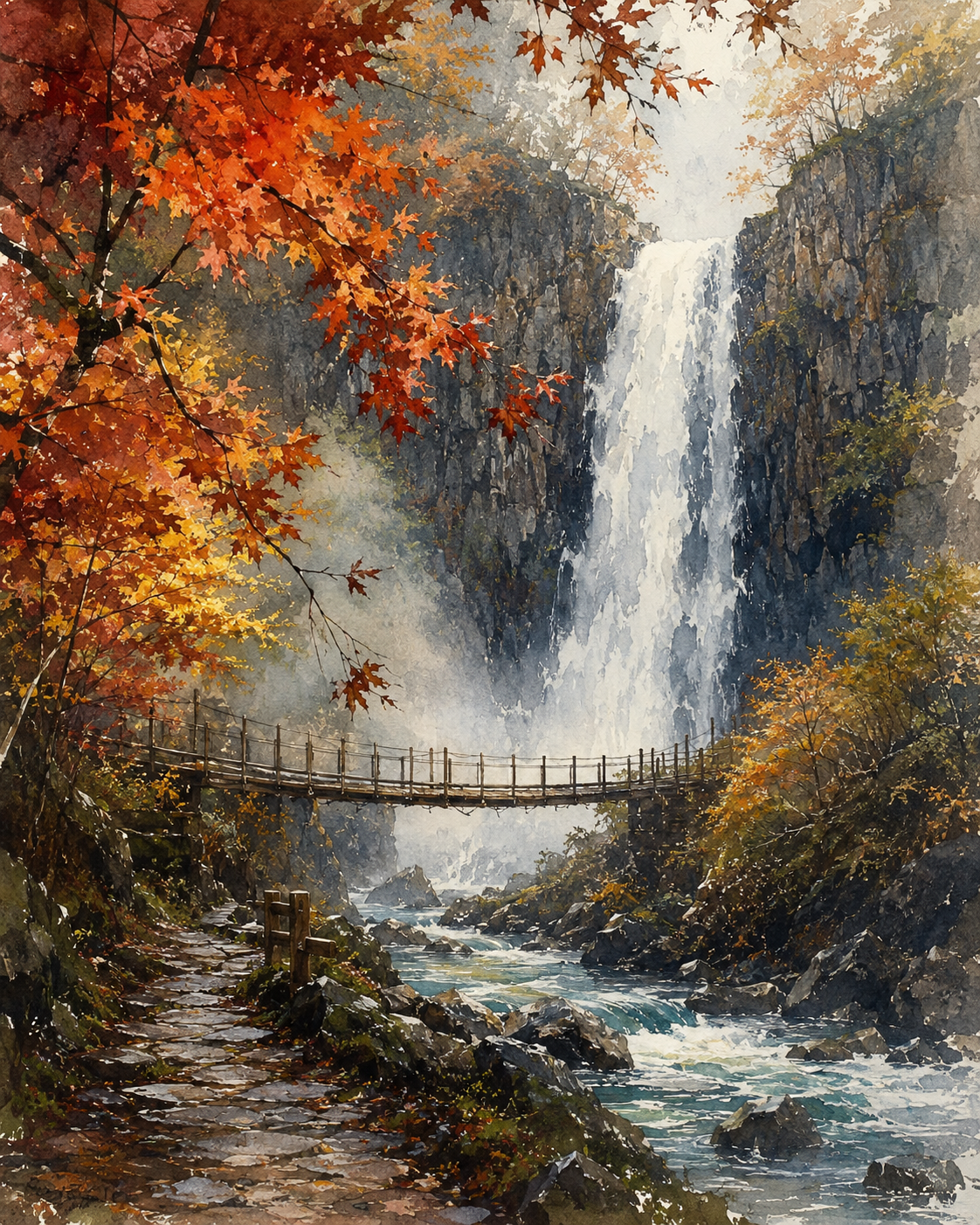
A Bridge Before the Roaring White
Critique
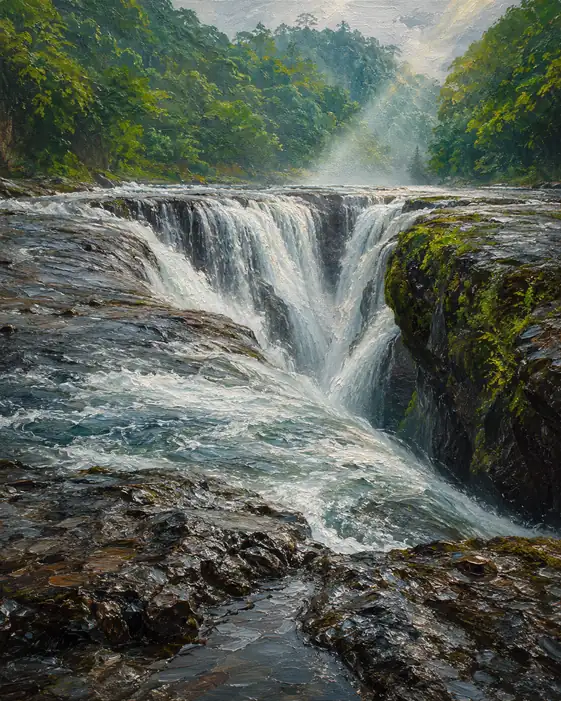
Introduction A great waterfall descends through an autumn gorge behind a suspension bridge and riverside path. Overwhelming water meets thin human routes, contrasting natural scale with the body that approaches it. Description White water falls from the upper right between gray-black cliffs, raising mist. A blue-green torrent flows toward the foreground around rocks and foam. A narrow bridge crosses the middle, while wet stone paving bends inward at lower left. Red-orange maple branches frame that side; yellow foliage and dark stone occupy the other. Bright haze closes the upper distance. Analysis Vertical waterfall, horizontal bridge, and diagonal path and river create three intersecting movements. Warm leaves on the left balance cold white water on the right, with the bridge joining them. Large hard foreground stones differ from soft spray beyond, clarifying depth. Repeated white marks across water and paving spread moisture through the image. Bridge and path provide bodily scale without figures. Interpretation and Evaluation The bridge appears less as conquest than as a modest connection between banks. Thin against the falls, it evokes sway, sound, and exposure. Autumn color signifies fullness and decline beside continuous water. Because the path begins near the viewer, looking becomes an approaching walk rather than detached observation. Spectacle and intimate travel coexist persuasively. Conclusion Waterfall, bridge, path, foliage, and current create a space through which the eye continually moves. Warm and cold, rock and water, hard paving and soft mist strengthen one another. The bridge inscribes human presence discreetly within immensity. Wet stones and fallen leaves specify recent weather and season. Even amid imagined thunder, the gorge retains the quiet of walking and reflection.
Same Subcategory
 Blue House in the Morning Mist
 Warm Windows Beneath the Snow Peaks
Similar Artworks
 A White Voice Through Crimson
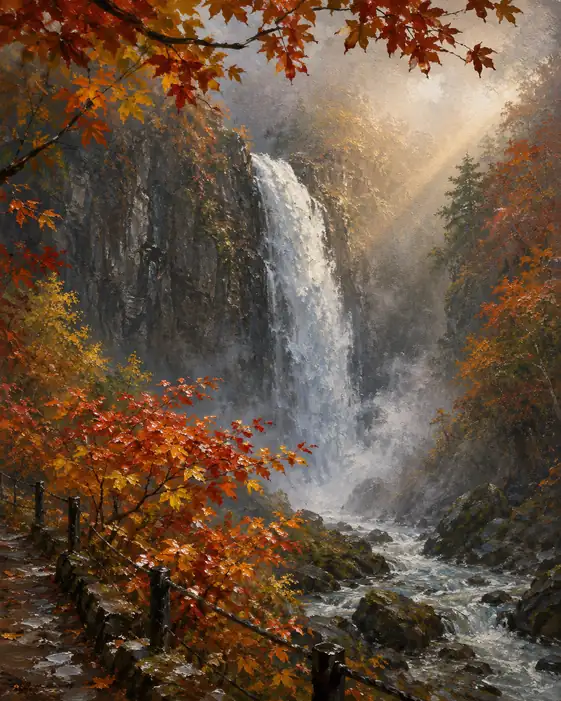 Autumn Listens to the Falling Thunder
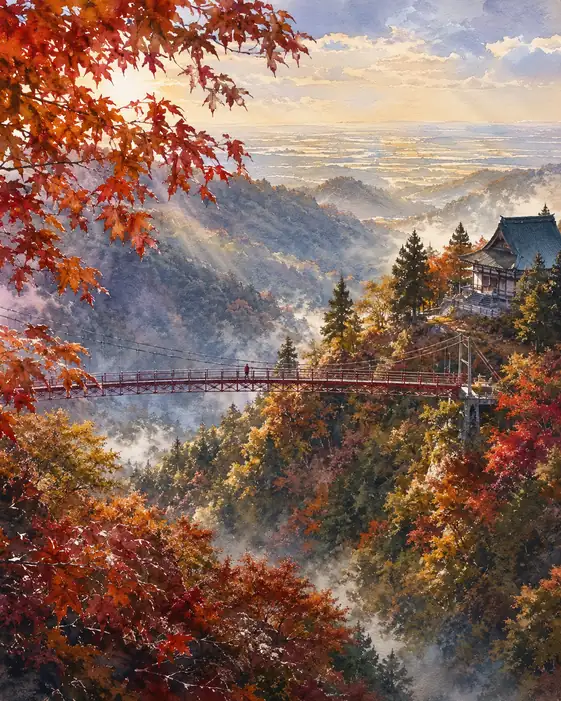 A Red Thread Across the Valley
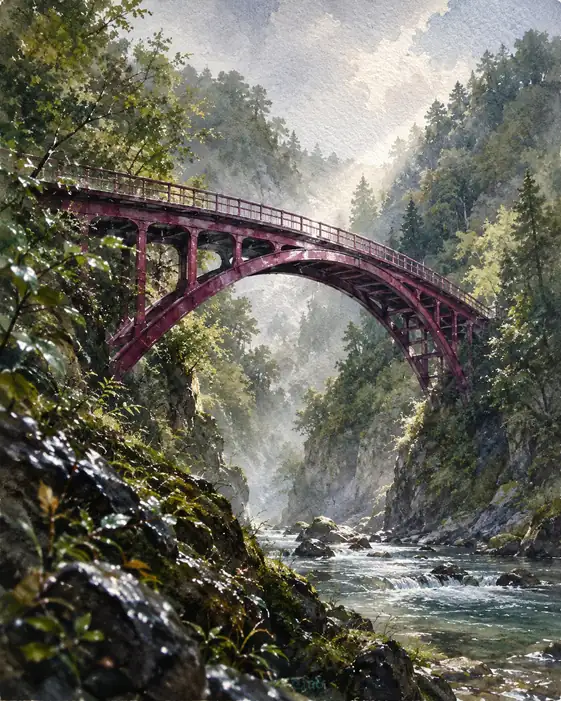 The Curve That Crossed the Mist
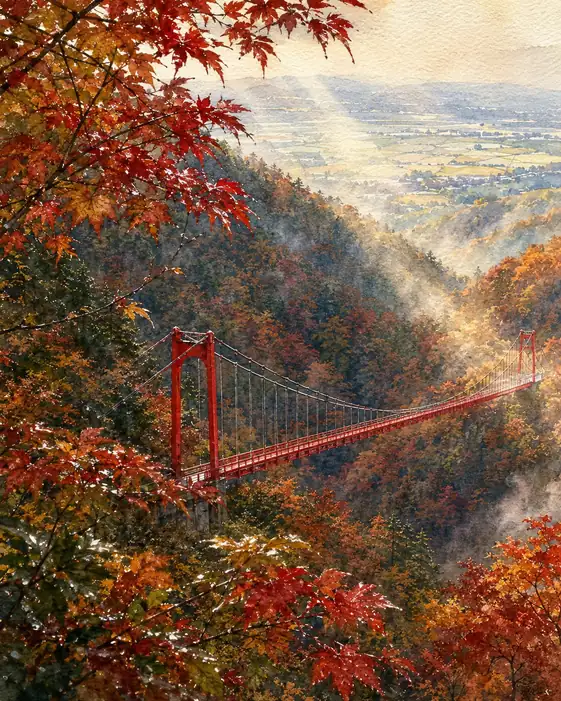 The Red Span Beyond the Mist
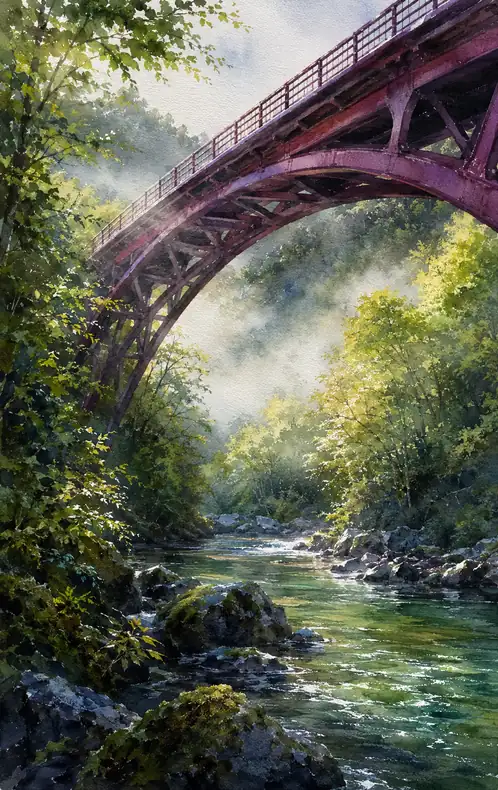 An Arc Where the Forest Breathes
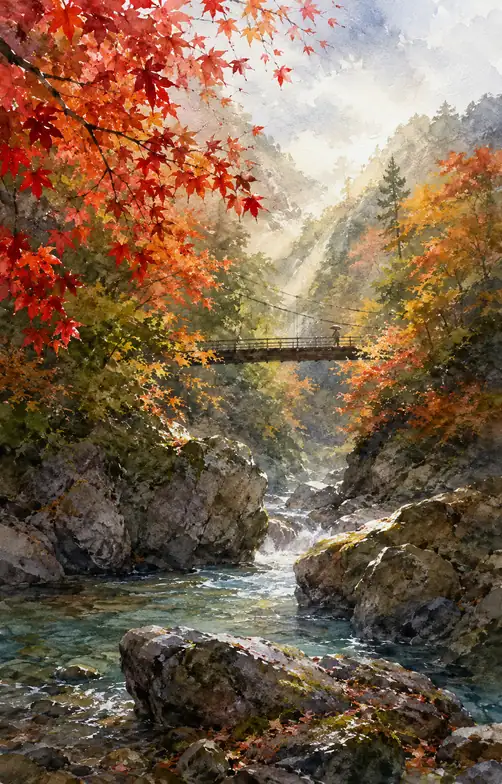 One Umbrella Above the Current
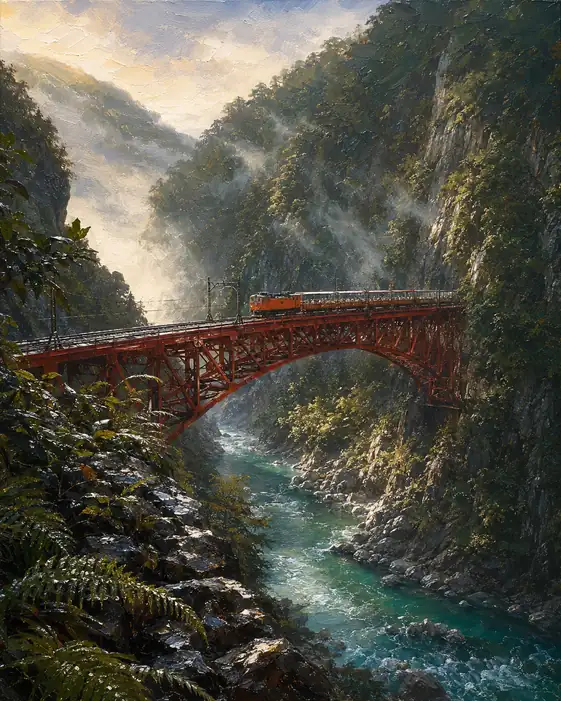 The Red Journey Across Green Silence
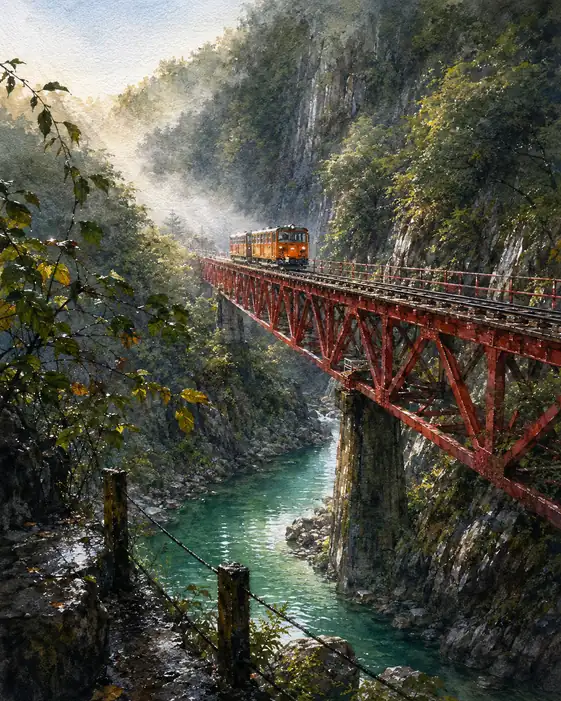 The Red Rail Above Emerald Water
 Water Vanishes into Stone