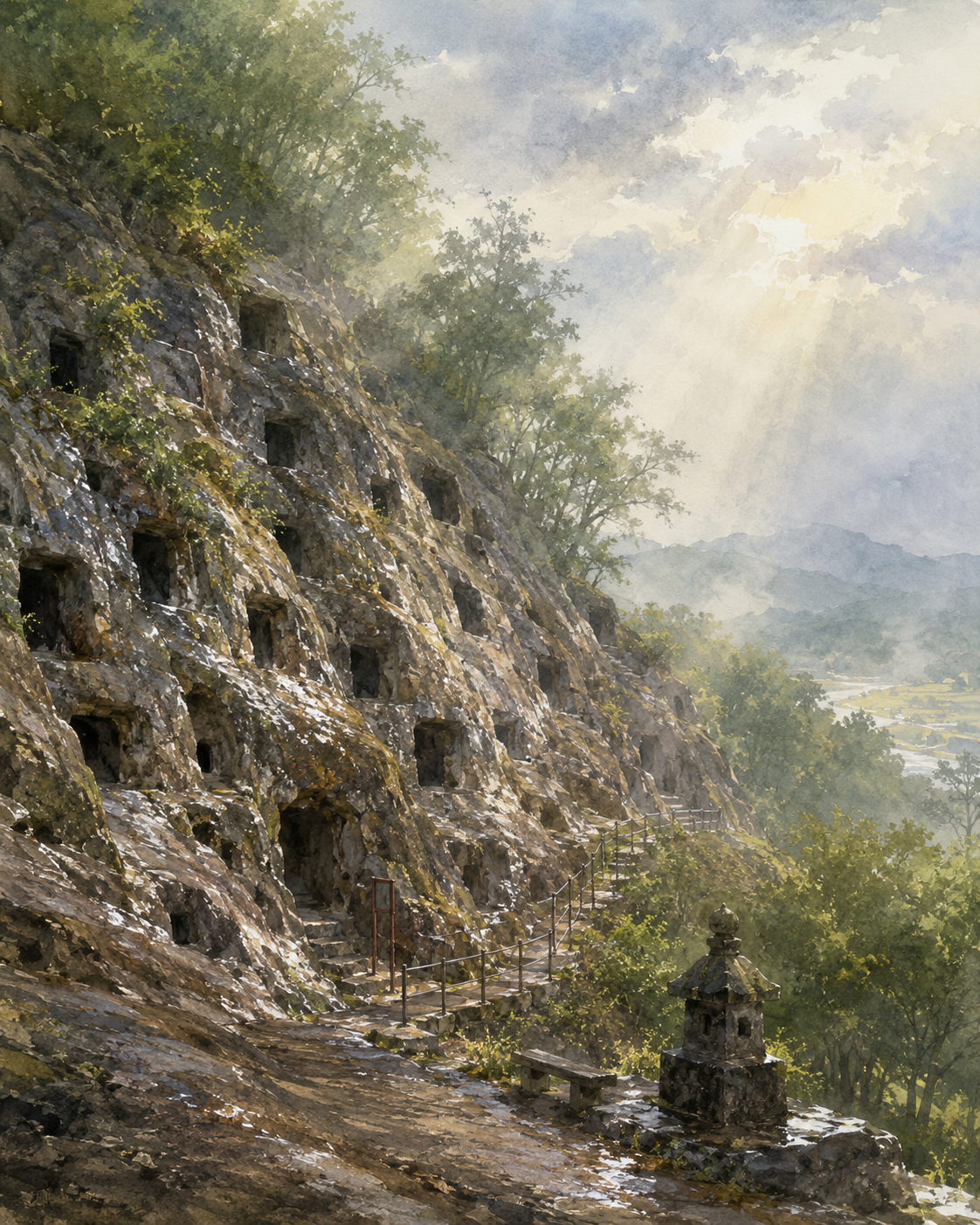
Light Among the Ancient Chambers
Critique
Introduction Small chambers cut into a mountainside are linked by a narrow path. Damp rock, foliage, and a distant valley show devotion inscribed into terrain over centuries. Description A steep cliff dominates the left and center, punctured by square and irregular openings arranged in tiers. Gray-brown rock carries pale water marks, moss, and yellow-green plants. Stone steps and a railed path cross the caves before turning out of sight. A stone lantern and bench occupy the lower right. Light enters through trees above, revealing a river, fields, and distant ridges in blue-gray haze. Analysis The heavy wall on the left contrasts with open valley and sky on the right. Repeated dark openings impose order on the slope, while the diagonal path joins them into a temporal sequence. The foreground lantern supplies a vertical focus and echoes the caves' darkness. Angular marks describe nearby stone; pale washes define distance. Sunbeams and wet reflections introduce changing weather into the still ruins. Interpretation and Evaluation The chambers suggest a desire to enter nature for prayer. Each opening holds memories after worshippers' names and voices have vanished. With no figure shown, viewers inherit the pilgrim's role. The luminous valley suggests worldly life and the caves introspection, yet the path keeps both connected. Conclusion Rather than functioning as an archaeological diagram, the image evokes cold stone, warm filtered light, and moisture rising from below. Repetition and the turning route generate a long, invisible history of pilgrimage. Lantern and bench restore bodily scale to the immense cliff. Open brightness above gives the enclosed chambers a direction toward release. Nature, devotion, and weathering remain in quiet balance.
Same Subcategory
 Two Figures at the Edge of Gold
Similar Artworks
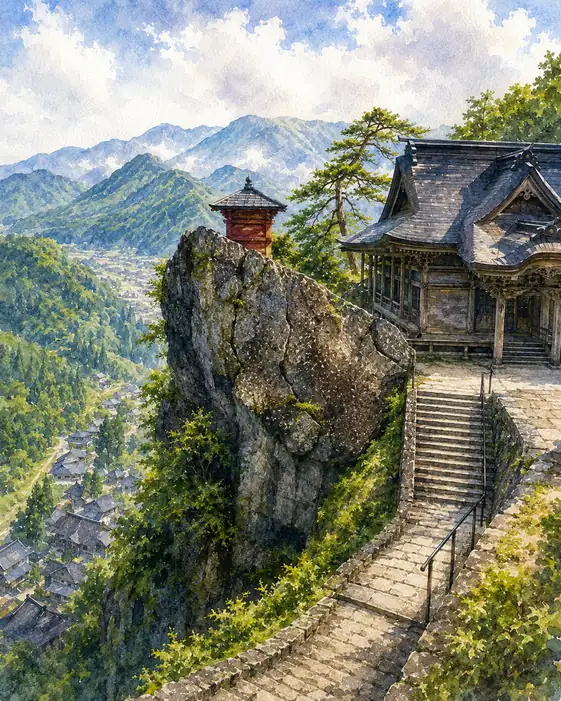 Where the Valley Learns to Pray
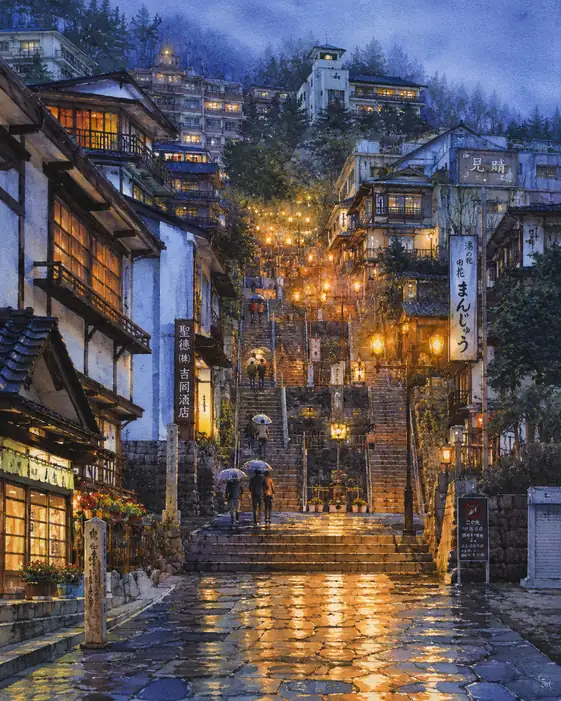 The Long Climb Through Rainlight
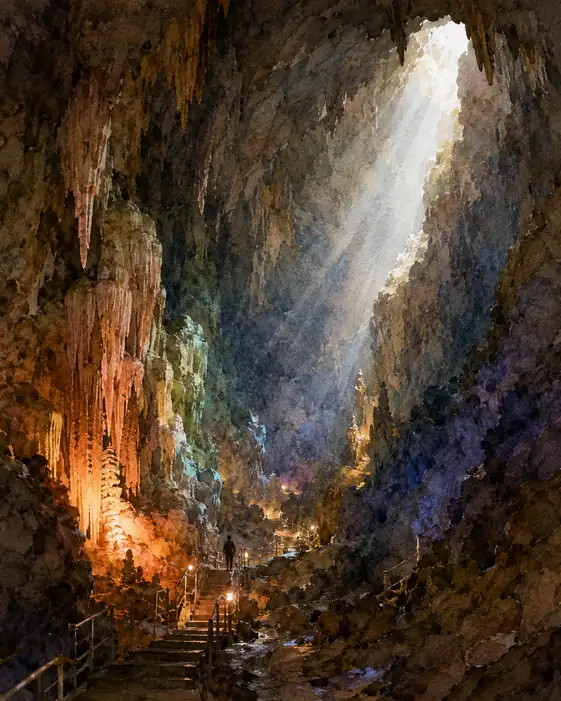 Daylight Finds the Underworld
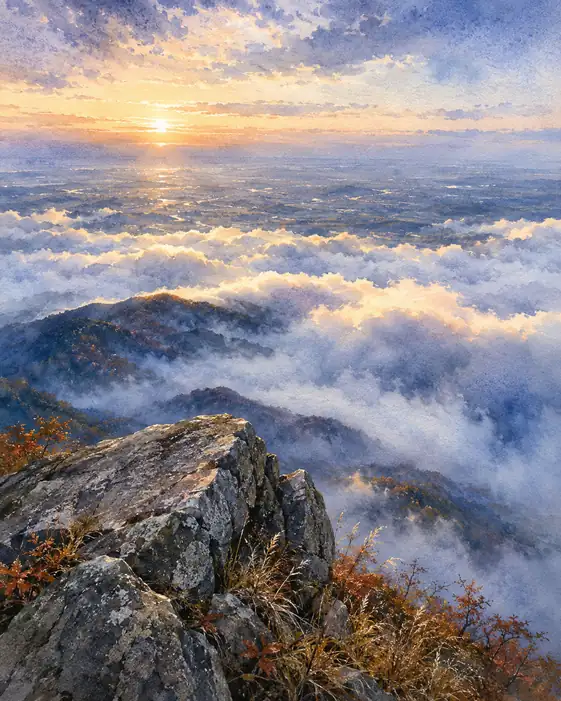 The World Begins Beyond the Clouds
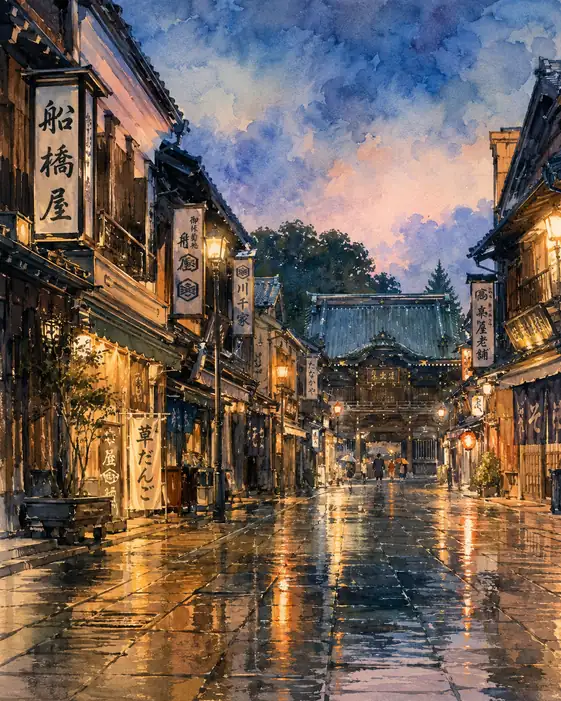 Rain Writes the Old Approach
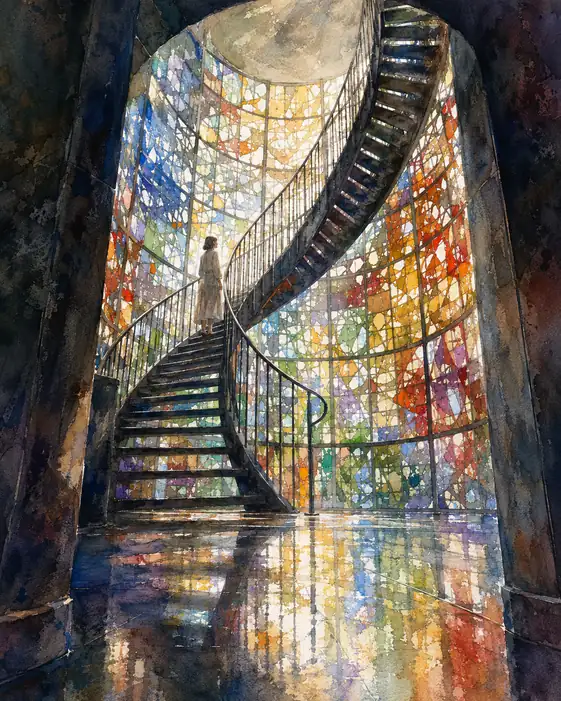 The Stairway Inside a Shattered Rainbow
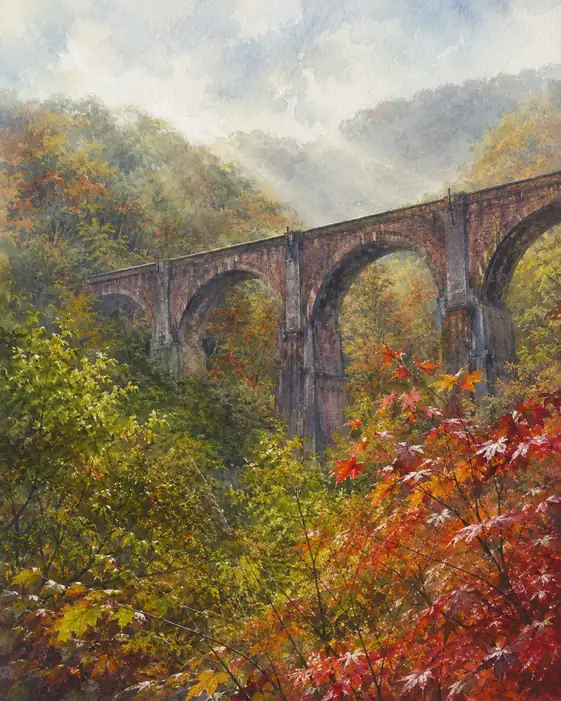 Arches Where Trains Became Echoes
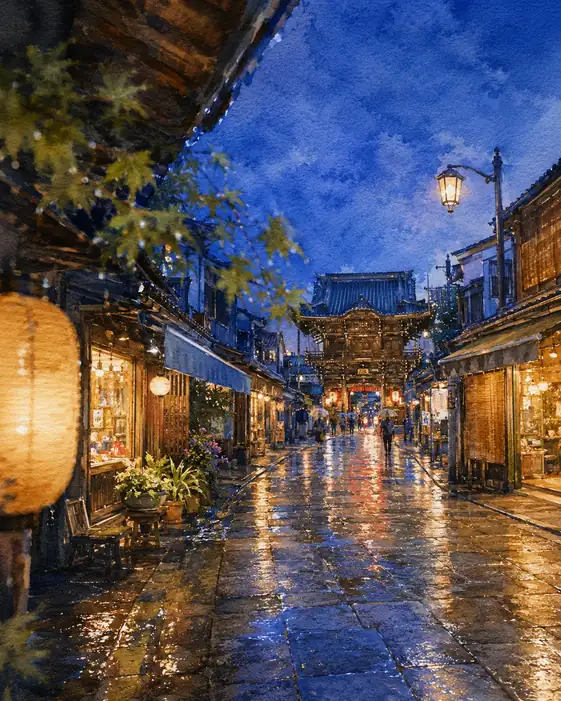 Lamps Lead Toward the Temple
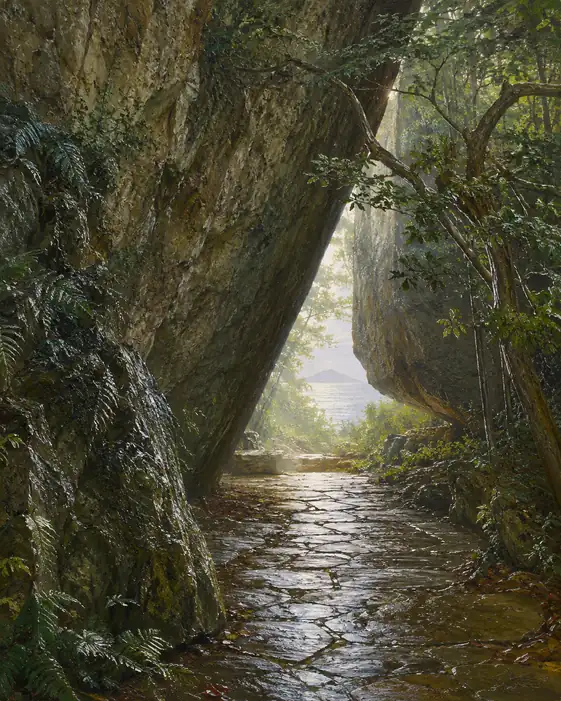 Sanctuary of Light and Stone
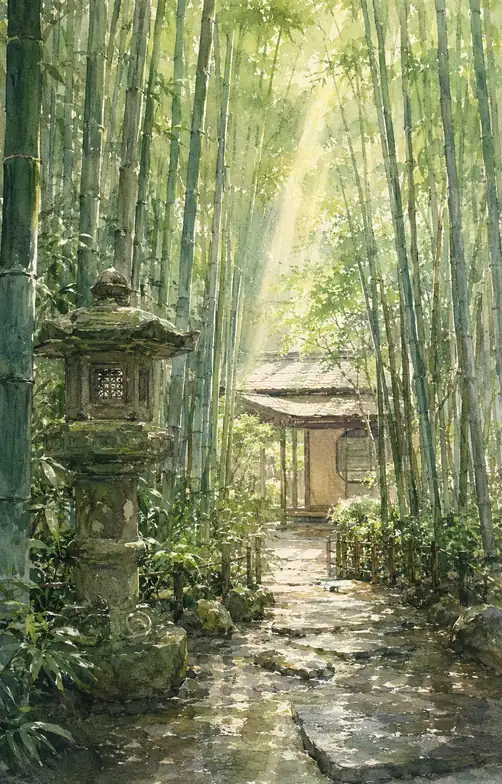 The Light That Knelt Among Bamboo