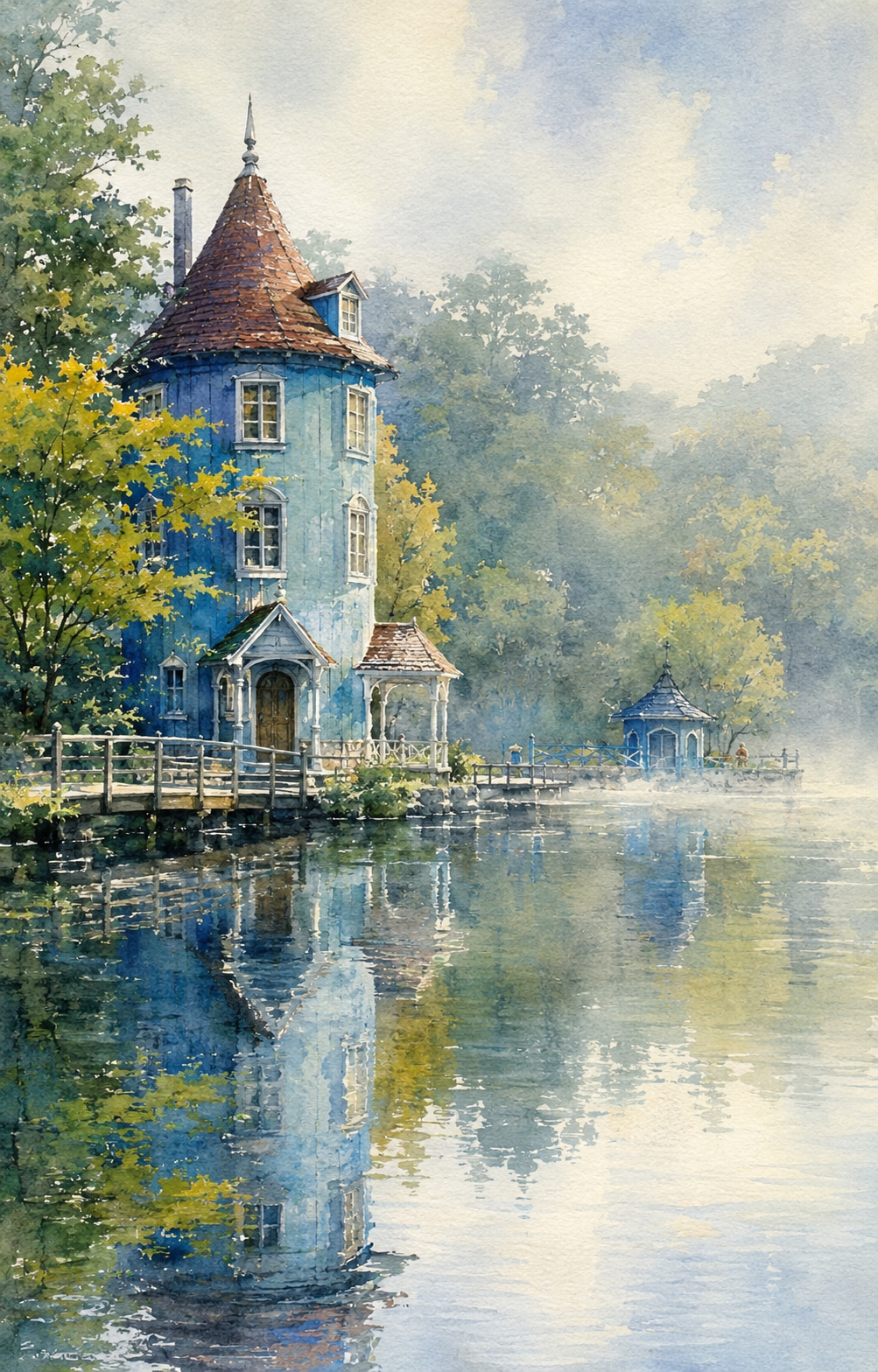
Blue House in the Morning Mist
Critique
Introduction A blue tower and pavilion stand beside a quiet lake, extending into reflection. Architecture meets morning mist, giving a real place storybook intimacy. Description At left, a nearly cylindrical blue building has white-framed windows, a porch, a steep red-brown roof, and a slender spire. A wooden walkway follows the shore toward a blue-roofed pavilion at center right. Yellow-green trees surround both structures, and distant woodland disappears into white mist. The calm lake stretches reflections of tower, foliage, and sky. Bright open water on the right balances architectural density on the left. Analysis Placing the tower in the left third preserves its presence while revealing the lake's breadth. Its vertical form and reflection establish a long axis crossed by the walkway's horizontal line. Red-brown roofing contrasts with blue walls, while yellow-green foliage mediates between them. Watercolor bleeding softens boundaries among mist, forest, and reflection; unpainted light conveys damp morning air. Precise architecture against indistinct nature further enriches the image. Interpretation and Evaluation The narrow tower and pointed roof evoke a fairy-tale dwelling, yet worn walls, old tiles, and a damp walkway give it lived time. The second tower wavering in water resembles architecture remembered or dreamed, creating a double reality. A distant pavilion and tiny suggestion of a figure keep the lakeside from becoming a sealed miniature: it remains a place where someone might walk and stay. Conclusion Light, water, and mist draw narrative power from the architecture. Color moves from blue at left to white openness at right, like morning waking. Reflection enriches composition and memory. Gentle yet mysterious, the scene lets viewers imagine its inhabitants and histories.
Same Subcategory
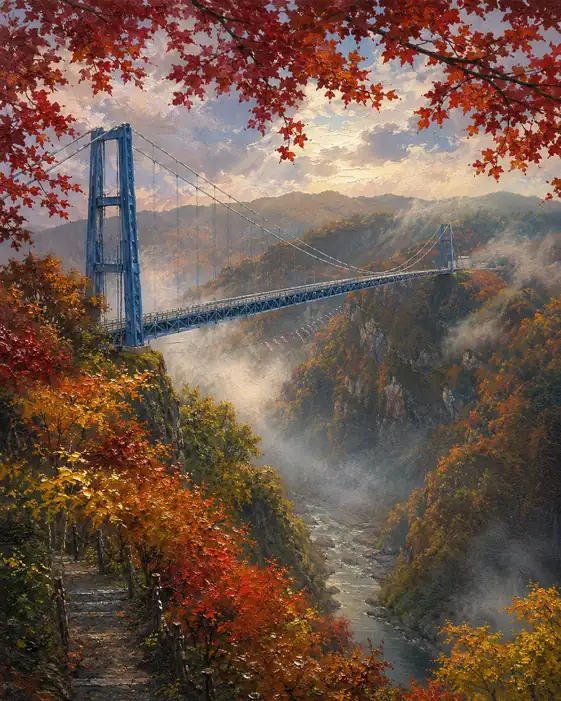 Bridge Above the Autumn Abyss
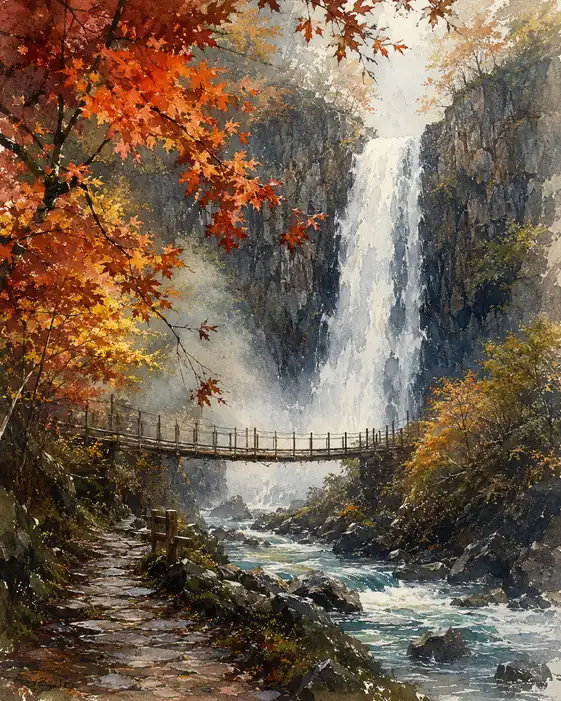 A Bridge Before the Roaring White
Similar Artworks
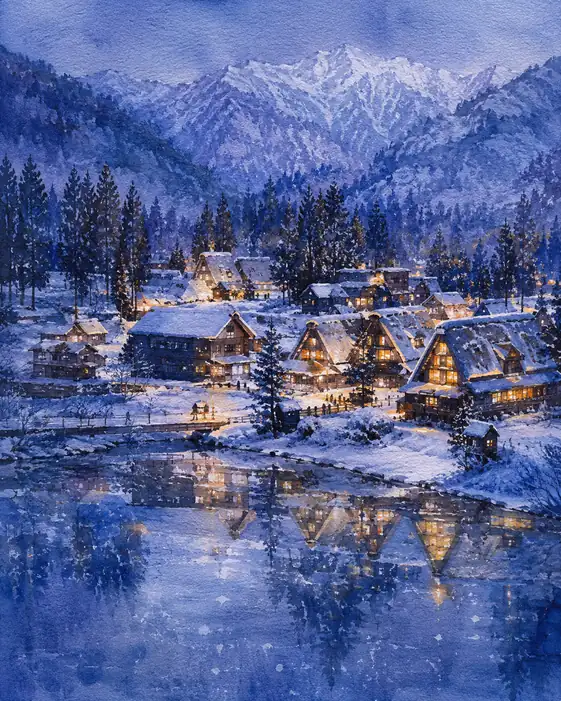 Warm Windows Beneath the Snow Peaks
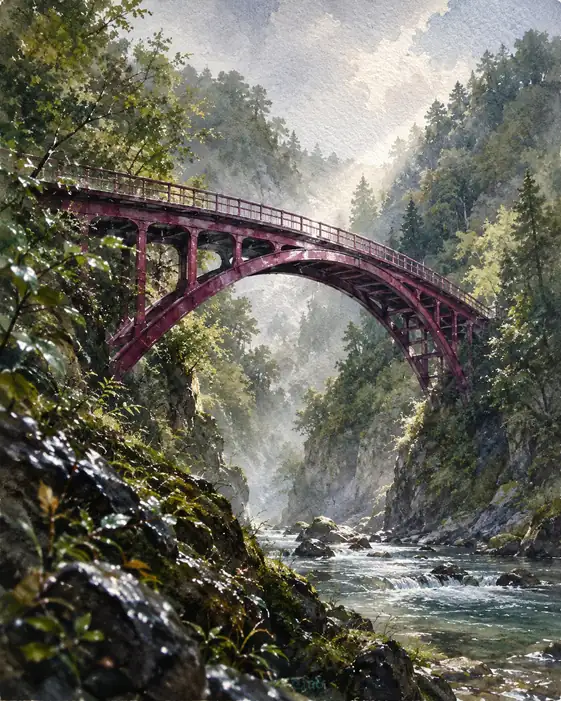 The Curve That Crossed the Mist
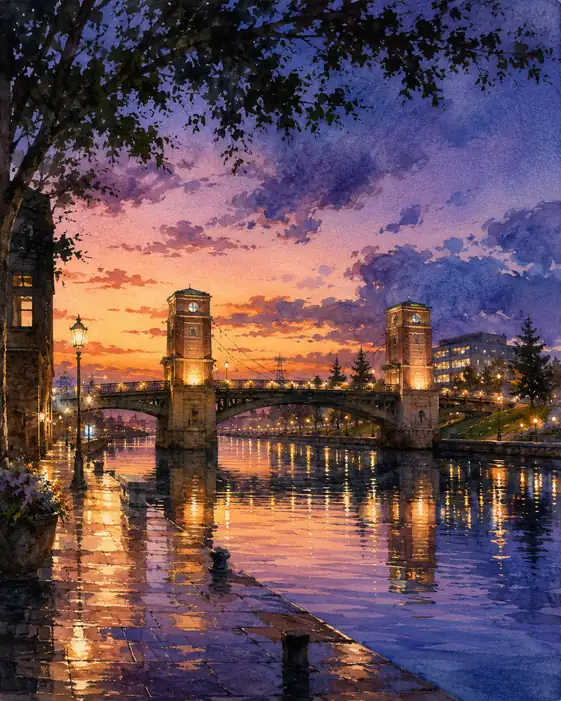 Two Towers Hold the Sunset
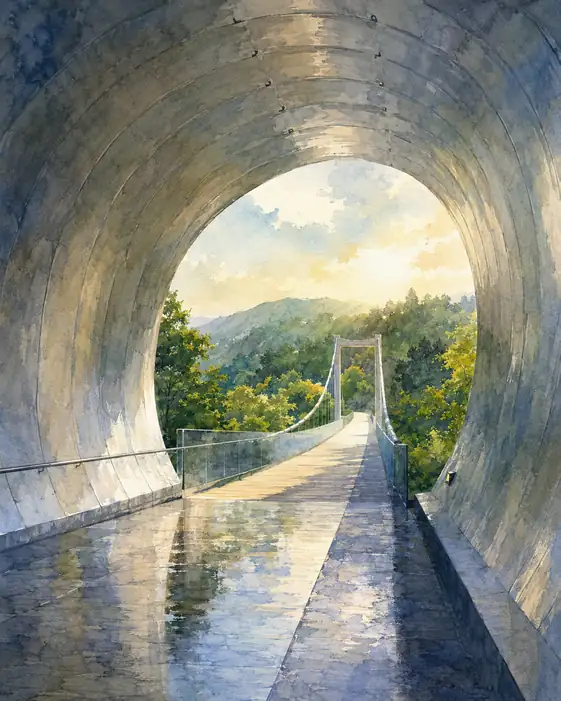 Beyond the Circle, Summer Begins
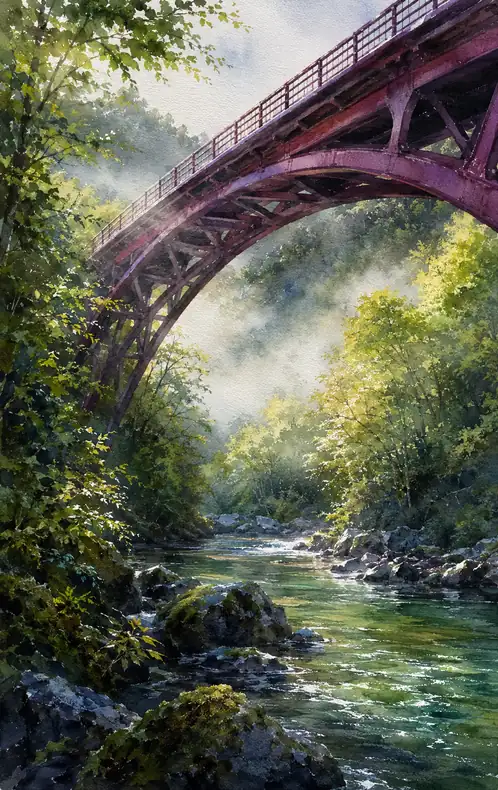 An Arc Where the Forest Breathes
 When the Flowers Took Flight
 The Garden Grew Wings
 Rainbows Resting on the Engawa Floor
 Spring Arranged Its Colors Here
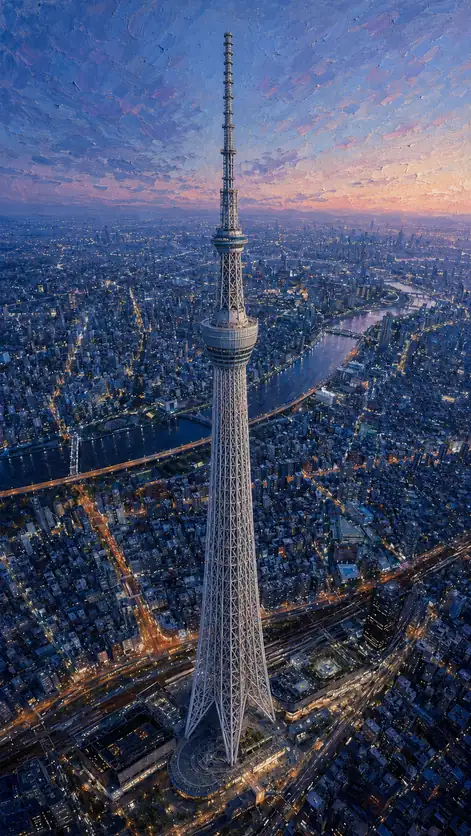 A Quiet Compass Above the Lights