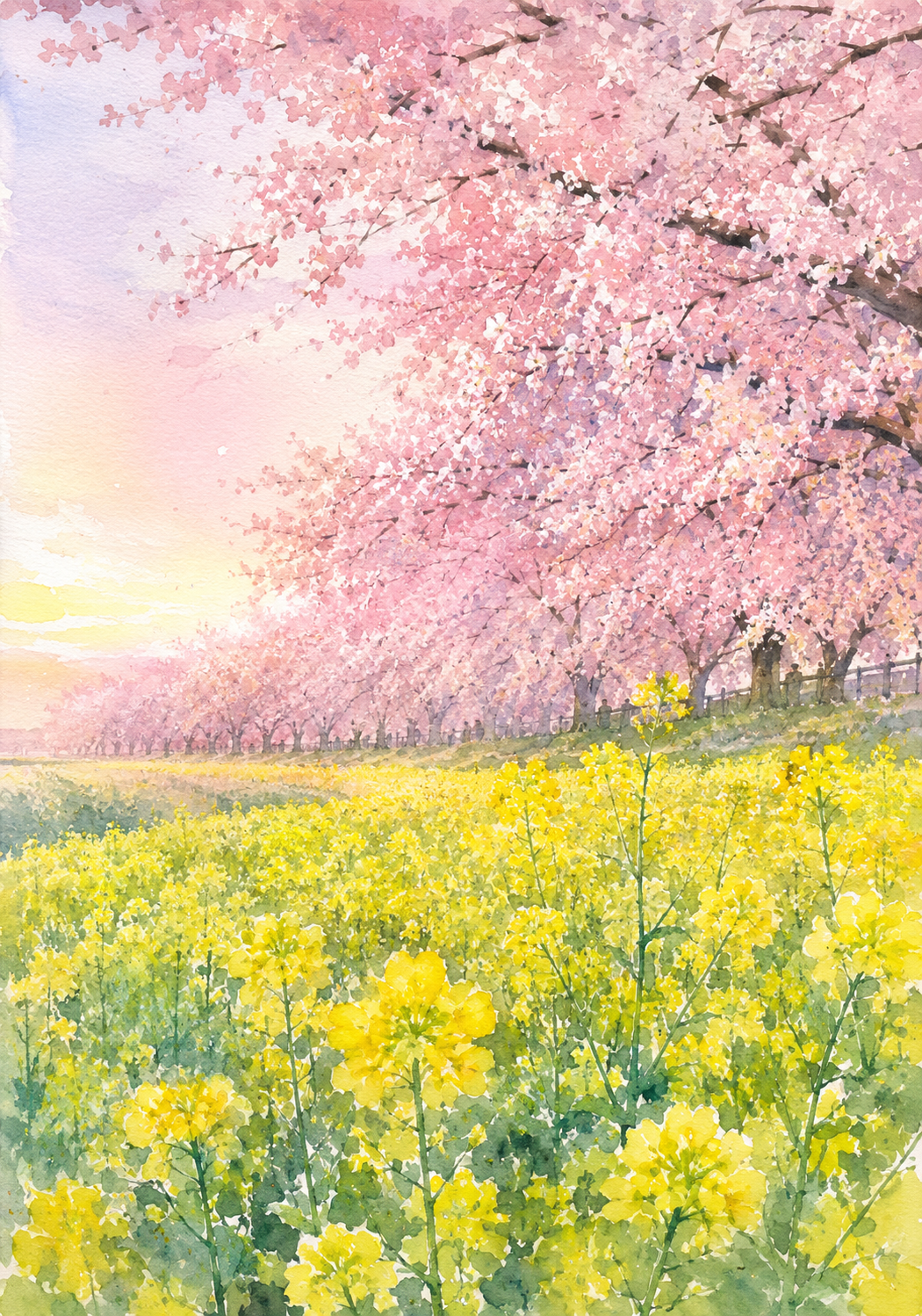
Spring in Two Colors
Critique
Introduction Cherry trees meet a yellow field of rapeseed beneath spring light. Pale pink fills the upper half and yellow the lower. With no figures, flowers become the subject. Description Rapeseed rises densely from the foreground in yellow clusters on slender green stems. Along a gentle embankment, cherry trees recede from the right toward the far left, dark trunks supporting abundant pink blossom. Overhanging branches form a canopy at upper right. In the open left sky, pale blue, pink, and white washes merge above warm horizon light. A narrow fence follows the trees and marks their recession. Analysis The simple palette links two warm fields of pink and yellow through green foliage. Large foreground flowers gradually become finer marks, while dense nearby cherry petals dissolve into a distant band, producing gentle depth. Preserved white paper makes blossoms luminous, and loose edges express the lightness of spring air. Diagonal rows converge toward the left, creating a visual route through the abundance. Interpretation and Evaluation The brief fullness of cherry blossom and the brightness of rapeseed share a celebratory sense of renewal. Yet the flowers are rendered as spreading washes rather than fixed, separate petals, so their beauty already carries change. The unoccupied field feels open rather than lonely, allowing the viewer to enter imaginatively. By favoring remembered color over botanical exactness, the scene approaches a widely shared image of spring. Conclusion The work balances pink-and-yellow contrast with transparent handling. The eye moves from dense blossom into open light, combining fullness with breath. Foreground flowers invite entry, and receding trees suggest a walk. Festive without insistence, the painting recalls spring light, scent, and wind.
Same Subcategory
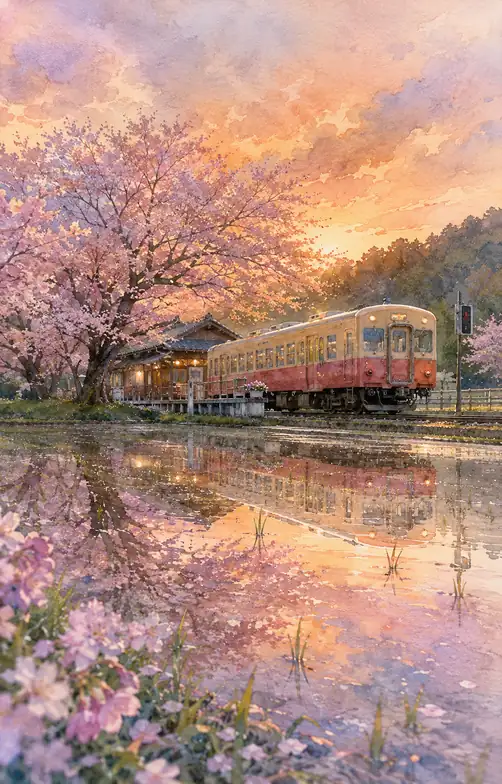 The Last Train of Blossom Light
Similar Artworks
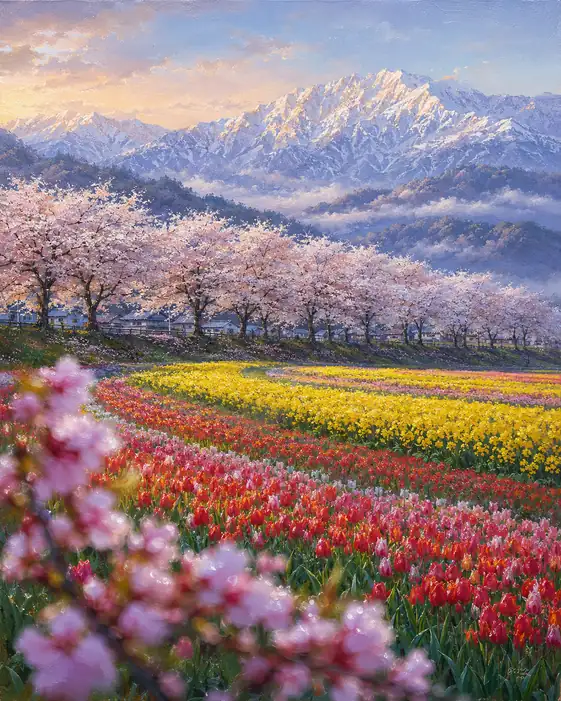 Spring Plays in Four Movements
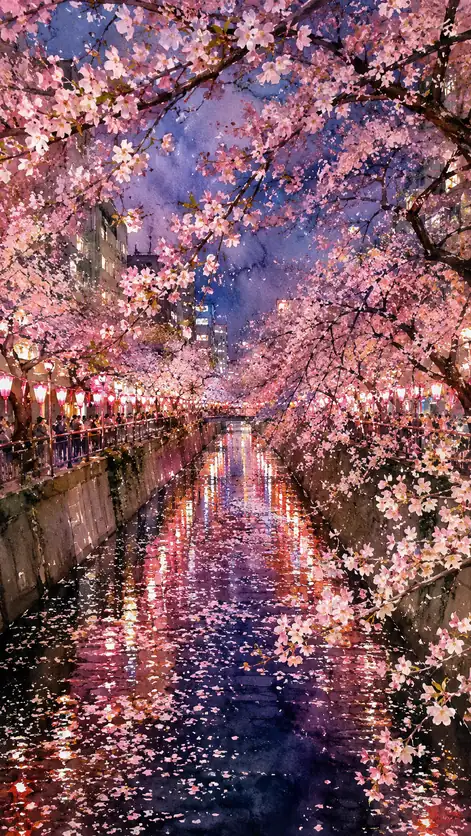 Petals Carry the City Lights
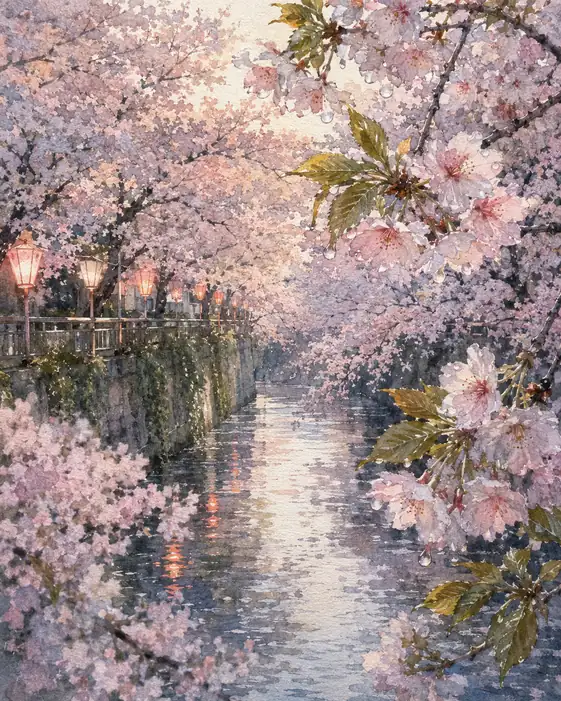 Rain Beads on the Passing Bloom
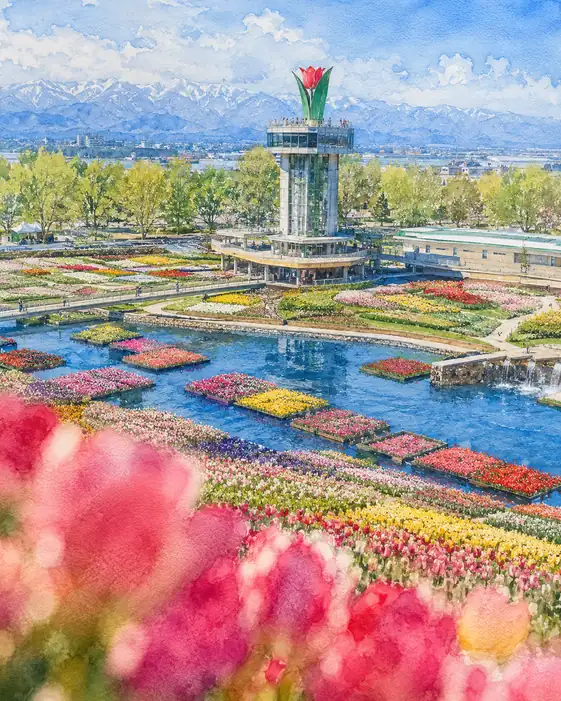 Spring Arranged Its Colors Here
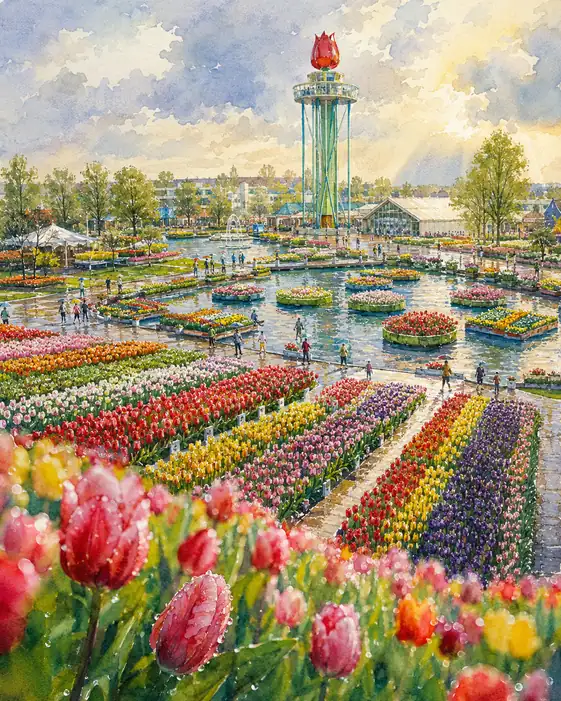 Spring Arranged Around a Flame
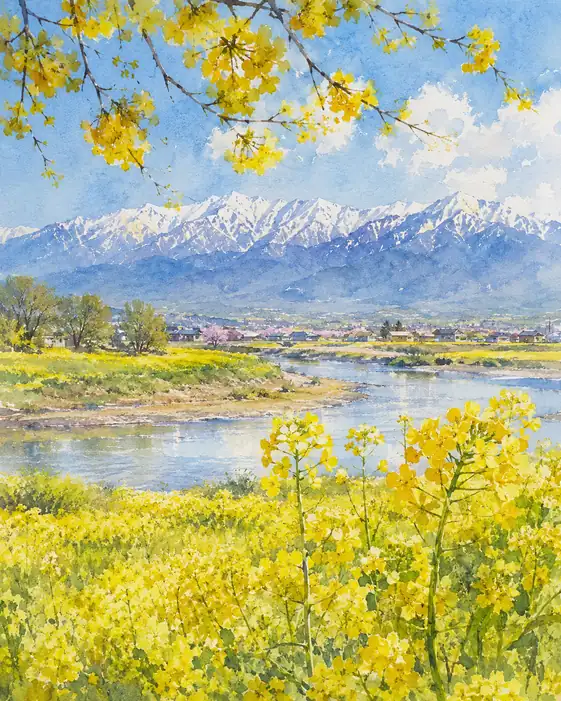 Spring Arrives Before the Snow Leaves
 The Cherry Tree Remembers the Night
 A Windmill of Love, Carrying Spring
 Spring Drifts Across the Ramparts
 Castle Framed by Falling Spring