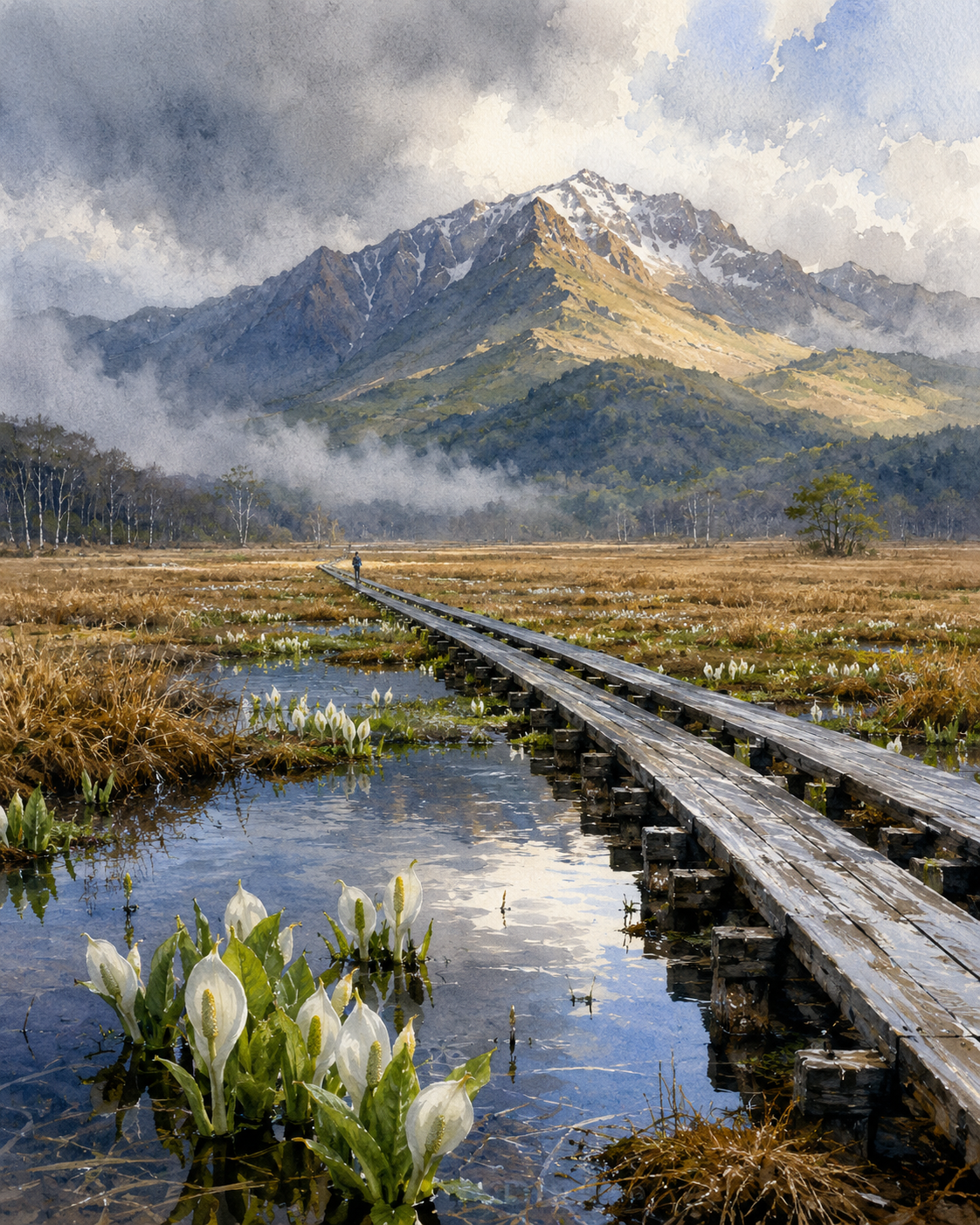
Spring Comes Walking Along the Boardwalk
Critique
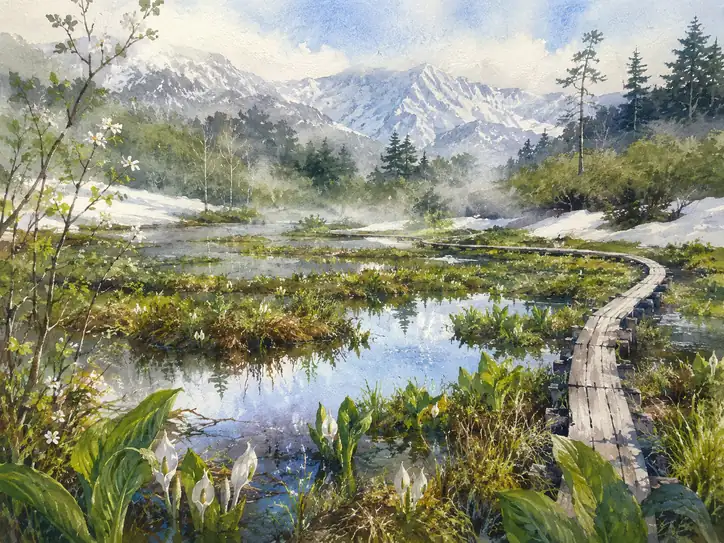
Introduction A wooden boardwalk crosses a wetland toward a snow-streaked mountain. White flowers bloom beside foreground water, while a solitary walker appears far away. Spring meets severe alpine weather, placing human movement within nature's larger scale. Description Beginning near the foreground center, the boardwalk bends through marshland and disappears into mist. Pools, brown grasses, and white flowers surround its dark boards. The walker is a small silhouette before rocky slopes bearing ribbons of snow. Thick gray clouds cover the sky, yet warm light touches the mountain's right side and parts of the wetland. Analysis Converging boardwalk edges pull the eye from foreground to figure and summit. A low viewpoint enlarges flowers and wet ground, increasing the mountain's distance. Heavy cloud contrasts with intricate marsh textures, while the walkway becomes their bridge. Selective light and white blossoms interrupt a cool, dark palette, making signs of life distinct within threatening weather. Interpretation and Evaluation The path suggests a modest way to cross fragile ground without damaging it. The tiny walker measures the mountain and embodies persistence beneath an uncertain sky. Lingering snow and new flowers present seasonal change as a negotiation between winter and spring. Concentrating light on one slope heightens sublimity without theatrical excess. Conclusion The work combines compelling direction with tension from unstable mountain weather. Viewers stand mentally at the boardwalk's entrance and follow the distant traveler. Flowers, snow, and a break in the clouds become signs of gradual change and resilient life. Without making humanity dominant, the painting reveals the meaning of continuing through a vast, difficult environment.
Same Subcategory
 Two Figures at the Edge of Gold
Similar Artworks
 One Umbrella Above the Current
 Beyond the White Wisteria, Time Unravels
 The World Begins Beyond the Clouds
 Sunset Enters the Fissure
 Silent Vows of the Alpine Spring
 Spring Arrives Before the Snow Leaves
 Arches Where Trains Became Echoes
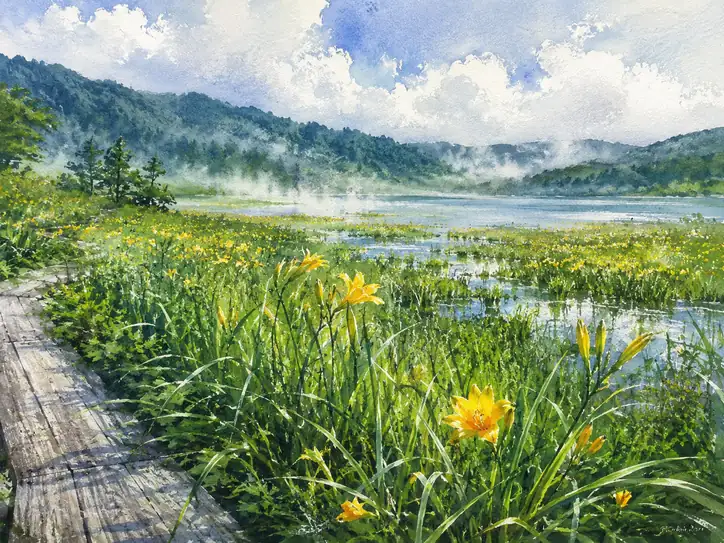 Yellow Symphony on the Summer Marsh
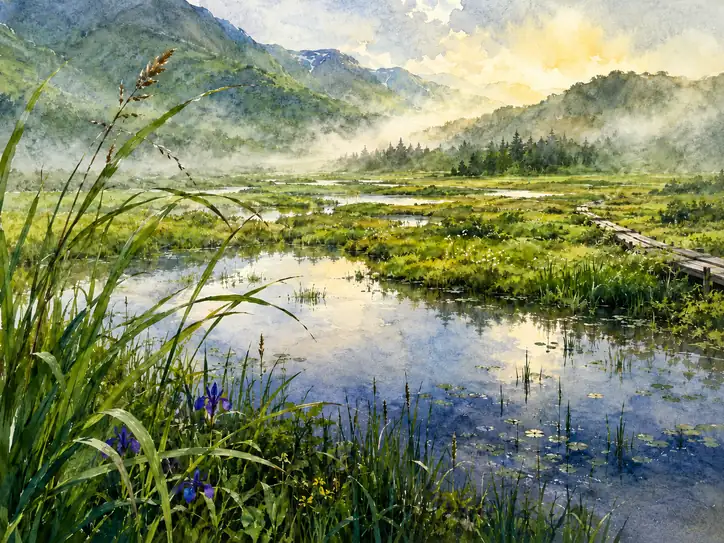 Journey Through the Mist
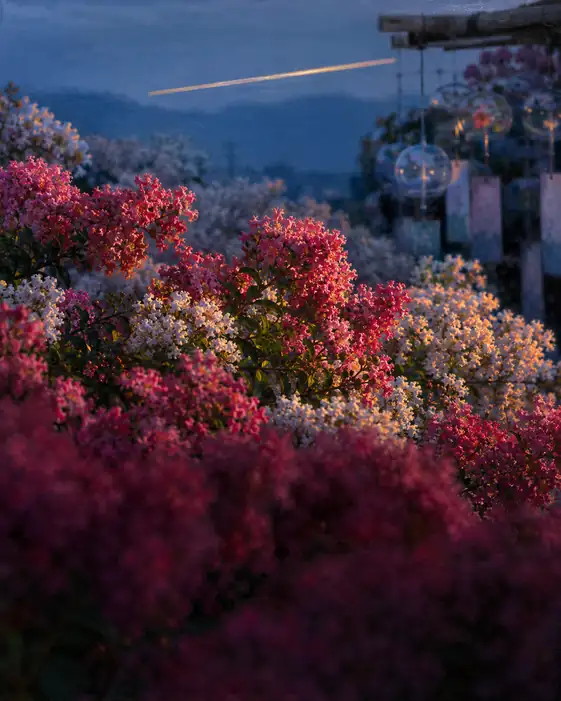 Crape Myrtle and Wind Chimes Beneath the Twilight Trail