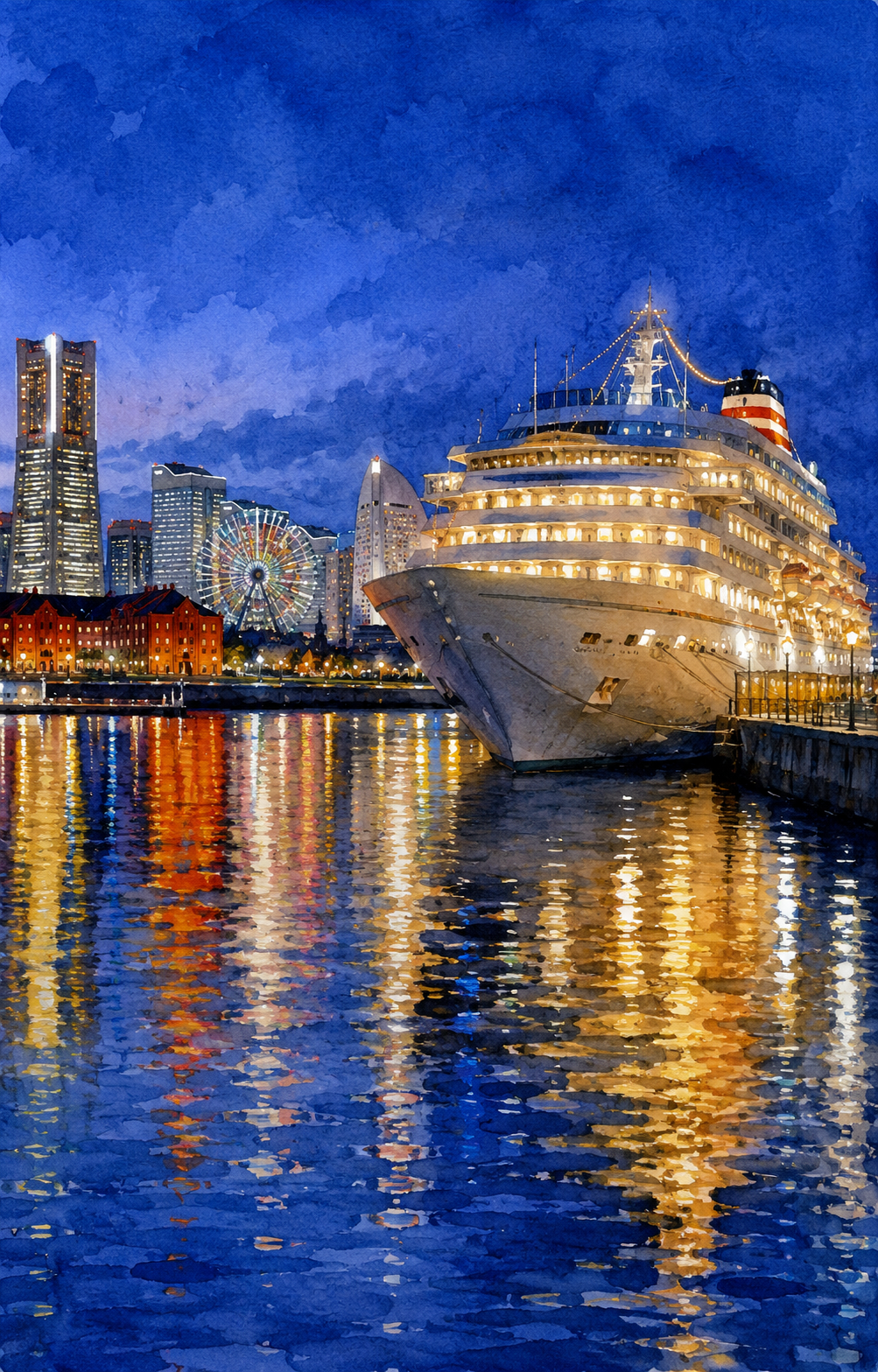
A Ship's Whistle Across a Century of Blue
Critique
Introduction A monumental cruise ship and an illuminated city face one another across a nocturnal harbor. Their lights concentrate the excitement of travel and the spectacle of the waterfront. Description At right, a white liner rests against the quay, its stacked cabins and decks glowing gold. On the left, red-brick warehouses, a Ferris wheel, high-rises, and a slender tower define the skyline. The sky deepens from cobalt to navy. White, yellow, red, and blue reflections form wavering vertical bands, while a dark channel separates ship and city. Analysis The two-part arrangement is clear, with water both dividing and connecting its subjects. Although the liner commands attention through scale, the tower and Ferris wheel provide vertical and circular counterweights. Horizontal quays contrast with upright trails of reflection. Warm illumination against cool blue night intensifies the harbor's brilliance without erasing its depth. Interpretation and Evaluation The ship symbolizes possible destinations and extraordinary events briefly entering an ordinary port. Historic warehouses and the established skyline embody continuity and accumulated local time. Their encounter creates tensions between departure and return, the unknown and home. Lights loosened by water soften concrete forms and bring the harbor near to dream. Conclusion Beyond urban glamour, the painting conveys the expectation and farewell particular to ports. The immense vessel, varied landmarks, and quiet central water balance density with openness. Reflections bind the elements and lend warmth to modern energy. This dramatic nightscape invites viewers to imagine both an imminent voyage and the city remaining on shore.
Same Subcategory
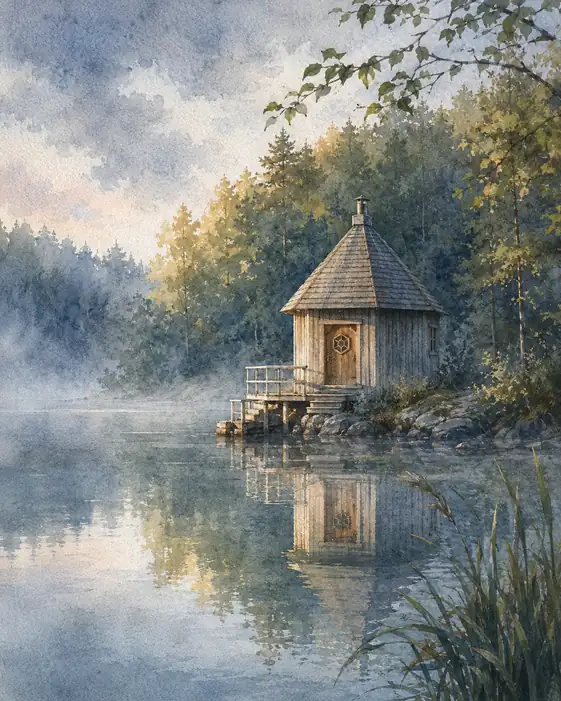 The Locked Door of the Lake
Similar Artworks
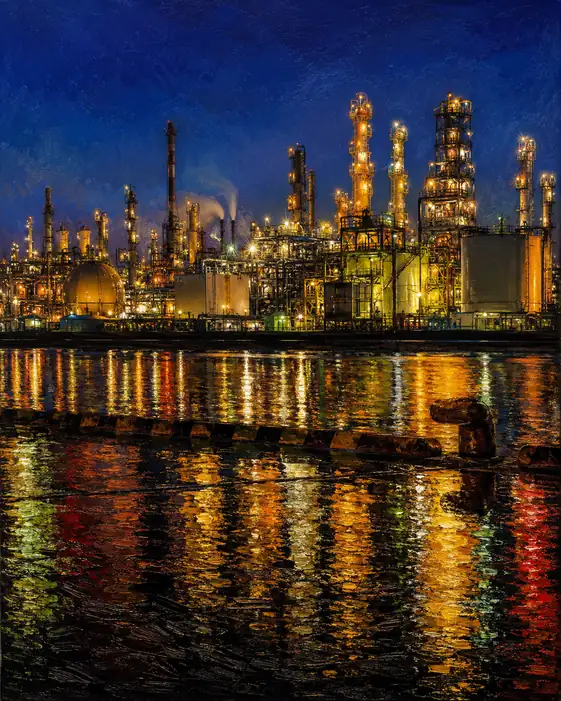 The Night's Mechanical Constellation
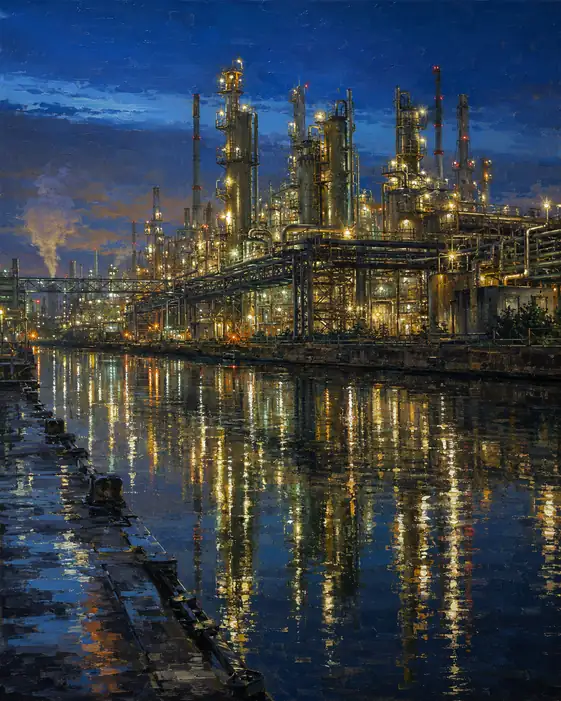 The Sleepless Body of the City
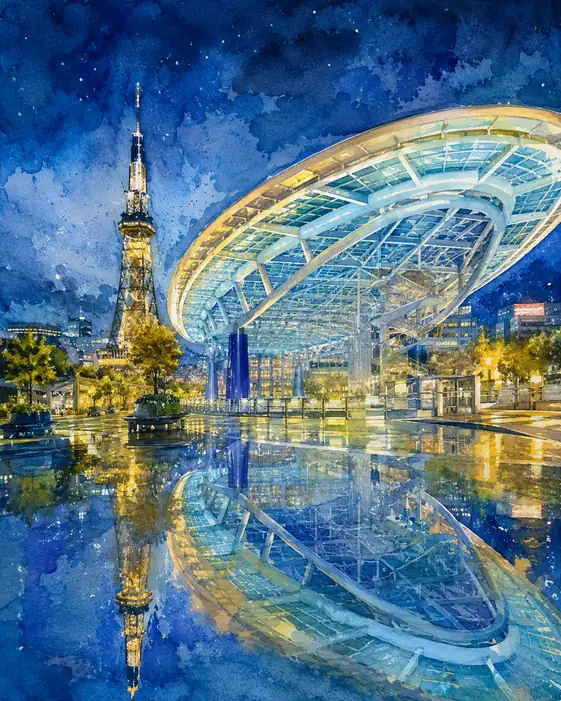 The City Dreams in Double
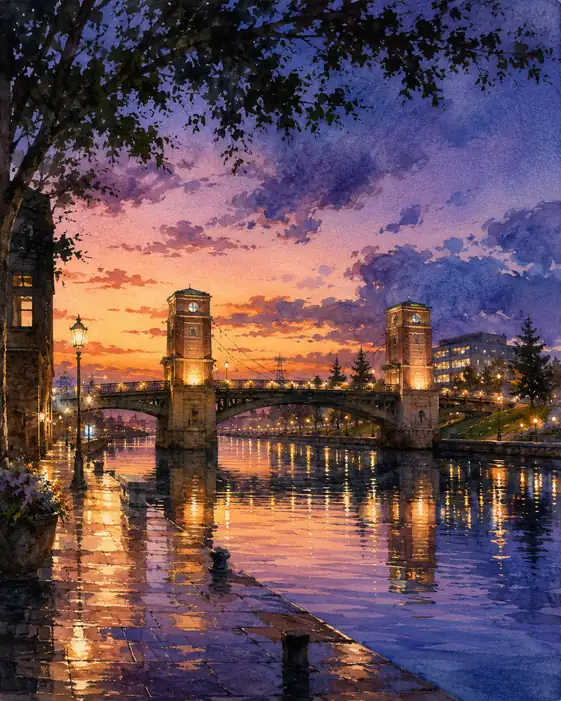 Two Towers Hold the Sunset
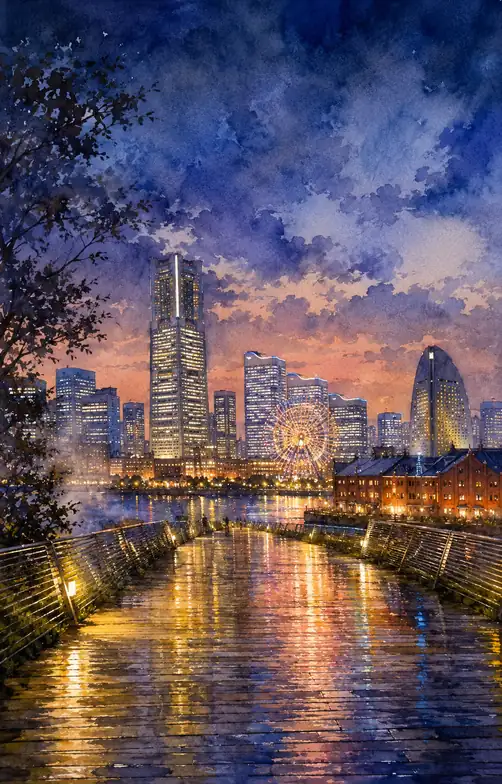 The Night Walks Toward a Wheel of Light
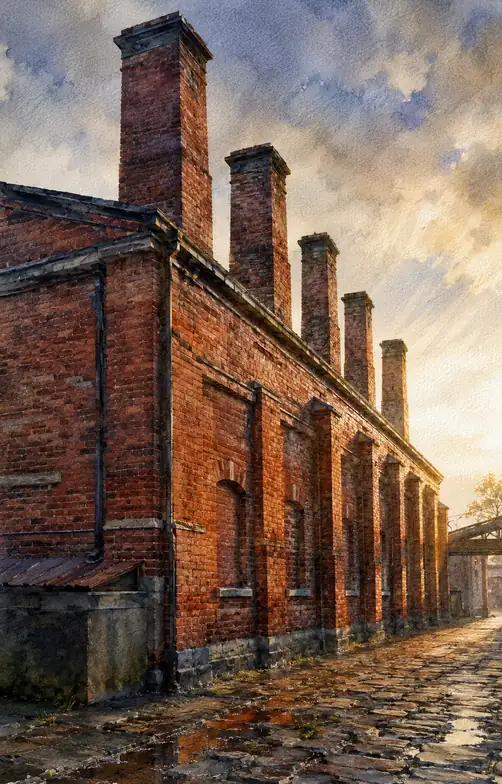 The Kilns Remember Every Flame
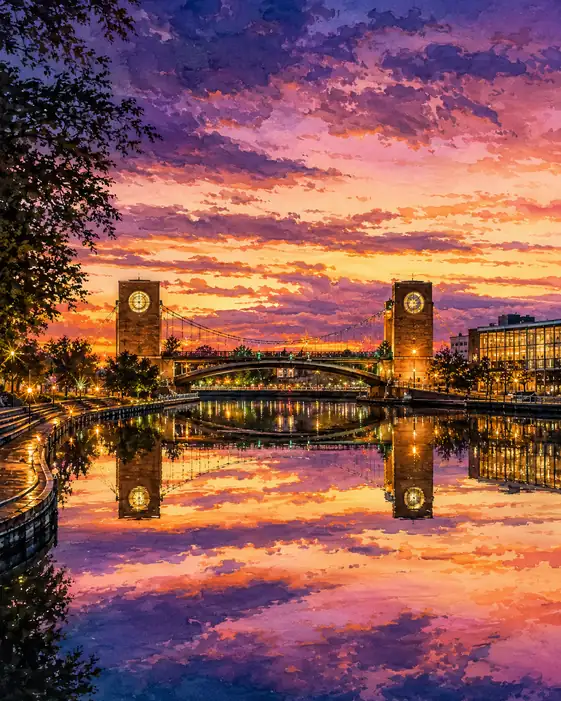 Two Clocks Holding the Sunset
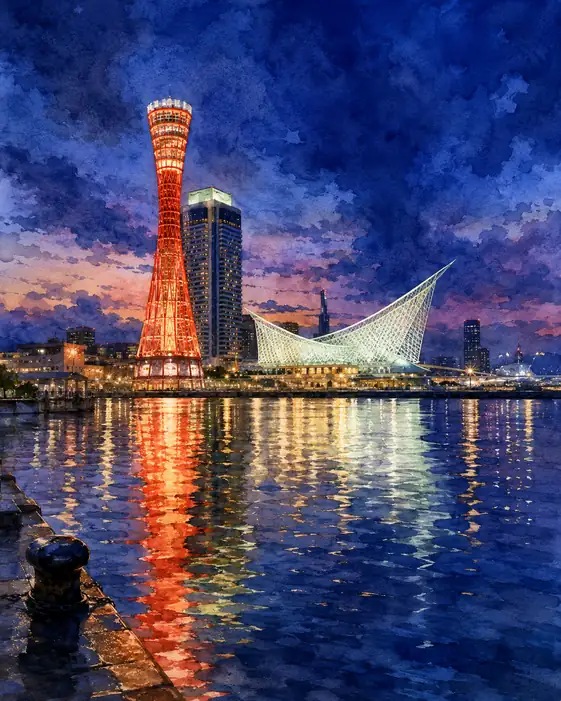 Red Beacon, White Sail
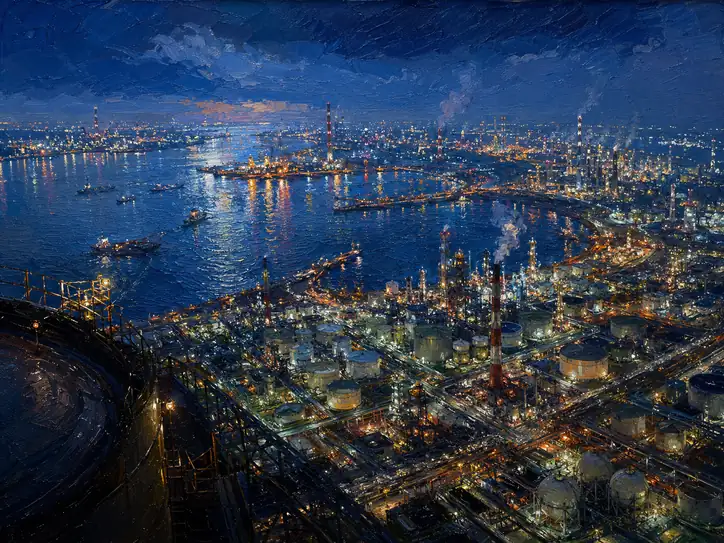 The Heartbeat of the Sleeping City
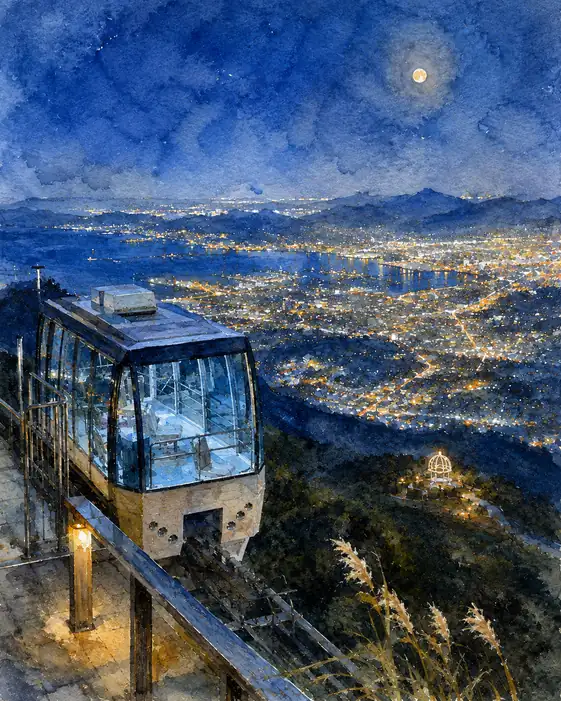 Moonlit Descent and the Harbor Glow