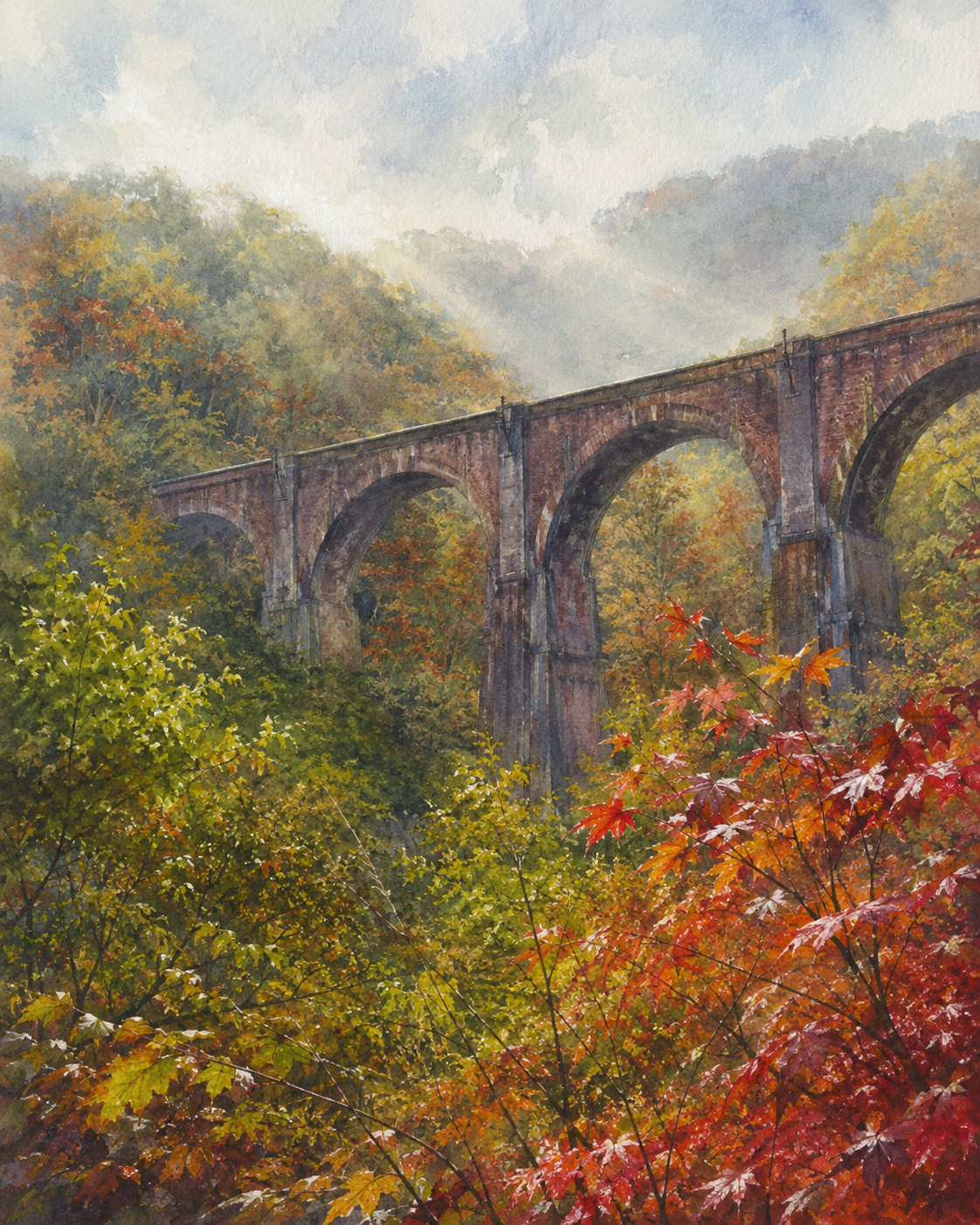
Arches Where Trains Became Echoes
Critique
Introduction An aging brick viaduct crosses a valley enveloped in autumn foliage. Without a train or human figure, its arches record former movement and suggest industrial memory being absorbed into the forest. Description The viaduct rises diagonally from lower left to upper right, joining narrow piers with semicircular arches. Its masonry has weathered into red-brown and gray, with stains and moss. Leaves shift among green, yellow, orange, and red. Hazy mountains appear at far left beneath a pale sky, while the valley floor remains in damp shadow. Analysis Recurring arches establish the dominant rhythm and carry the eye into depth. The bridge's diagonal gives its massive construction ascent and momentum, countered by vertical piers and trunks. Subdued brick red echoes the autumn canopy, linking architecture and vegetation. Detailed foreground branches against a low-contrast distance describe the valley's moisture and scale. Interpretation and Evaluation The structure appears less as a monument to conquest than as a ruin incorporated into natural time. Trees show through its openings, softening the boundary between masonry and woodland. Empty arches invite imagined sounds of vanished trains. By placing weathering beside autumn abundance, the work presents decline as one phase of transformation rather than a final ending. Conclusion The painting allows architectural order and seasonal life to coexist. Following the arches, the viewer reaches haze, mountains, and sky, sensing a passage from past to present. The resonance between brick and foliage makes the viaduct the landscape's historical skeleton rather than an intruder. Quiet yet suggestive, the image encourages reflection on memory, erosion, and renewal.
Same Subcategory
 Sunset Enters the Fissure
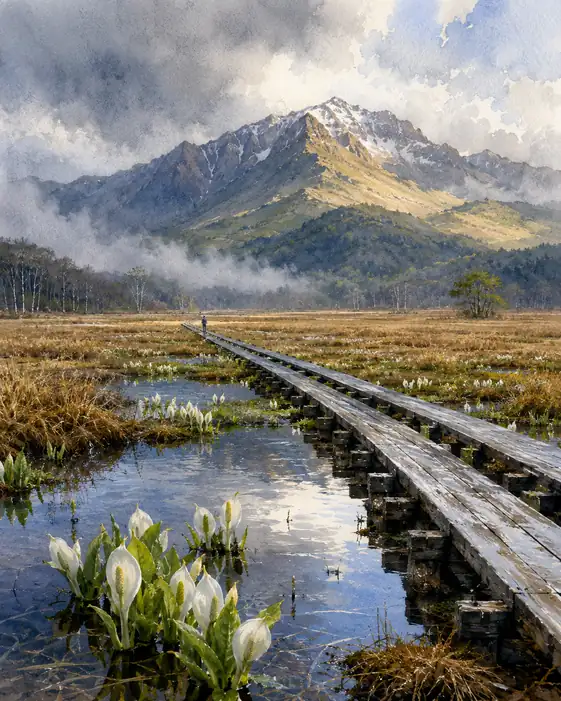 Spring Comes Walking Along the Boardwalk
Similar Artworks
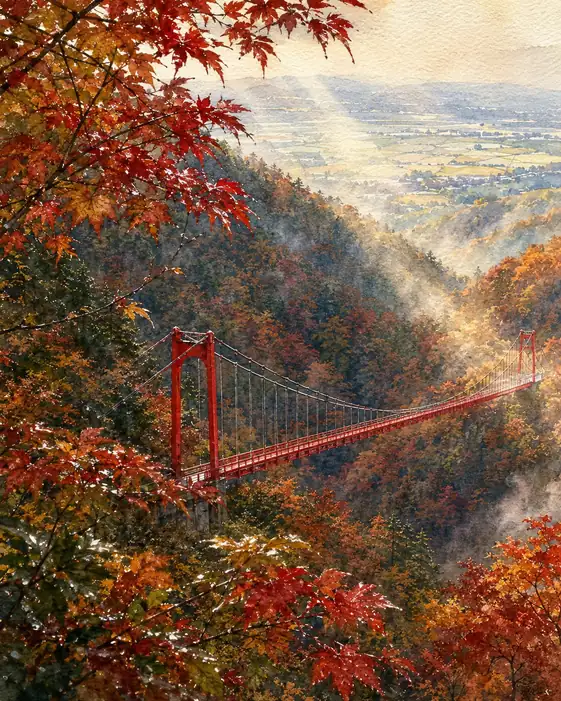 The Red Span Beyond the Mist
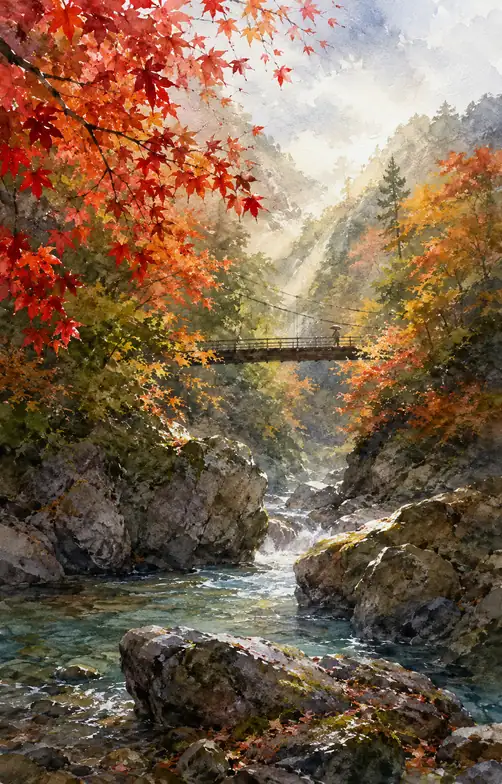 One Umbrella Above the Current
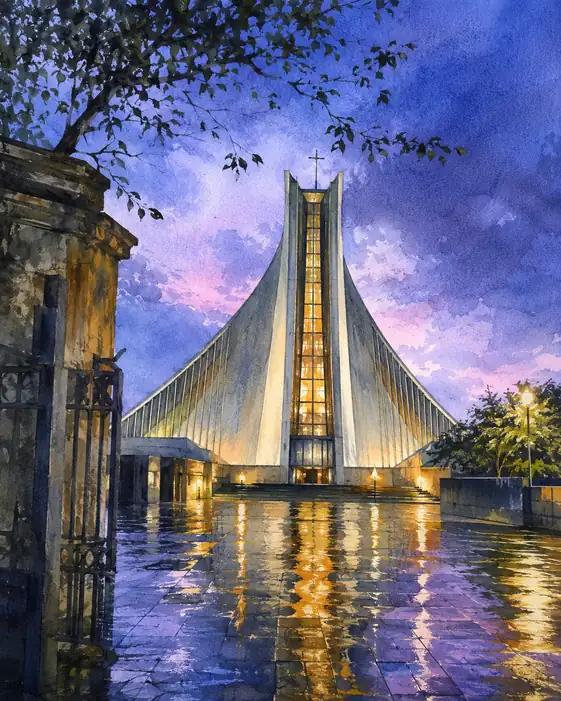 A Spire Gathering the Rainlight
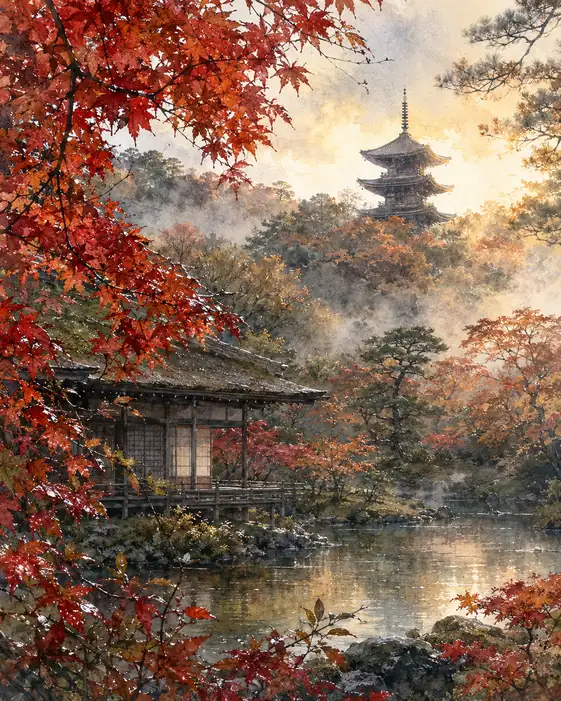 Pagoda Beyond the Autumn Pond
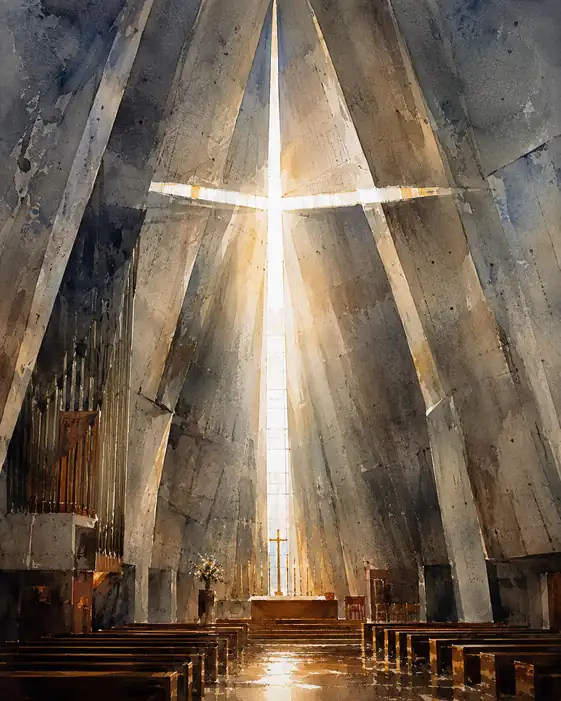 A Cross Cut from Silence
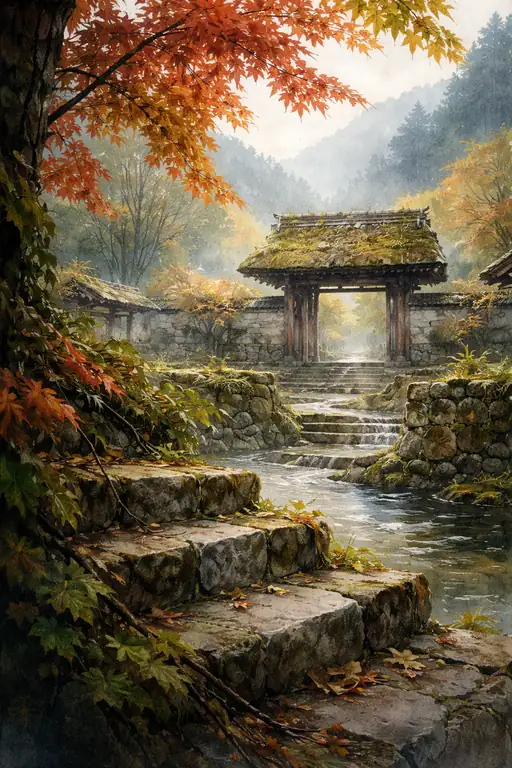 Whispers of Autumn: The Mossy Gate in the Mist
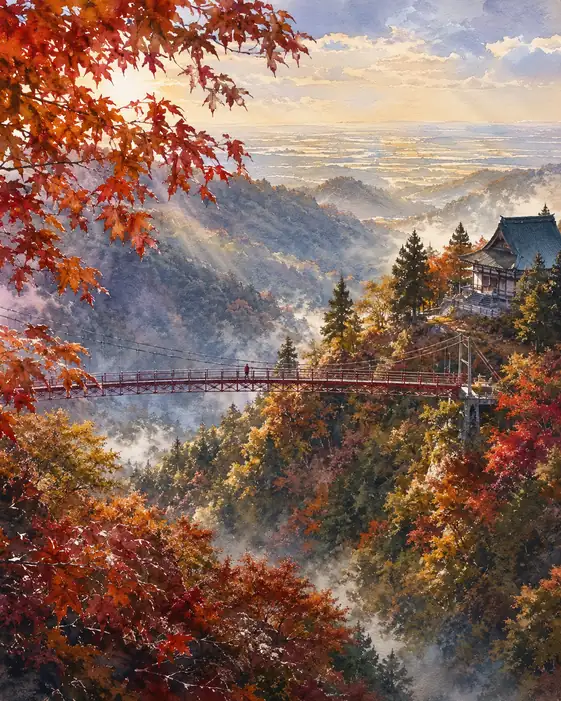 A Red Thread Across the Valley
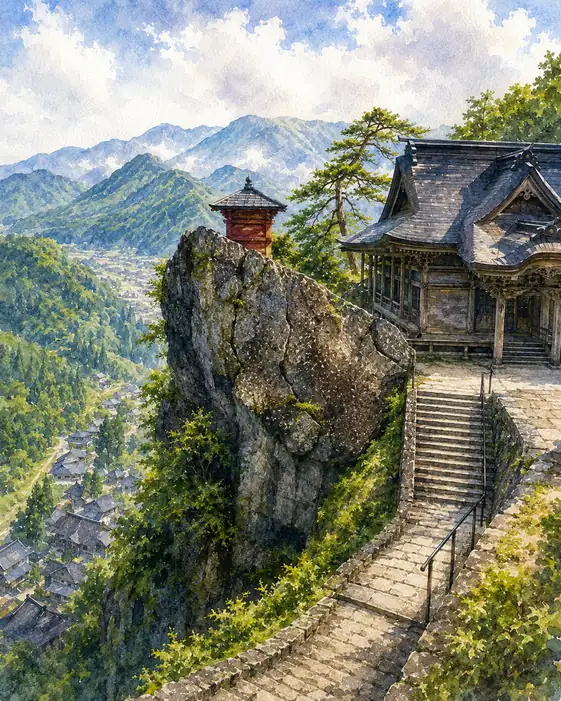 Where the Valley Learns to Pray
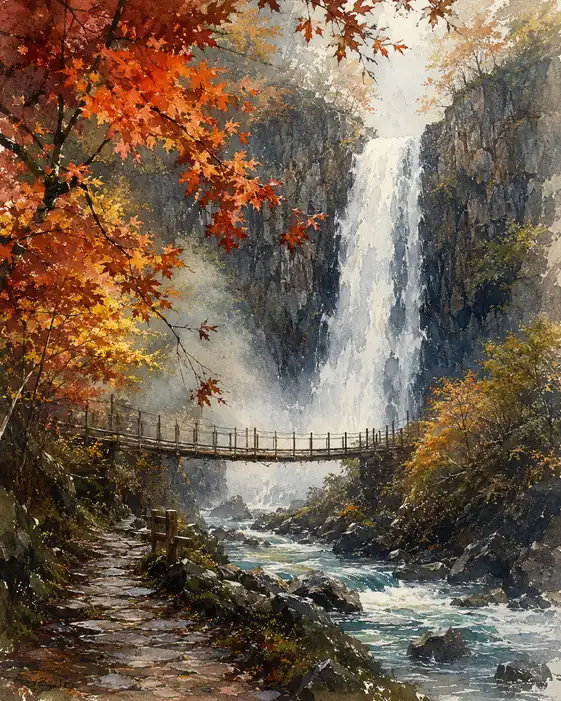 A Bridge Before the Roaring White
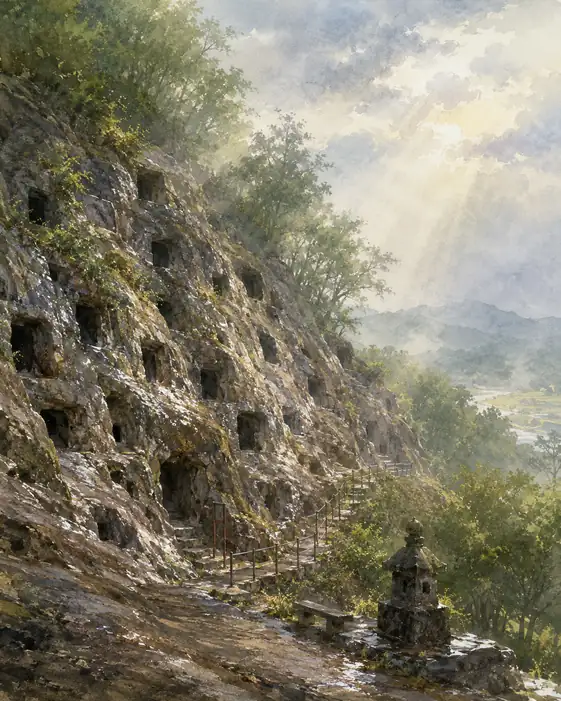 Light Among the Ancient Chambers