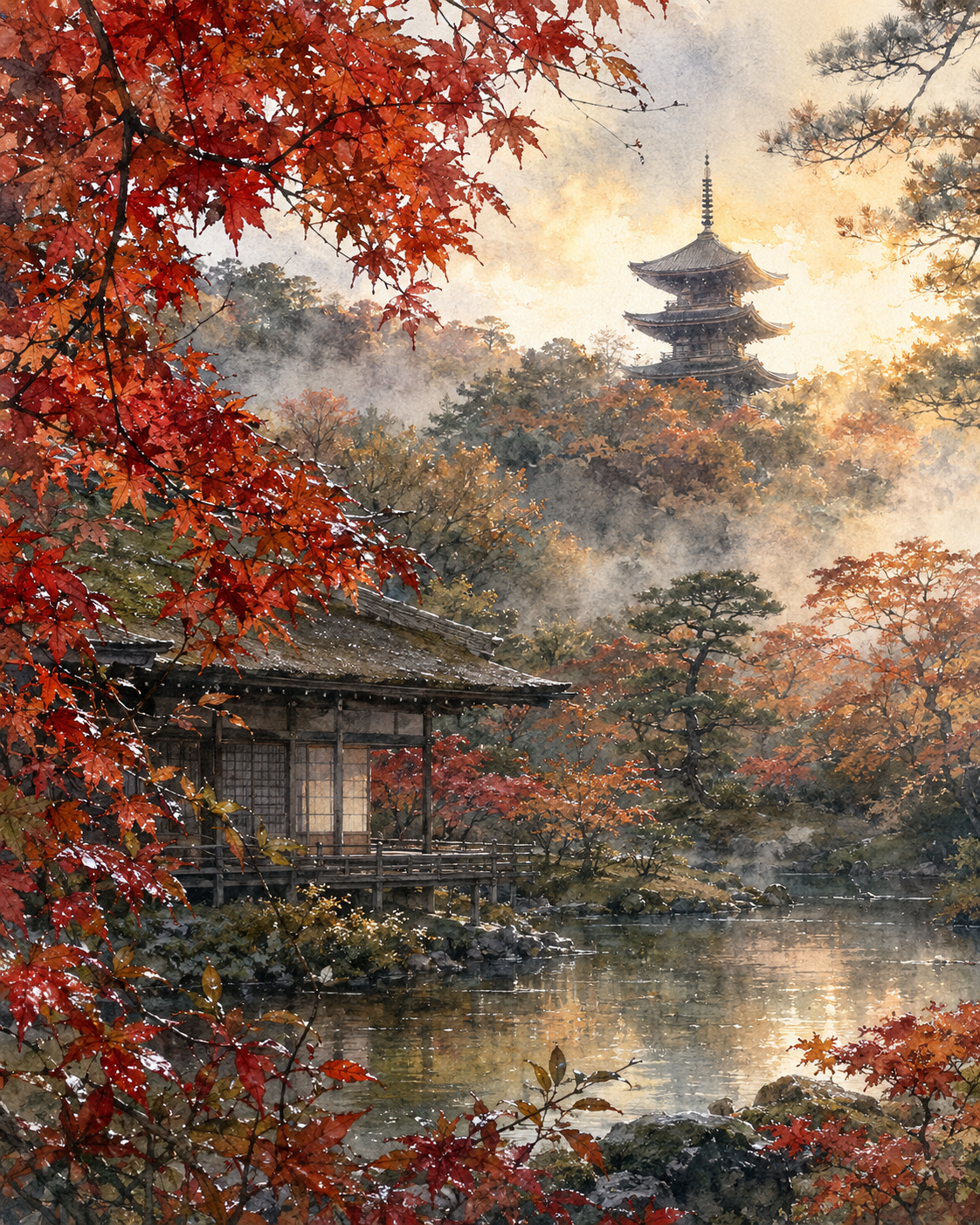
Pagoda Beyond the Autumn Pond
Critique
Introduction Blazing foliage, a still pond, misty hills, and a distant pagoda form a temple-garden landscape. Brilliant foreground color dissolves into haze, allowing splendor and contemplation to coexist. Description A dark wooden pavilion stands beside the water at left. Maple branches extend from the upper left toward the center, densely covered with red, orange, and yellow leaves echoed in the pond. On the upper-right hill, a small tiered pagoda appears among pale mist and trees. Calm water receives broken reflections of foliage, stones, and sky. Analysis The maple frames the scene, directing the eye toward the pavilion, across the pond, and finally to the pagoda. Dense warmth on the left is balanced by cool blue-gray haze on the right, contrasting nearness with distance and clarity with ambiguity. Diagonal branches and a curving bank animate the stillness. Detailed leaves yield to softened background contours, creating atmospheric depth. Interpretation and Evaluation Autumn foliage represents beauty at its fullest while suggesting its approaching fall. Beside enduring religious architecture, that brief radiance becomes a meditation on seasonal time and inherited devotion. The misty pagoda feels less like a destination than a spiritual point of orientation. The pond and haze keep the rich palette from becoming noisy. Conclusion The painting uses autumn spectacle as an entrance into stillness. Its journey from leaves to water to the veiled tower makes looking resemble a walk through sacred grounds. Warm color and cool atmosphere convey vitality and impermanence at once. Faint light on the water completes an image of a radiant day passing into memory.
Same Subcategory
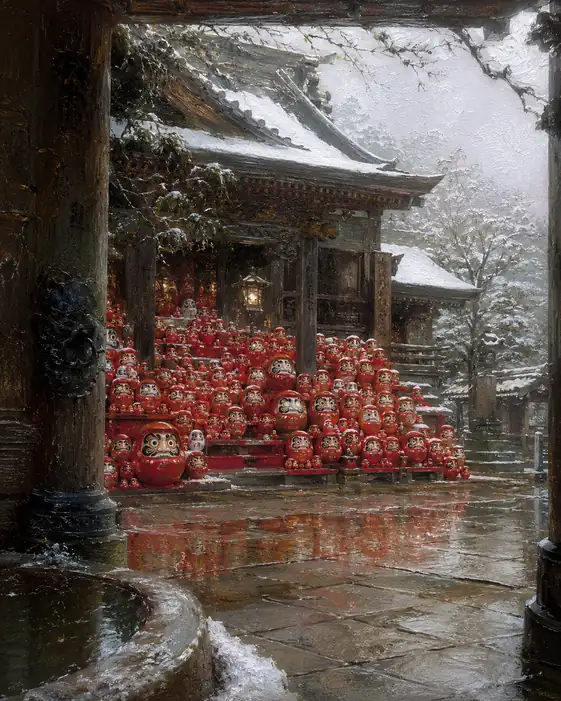 A Hundred Vows Face the Snow
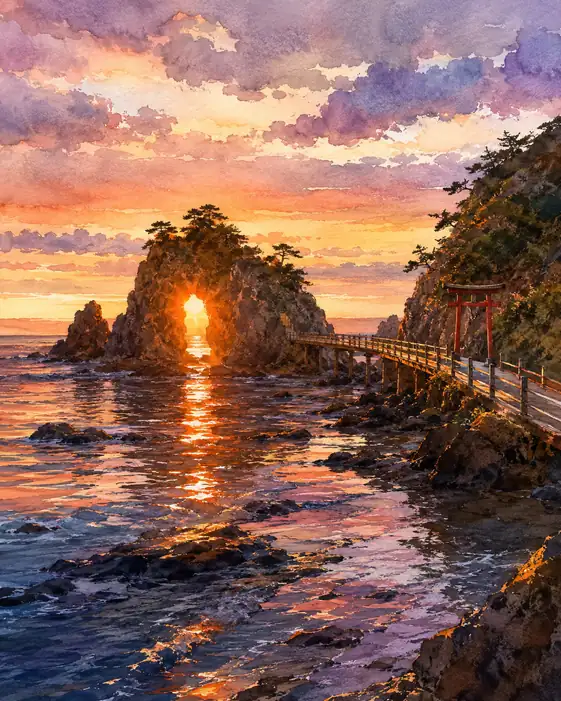 The Sun Passes Through the Sacred Rock
Similar Artworks
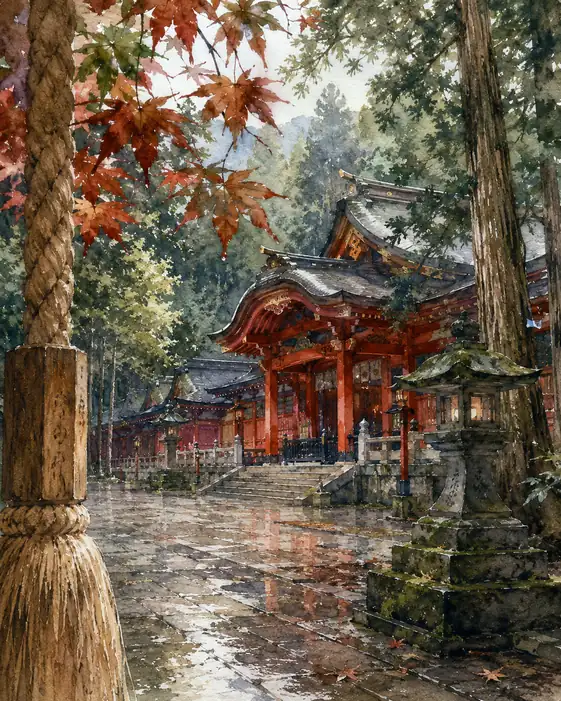 Serenity in the Autumn Rain
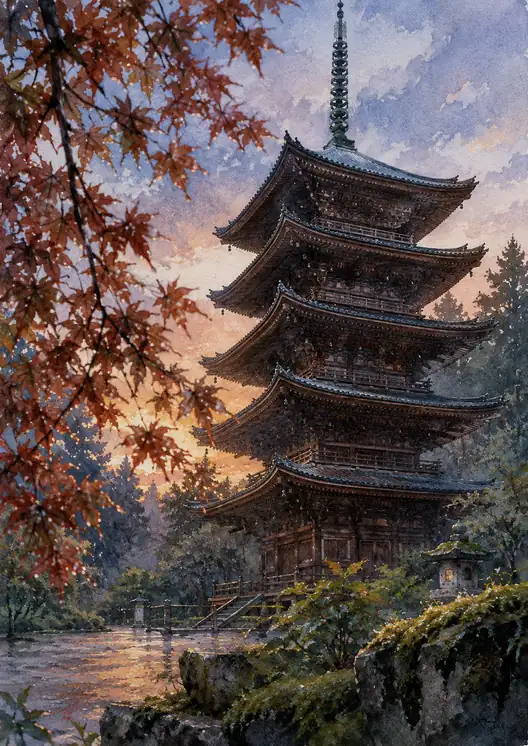 Autumn twilight, the Pagoda’s Silent Prayer
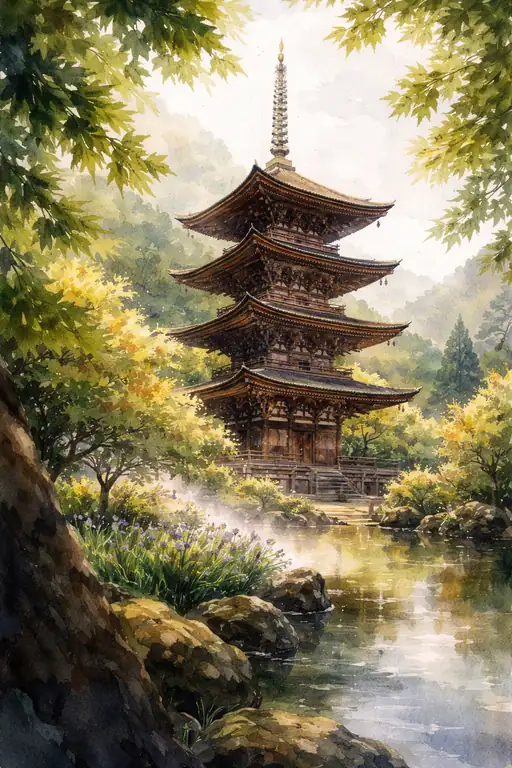 Reflection of the Silent Pagoda
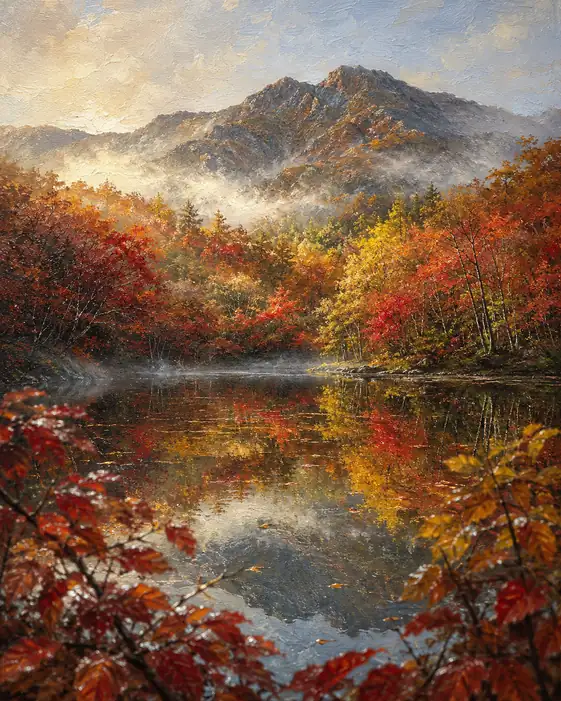 When Autumn Becomes a Mirror
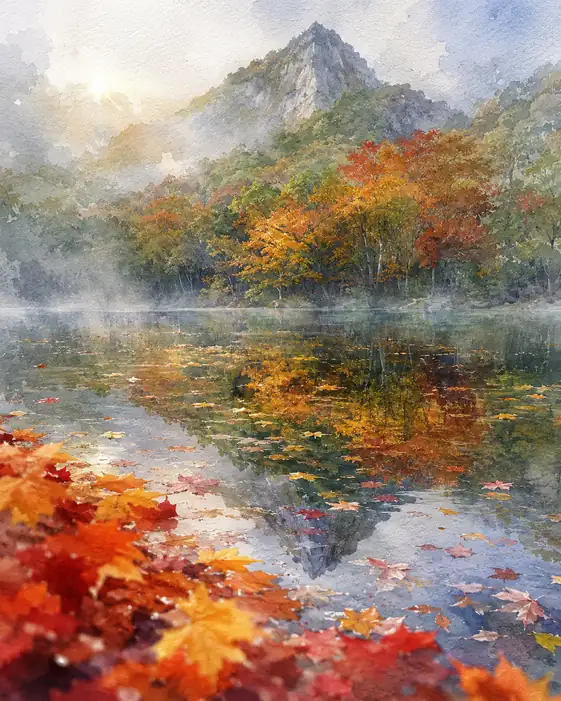 Leaves Adrift in the Mountain's Memory
 Autumn Waits behind the Quiet Frame
 Autumn Paints a Second Garden
 Autumn Encircles the House of Silence
 Under the Cloud, the Sacred Door
 The Stone Remembers Every Ascent