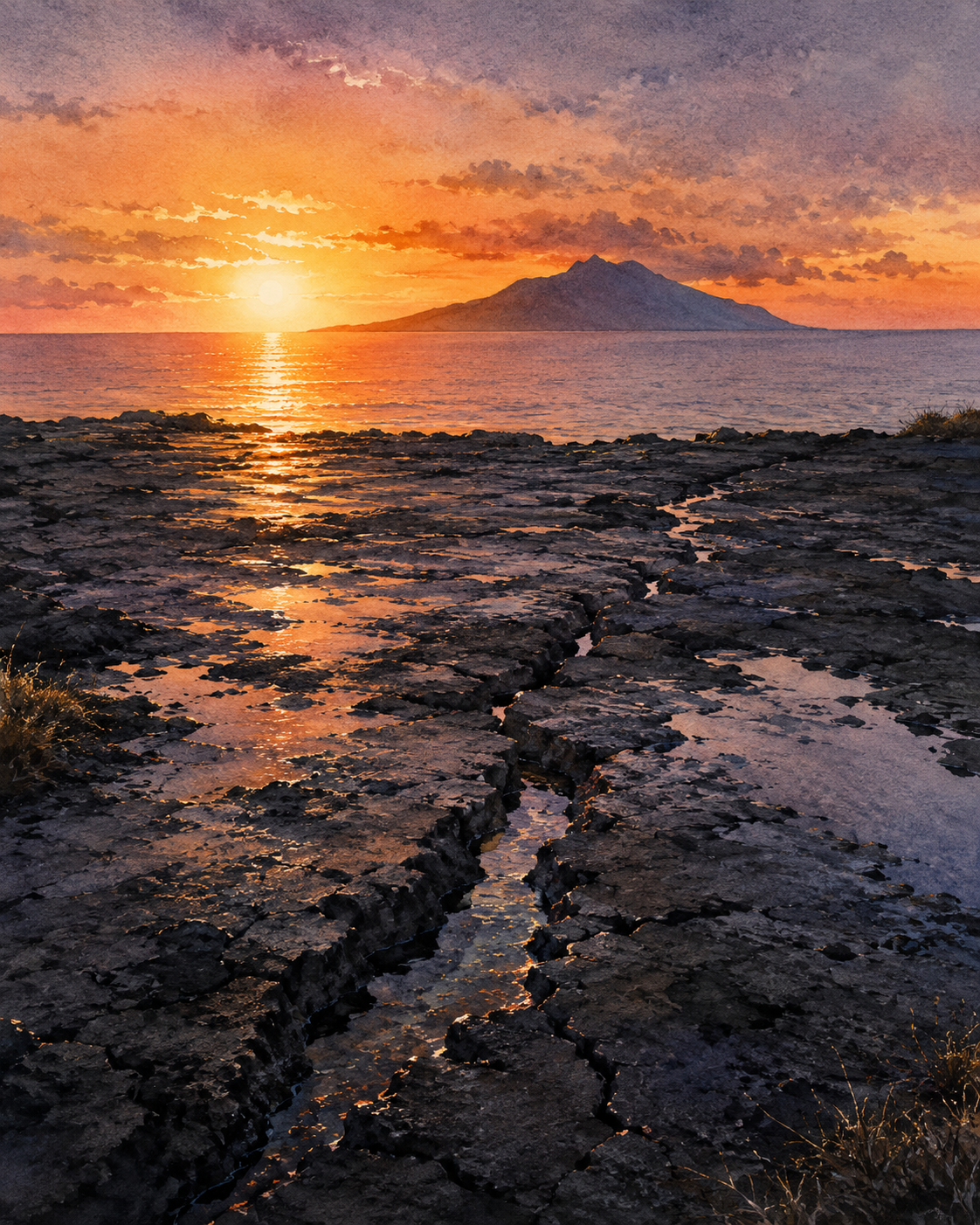
Sunset Enters the Fissure
Critique
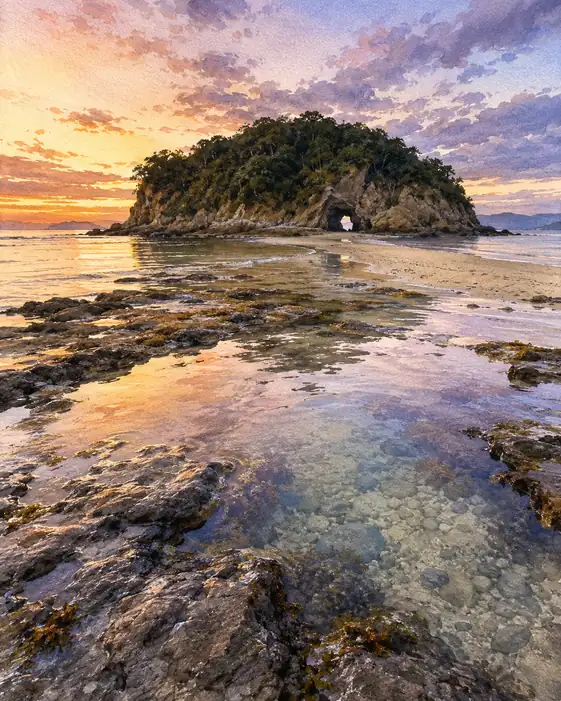
Introduction This coastal landscape places a mountain island beyond a sunset sea and tidal pools across dark foreground rock. Orange sky and reflection, blue-violet island and cloud, and black-brown ground form three value layers, joining distant view with immediate geology. Sun, sea, island, and stone alone express evening quiet and long duration. Description The sun descends near the left horizon and casts a vertical gold path on the sea. A dark multi-peaked island rests at center-right. Sky changes from horizon orange into gray-violet beneath horizontal clouds. Flat black rock fills the lower half, crossed by a deep central fissure and many pools extending toward water. Sparse grasses survive at the lower edges. Analysis Separating sun and island while directing the central crack seaward creates triangular vision. Quiet horizontals cross vertical fissure and reflection. Thin orange and violet highlights clarify rough wet stone. The distant island is simplified into mass, whereas cracks and pools remain precise nearby. Sky gradation communicates changing time. Interpretation and Evaluation The fissure resembles a wound but also channels tide inland and connects platform with sea. Sunset changes within minutes, while island and rock indicate geological duration. Pools mirror small fragments of sky and divide distant solar light at the viewer's feet. Grand evening becomes tactile through ground observation. Conclusion Sun and island appear primary, but fissure and pools ultimately carry time and bodily position. Broken reflections distinguish ocean water from still pools. Gray-violet cloud restrains warm color. A faint gold edge along the island clarifies illumination. The painting unites brief sunset with long stone time through disciplined color.
Same Subcategory
 The Long Climb Through Rainlight
 Arches Where Trains Became Echoes
Similar Artworks
 We Stood Where the Sun Became Water
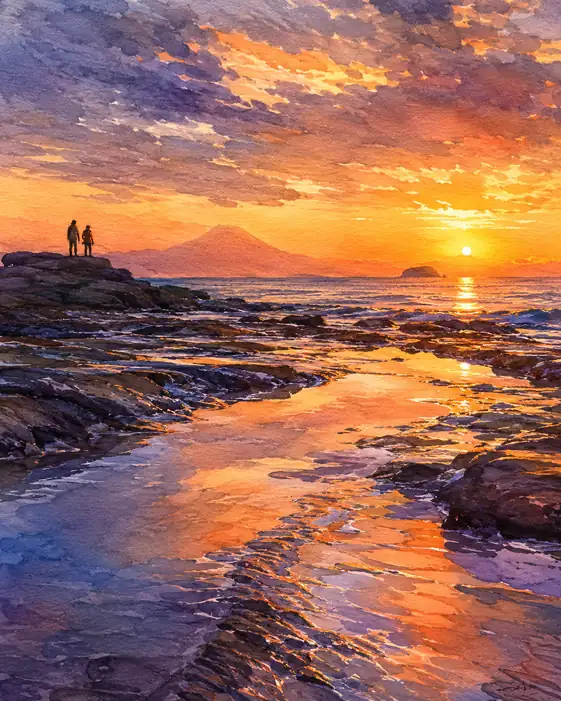 Two Figures at the Edge of Gold
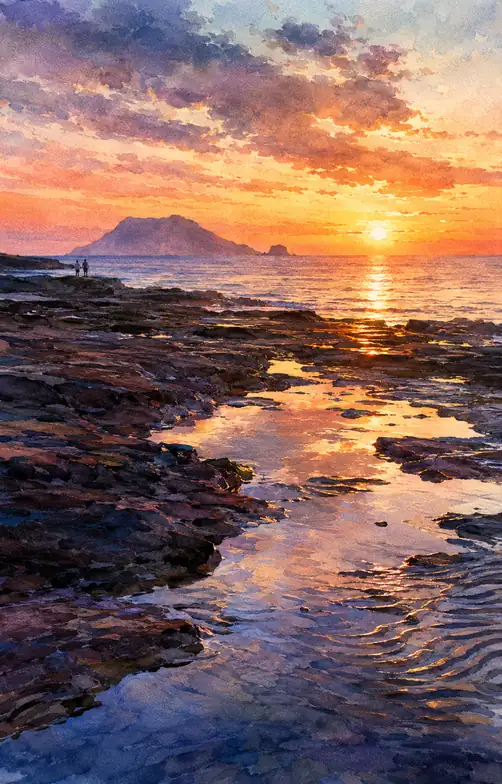 Two Figures at the End of Fire
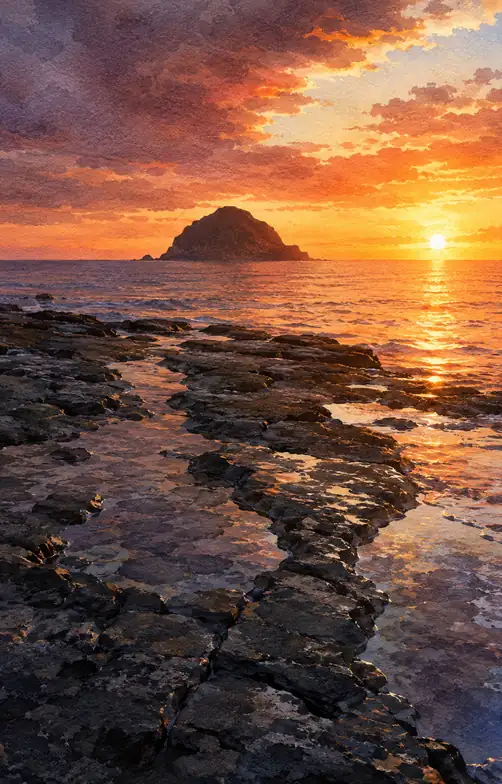 Evening Pours Through the Black Shore
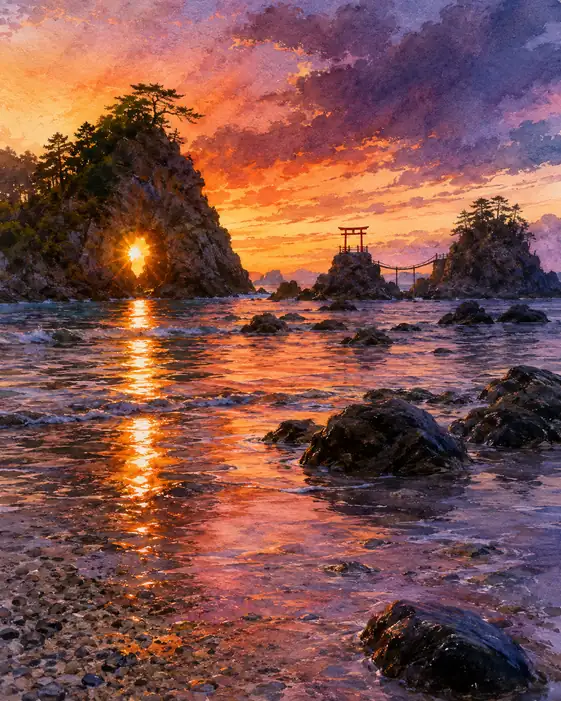 The Sun Passes Through the Sacred Stone
 The Sun Passes Through the Sacred Rock
 The World Begins Beyond the Clouds
 The Lighthouse Drinks the Last Sun
 I Walked Home Through the Last Light
 Low Tide Opens a Secret Door