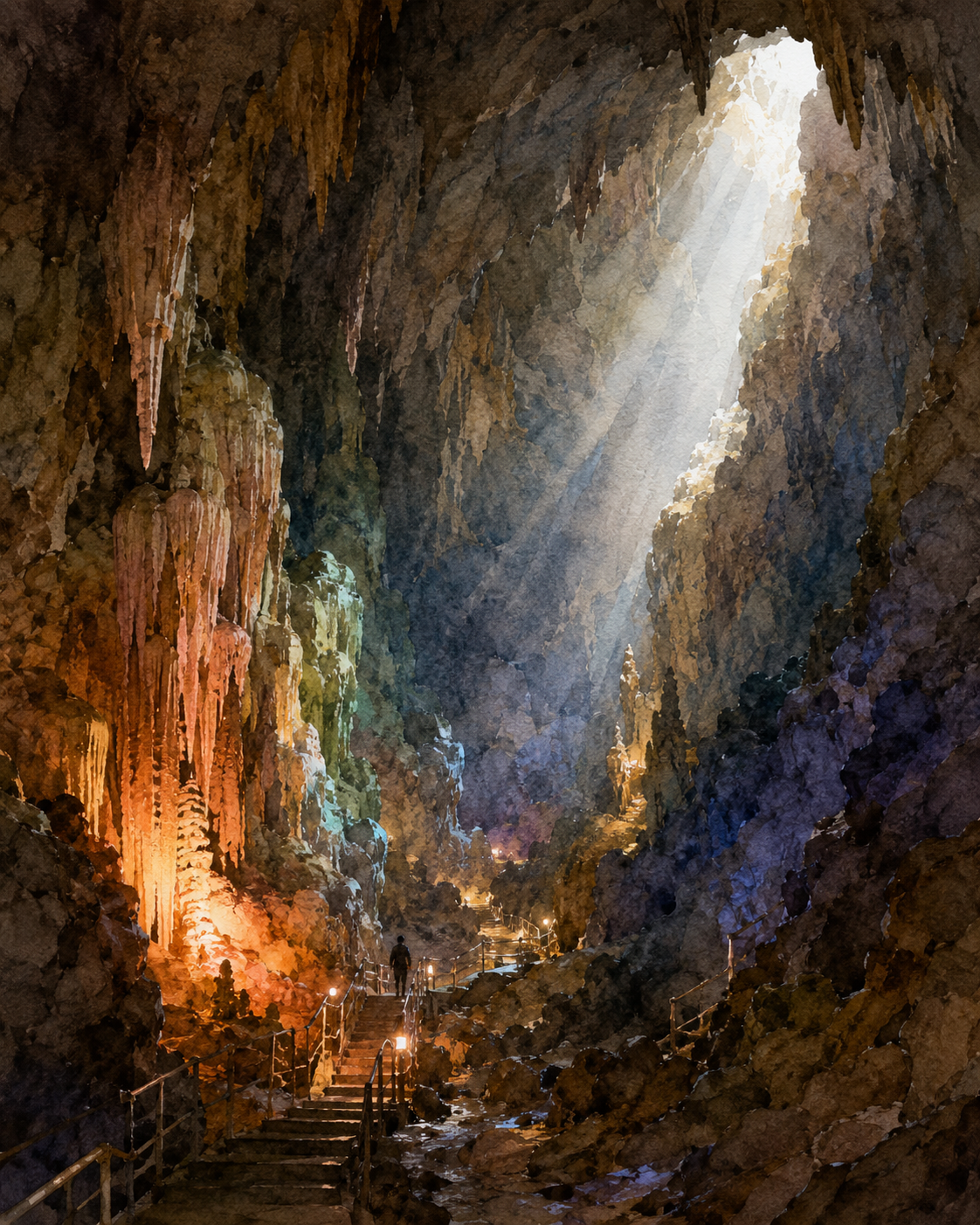
Daylight Finds the Underworld
Critique
Introduction This watercolor depicts a vast limestone cave through one visitor on stairs and white light entering from an opening above. Orange-lit formations at left, blue-violet wall at right, and natural light divide temperature and depth. Specific rails and lamps balance underground mystery with a safe contemporary route. Description Stalactites crowd the ceiling and sides. White rays enter diagonally through a tall upper-right fissure. A group of stalagmites glows orange at left beside green-blue rock. Stone steps and metal rails curve inward from below, followed by one dark person. Small guide lights reflect in wet stone and pools. A faint violet glow remains further back. Analysis Dark cave walls form an irregular oval around light and steps. Stair convergence and repeated lamps measure depth, while the small figure clarifies scale. Warm formations, cool right stone, and white upper light organize three temperatures. Watercolor blooms express humidity, and thin mineral lines convey hardness and slow growth. Shadow retains useful gradation. Interpretation and Evaluation Upper light confirms the outside world, but the route circles carefully rather than exiting directly. Ancient formations and brief modern viewing reveal contrasting timescales. Artificial illumination dramatizes the cave while also protecting footsteps. The visitor remains an observer confronting geology, not a conquering hero. Conclusion White rays and orange stone dominate first, but stairs and person make the chamber legible. Column-like formations create architectural rhythm. Deep violet controls warm light and preserves unknown space. Reflections communicate both moisture and careful movement. Layered illumination brings geological duration into contact with temporary exploration.
Same Subcategory
Similar Artworks
 The Earth Keeps a Golden Silence
 At the Edge of the Lantern's Knowing
 A Boat Beneath the Earth's Window
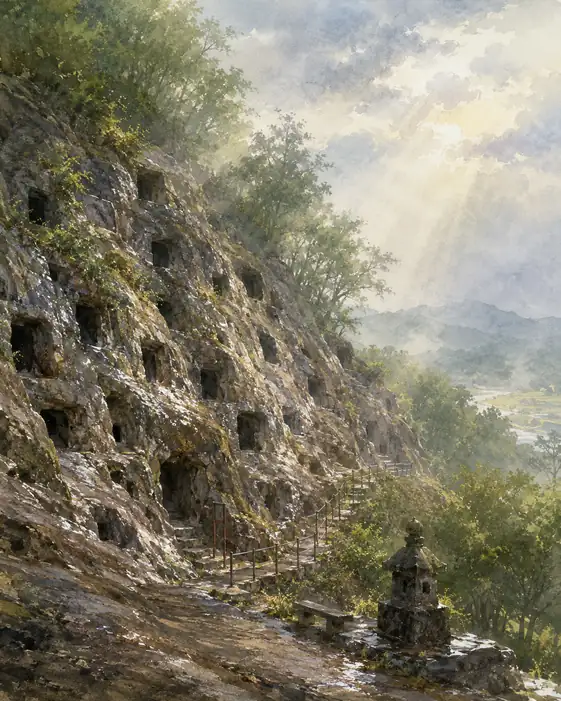 Light Among the Ancient Chambers
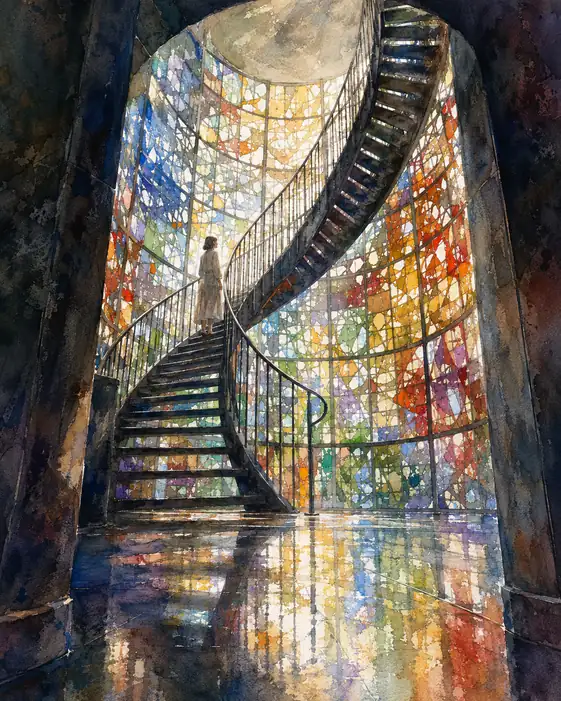 The Stairway Inside a Shattered Rainbow
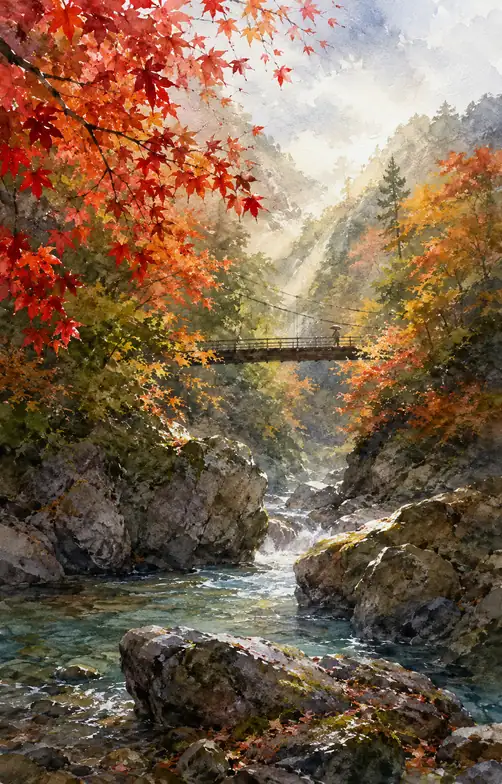 One Umbrella Above the Current
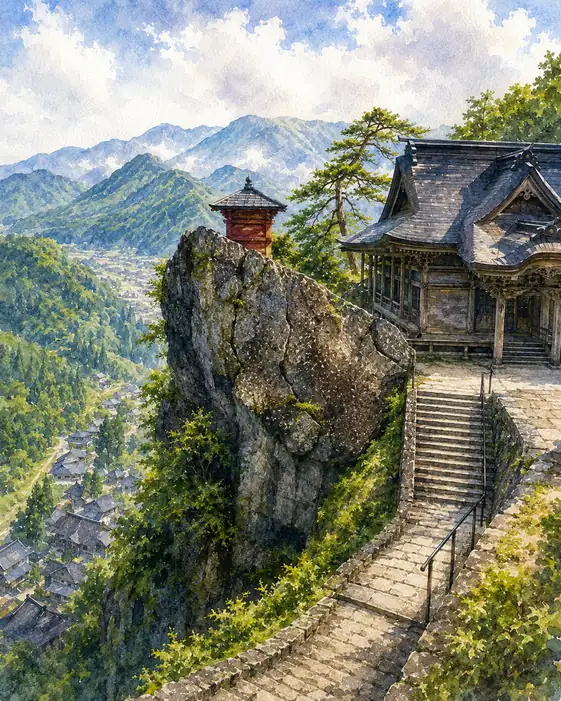 Where the Valley Learns to Pray
 A Spire Gathering the Rainlight
 The Long Climb Through Rainlight
 A Cross Cut from Silence