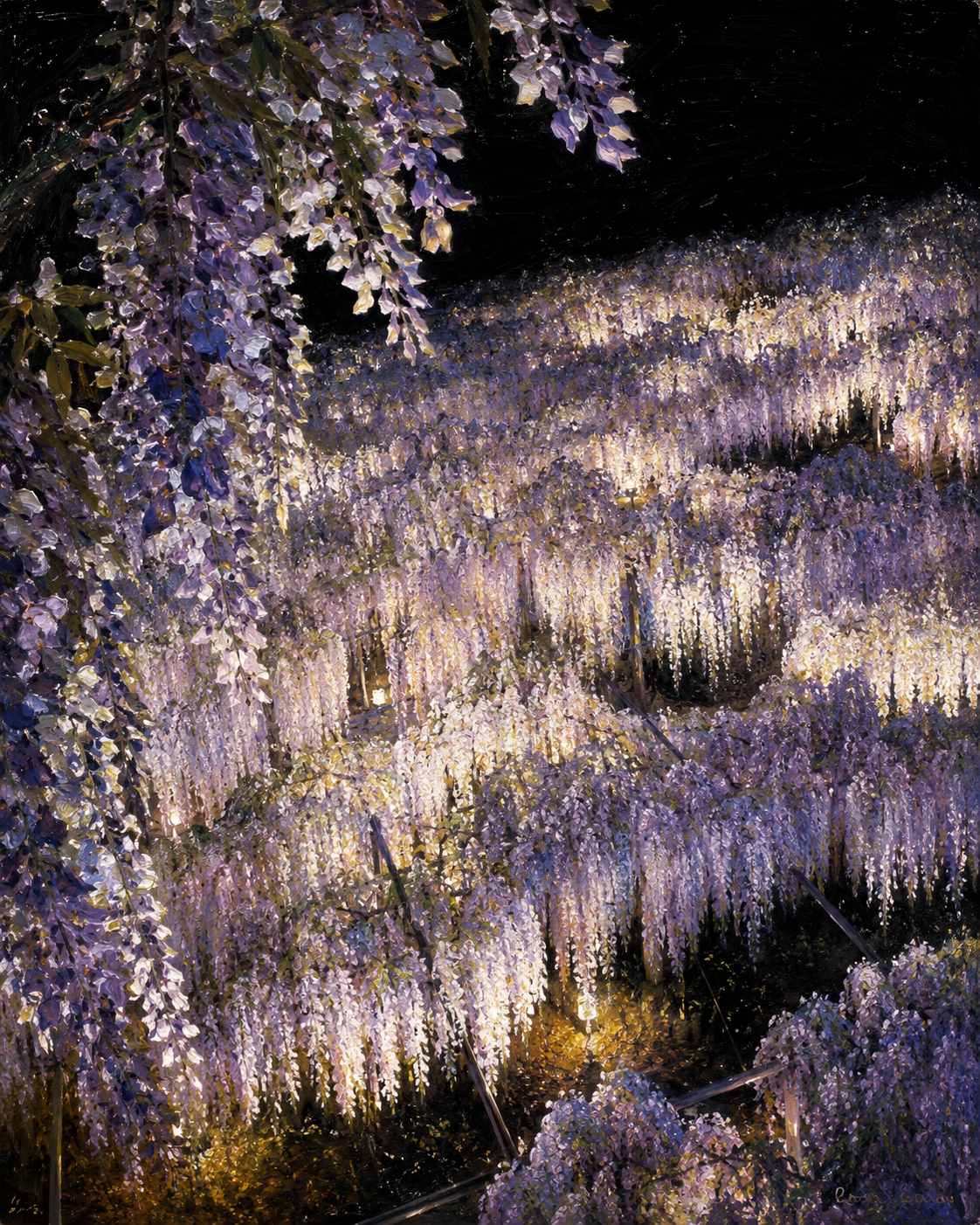
Blooming in Layers of Night
Critique
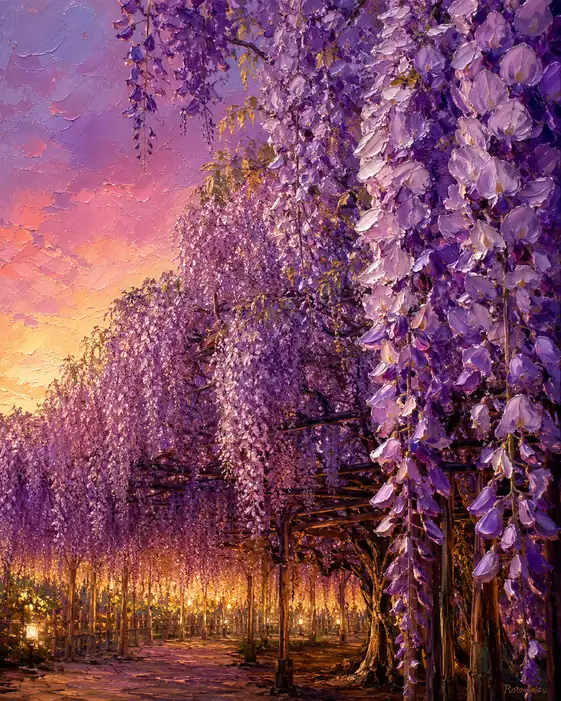
Introduction This vertical painting depicts the illuminated wisteria of Ashikaga Flower Park rising in luminous layers against a black night. A heavy spray of blossoms enters from the upper left and overlooks the terraced canopy. Pale violet and warm white dominate, giving the scene a restrained yet radiant first impression. Description Foreground racemes are assembled from separate strokes of lavender, cream, blue, and olive. Beyond them, multiple banks of hanging flowers occupy the center and right, divided by dark gaps. Small lamps beneath the trellises cast amber pools onto posts and ground. The upper background remains almost entirely black, with no visible horizon. Analysis The strong left-hand frame establishes proximity, while decreasing marks and compressed tiers create recession. Vertical floral strands are crossed by occasional rails and branches, providing a subtle geometric structure. Thick highlights make nearby petals project from the surface; finer touches cause distant blooms to shimmer. Black space intensifies the light and prevents the elaborate textures from becoming uniform. Interpretation and Evaluation The painting suggests that the garden is encountered through fragments revealed by illumination. Its descriptive precision lies less in individual botany than in differences of weight, spacing, and light. The composition is dense but readable, and the cool palette gains depth from limited gold accents. The use of darkness as a constructive element is both technically assured and visually distinctive. Conclusion What first appears to be a curtain of radiant flowers gradually resolves into a carefully layered nocturnal architecture. Through asymmetrical framing, varied brushwork, and active negative space, the work gives abundance a clear and contemplative order.
Same Subcategory
Similar Artworks
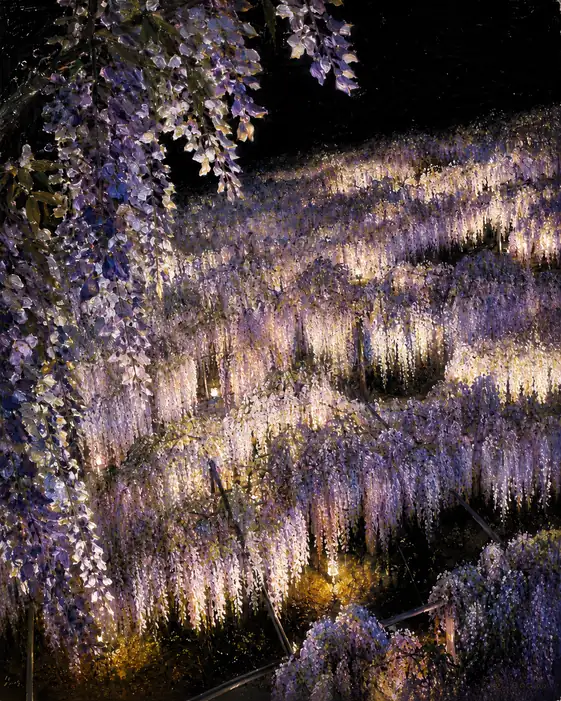 Violet Unfolding into Darkness
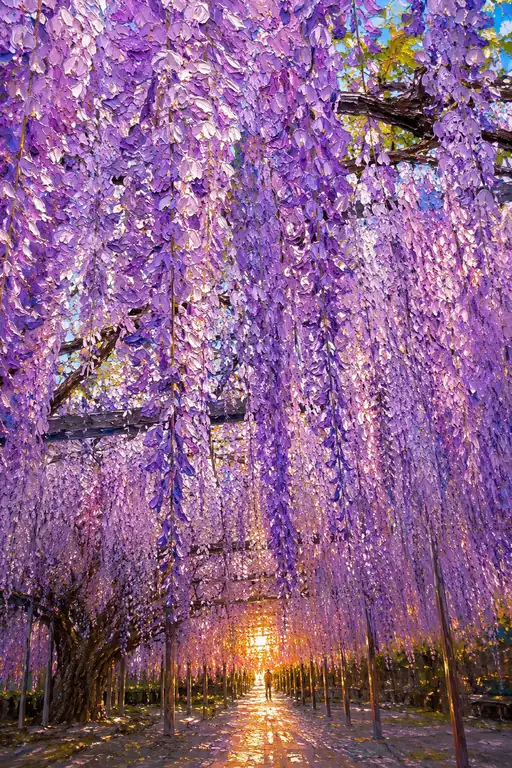 The One Who Stands at the End of Light
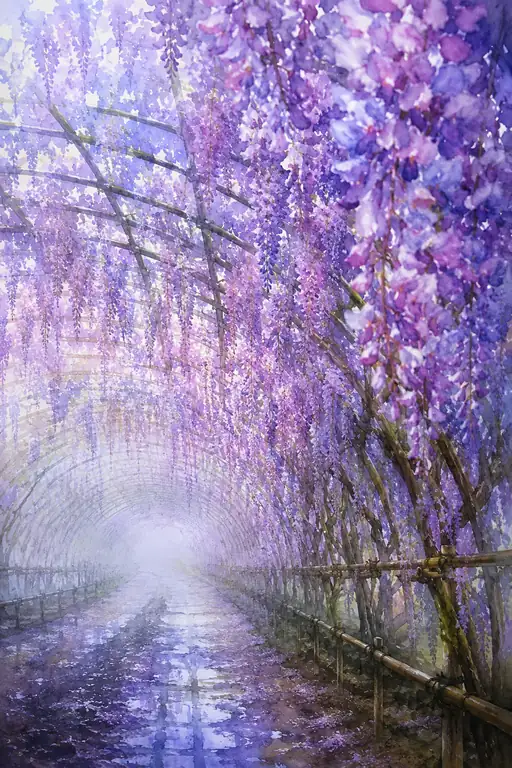 Where the Blossoms Wait Beyond the Mist
 Through Violet Shade into Gold
 The Wisteria's Memory, Holding Up the Skylight Blue
 The Last Light Beneath the Blossoms
 Violet Breath Sewing the Dusk
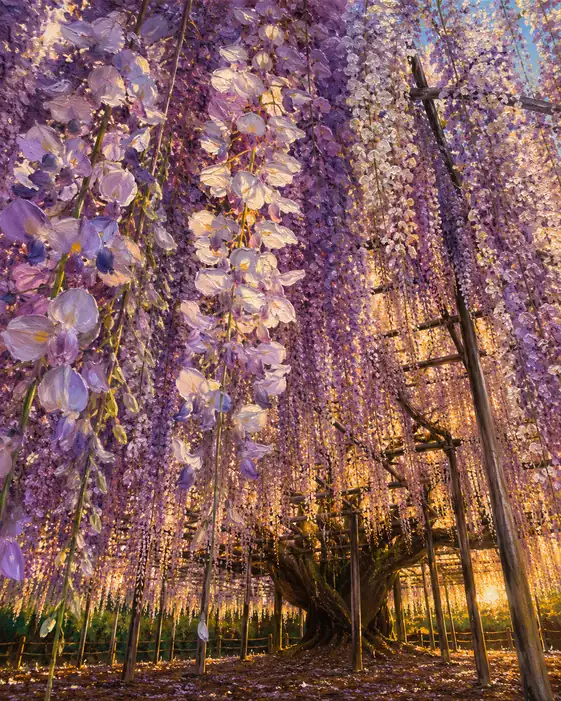 Where the Ancient Wisteria Holds the Sun
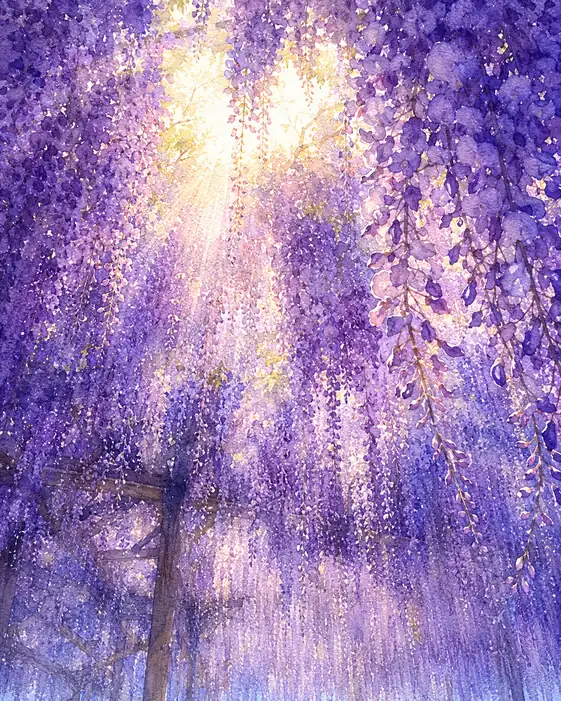 Sunburst Through the Violet Canopy
 Beyond the White Wisteria, Time Unravels