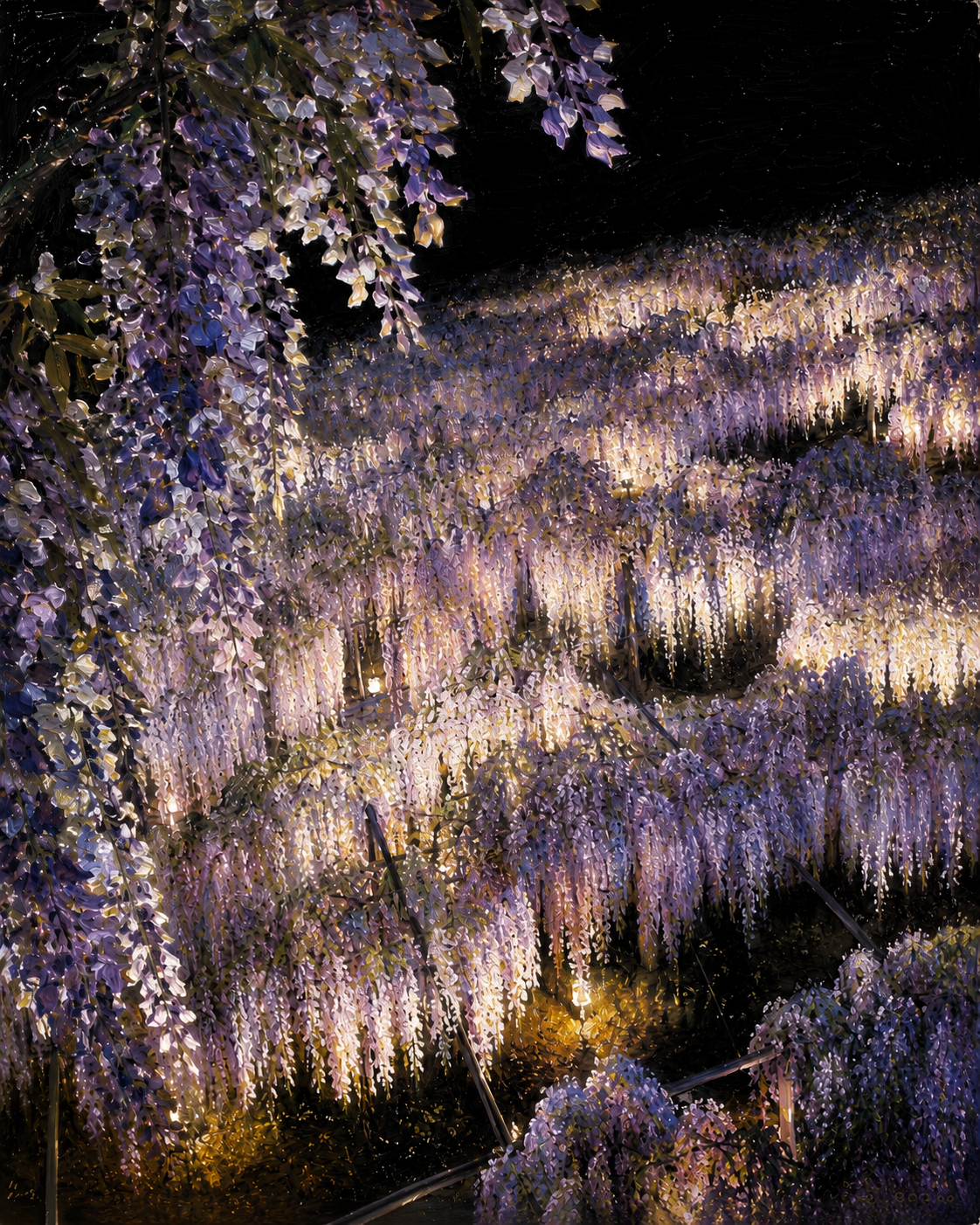
Violet Unfolding into Darkness
Critique
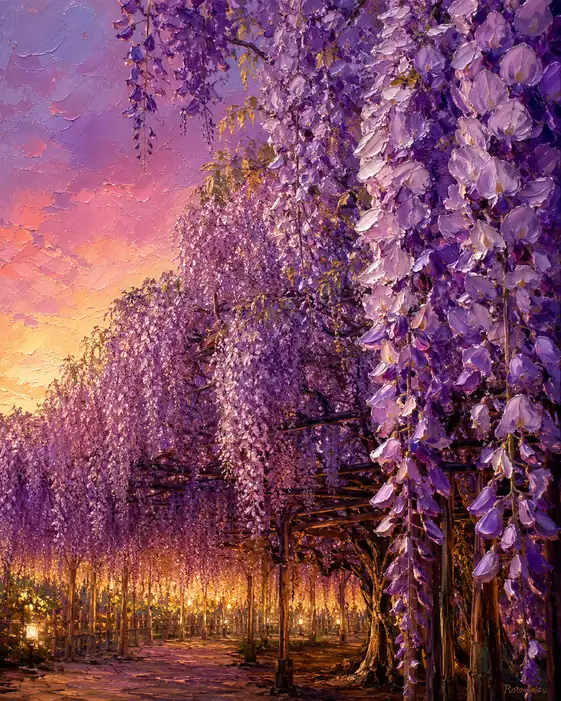
Introduction This vertical painting portrays illuminated wisteria at Ashikaga Flower Park against a nearly black night. The flowers form layered terraces of lilac light, while a close branch enters from the upper left. Darkness and radiance produce an immediate sense of depth, abundance, and nocturnal stillness. Description Large clusters hang in the upper-left foreground, modeled with lavender, white, blue, and muted green strokes. Across the middle and right, successive bands of wisteria descend from trellises at different heights. Warm lamps glow beneath the canopy and reveal fragments of posts and ground. Broad black intervals separate the illuminated tiers. Analysis The staggered tiers create recession without relying on a visible horizon or central path. Foreground blossoms are built from broad, distinct marks, while distant racemes dissolve into fine vertical touches. Black negative space is active rather than empty, isolating each floral mass and sharpening its silhouette. Cool violets are warmed by cream highlights and small ochre lights, producing a controlled nocturnal palette. Interpretation and Evaluation The work treats illumination as a means of discovering structure within darkness. The garden appears partly revealed and partly withheld, which encourages prolonged viewing. Its descriptive skill is strongest in the varied density and scale of the flowers. The asymmetrical framing, disciplined color, and impasto-like technique turn a botanical subject into a distinctive study of visibility and concealment. Conclusion The first impression of lavish night bloom gradually becomes an awareness of the darkness that organizes it. Through layered spacing, tactile marks, and selective light, the painting gives the wisteria both material presence and quiet mystery.
Same Subcategory
Similar Artworks
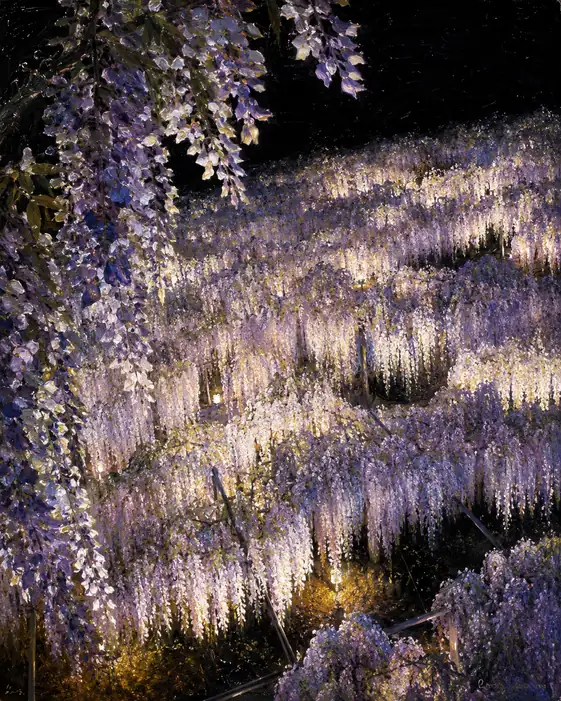 Blooming in Layers of Night
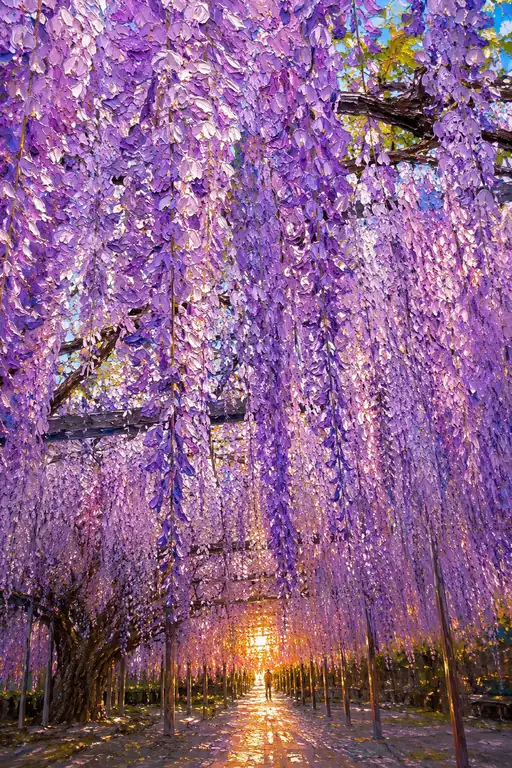 The One Who Stands at the End of Light
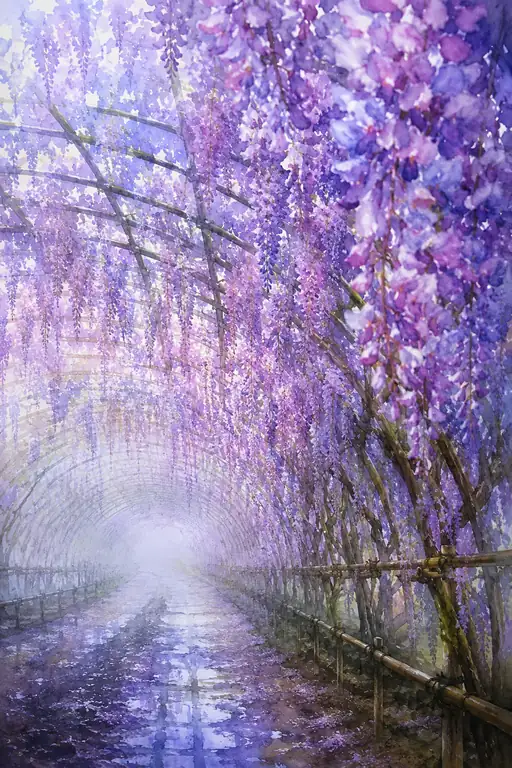 Where the Blossoms Wait Beyond the Mist
 Through Violet Shade into Gold
 The Wisteria's Memory, Holding Up the Skylight Blue
 The Last Light Beneath the Blossoms
 Violet Breath Sewing the Dusk
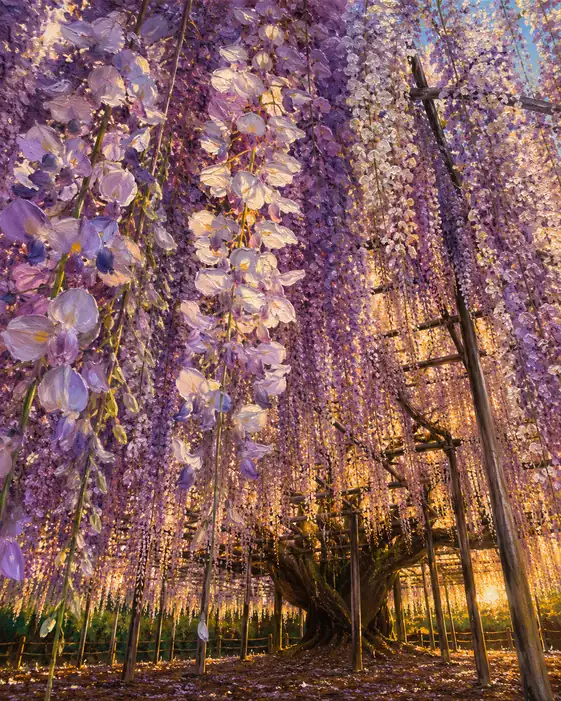 Where the Ancient Wisteria Holds the Sun
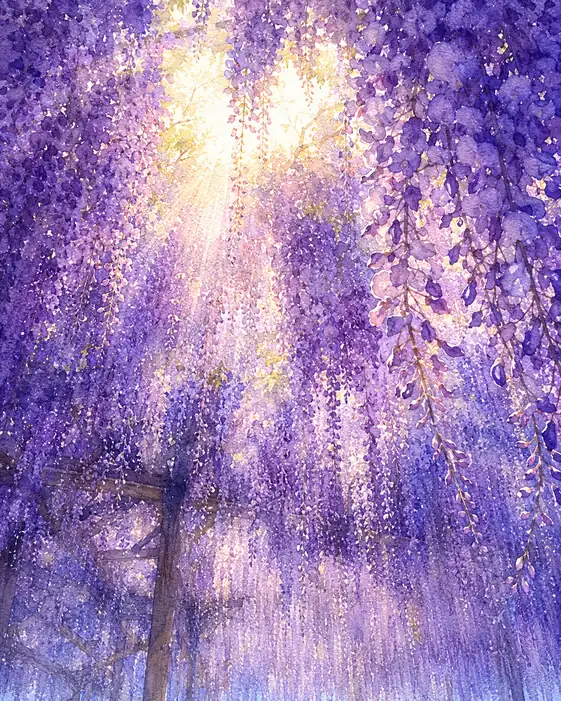 Sunburst Through the Violet Canopy
 Beyond the White Wisteria, Time Unravels