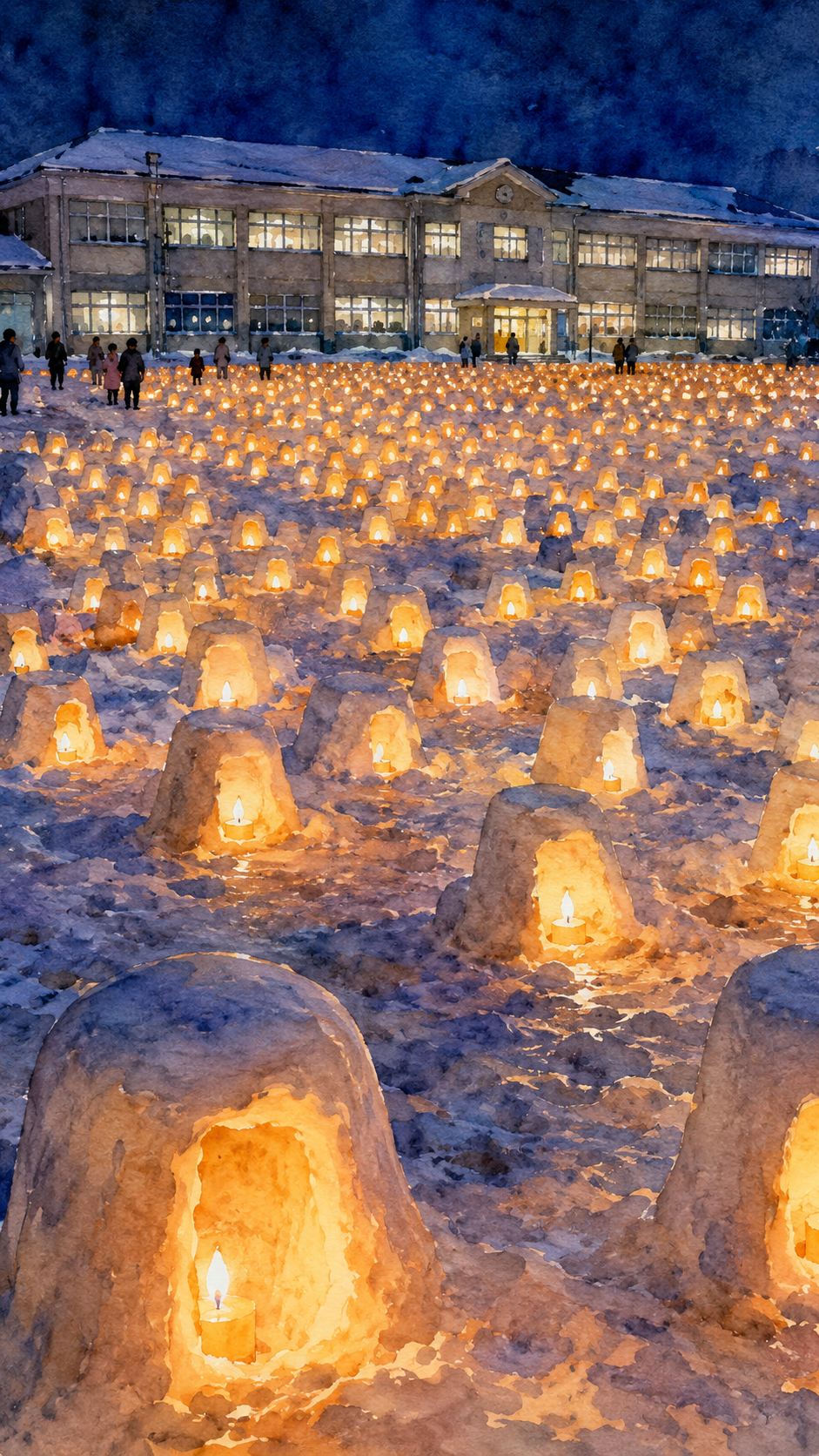
The Night Remembered by Windows and Flames
Critique
Introduction This vertical watercolor-like painting depicts the Yokote Kamakura Festival spread before a snow-covered historic school building. The frontal architecture and broad field of candlelit shelters create a measured, civic atmosphere. Amber illumination against a deep blue night immediately unites the event and its setting. Description Large kamakura are cropped along the lower edge, and many smaller forms fill the open ground in loosely ordered rows. Visitors move between them as small dark figures. Across the upper third stands a symmetrical two-story wooden building, its long windows glowing from within. Snow rests on the roof and gathers unevenly around the lights. Analysis Horizontal architectural bands stabilize the vertical field of repeated lamps. The low viewpoint enlarges the nearest shelters, while their rapid reduction establishes distance to the building. Transparent blue and gray washes describe snow without excessive detail; warm ochre is reserved for windows and flames. This repetition between rectangular windows and rounded openings creates a subtle dialogue of human-made forms. Interpretation and Evaluation The scene connects temporary festival structures with a more enduring public building. Both contain light, suggesting different scales of communal shelter and memory. The perspective and descriptive clarity are convincing, and the restrained palette gives the crowded foreground unity. The parallel between illuminated windows and candle niches is an understated but original compositional idea. Conclusion The first impression of a luminous snowfield gradually expands into an understanding of place shaped by gathering and architecture. Careful scale, balanced geometry, and economical watercolor-like technique give the work quiet civic dignity.
Same Subcategory
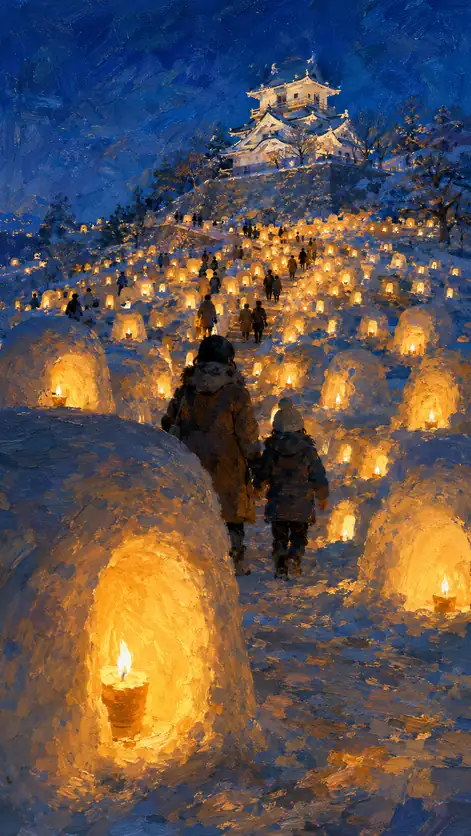 The Winter Castle Beyond Our Joined Hands
Similar Artworks
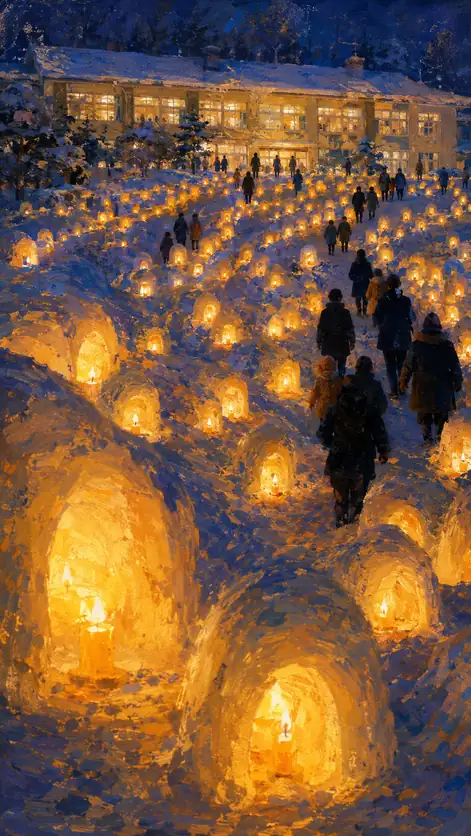 The Road Home to the Warm Windows
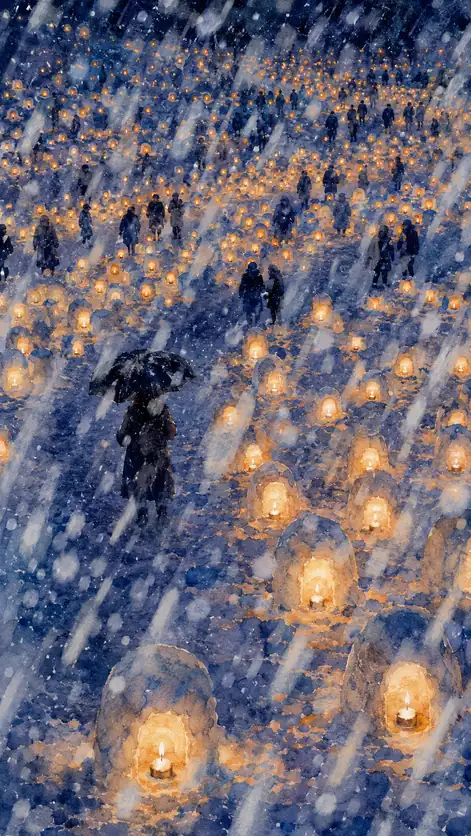 Through the Snow, Toward the Gathering Light
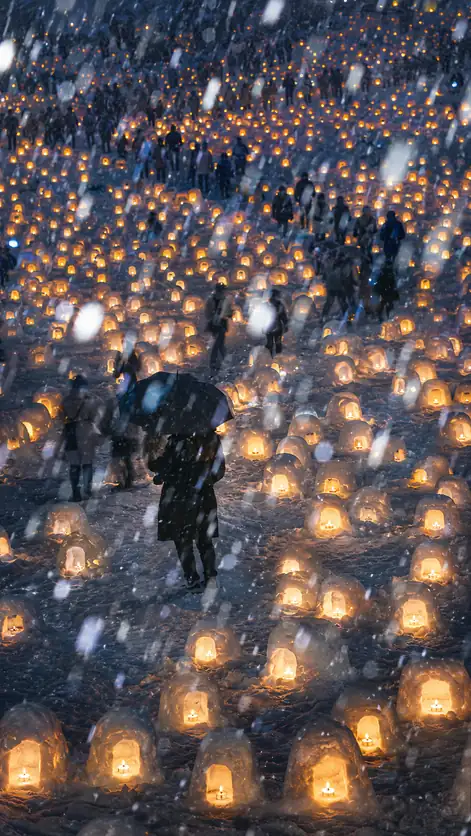 The Lights Wait Through the Storm
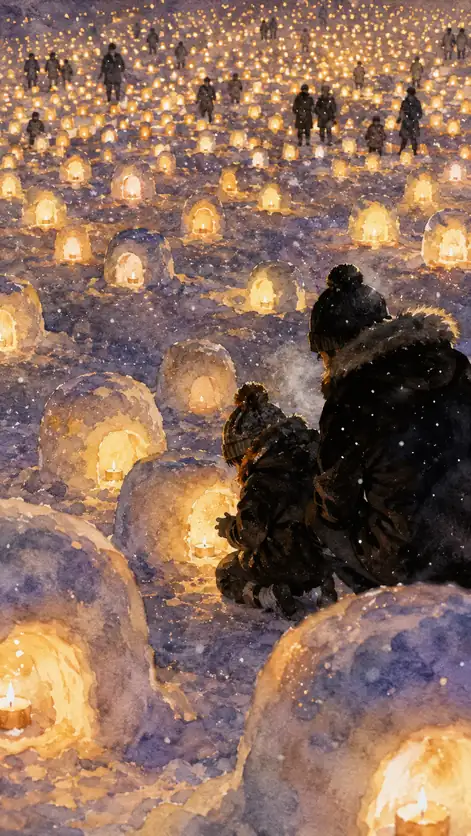 One Flame Between Our Winter Breaths
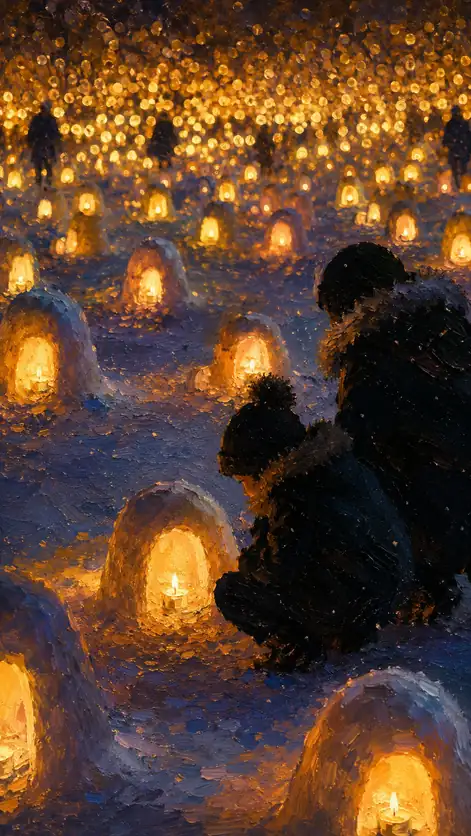 The One Flame We Keep
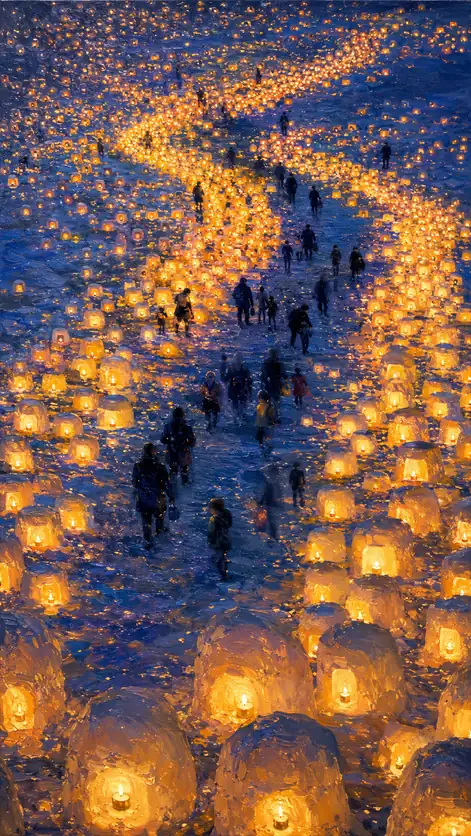 We Dissolve into the River of Light
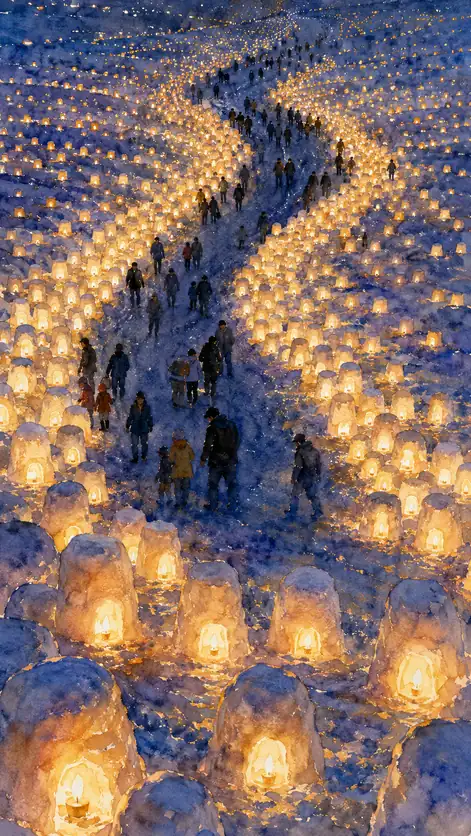 Walking the River of Light Together
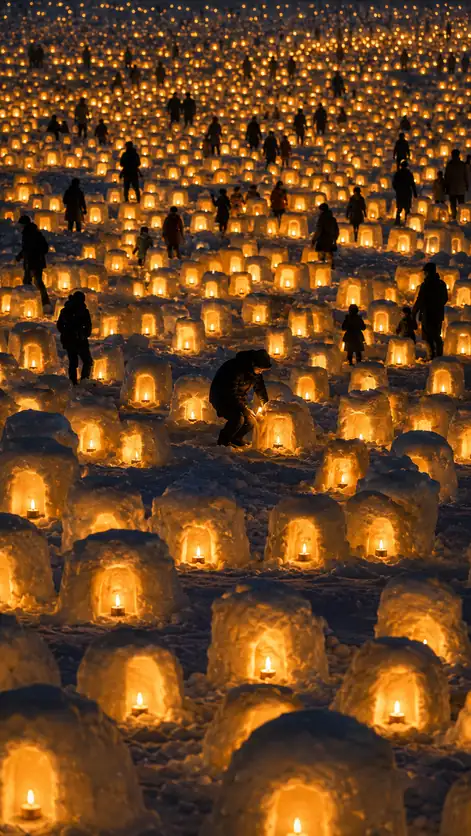 The Hand That Brings Stars to Snow
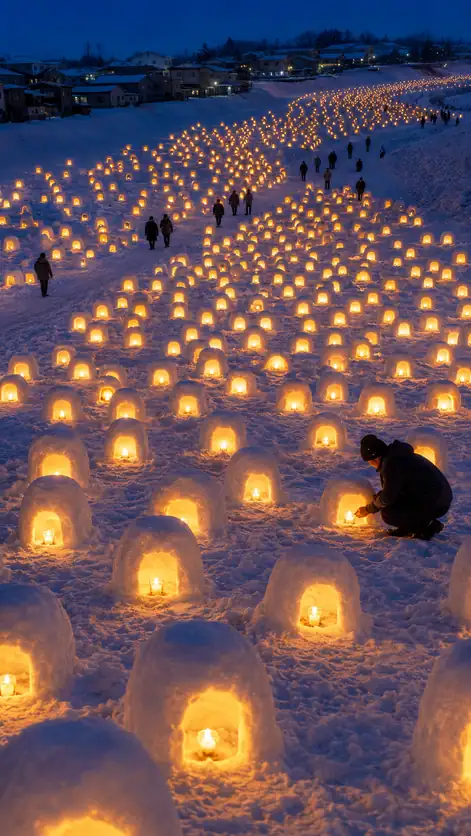 The River Kept Aglow
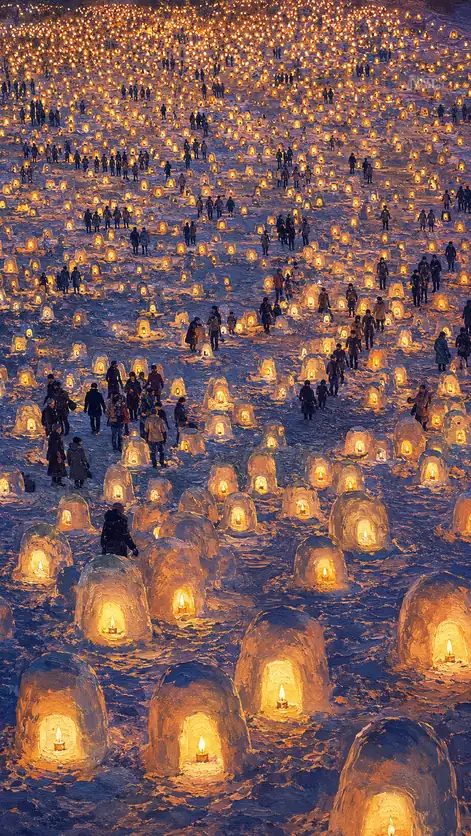 A Thousand Lights, One Warmth