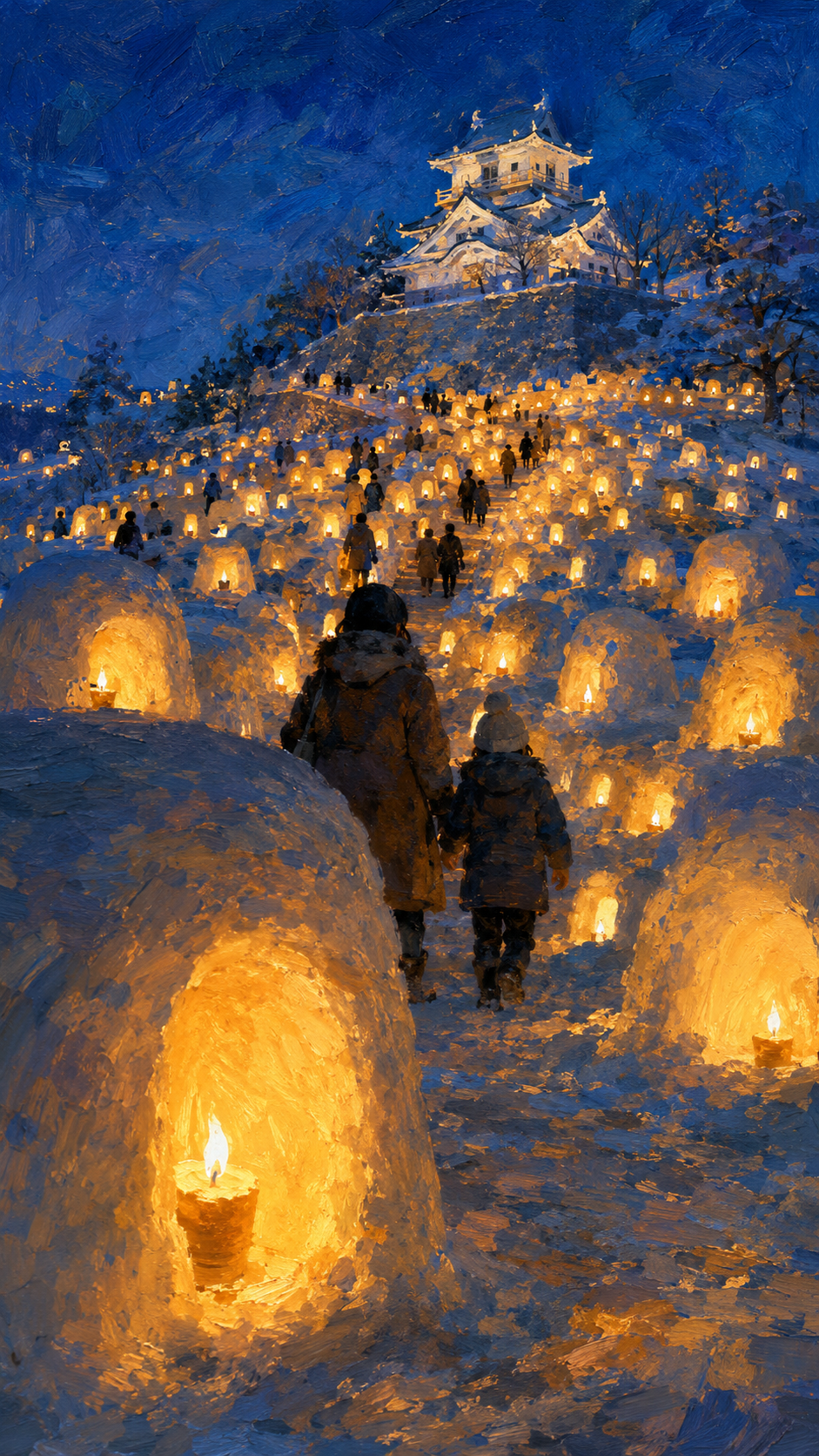
The Winter Castle Beyond Our Joined Hands
Critique
Introduction This vertical painting depicts the Yokote Kamakura Festival rising toward a brightly illuminated hilltop castle. An adult and child walk away from the viewer through a field of glowing snow shelters. The upward route and strong blue-gold contrast give the scene a purposeful, story-like character. Description A very large kamakura fills the lower left, its candle casting thick amber light across the snow. Smaller shelters multiply along a central ascent crowded with visitors. The adult and child occupy the middle foreground and hold hands as they walk. Above them, the white castle stands against a densely brushed cobalt sky, framed by bare trees. Analysis The composition is constructed as a sequence of scales, from the cropped foreground lamp to the distant architecture. The central path, paired figures, and hill establish a clear upward axis. Broad impasto unifies snow, sky, and light, while sharper edges on the castle provide a stable destination. Cool expanses contain the warm illumination and prevent its intensity from flattening the space. Interpretation and Evaluation The climb can be read as a passage from intimate guidance toward shared cultural memory. The handholding figures introduce trust, while the illuminated building gives the festival a civic horizon. Drawing and perspective remain clear despite the vigorous surface. The composition, dramatic color, and material technique are effective, and the interlocking scales give the familiar event a distinctive narrative structure. Conclusion The initial charm of a parent and child among lights develops into a broader image of inheritance and place. Through controlled ascent, tactile paint, and focused contrast, the work connects personal experience with the festival's communal setting.
Same Subcategory
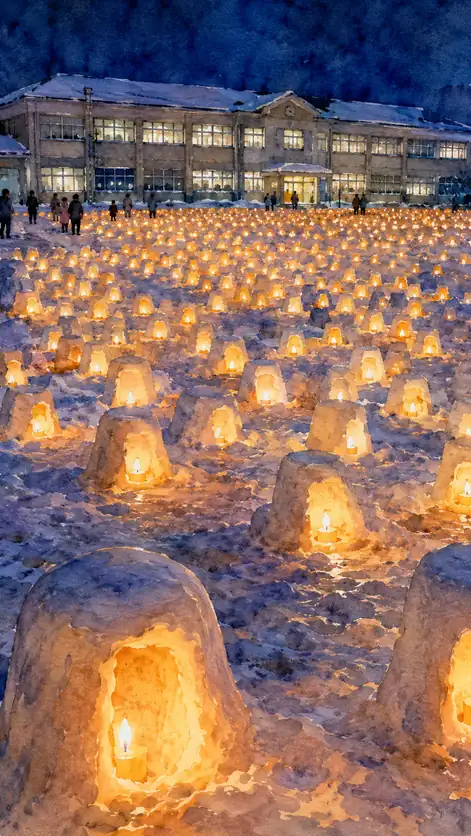 The Night Remembered by Windows and Flames
Similar Artworks
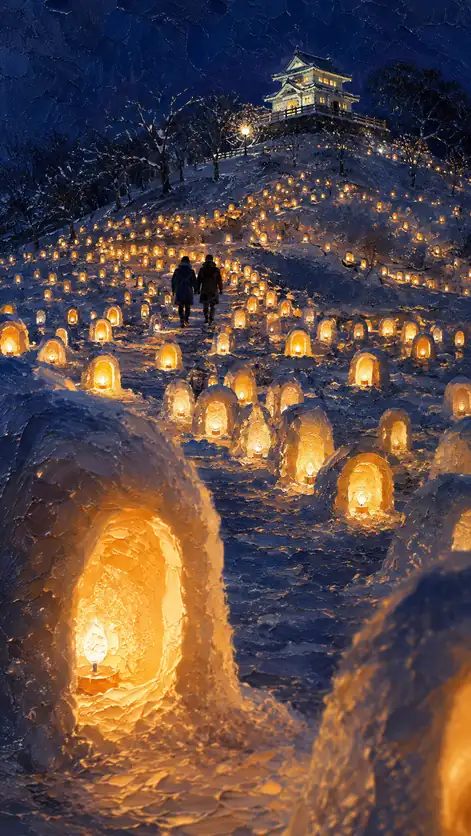 We Climb the Night at the Same Pace
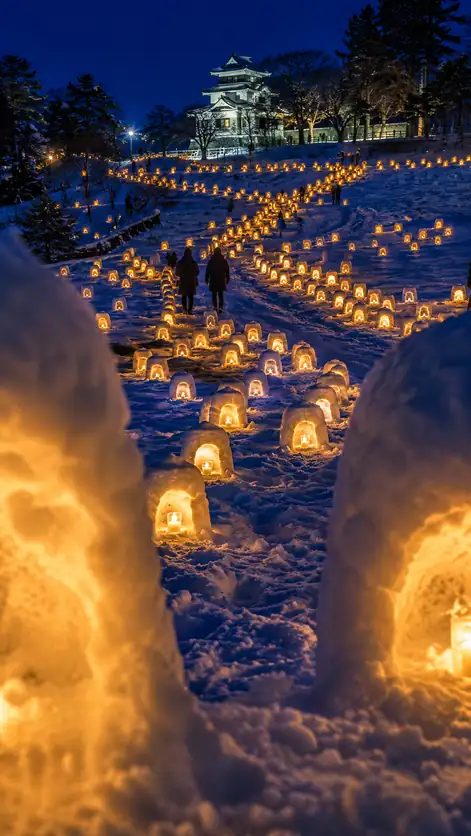 Through Gates of Light, Toward the White Castle
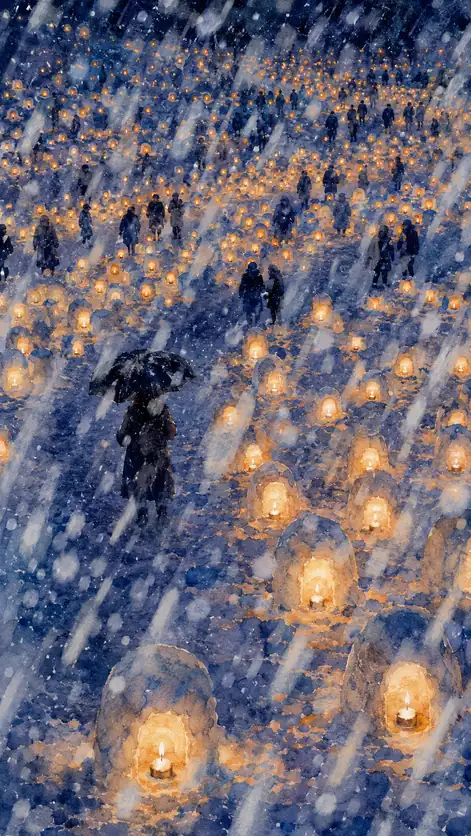 Through the Snow, Toward the Gathering Light
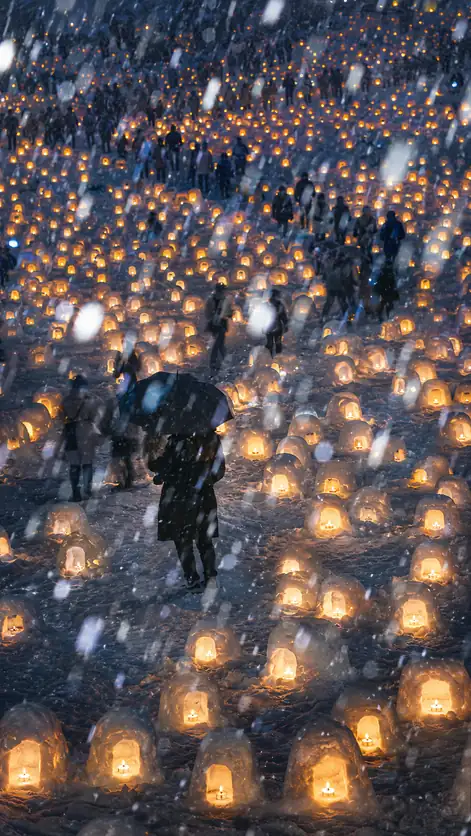 The Lights Wait Through the Storm
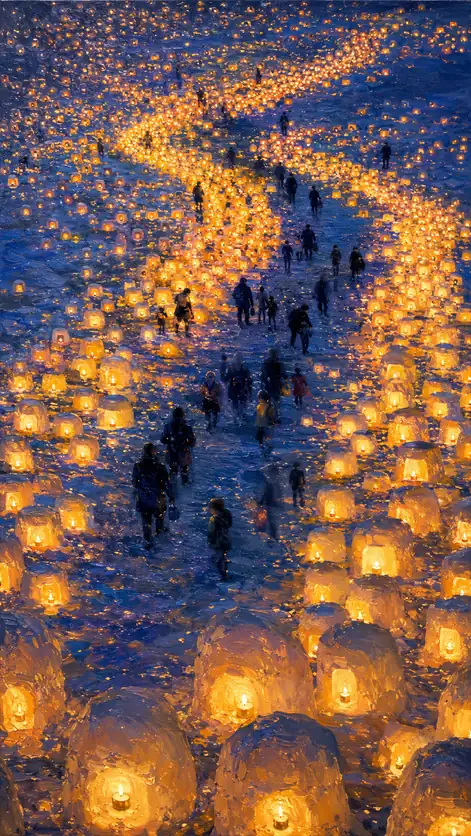 We Dissolve into the River of Light
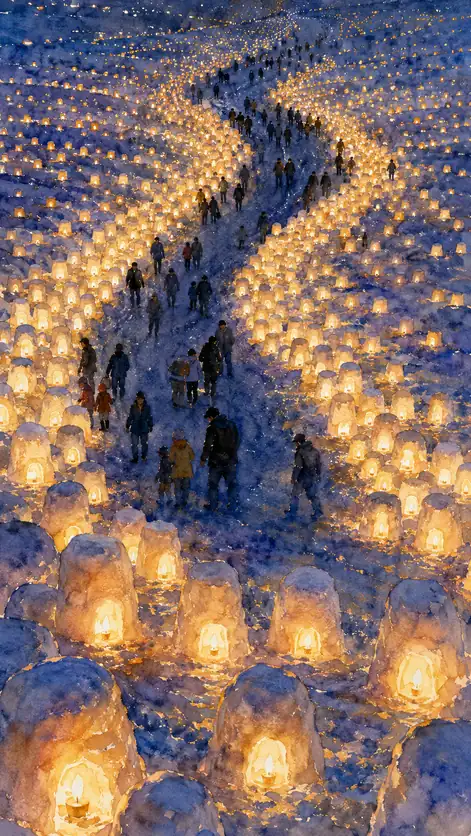 Walking the River of Light Together
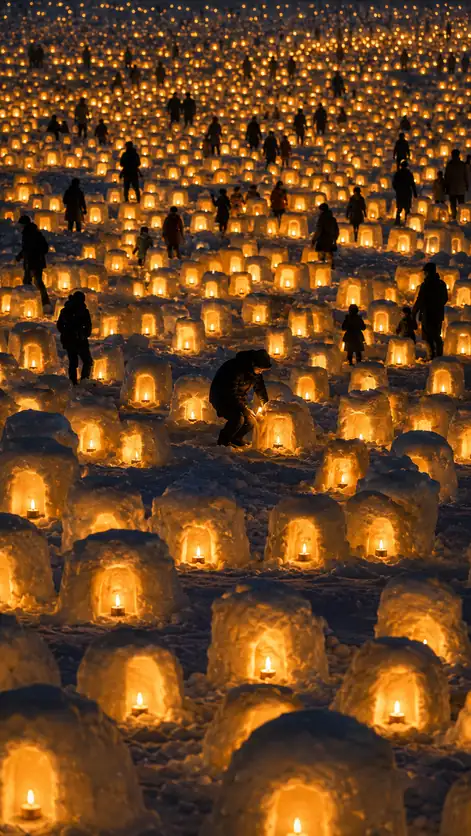 The Hand That Brings Stars to Snow
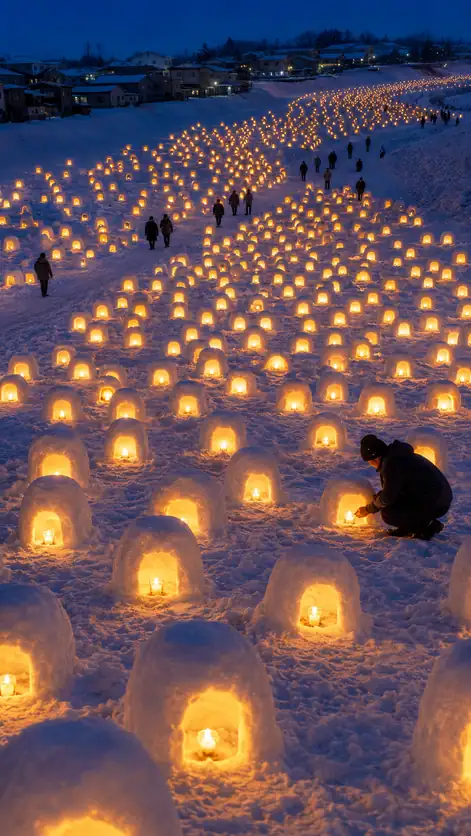 The River Kept Aglow
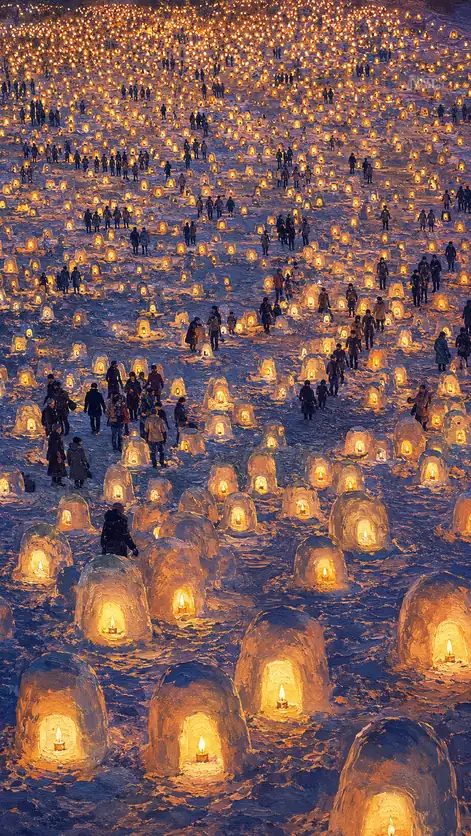 A Thousand Lights, One Warmth
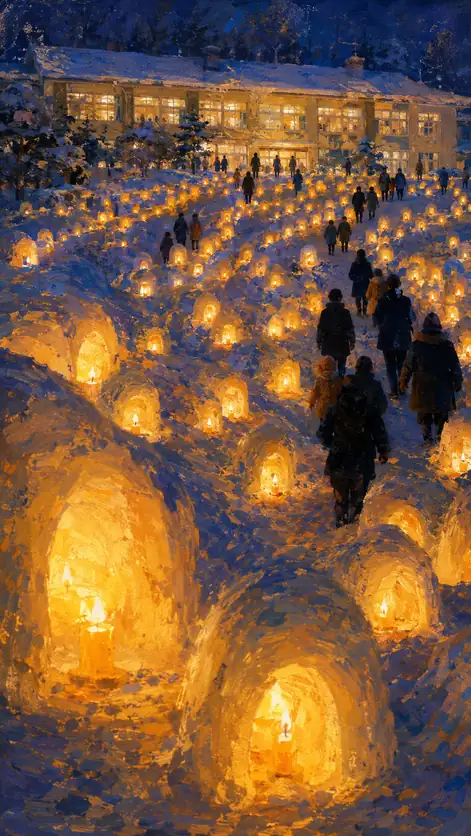 The Road Home to the Warm Windows