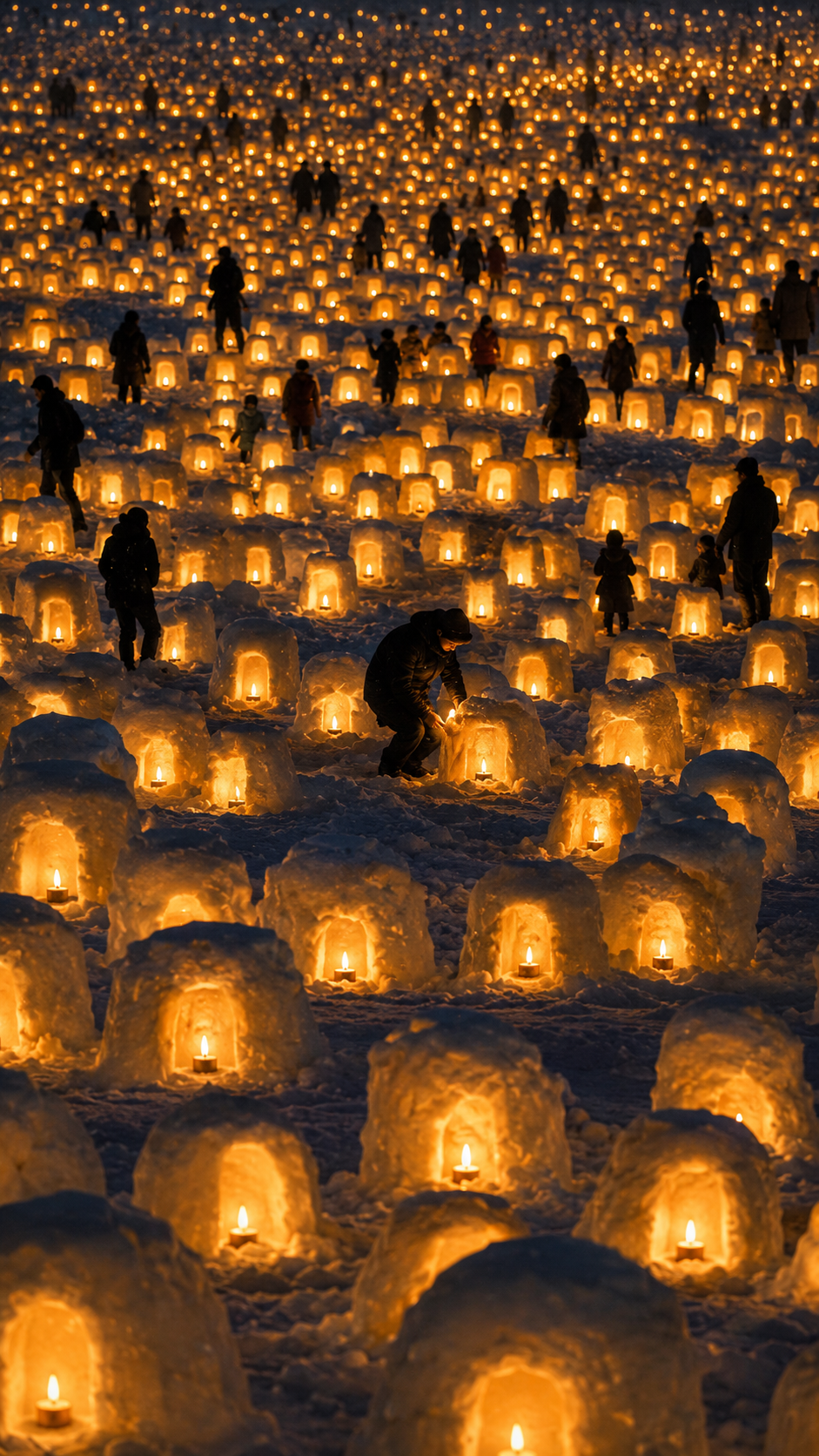
The Hand That Brings Stars to Snow
Critique
Introduction This vertical image presents the Yokote Kamakura Festival as an immense nocturnal field of glowing snow shelters and moving visitors. A near-central figure tending a candle provides a point of concentration. The scene's first impact comes from the density of amber lights suspended against blue-black winter darkness. Description Large rounded shelters fill the lower foreground, their openings revealing distinct flames. They multiply upward until individual forms merge into a luminous field. Adults and children appear as dark silhouettes throughout, some standing, some walking, and one bending close to a light. Snow ridges weave between the figures and catch narrow bands of orange reflection. Analysis Shallow depth in the foreground gives way to compressed distance above, increasing the sense of abundance. The central worker interrupts the repeated pattern and anchors the human scale. Alternating dark bodies and bright openings create a syncopated rhythm, while selective focus separates near forms from the soft upper lights. The limited blue-orange palette remains powerful because tonal differences are carefully controlled. Interpretation and Evaluation The festival appears less as a static display than as an inhabited field. Human silhouettes measure the landscape and show continuous movement, care, and participation. The depiction of snow translucency is convincing, and the crowded composition is held together by firm color organization. Its distinctive achievement is the integration of documentary immediacy with an almost abstract constellation of lights. Conclusion The initial spectacle of illumination gradually resolves into many individual encounters with warmth. Through repetition, focus, and lucid tonal contrast, the image gives the communal event both impressive scale and an accessible human center.
Same Subcategory
Similar Artworks
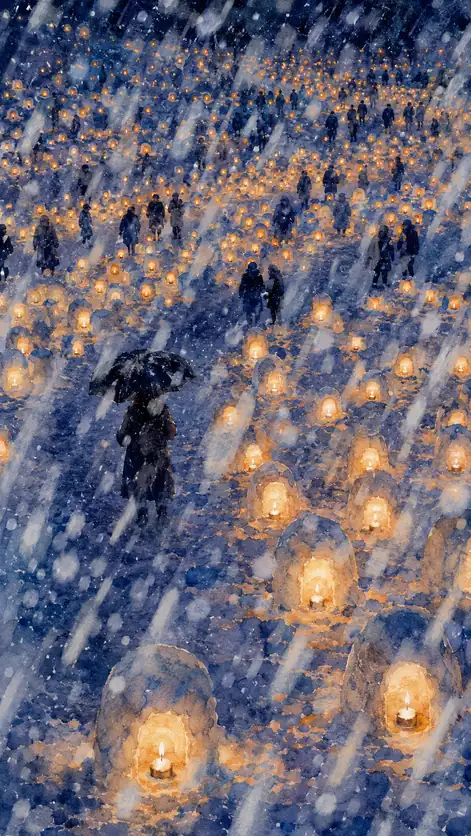 Through the Snow, Toward the Gathering Light
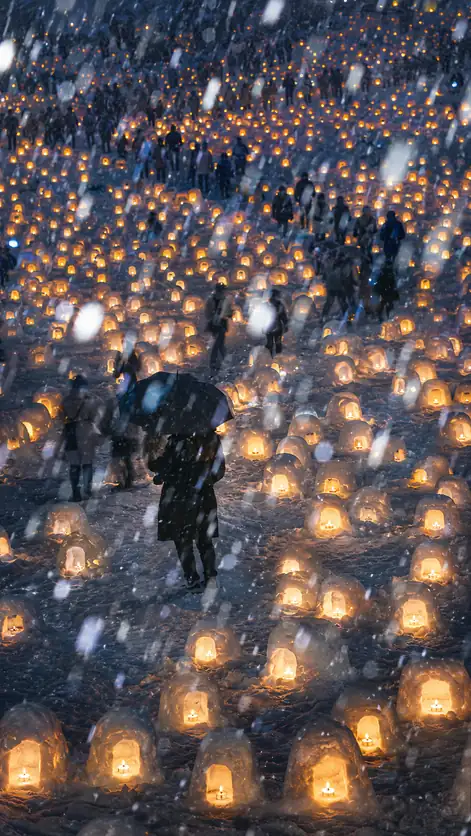 The Lights Wait Through the Storm
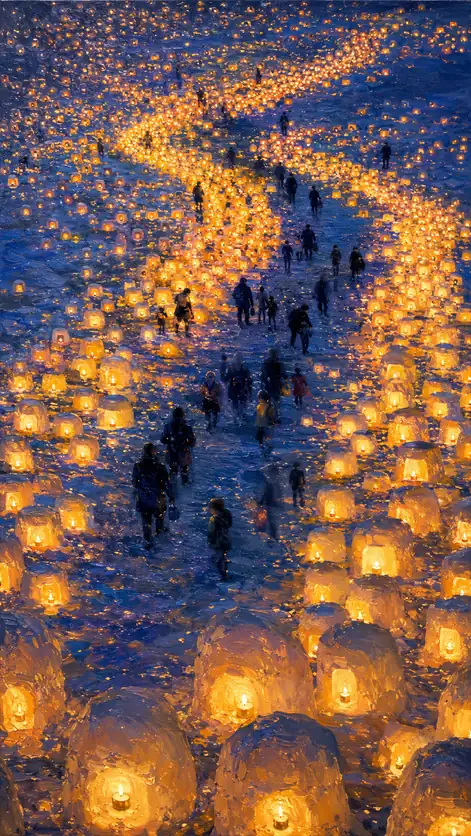 We Dissolve into the River of Light
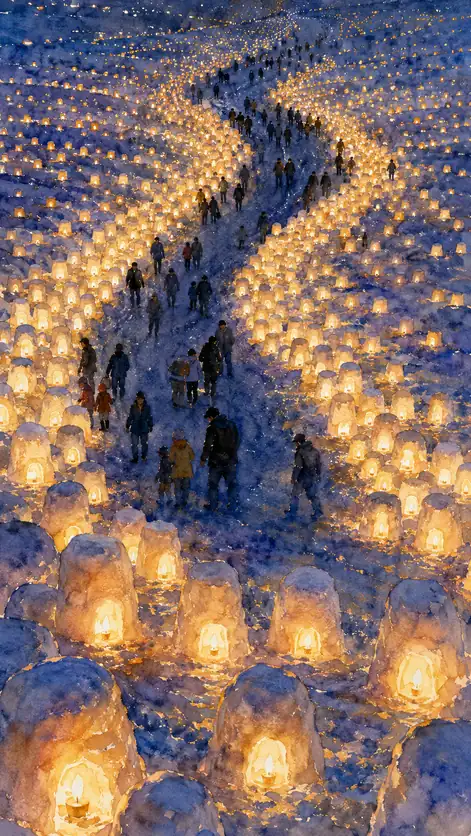 Walking the River of Light Together
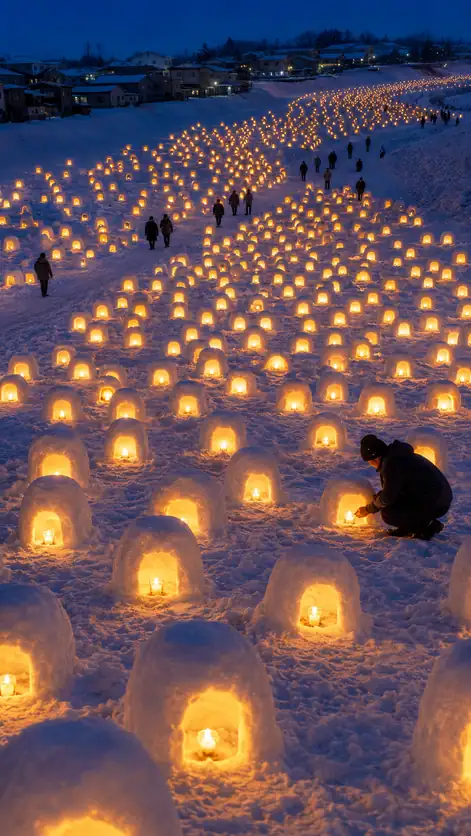 The River Kept Aglow
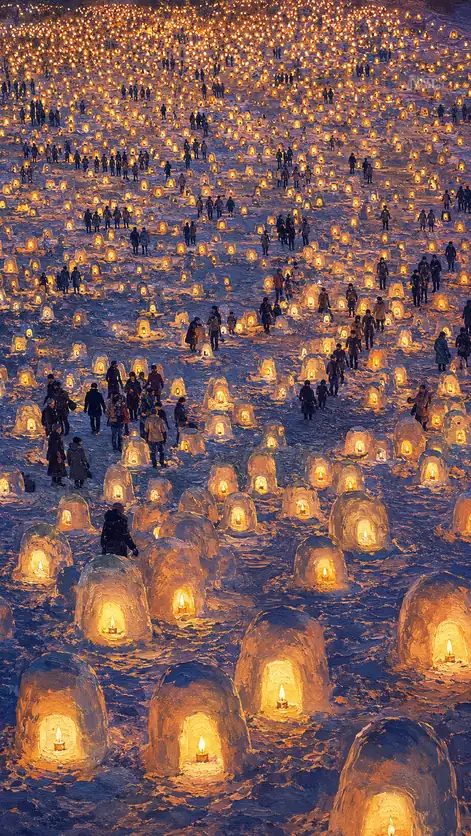 A Thousand Lights, One Warmth
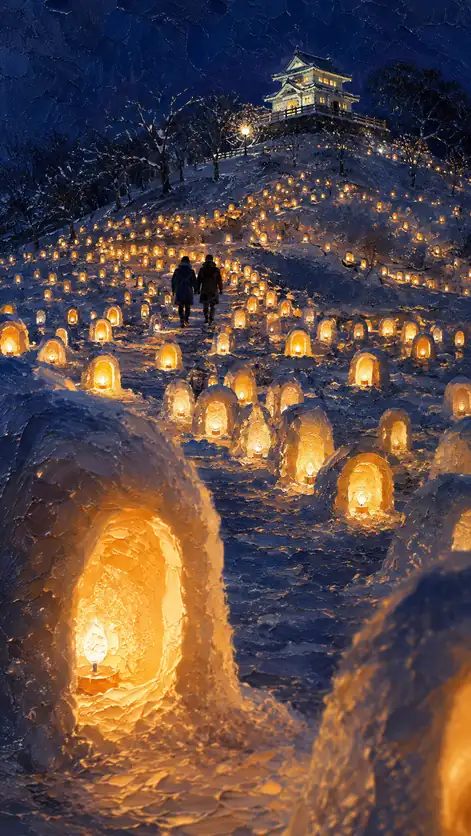 We Climb the Night at the Same Pace
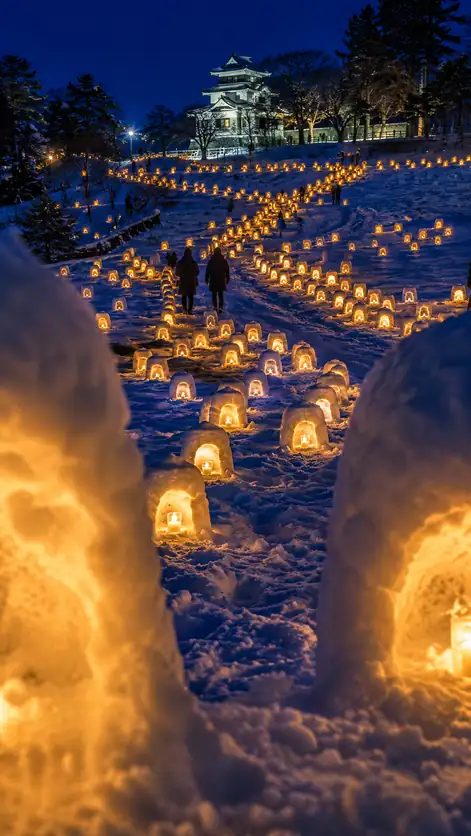 Through Gates of Light, Toward the White Castle
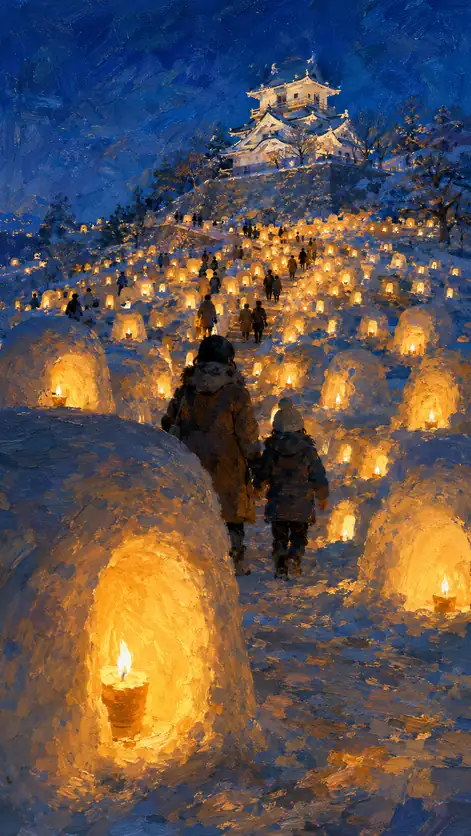 The Winter Castle Beyond Our Joined Hands
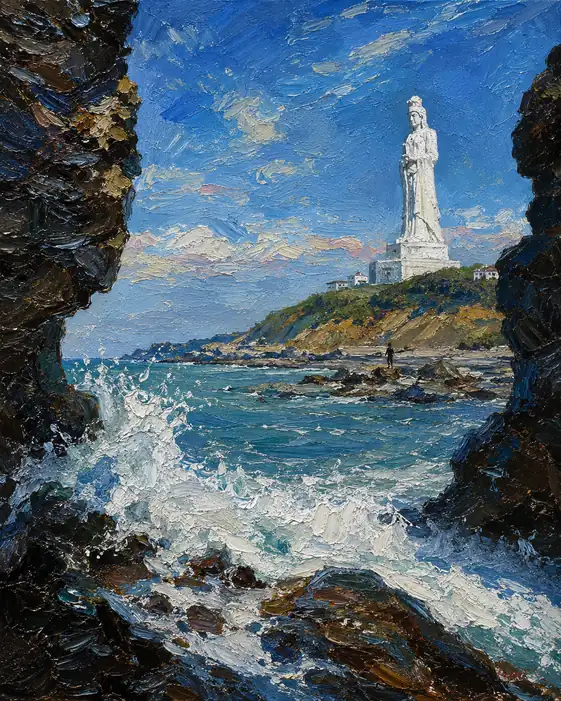 The Watcher Beyond the Tide