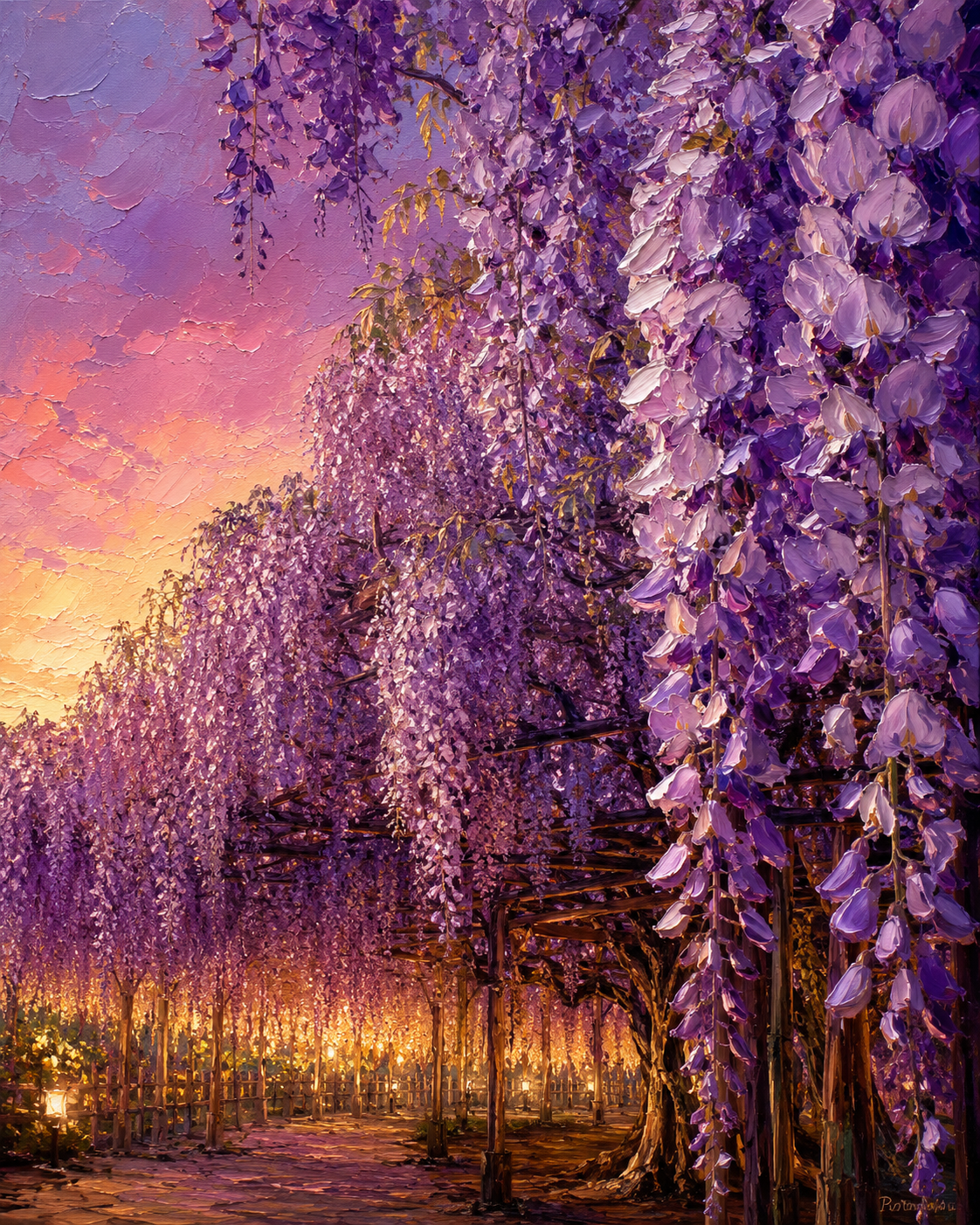
The Last Light Beneath the Blossoms
Critique
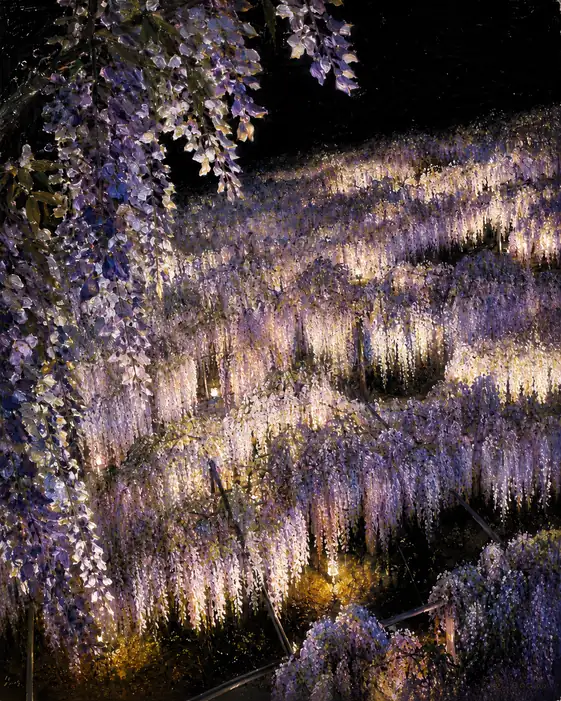
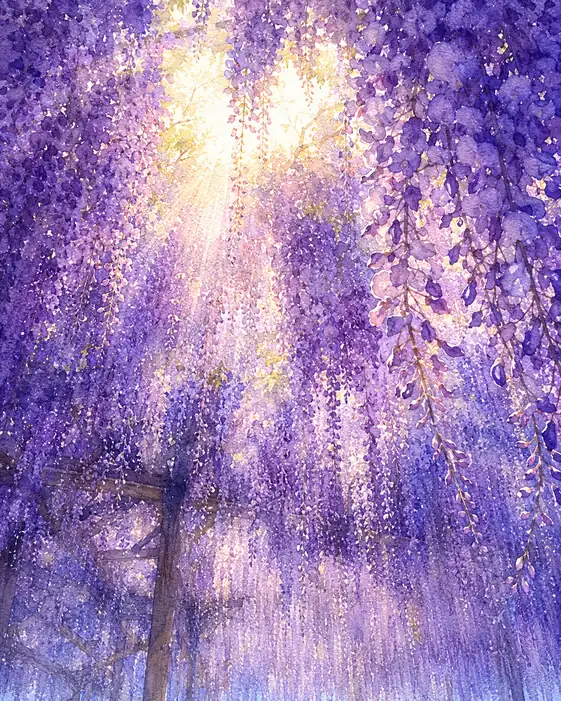
Introduction This vertical painting shows the wisteria of Ashikaga Flower Park at sunset, with the flowering canopy pressing close to the viewer. Purple blossoms dominate the scene, yet an open band of peach-colored sky introduces breadth. The first impression is opulent, warm, and distinctly theatrical. Description Large racemes descend along the right edge in layered lilac and violet strokes. A procession of rounded canopies recedes toward the left, each resting on dark wooden trellises and posts. Amber lights burn beneath the flowers, illuminating trunks, rails, and patches of ground. The horizon glows yellow-orange before rising into a rose and lavender sky. Analysis The composition uses asymmetry to create motion: the foreground blossoms form a heavy curtain, while the distant avenue opens outward. Repeated arches of foliage establish depth more strongly than a single vanishing path would. Thick paint gives the petals substantial weight, and broken highlights animate their edges. Warm illumination below answers the cool canopy above, binding separate spatial zones. Interpretation and Evaluation The image presents flowering as both natural event and staged spectacle. Its drawing convincingly distinguishes hanging petals, gnarled wood, and open atmosphere. The color is heightened but internally consistent, while the diagonal organization keeps the dense subject readable. The fusion of close-up abundance and panoramic recession is the work's most distinctive compositional achievement. Conclusion The initial sense of decorative richness gradually gives way to an awareness of measured depth and visual pacing. By balancing dense texture with open sky, the painting turns a garden at dusk into a coherent meditation on abundance and passing light.
Same Subcategory
Similar Artworks
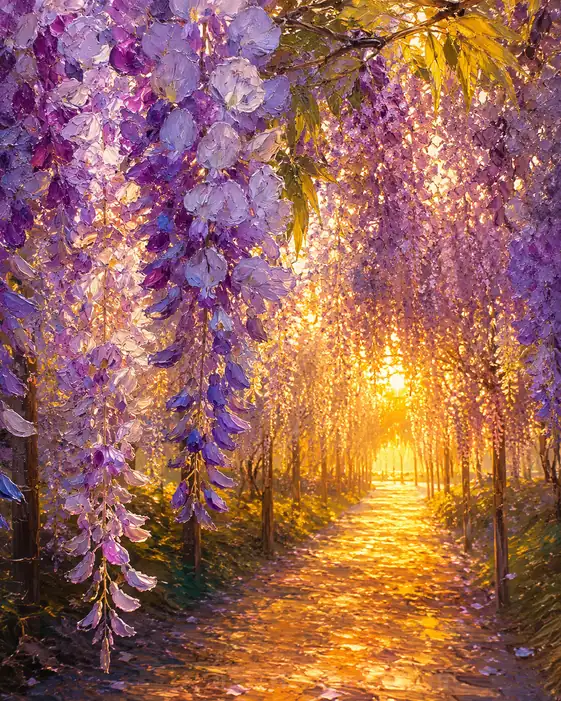 Through Violet Shade into Gold
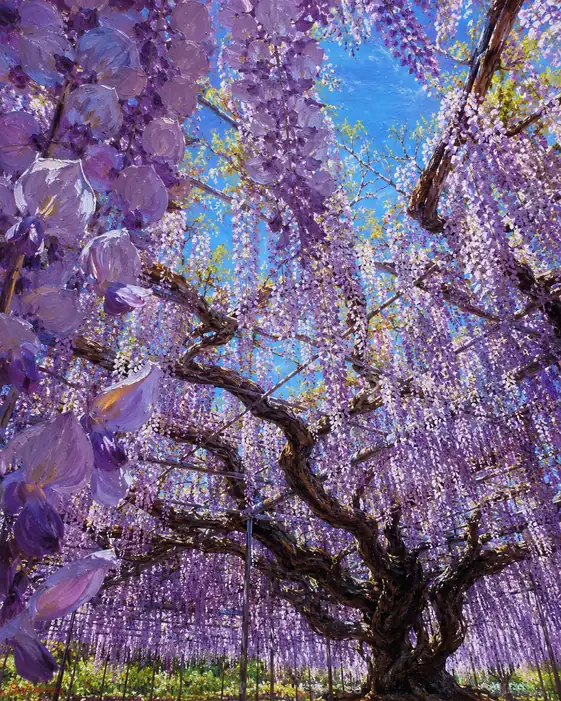 The Wisteria's Memory, Holding Up the Skylight Blue
 Violet Breath Sewing the Dusk
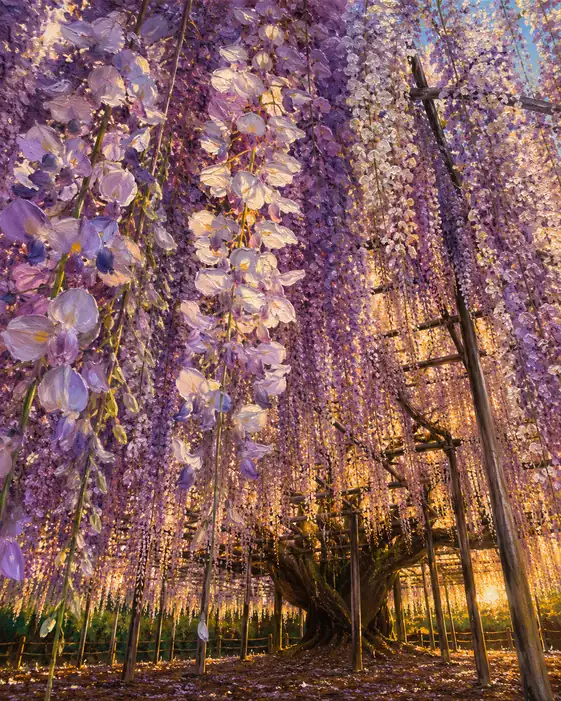 Where the Ancient Wisteria Holds the Sun
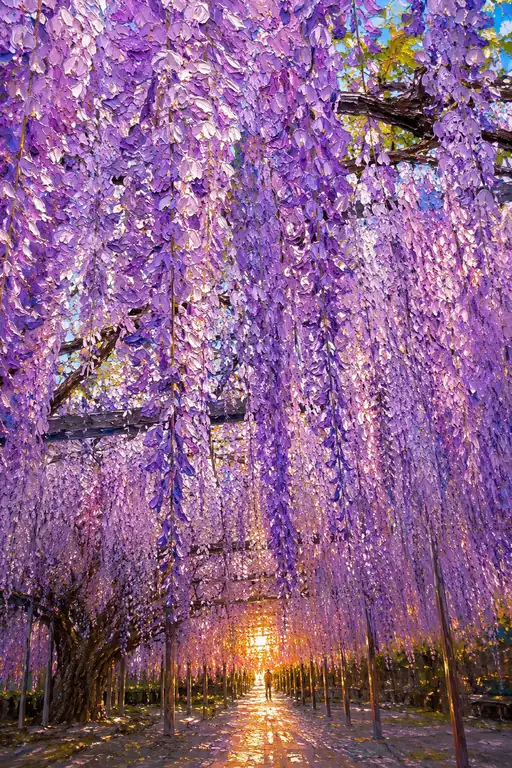 The One Who Stands at the End of Light
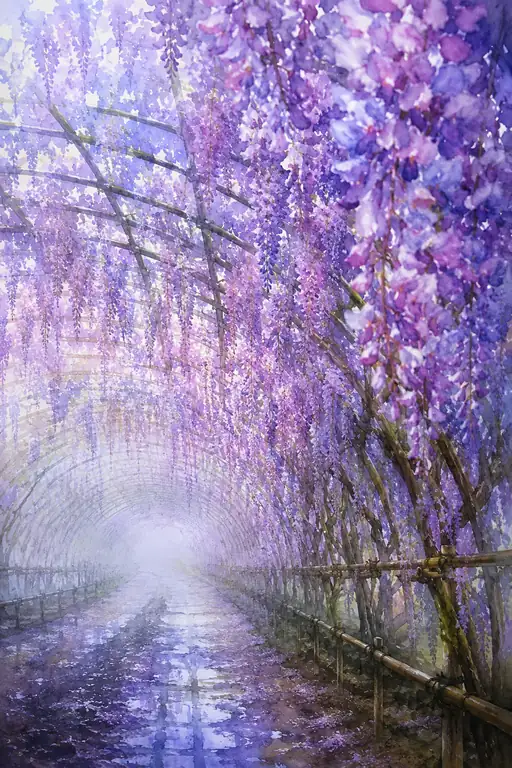 Where the Blossoms Wait Beyond the Mist
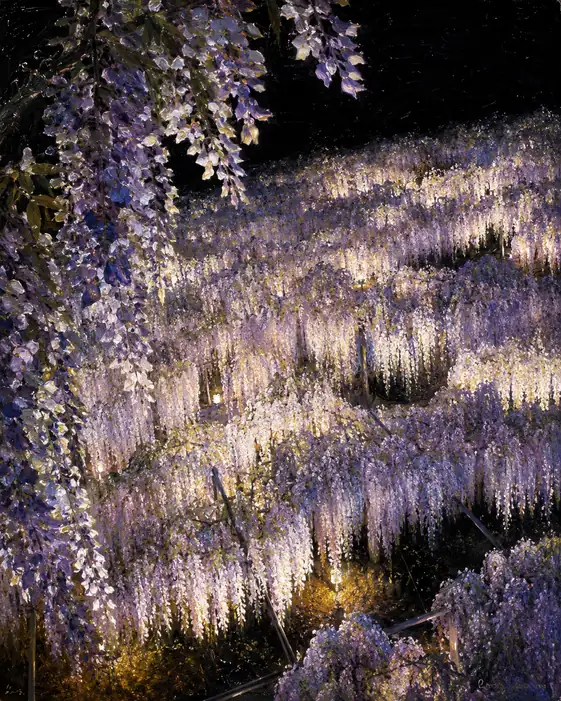 Blooming in Layers of Night
 Violet Unfolding into Darkness
 Beyond the White Wisteria, Time Unravels
 Sunburst Through the Violet Canopy