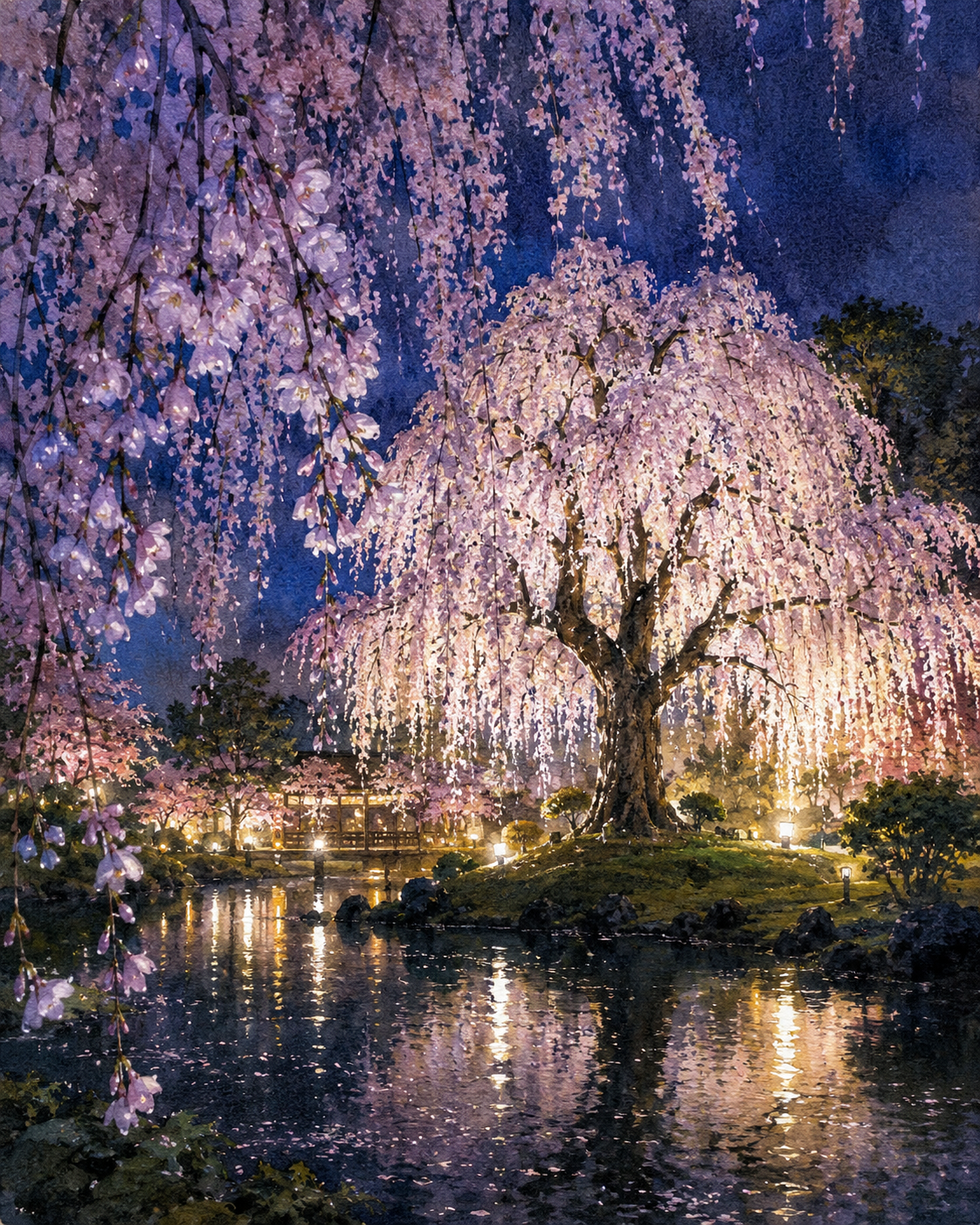
After the Crowd, the Cherry Tree
Critique
Introduction This painting depicts a monumental weeping cherry illuminated at night and reflected with garden lamps in a pond. Deep navy sky, pale pink blossoms, and warm-white lights create cool-warm contrast, presenting full bloom as both festival and silence. Nearby hanging branches place viewers inside a floral curtain. Description A thick-trunked cherry stands on a small island at center-right, its branches releasing countless long blossom strands. Low lamps illuminate the canopy from below. The pond reflects trunk, flowers, and light vertically amid scattered petals. Another close cherry branch covers the left. A bridge or pavilion glows behind, while the right distance sinks into dark woods. Analysis The central tree forms a vertical axis, balanced asymmetrically by near flowers. Uplighting clarifies hanging rhythm against navy. Dots and short lines describe blossom, dense dark marks form trunk, and lateral strokes make water. Lights continue into reflection, extending night depth. Violet, pink, blue, and gold remain cohesive. Interpretation and Evaluation Artificial illumination reconstructs the tree as a nocturnal performer. Reflection destabilizes its splendor and suggests bloom's brevity. Visible knots and moss reveal an old living body beneath decoration. With no people, lamps and pavilion imply a viewing site in a quiet interval before or after crowds. Conclusion Glowing flowers overwhelm first, but black trunk and pond darkness supply weight. Near strands measure distance and envelop viewers. Broken reflections preserve gentle motion. Dimmer tips make the hanging form three-dimensional. The work expands night-blossom festivity into relationships among illumination, tree age, and water time.
Same Subcategory
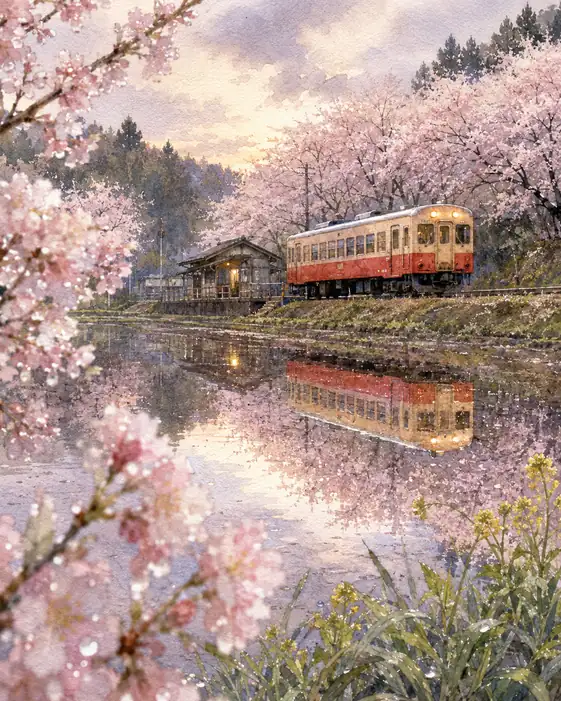 Spring Waits at the Country Platform
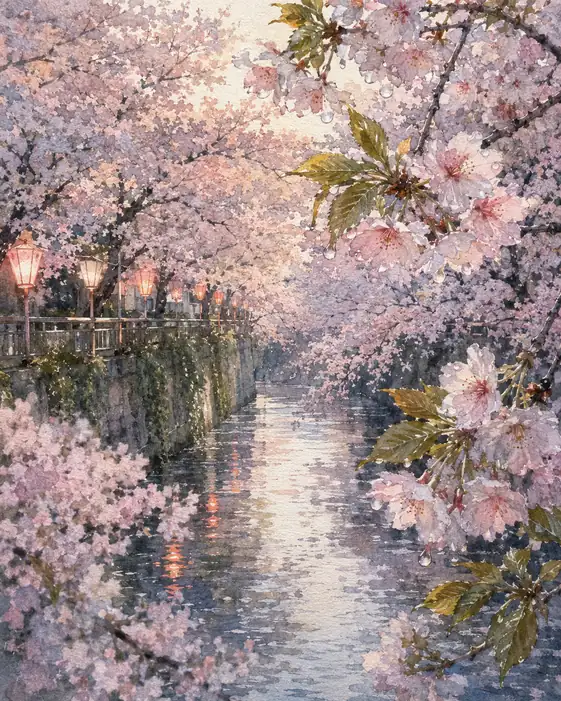 Rain Beads on the Passing Bloom
Similar Artworks
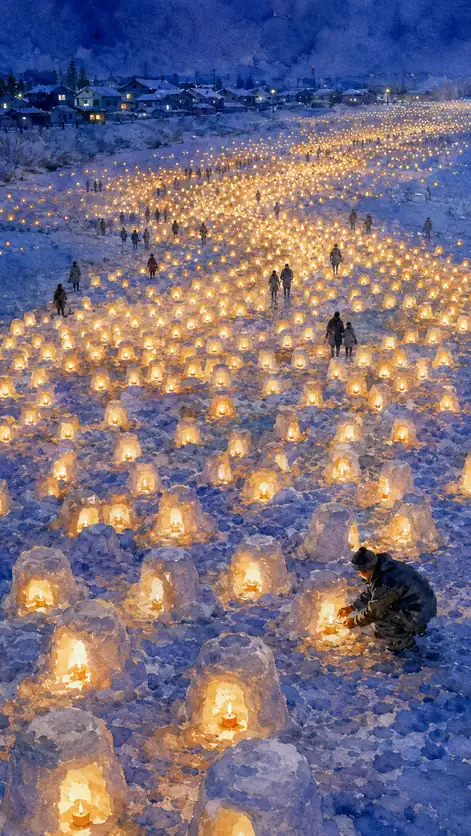 On the Water God's Riverbank, a Thousand Ice Blossoms Bloom
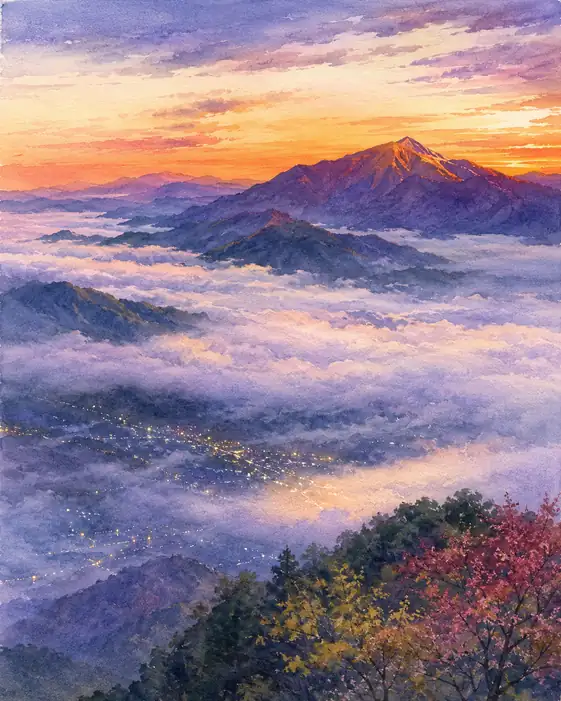 Where Town Lights Drift Beneath Clouds
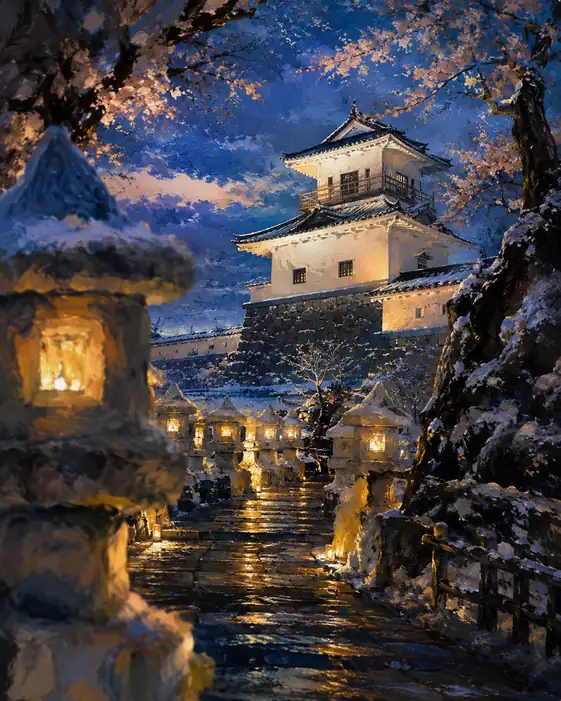 Lanterns Teach the Castle to Glow
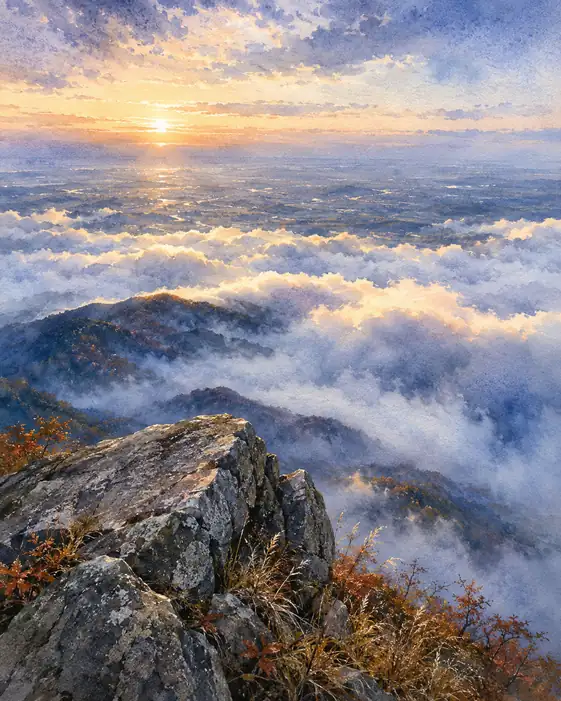 The World Begins Beyond the Clouds
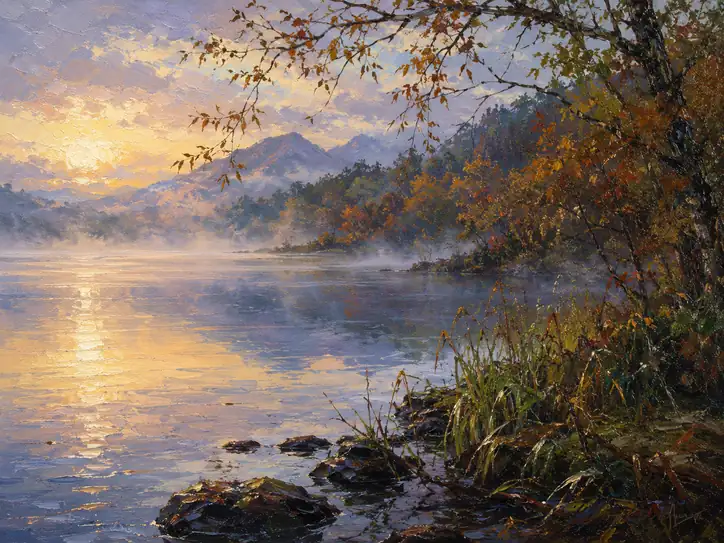 Solitude by the Fog-Bound Pond
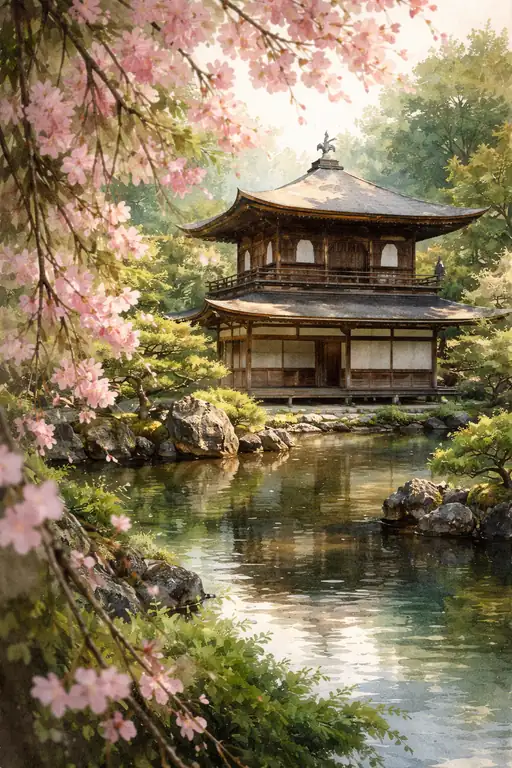 Spring's Gilded Reflection
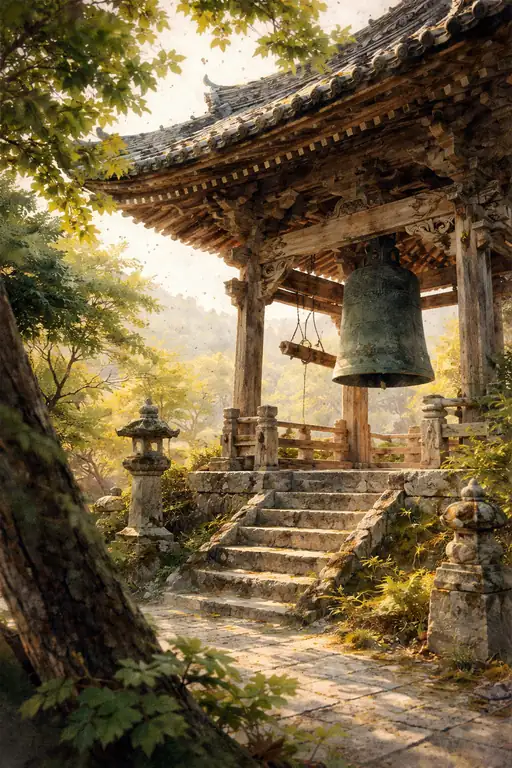 The Silent Wait of the Majestic Temple Bell
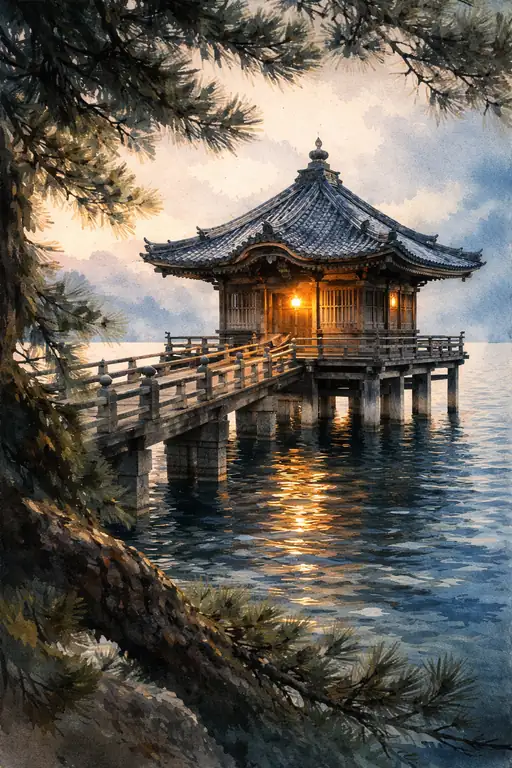 Sanctuary of the Golden Ripple
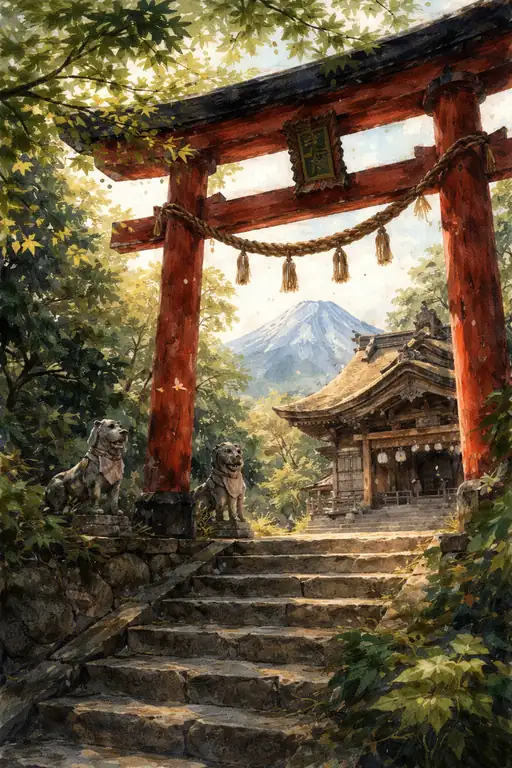 Sacred Portal to the Divine Peak
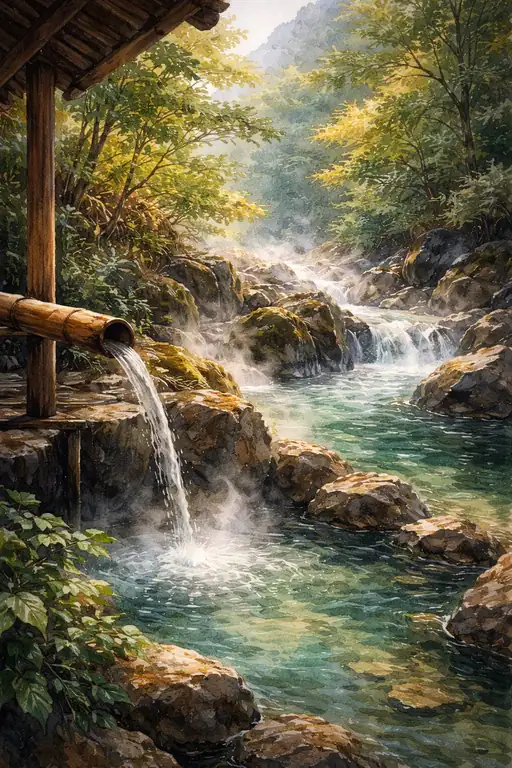 Breath of the Emerald Sanctuary