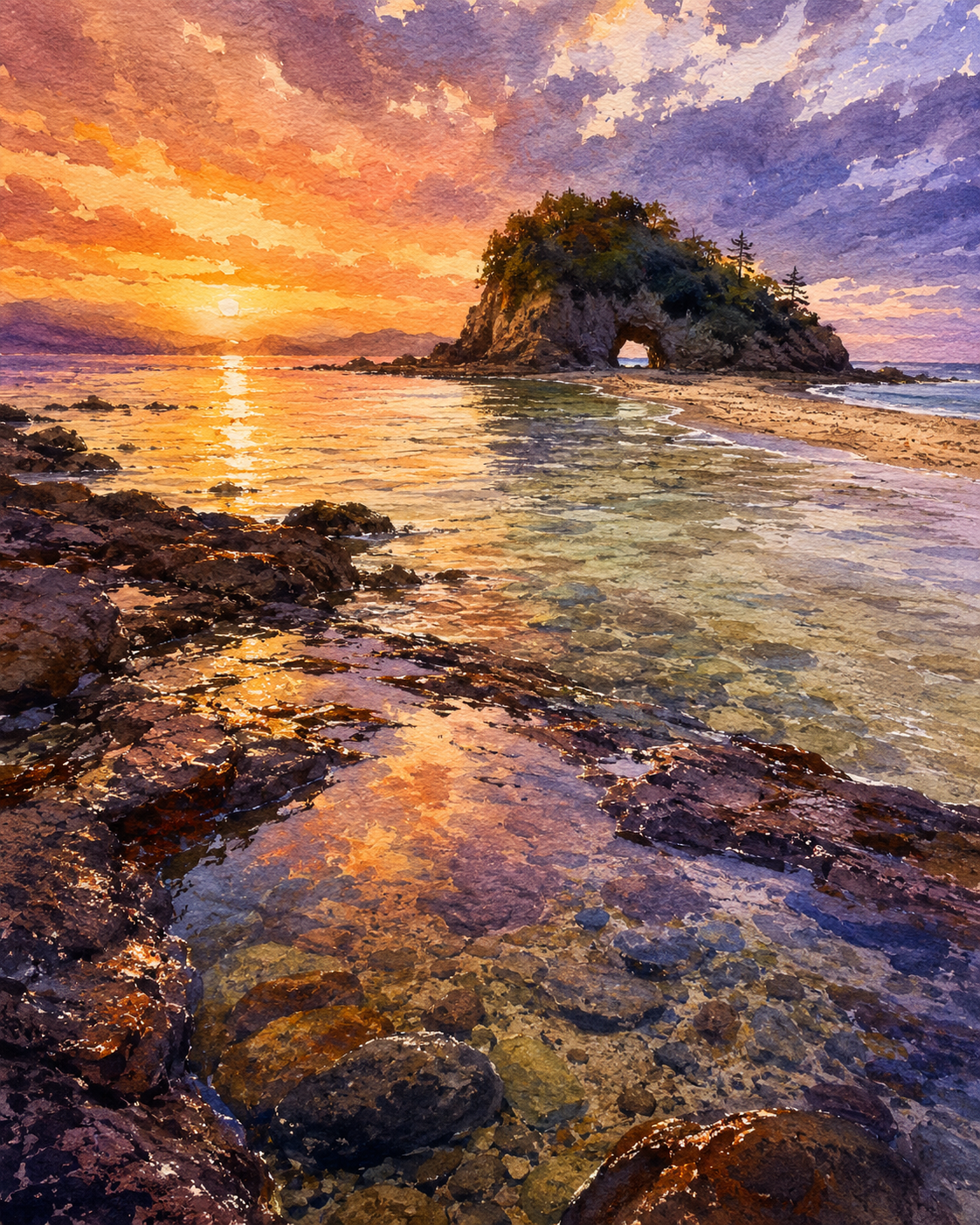
The Sun Through an Ancient Door
Critique
Introduction This coastal landscape depicts shallow sea at sunset and a natural arch through a central rocky islet. Gold sky and water at left, violet-blue cloud at right, and wet foreground stone combine evening beauty with tidal tactility. The small opening through heavy rock connects distant sea with nearby pools. Description A low tree-covered islet stands above center with an arch at its base. A narrow sandbar reaches it from the right, while the sun nears the left horizon. Transparent shallows reveal stones, sand, and seaweed. Wet violet-black rocks occupy the left foreground and carry orange reflections. Sky shifts dramatically from orange to purple and blue. Analysis The dark island balances the left sun against the rightward sandbar. Foreground diagonals and shoreline curves direct vision toward it. Visible bottom and sky reflection coexist, expressing surface and depth. Orange-blue complementarity is moderated by brown rock and green-gray water. The white arch becomes a precise focus and proves the island's thickness. Interpretation and Evaluation The opening records long erosion beside very brief sunset light. A sandbar that changes with tide implies a limited period for crossing. Detailed pool stones return the grand sky to close observation. The landmark is treated not simply as icon but as a relationship among seawater, geology, and tidal level. Conclusion Burning sky and dark island dominate first, but transparent shallows make the scene bodily. Broken solar reflection conveys moving water. The arch opens distance and prevents enclosure. Purple and orange on wet rock connect both sky conditions to the viewer's feet. Transparency and dense light effectively express thresholds of tide and dusk.
Same Subcategory
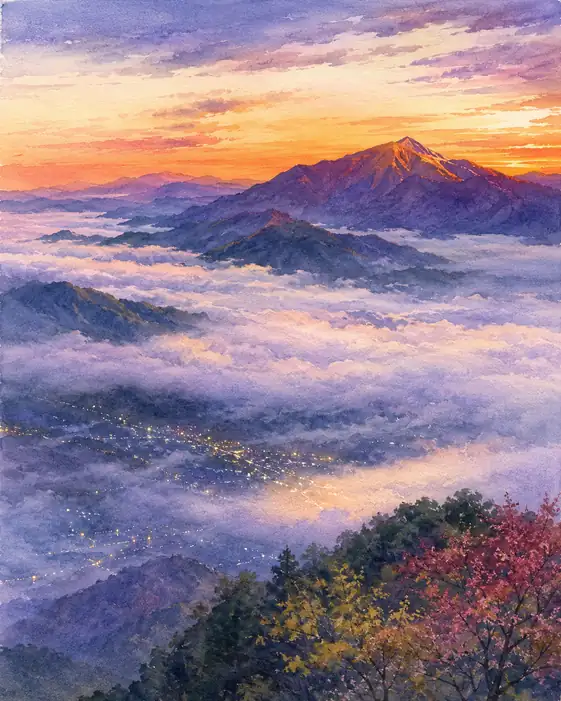 Where Town Lights Drift Beneath Clouds
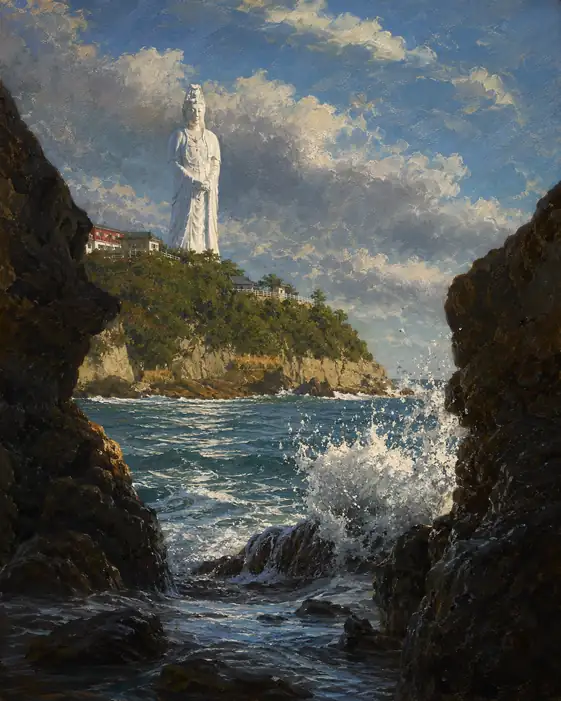 The White Guardian Beyond the Breakers
Similar Artworks
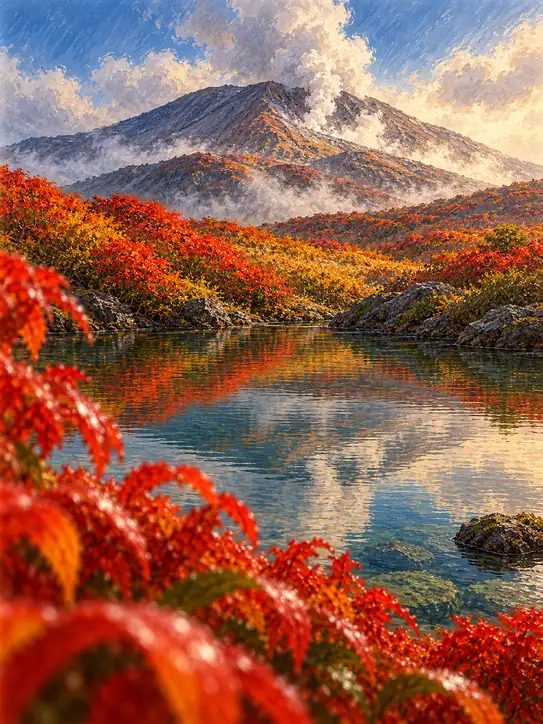 The Mountain Breathes Through Autumn
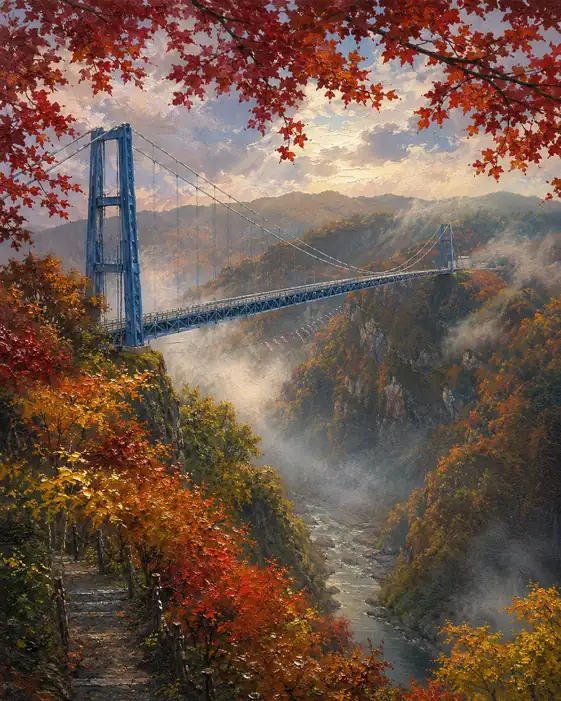 Bridge Above the Autumn Abyss
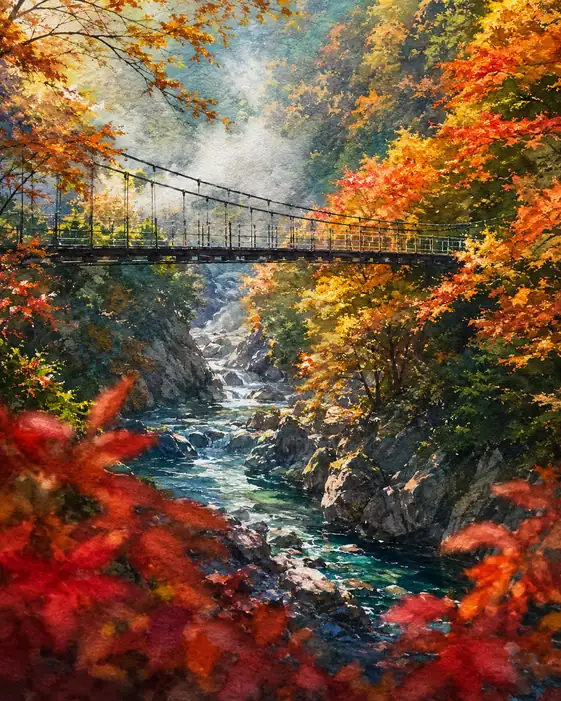 The Empty Bridge Invites the Wind
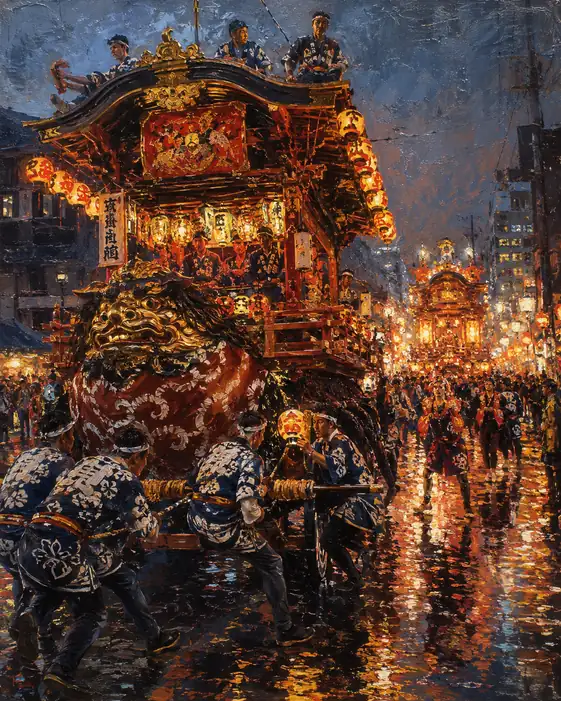 We Pull the Night into Flame
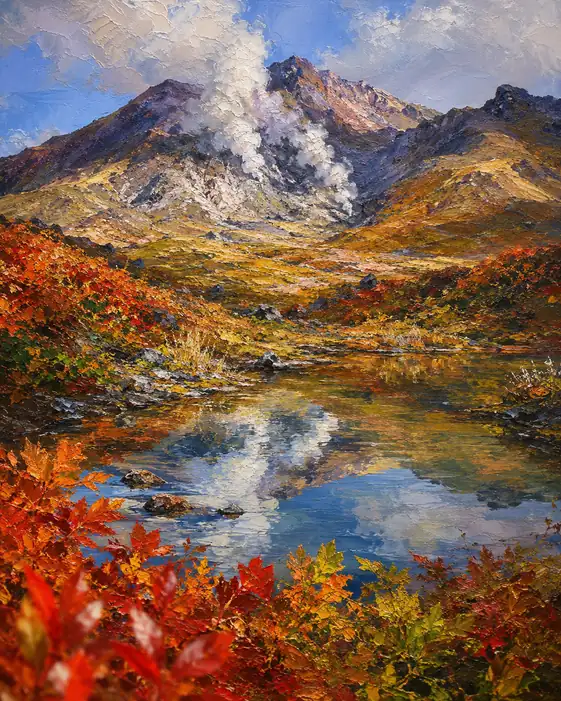 The Mountain Breathes into Autumn
 A Waterfall Carrying the Last Light
 Symphony of Stone and Torrent
 Autumn Leans Into the Crossing
 When Heaven Finds the Iron Arc
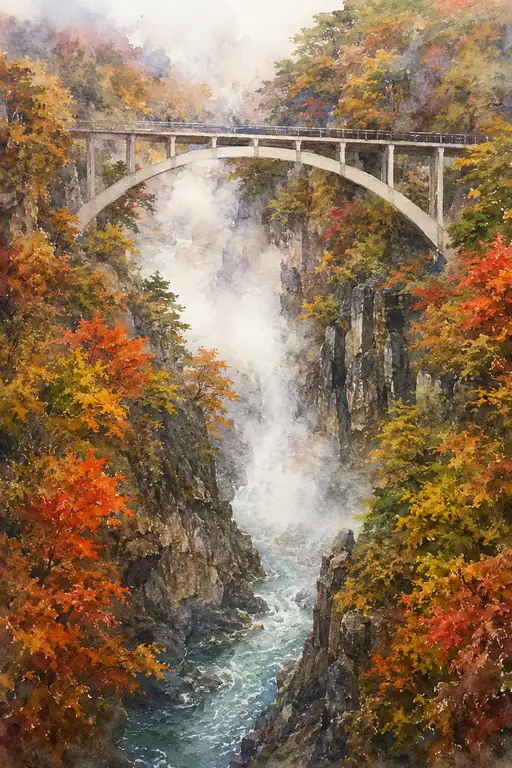 The White Arch Holds the Mist