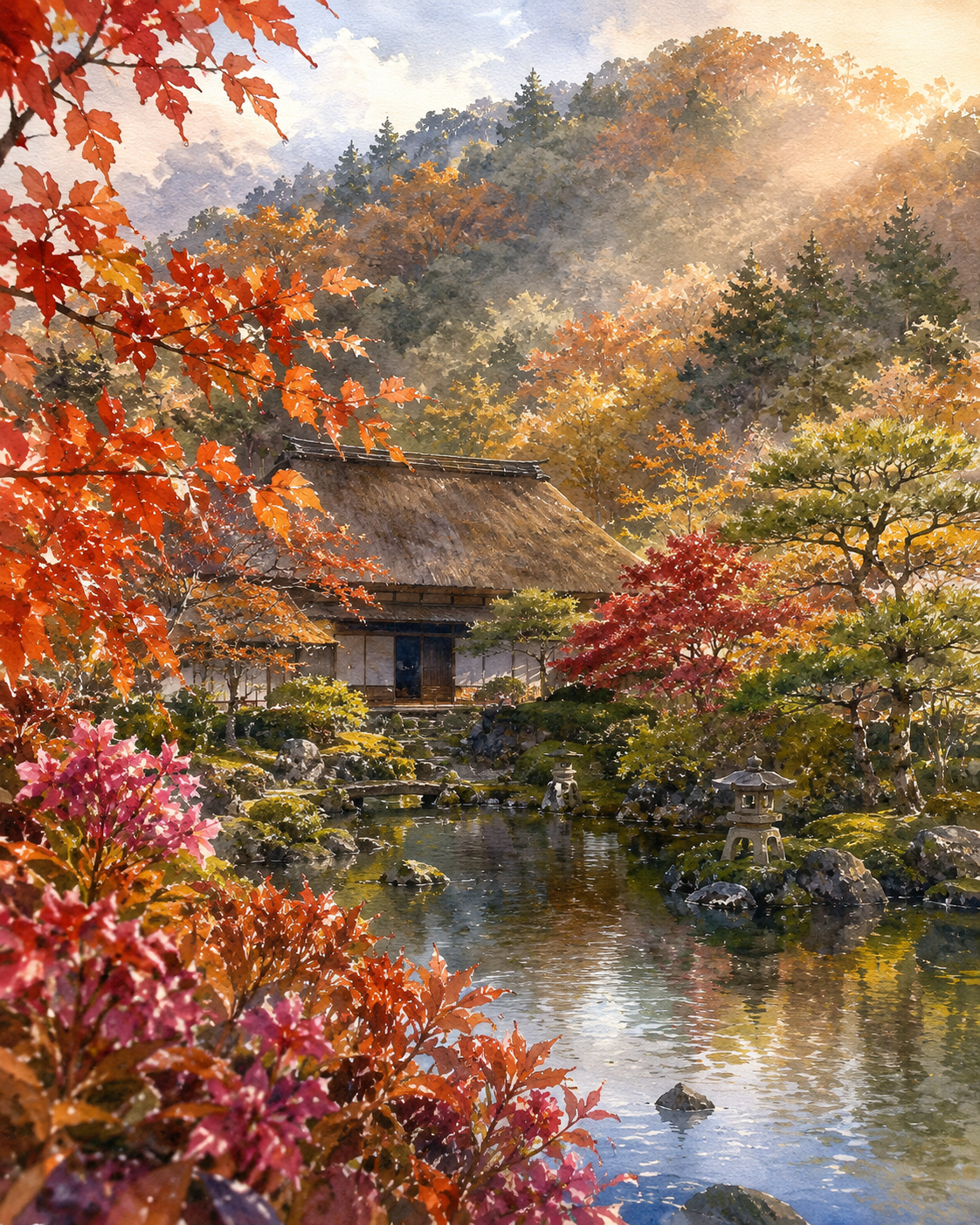
A Thatched House Holds Autumn
Critique
Introduction This autumn scene depicts a thatched house beside a pond and stone lanterns beneath colored mountains. Brilliant red foreground leaves, still central water, and modest architecture connect seasonal fullness with cultivated space. Gold light enters from upper right through mist and canopy, giving the quiet garden a brief daily radiance. Description A large thatched house stands across the upper center with pale walls and dark entrance. Moss, stones, clipped pines, and shrubs fill its garden above a pond. Several stone lanterns stand in and beside the water. Red, orange, and pink leaves overlap the left foreground, while pine branches extend from the right. Autumn woods and morning haze cover the mountain behind. Analysis The roof trapezoid and pond horizontal create stability, punctuated by a right lantern. Saturated left foliage balances green pine and opens vision toward water. Thick detailed foreground yields to misted distance. Reflections of sky, trees, and lanterns break laterally, remaining distinct from objects. Repeated gold illumination unifies the scene. Interpretation and Evaluation The garden reorganizes nature, yet shared autumn color makes cultivation continuous with the mountain. The house becomes both viewing place and vessel enduring seasons. Lanterns supply human and ritual order, while water transforms them into unstable images. Pond, moss, and thatch restrain brilliant foliage into mature calm. Conclusion Red leaves and sunlight attract attention first, but dark pond and house stabilize emotion. Small ripples preserve time within stillness. Directional strokes separate thatch from leaves. Lantern scale describes depth and possible movement. Light, color, and garden structure express autumn habitation as quiet fulfillment.
Same Subcategory
 Morning Opens Beyond the Stone
 Dawn Finds the City Beneath Clouds
Similar Artworks
 Rain Pearls Beneath Turning Sails
 Spring Waits at the Country Platform
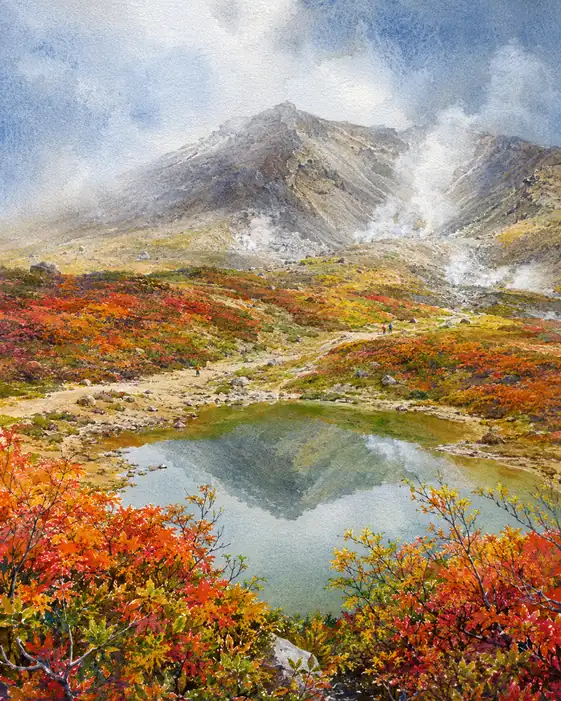 Between Steam and Still Water
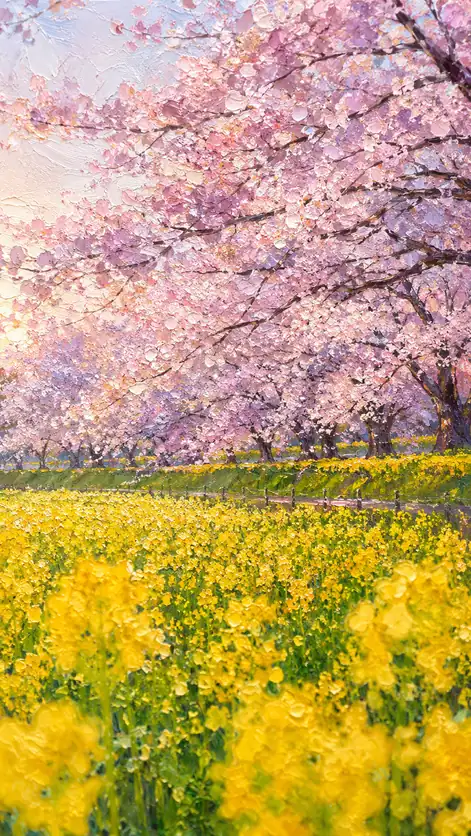 Spring Has Two Voices
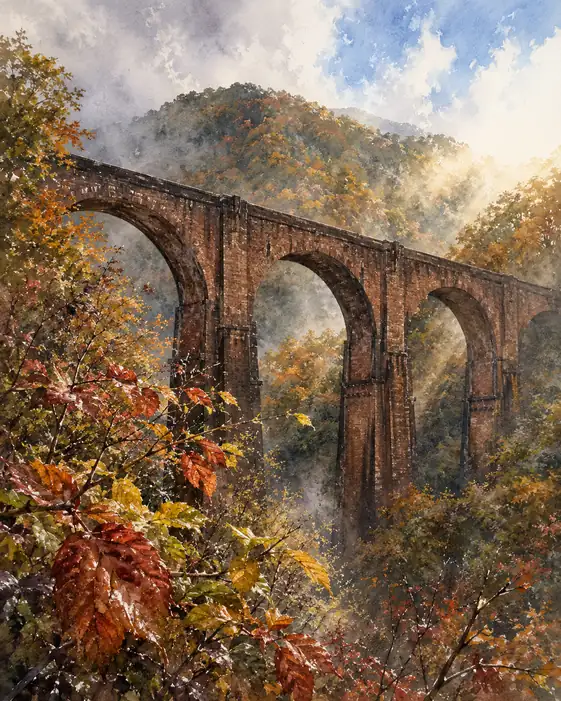 Arches Holding the Mountain's Memory
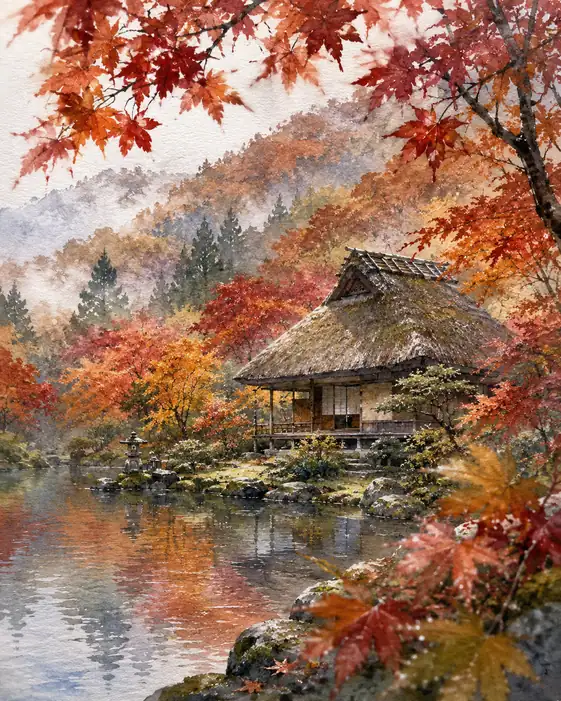 A House Where Autumn Returns
 Steam Carries Spring Home
 When the Sky Learned to Swim
 Beneath the Golden Guardian
 One Pause Above the Burning Valley