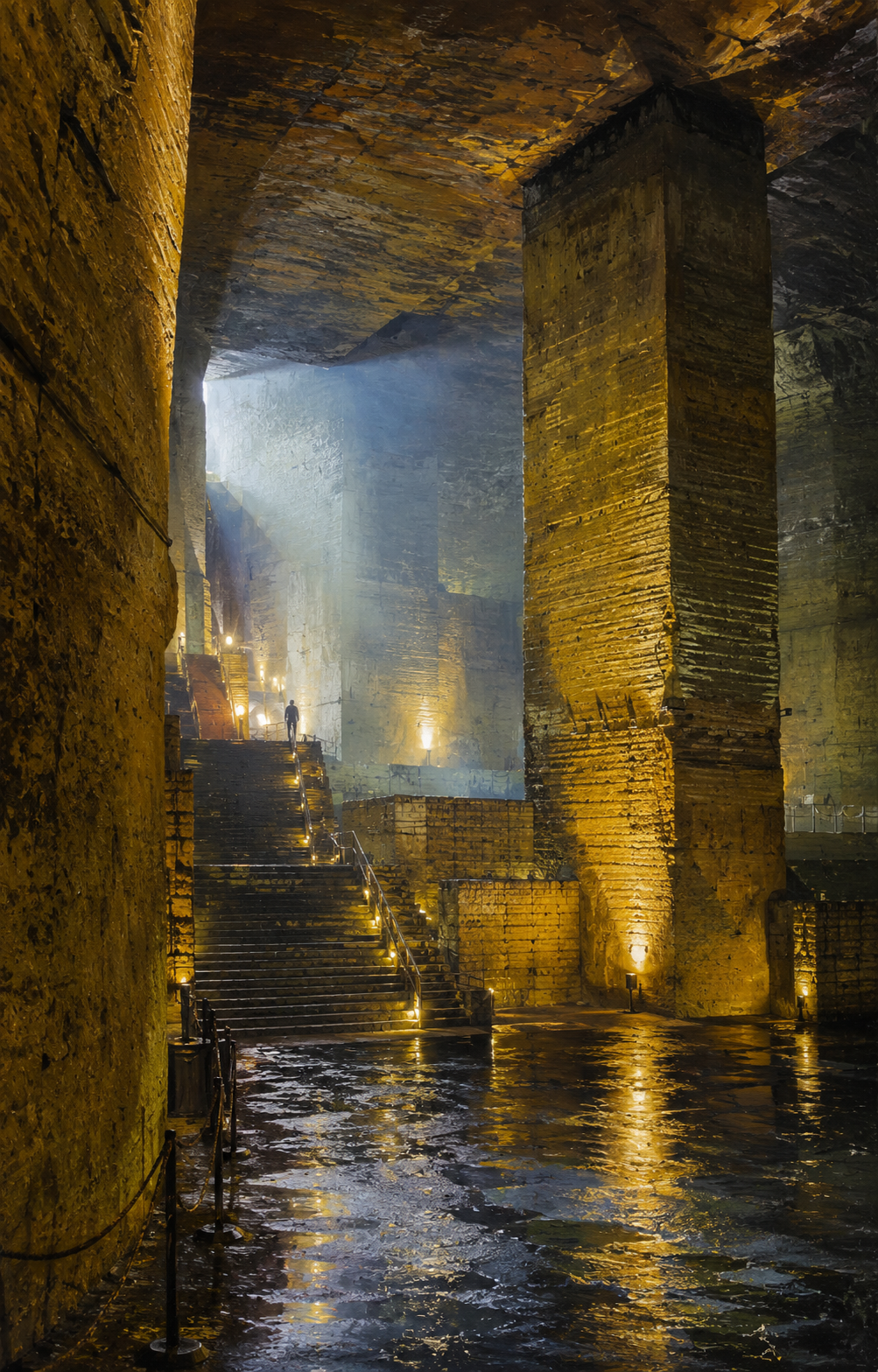
Cathedral of the Quarry
Critique
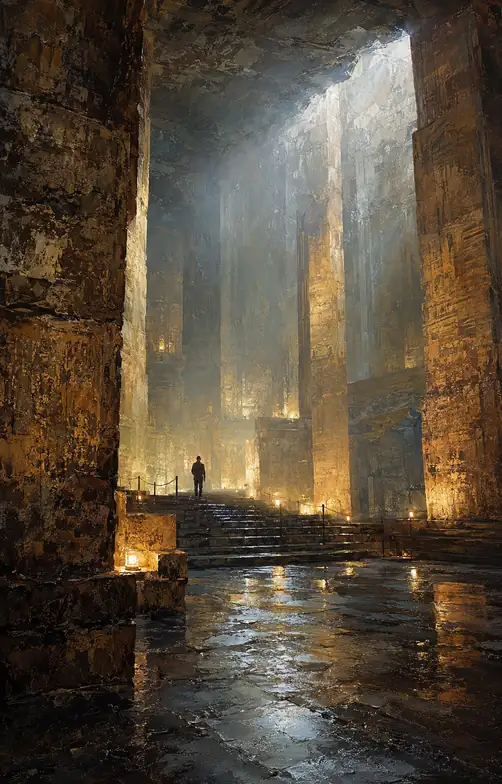
Introduction This painting depicts a monumental underground stone chamber through golden artificial illumination and blue-white daylight descending from above. Vast pillars, ceiling, stairs, and wet floor convey the weight and scale of a human-cut interior. One tiny figure becomes both measure and emotional center, approaching traces of past labor. Description A huge square pillar reaches the ceiling at right, while a near rock wall encloses the left. Broad steps rise in two stages, with a dark person standing above. Many small lamps follow rails and illuminate masonry from below. Blue-white rays enter through a high opening and brighten haze. Wet foreground paving spreads broken gold and blue reflections. Analysis Strong pillar verticals cross stair horizontals to give the chamber structure. The tiny figure clarifies scale, while repeated lamps measure route and recession. Thick lateral marks describe cut stone layers, then become smoother in floor reflections. Warm artificial and cool natural light complement one another, establishing entry, direction, and depth within darkness. Interpretation and Evaluation The chamber feels temple-like, but irregular walls and tool marks suggest extraction and labor rather than worship. The visitor does not dominate; they witness the result of long human activity. Lamps identify a safe contemporary path, while daylight maintains remote connection to the outside. Scale and light express both awe and historical understanding without explanatory symbols. Conclusion Golden pillars and darkness overwhelm first, but figure and stairs provide reading order. Wet flooring breaks heavy masonry light into changing time. Illumination restricted to the pillar base makes its height continue into shadow. A cropped left wall places viewers at the entrance. Tactile stone and controlled lighting turn underground immensity into quiet awe.
Same Subcategory
 The Watcher Beyond the Tide
Similar Artworks
 A Wind of Seven Blessings over Ryumon Falls
 A Gate Reflected Inward
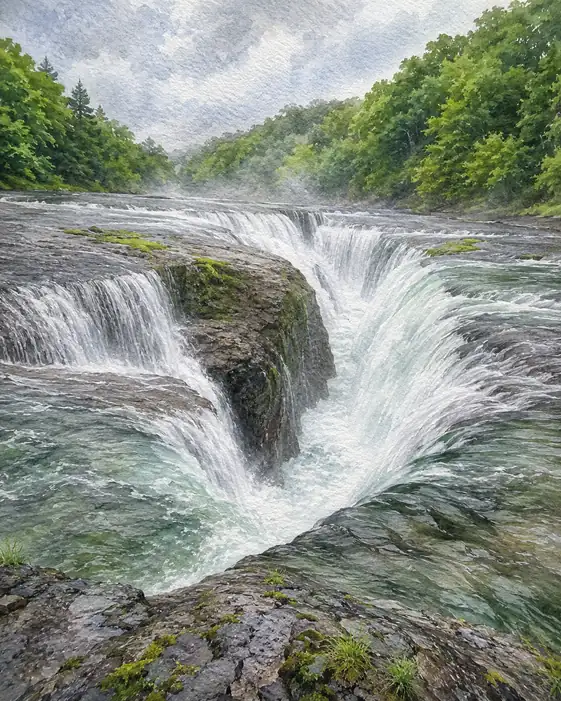 Where Water Carves Its Own Name
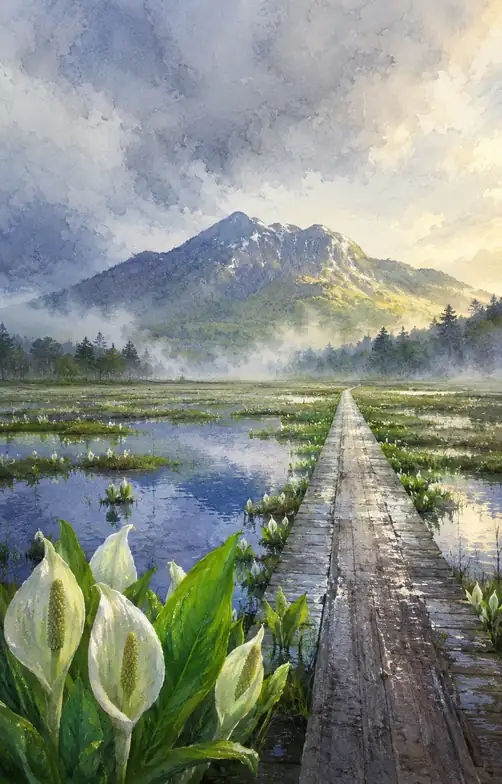 The White Flowers Guide My Steps
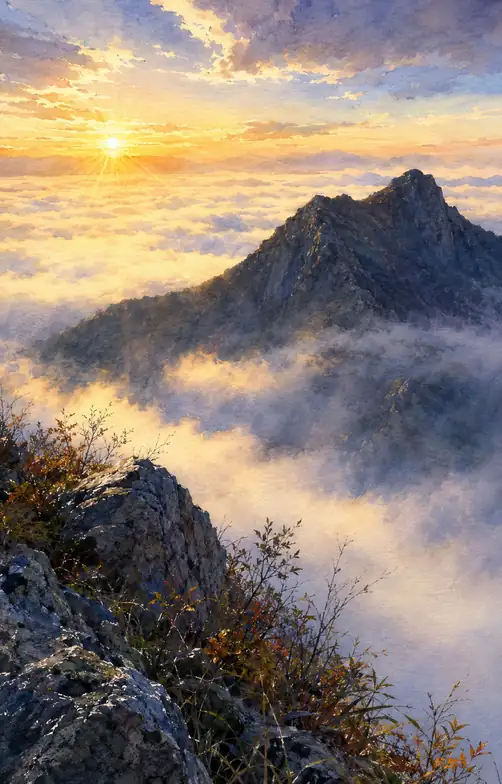 Morning Poured Across the Clouds
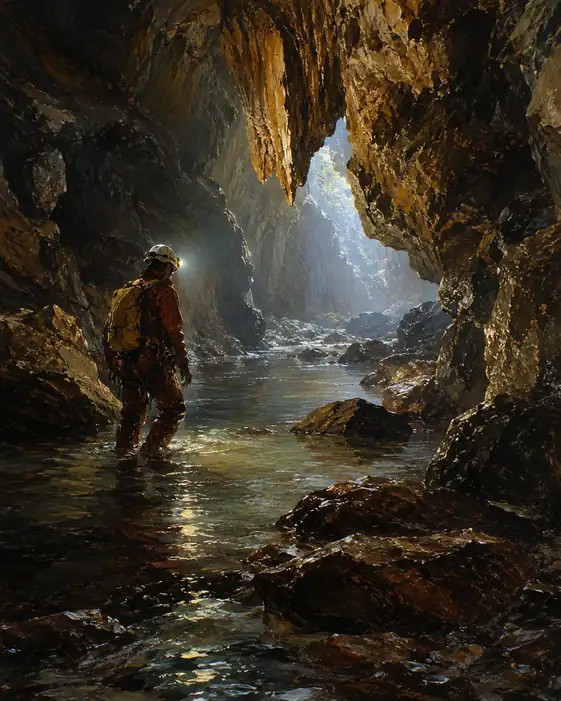 Beyond the Reach of My Small Light
 The Stone Hall Keeps Its Silence
 Two Journeys Through the First Snow
 The Gate Beneath the Water
 The Float Passes Through Rain