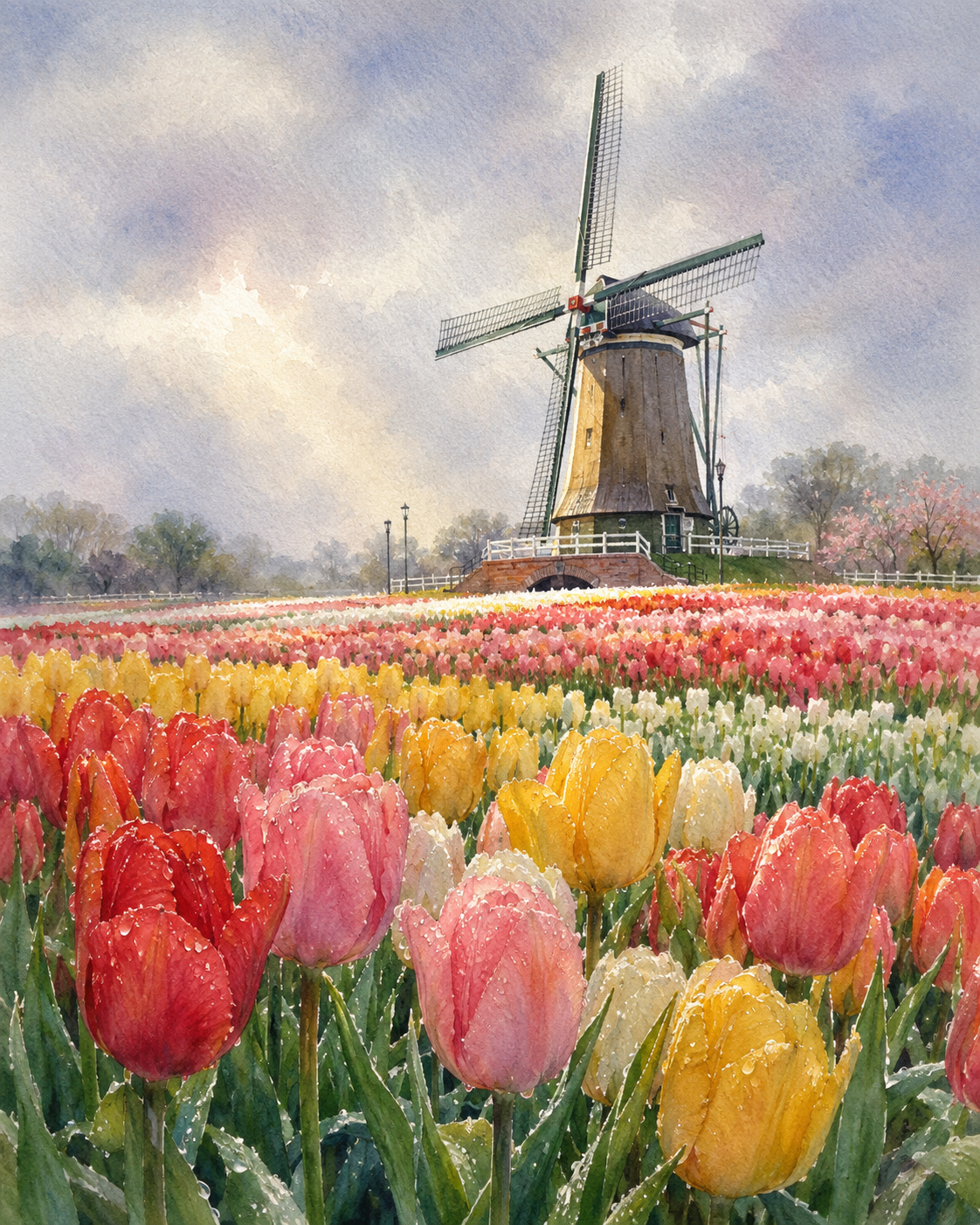
Rain Pearls Beneath Turning Sails
Critique
Introduction This spring landscape places a large windmill beyond bands of multicolored tulips after rain. Red, pink, yellow, and white flowers meet the vertical wood-and-brick structure, joining agricultural breadth with symbolic architecture. Heavy clouds, clearing light, and droplets create freshness beyond a conventional sunny tourist view. Description Tulips divided into color bands fill the lower and middle sections. Enlarged foreground petals and green leaves retain round drops. A wooden windmill tower with four lattice sails stands above a brick base and white fence. Pink flowering trees appear at right, with darker woods and lamps at left. Blue-gray cloud opens toward yellow-white light. Analysis The tower axis and radiating sails focus the upper image, while horizontal flower bands stabilize below. Scale shifts from large blooms to distant dots, defining field depth. Soft petal curves oppose hard sail grids; wet shine opposes dry timber. Red-green complementarity and yellow against gray-blue remain unified by transparent washes. Interpretation and Evaluation The windmill refers to historical labor and land use but now also functions as a visual landmark. Ordered flower rows and wind-driven sails both suggest human organization of natural forces. Droplets give each bloom immediate presence and redirect attention from icon to close observation. The scene remains connected to work, weather, and plants. Conclusion Near flowers dominate first, but slender sails reveal sky and implied wind. Bright cloud announces the rain's end and explains highlights on petals. White fencing separates field from architecture while guiding vision to the base. Sails reaching the top intensify height and potential motion. Transparent watercolor cleanly expresses spring color and post-rain air.
 The Blue Hill Sends a Path to the Sun
 On the Water God's Riverbank, a Thousand Ice Blossoms Bloom
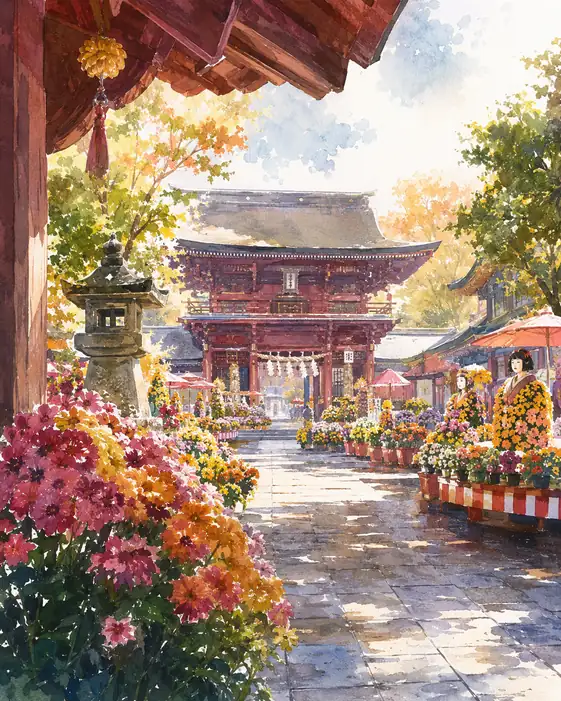 Flowers Await the Sacred Gate
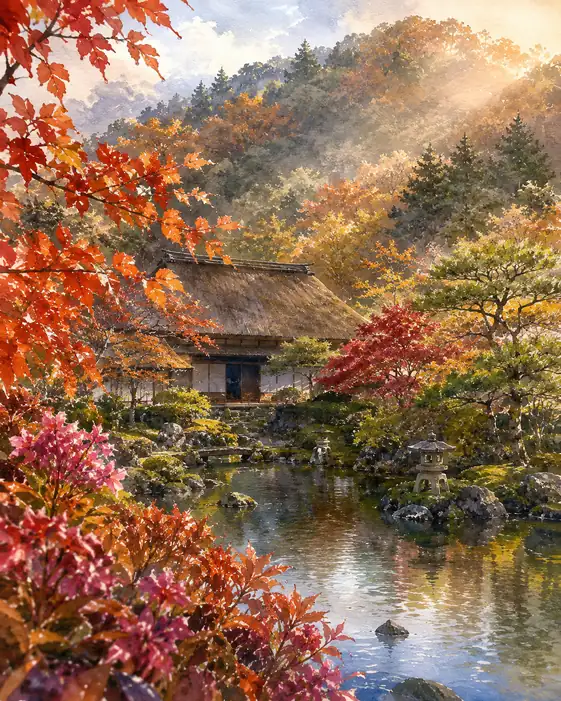 A Thatched House Holds Autumn
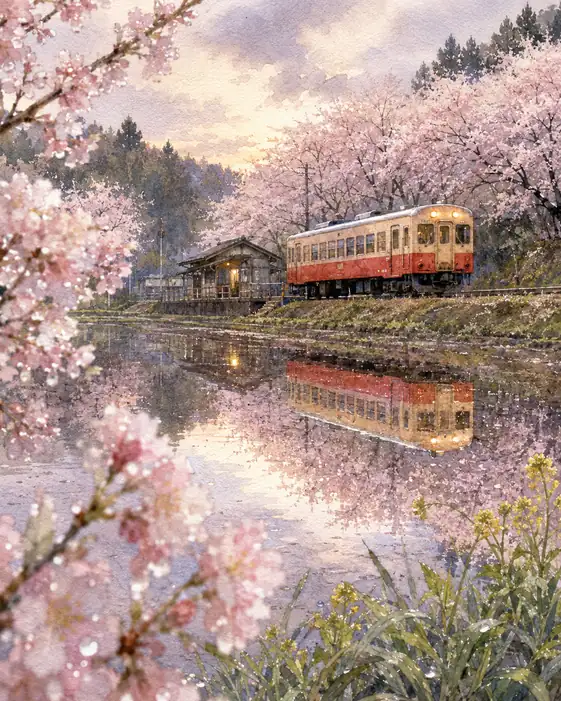 Spring Waits at the Country Platform
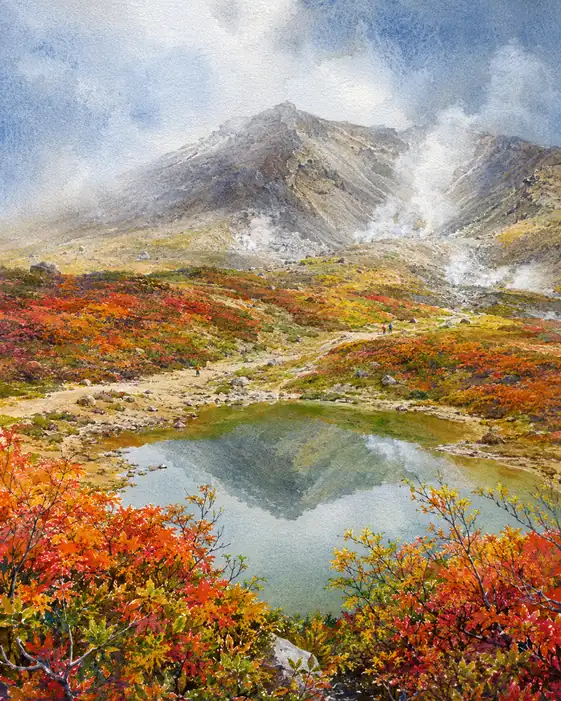 Between Steam and Still Water
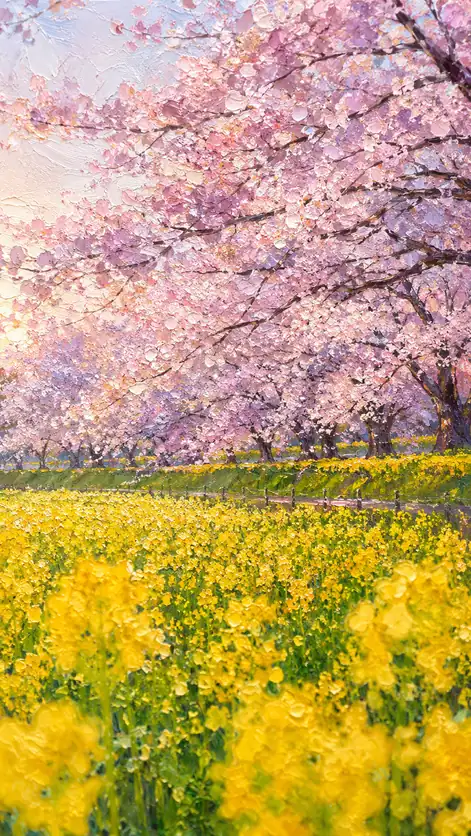 Spring Has Two Voices
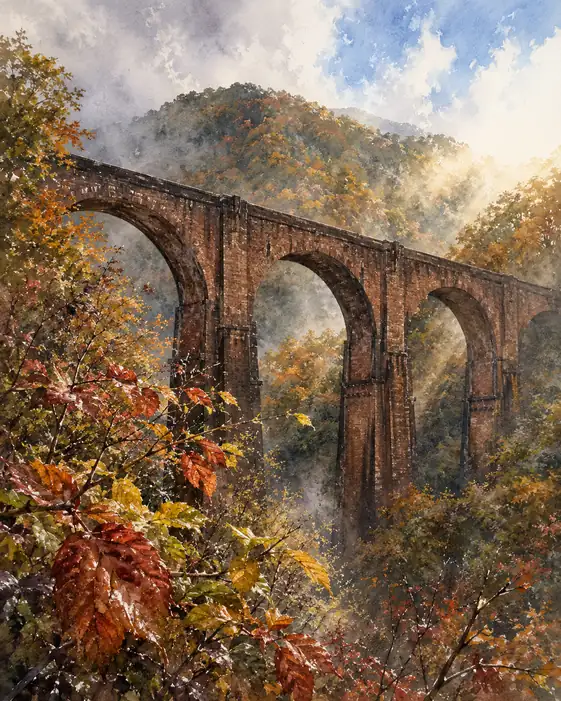 Arches Holding the Mountain's Memory
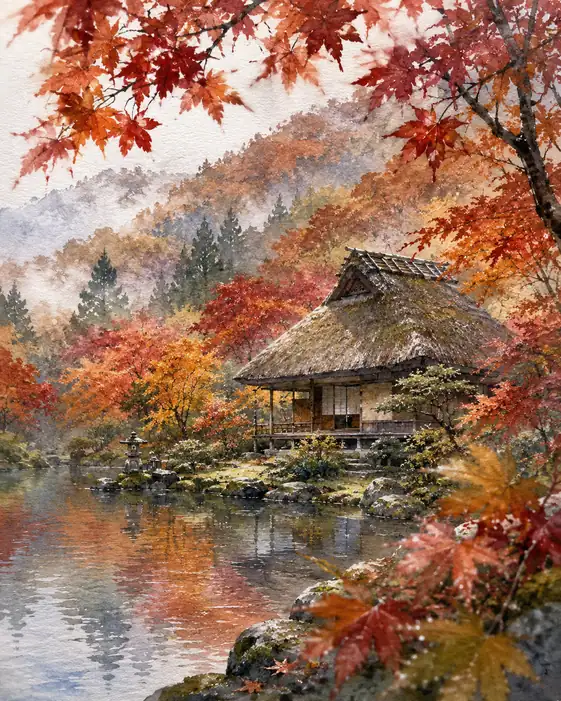 A House Where Autumn Returns
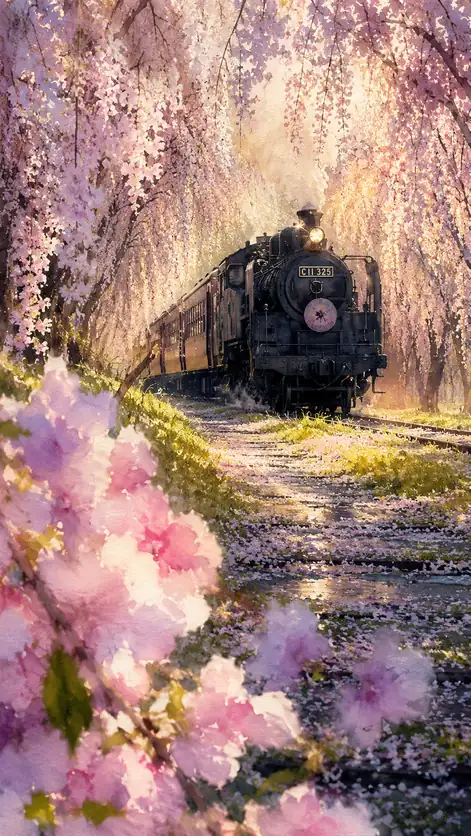 Steam Carries Spring Home
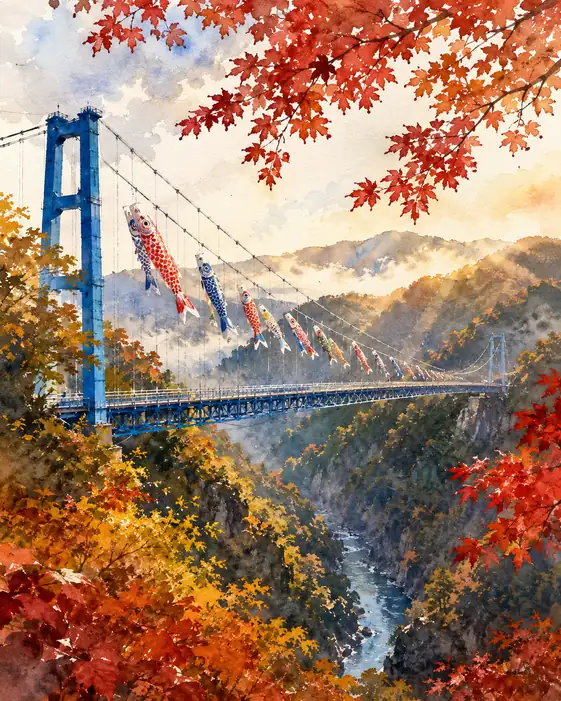 When the Sky Learned to Swim
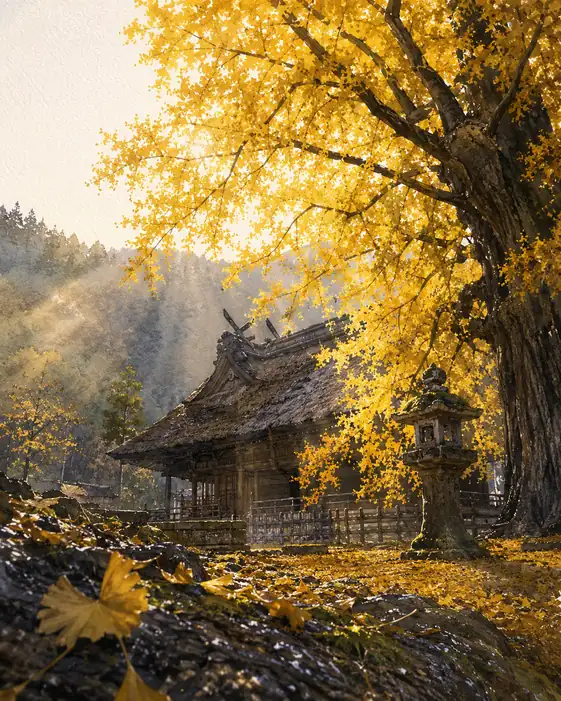 Beneath the Golden Guardian