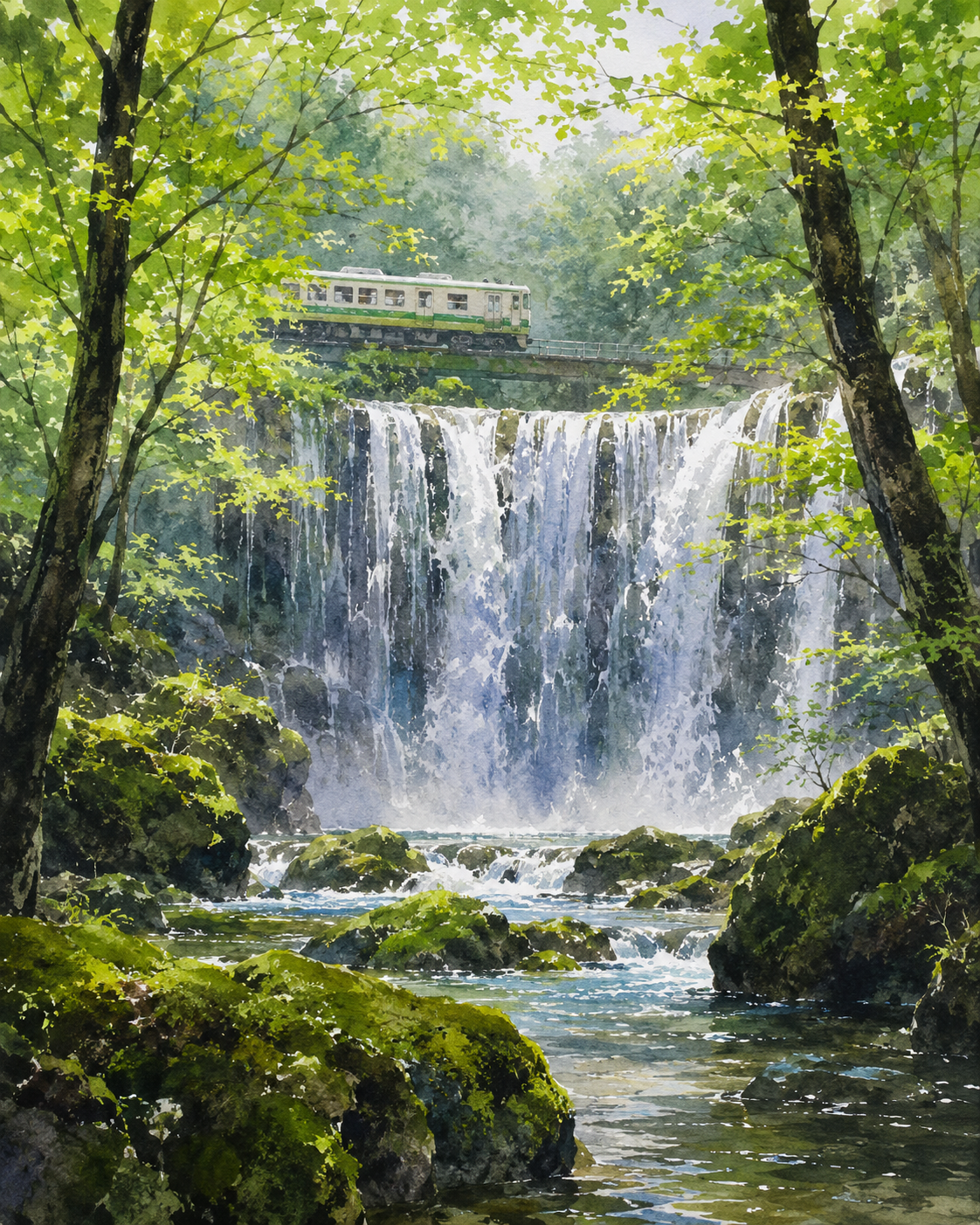
A Wind of Seven Blessings over Ryumon Falls
Critique
Introduction This watercolor shows a single green-and-white railcar crossing above a broad waterfall enclosed by fresh forest. Vertical falling water, horizontal track, and a stream advancing toward the viewer create three directions of movement, joining natural circulation with daily transport. Repeated windows supply human scale without diminishing the woods. Description The railcar travels left to right along the upper center. Directly below, a wide fall descends in many white streams and raises mist at its base. Water then winds among mossed rocks toward the foreground. Heavy trunks frame both sides beneath leaves ranging from bright to deep green. Wet near boulders shine, while distant forest dissolves through moisture. Analysis The central white waterfall is capped by the train's thin horizontal form. Dark trunks and rocks enclose the brightness and concentrate attention. Reserved paper for spray, layered blue-gray water, and yellow-green moss distinguish speed and weight. Precise vehicle rectangles oppose irregular leaf and water marks. Aerial depth remains convincing. Interpretation and Evaluation The train's position suggests careful passage beside a vast flow rather than technological conquest. Its green stripe echoes foliage, integrating it locally, while white body and black windows preserve distinction. Daily movement appears briefly within the landscape. Crossing axes clearly organize two very different speeds. Conclusion The waterfall's brightness dominates first, but the small railcar ultimately measures height and forest scale. Foreground foam grows broader, making approach tangible. Bright moss brings seasonal life to dark rock. Cropped trunks position viewers within the woods. Transparent blooms and precise structure express coexistence between nature and transport with freshness.
Same Subcategory
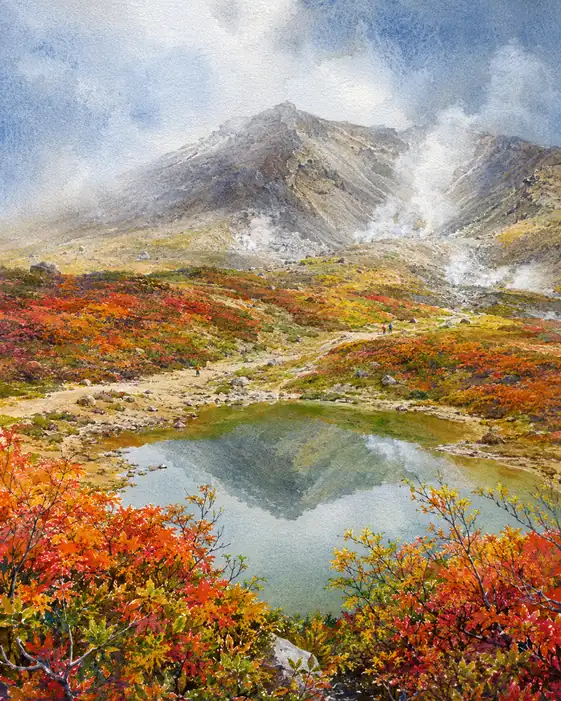 Between Steam and Still Water
Similar Artworks
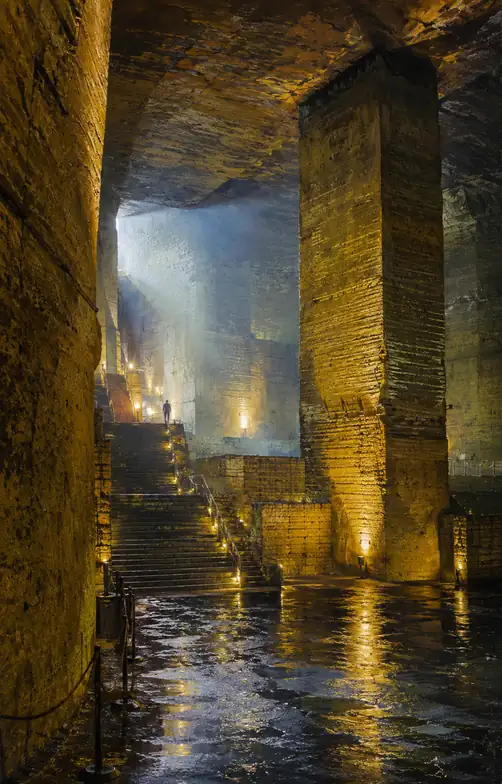 Cathedral of the Quarry
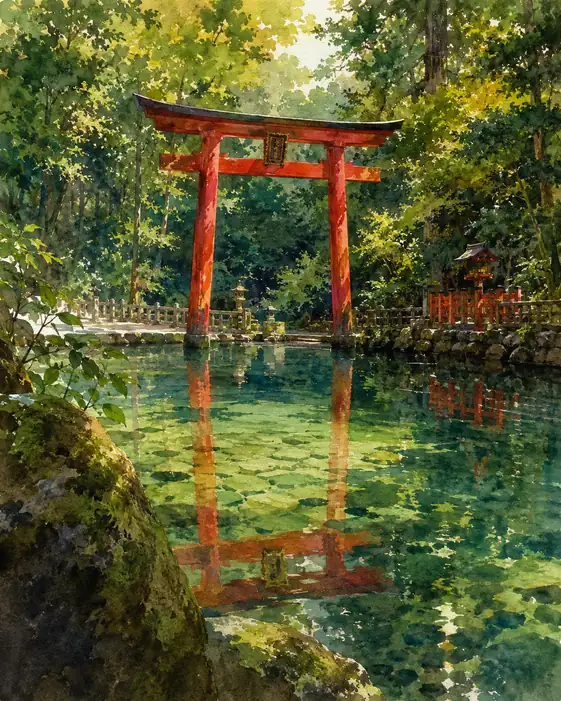 A Gate Reflected Inward
 Where Water Carves Its Own Name
 The White Flowers Guide My Steps
 Morning Poured Across the Clouds
 Beyond the Reach of My Small Light
 The Stone Hall Keeps Its Silence
 Two Journeys Through the First Snow
 The Gate Beneath the Water
 The Float Passes Through Rain