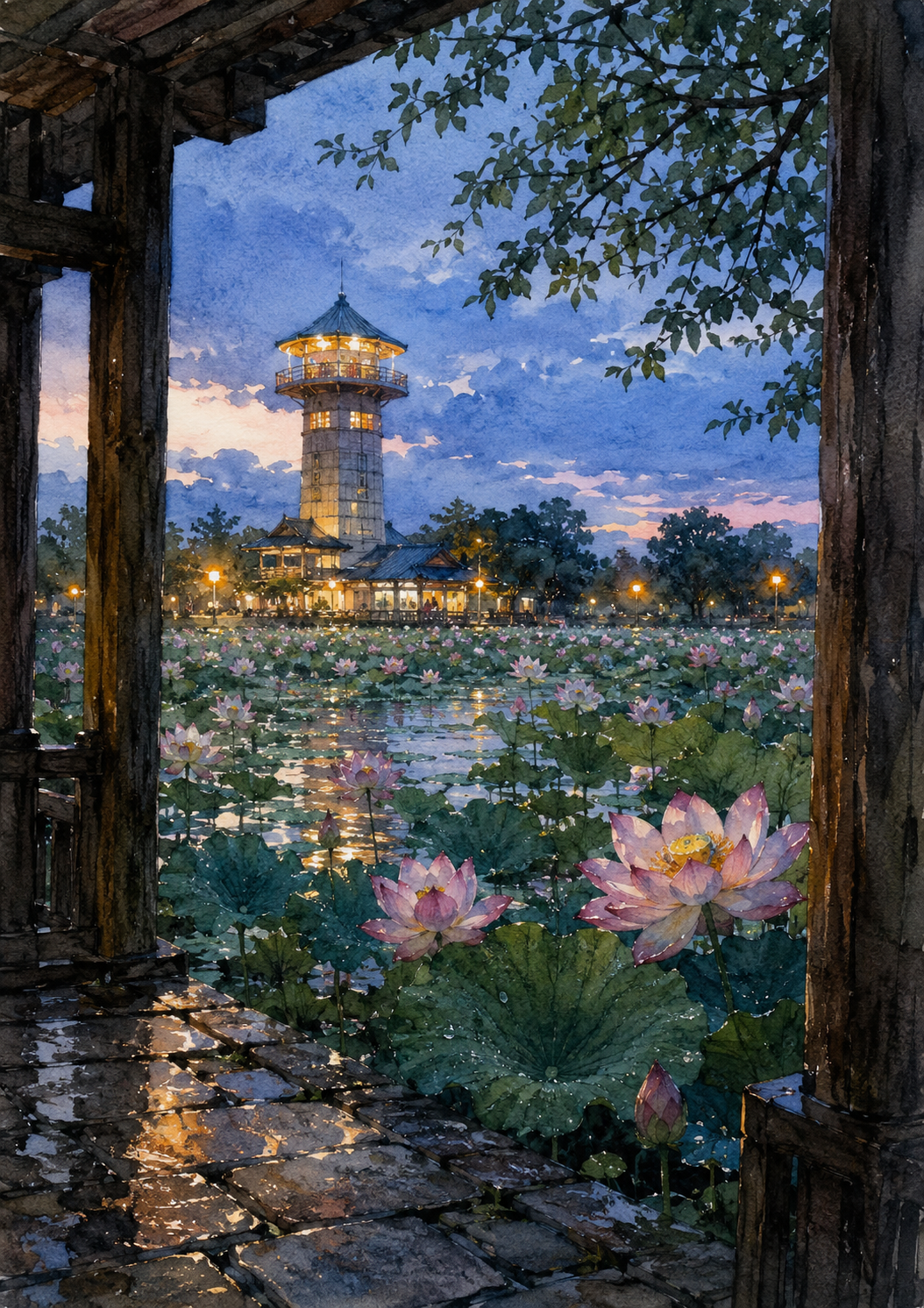
Lotus Light Calls Across the Water
Critique
Introduction This painting views a lotus pond and lighthouse-like observation tower at dusk from inside a dark wooden corridor. Near posts and eaves form a deep frame around blue sky, pink flowers, and gold lamps. Clear contrasts between interior and exterior, darkness and light, are joined by reflections into one quiet evening. Description Heavy posts and beams enclose the view, with wet stone flooring and railing at lower left. Beyond lies a broad pond filled with lotus leaves and flowers, enlarged at the right foreground. A tall stone tower rises left of center; its circular upper room and windows glow orange. Low buildings and lamps surround its base beneath blue clouds and a remaining pink horizon. Analysis The dark rectangle acts as a picture frame and emphasizes tower verticals against horizontal water. The right flower balances the left tower diagonally, while reflected lamps lead vision inward. Hard columns, round leaves, and cloud washes distinguish materials. Ultramarine, green, pink, and orange remain unified by cool dusk. Wet flooring extends exterior light into shelter. Interpretation and Evaluation Looking from shade clearly positions viewers as observers. The tower was designed to look outward, yet here it is watched from afar and becomes a nocturnal landmark. Lotus blooms rise from water toward light, creating another kind of ascent beside architecture. Reflection and evening color let artificial illumination coexist with life. Conclusion The large lotus and tower lamps attract attention first, but dark framing creates the actual entrance. Small streetlights measure distance, while gold water brings evening toward the viewer. White droplets make leaves tactile, and overhead branches soften rigid beams. Architectural perspective and transparent color express a period of quiet observation.
Same Subcategory
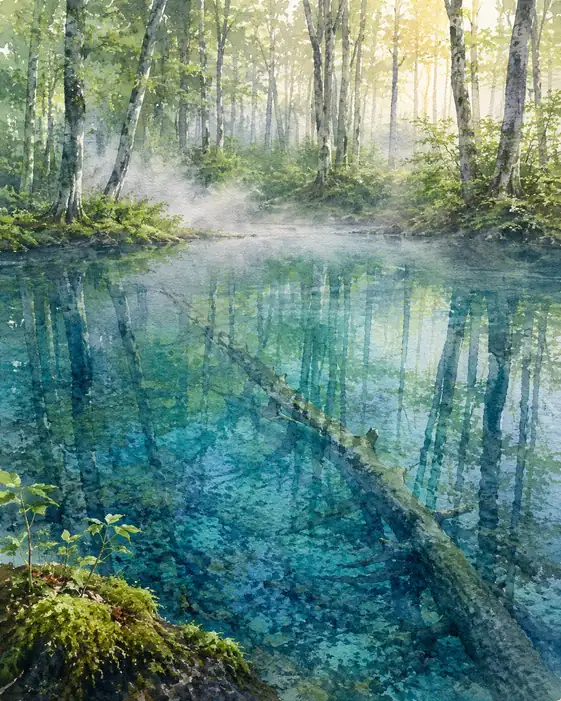 Where the Forest Remembers Its Reflection
 The Mountain Breathes Through Autumn
Similar Artworks
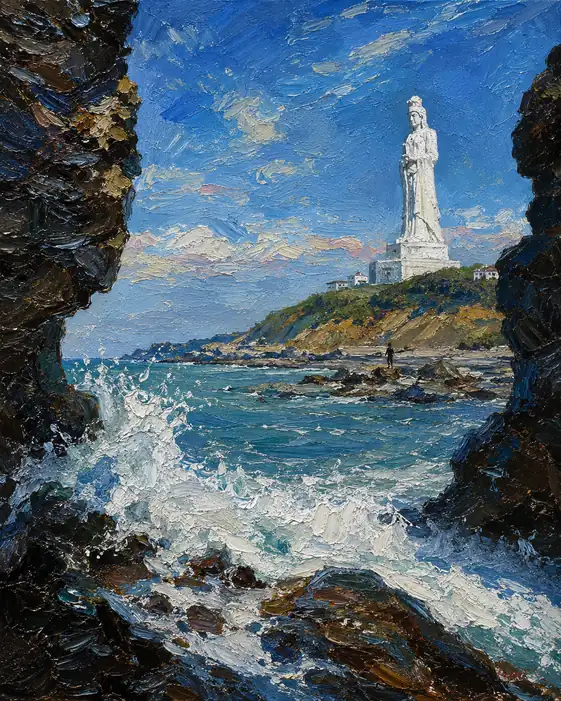 The Watcher Beyond the Tide
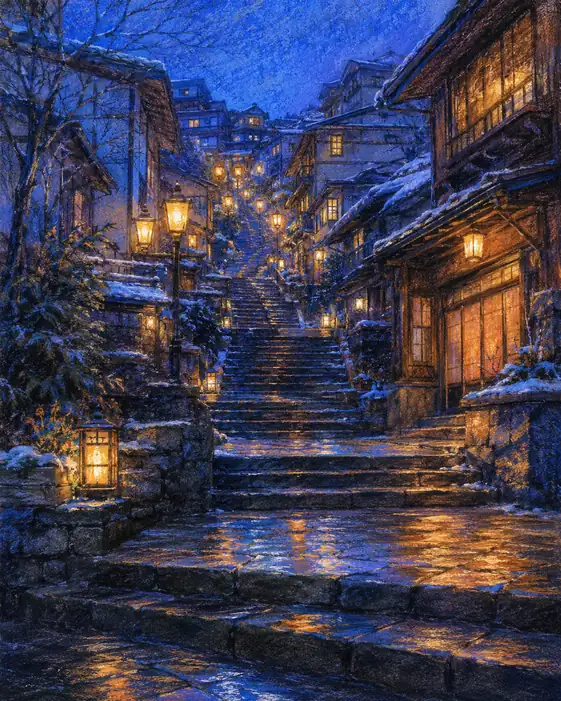 Every Lamp Knows the Way Home
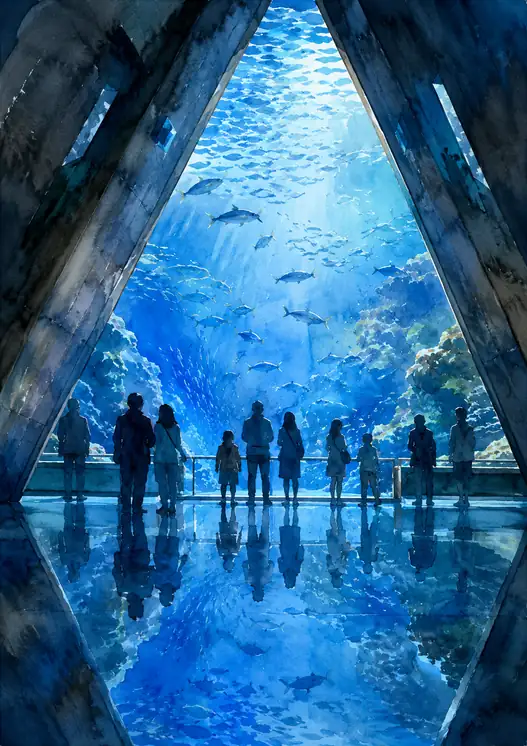 Before the Ocean, We Become Small
 Windows of Winter, Hearts of Home
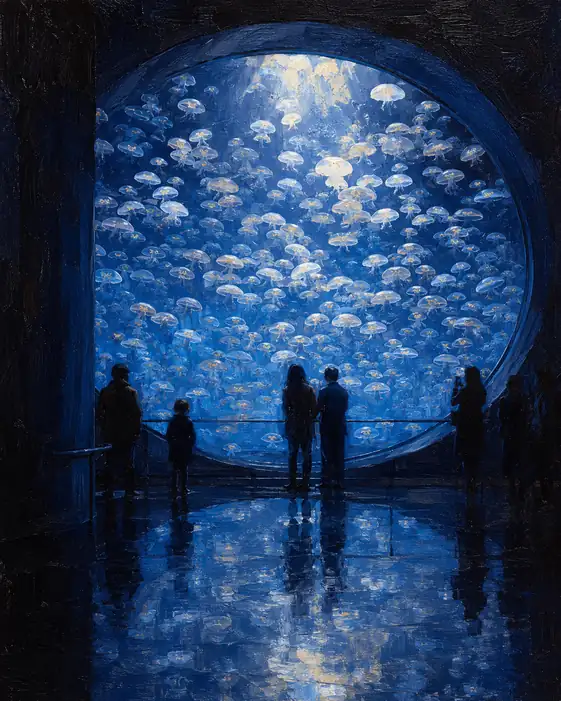 A Moon of Living Light
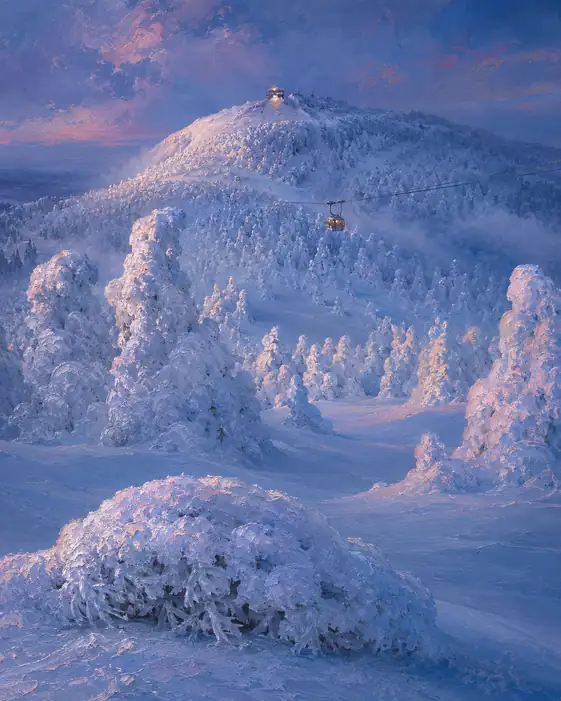 A Small Light Crossing the Snow Kingdom
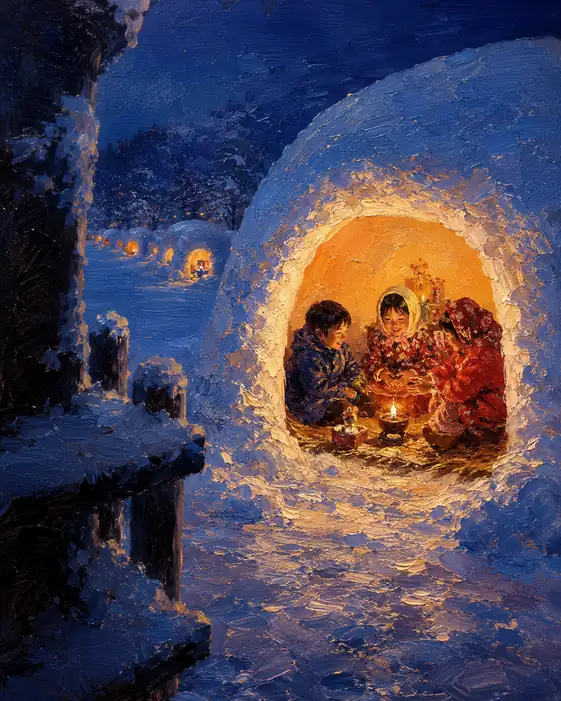 Children Keeping the Night Warm
 Through the Snow, Toward the Gathering Light
 The Lights Wait Through the Storm
 We Dissolve into the River of Light