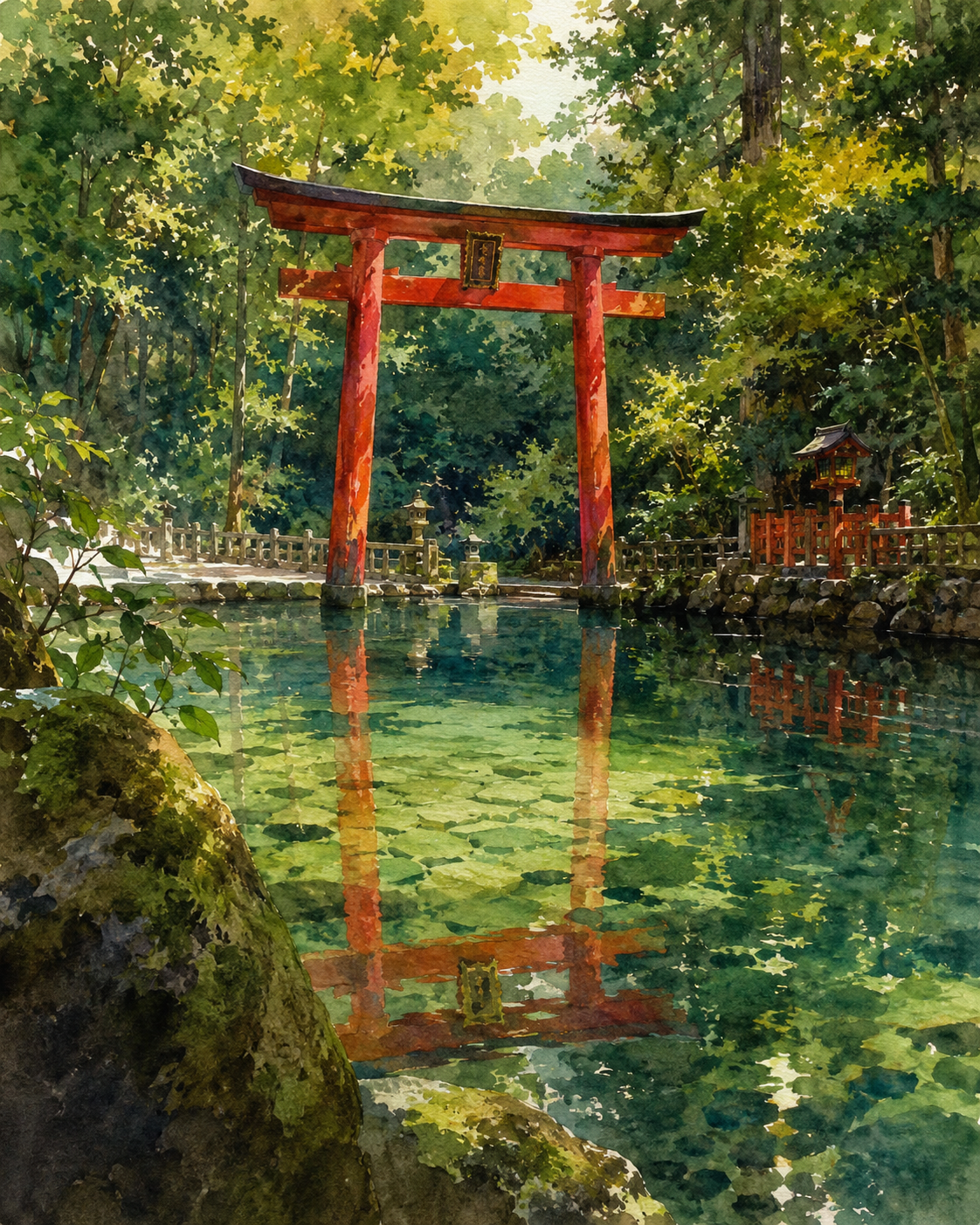
A Gate Reflected Inward
Critique
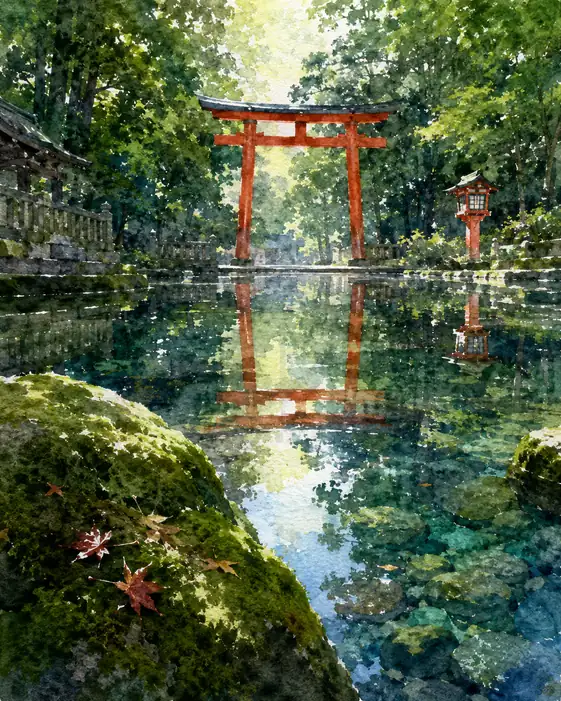
Introduction This painting depicts a vermilion torii standing in clear forest water whose stony bottom remains visible. Bright architecture, green light, and a mossed foreground rock join a sacred threshold with natural purity. The complete reflection suggests upper and lower worlds, but ripples and stones prevent a lifeless mirror. Description A large torii occupies the upper center with both pillars entering shallow water. A red fence and small lantern stand on the right bank; stone rails and lanterns line the left distance. The pool shifts from yellow-green to deep teal and reveals flat stones. A mossed boulder presses into the lower left. Leafy branches frame dappled forest light. Analysis The torii rectangle and its reflection establish a strong central axis, while the left rock adds asymmetric weight. Vermilion complements green but includes yellow and dark red to fit natural illumination. Distorted reflection, visible bottom, and mirrored forest combine transparency with surface imagery. Horizontal rails measure depth, and repeated light patches move attention inward. Interpretation and Evaluation A torii usually marks passage, but its placement in water suggests purification and introspection more than literal crossing. The pool shows both surface and depth. Old moss opposes the apparently renewed red structure and introduces contrasting durations. Religious meaning emerges from water, light, and material rather than explanatory ritual. Conclusion The torii dominates first, but moss and bottom stones ultimately carry place and touch. A small lantern supplies human scale. The reflection fades downward, suggesting depth and diminished light. Dark overhead leaves position viewers in shade and brighten the open pool. Transparent watercolor turns boundary and purity into quiet immersion.
Same Subcategory
 The Empty Bridge Invites the Wind
 Between Steam and Still Water
Similar Artworks
 Cathedral of the Quarry
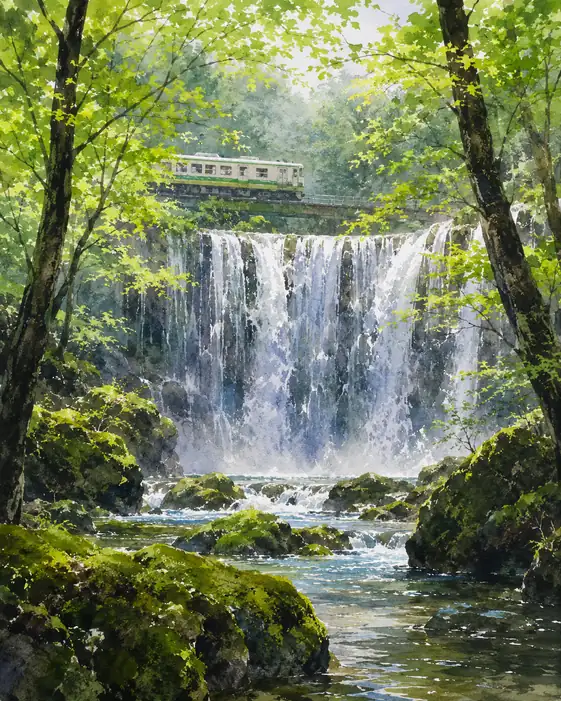 A Wind of Seven Blessings over Ryumon Falls
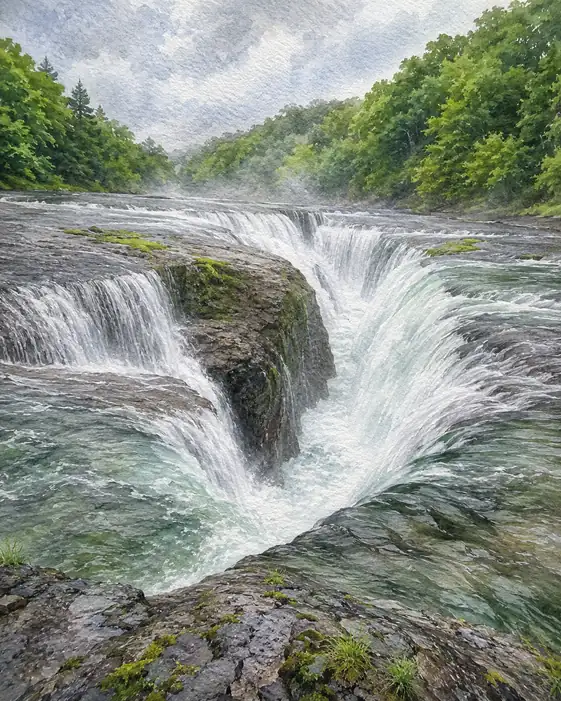 Where Water Carves Its Own Name
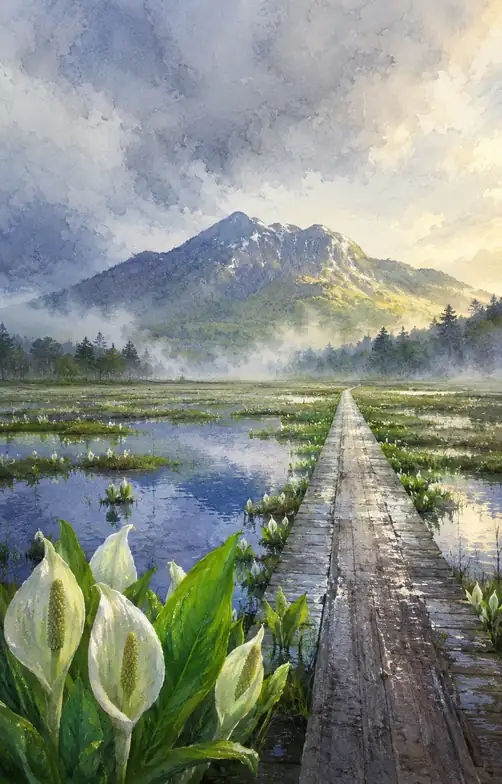 The White Flowers Guide My Steps
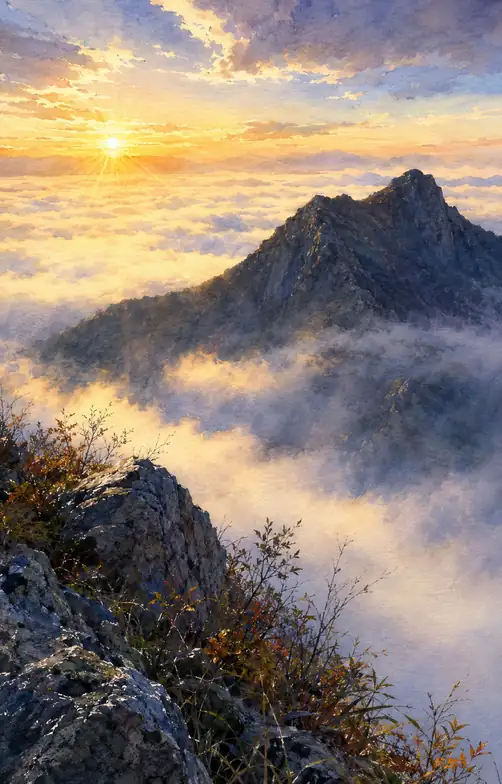 Morning Poured Across the Clouds
 Beyond the Reach of My Small Light
 The Stone Hall Keeps Its Silence
 Two Journeys Through the First Snow
 The Gate Beneath the Water
 The Float Passes Through Rain