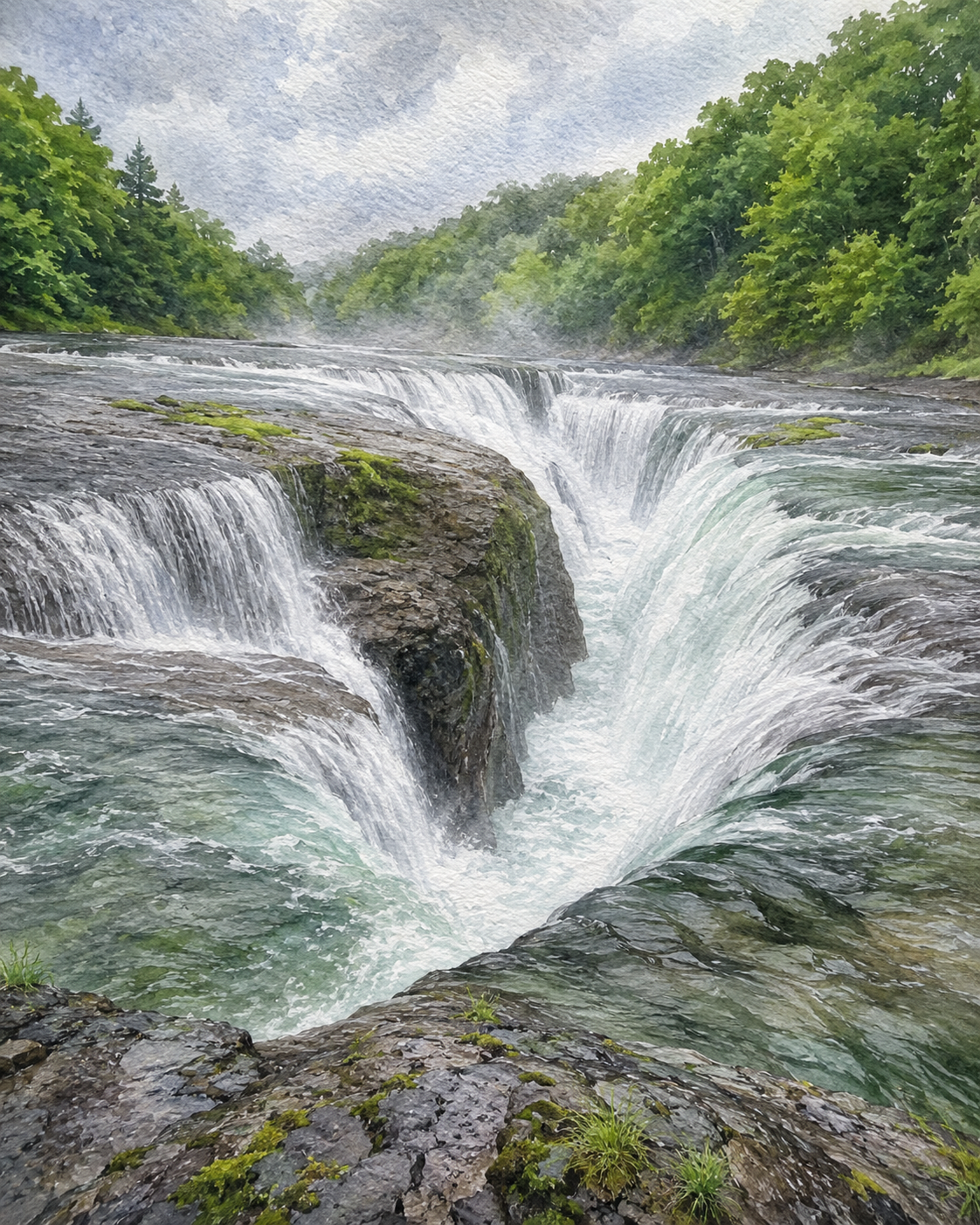
Where Water Carves Its Own Name
Critique
Introduction This watercolor depicts a broad waterfall splitting across rock shelves from an unusually close, nearly frontal viewpoint. White descent, blue-green current, and gray-black stone fill most of the frame, with forest reduced to a narrow upper band. Without people or buildings, converging and plunging water becomes the complete subject. Description The upper river approaches several ledges and gathers into a deep central drop. A thin curtain falls at left, while a heavy turquoise mass rolls over the right. Further white cascades continue behind. Dark shelves divide the water and carry moss and grass. Wet foreground rock shines immediately before the unseen plunge. Dense green woods border a gray sky. Analysis Flows converge into a central V, pulling vision forcefully toward the chasm. Vertical falls cross upstream horizontals and diagonal rocks, preventing a single undifferentiated white field. White, cyan, green, and gray distinguish transparency, foam, and thickness. Dry dark stone and yellow-green moss support the water's brightness. Proximity converts height into bodily sensation. Interpretation and Evaluation Water appears soft yet acts as the force cutting rock over long time. Several currents entering one narrow location reveal both natural order and danger. Moss and grass survive on slight margins beyond the strongest movement. By avoiding labels and human scale, the work studies interaction between water and geology with educational clarity and formal intensity. Conclusion The central fall overwhelms first, but side shelves ultimately control direction and speed. Heavy right water and thin left curtains imply different weights and sounds. The minimized distance makes viewers feel positioned at the edge rather than safely removed. Transparent blooms and sharp lines express beauty, hazard, and landscape-making force directly.
Same Subcategory
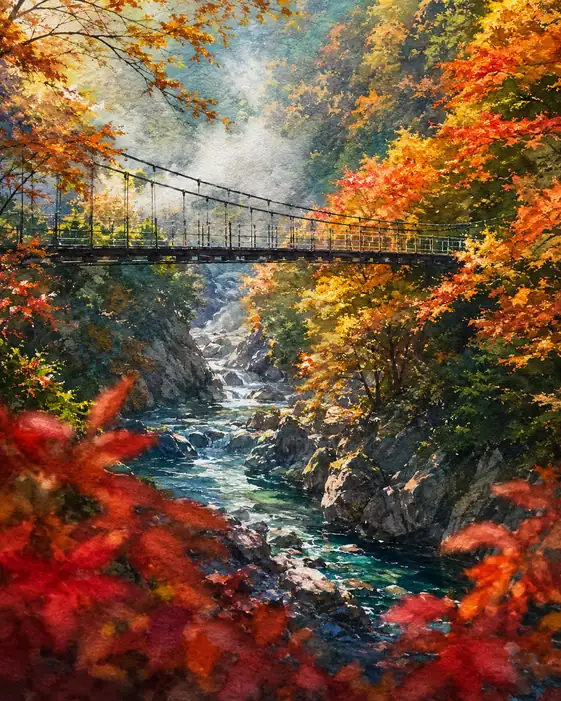 The Empty Bridge Invites the Wind
Similar Artworks
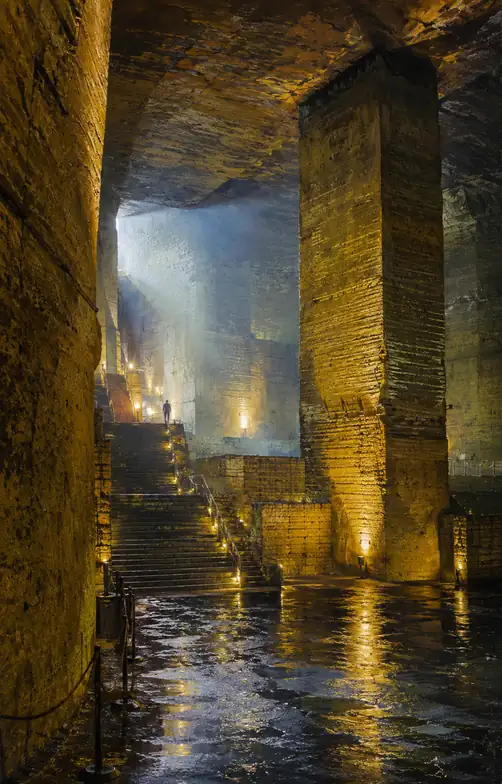 Cathedral of the Quarry
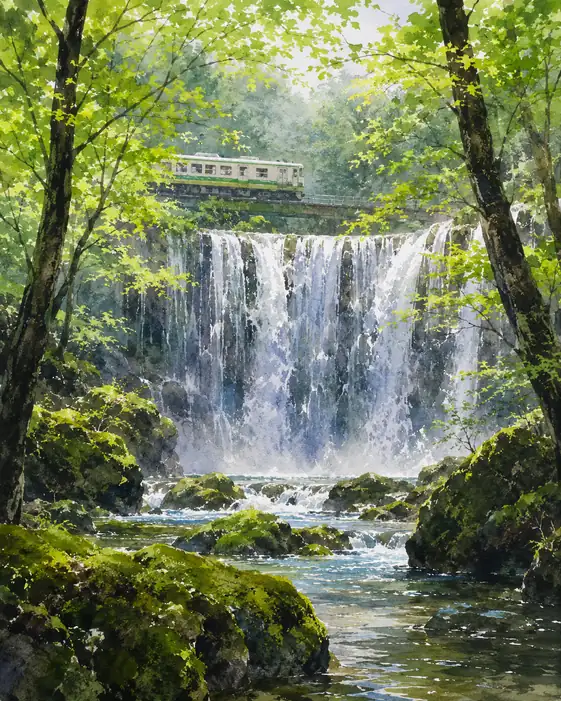 A Wind of Seven Blessings over Ryumon Falls
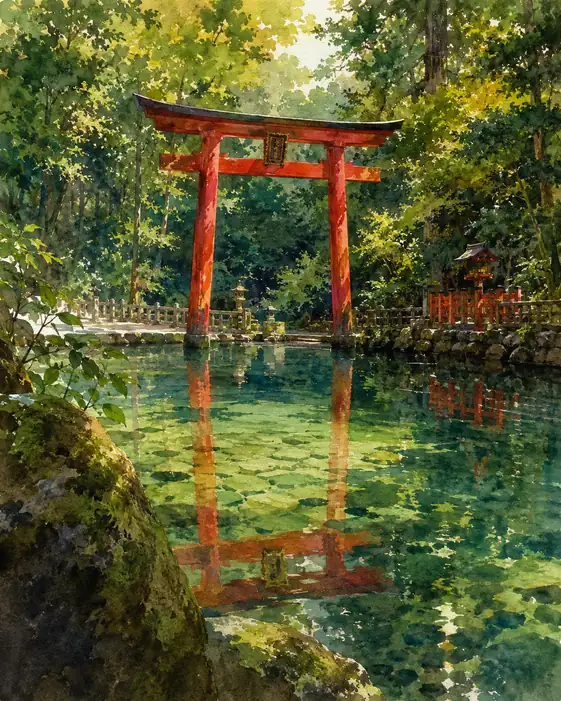 A Gate Reflected Inward
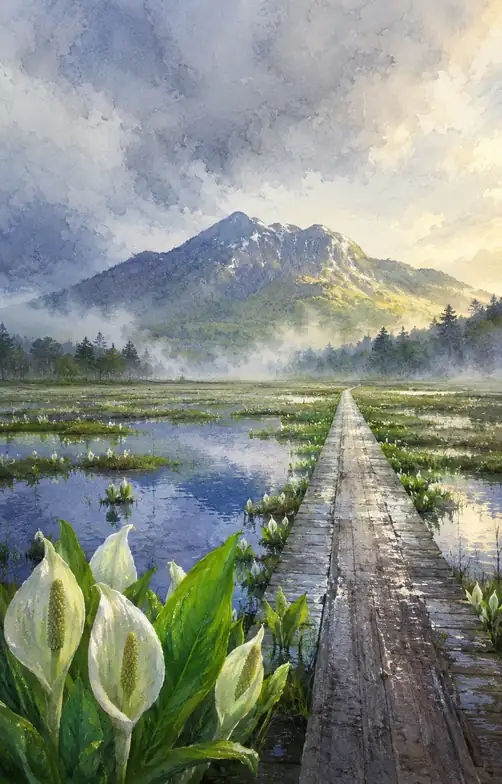 The White Flowers Guide My Steps
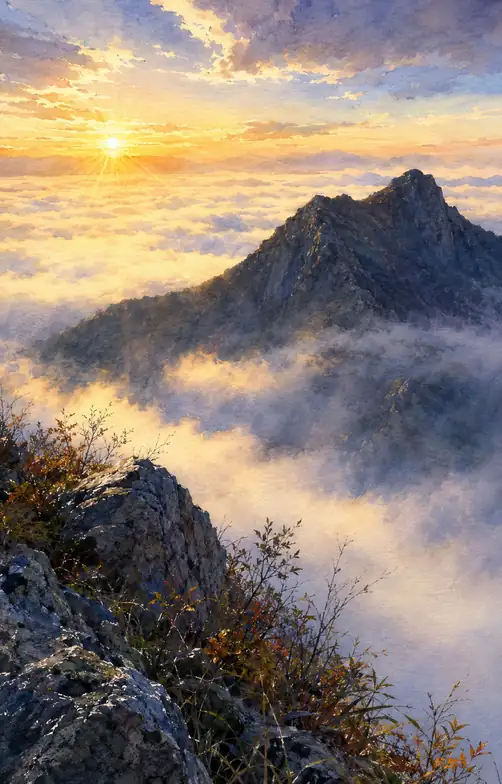 Morning Poured Across the Clouds
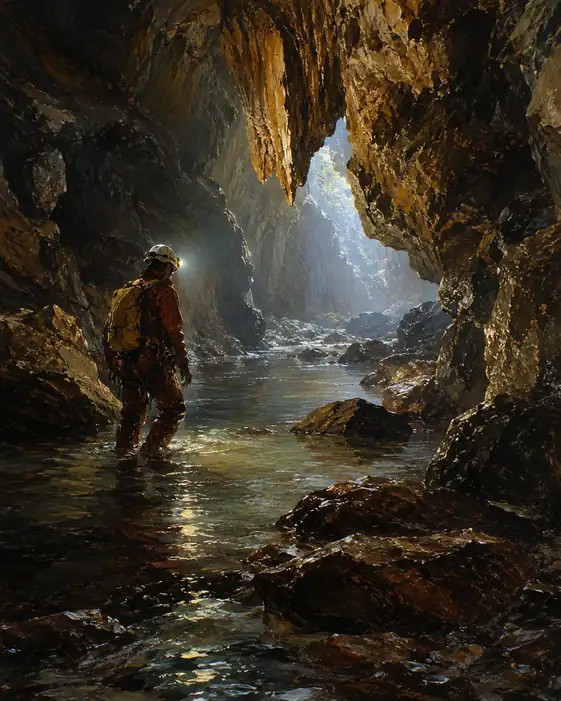 Beyond the Reach of My Small Light
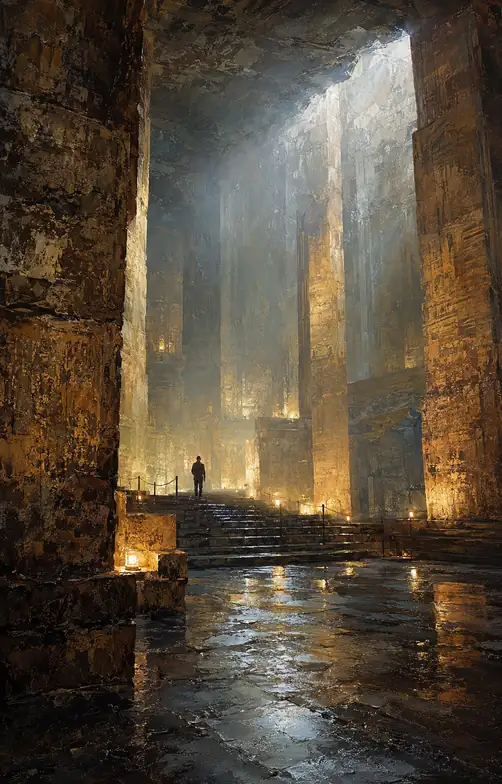 The Stone Hall Keeps Its Silence
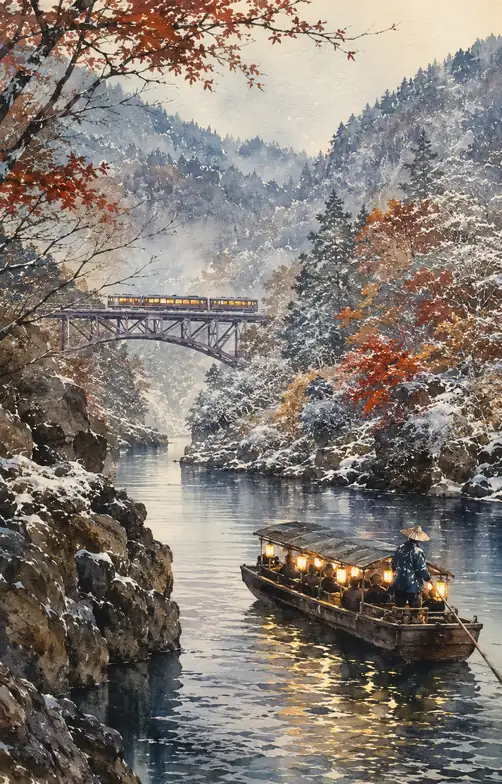 Two Journeys Through the First Snow
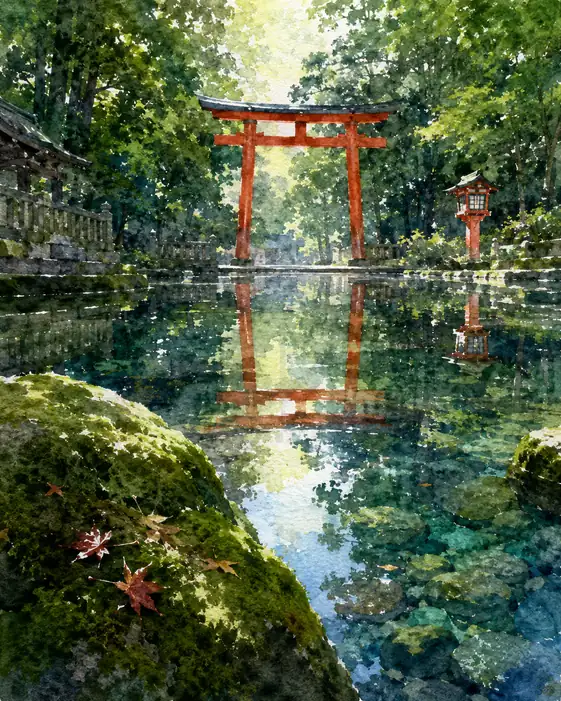 The Gate Beneath the Water
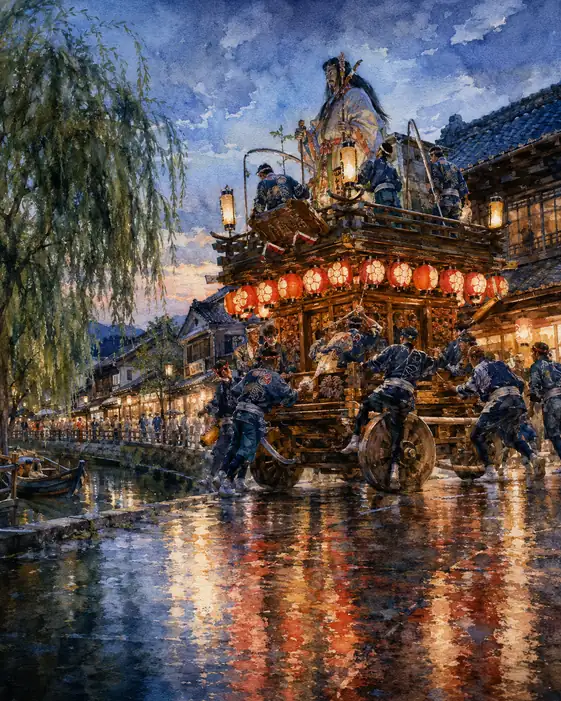 The Float Passes Through Rain