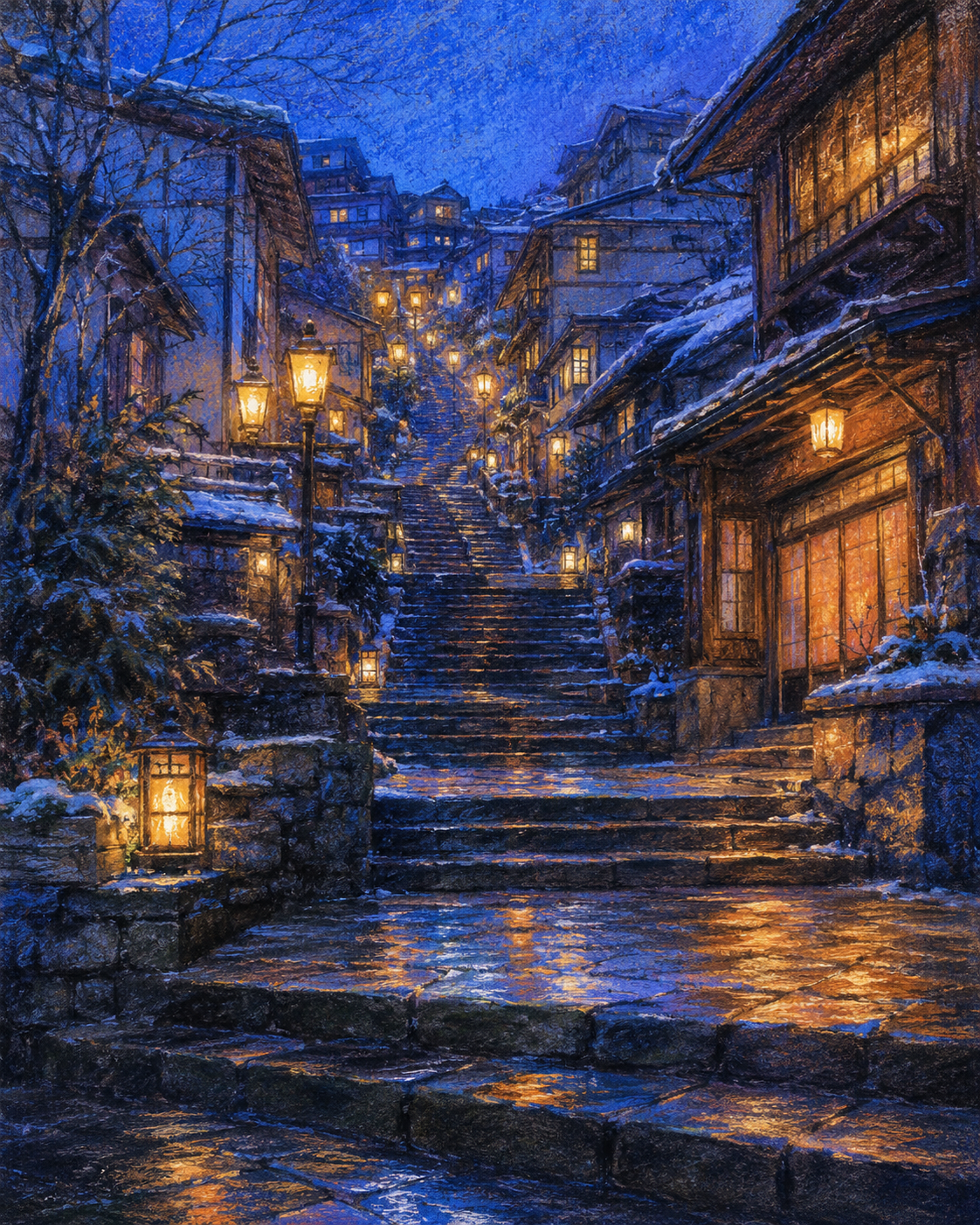
Every Lamp Knows the Way Home
Critique
Introduction This painting depicts a snowy mountain town where wooden inns and houses rise beside a steep stone stairway at night. Deep blue air contrasts with orange lamps, conveying both the bodily effort of climbing and warmth behind windows. Without visible figures, architecture and illumination make the town feel quietly inhabited rather than abandoned. Description Uneven stone steps extend from the foreground toward distant houses. Old timber buildings with tiled roofs and lattice windows stack along both sides. Snow rests lightly on roofs, branches, and shrubs. Streetlamps repeat at diminishing scales, while a large near window glows at right. Wet paving reflects broken orange and blue light beneath falling flakes. Analysis Converging stairs form a strong central axis, and repeated lamps measure depth. The sides remain asymmetrical, yet the broad bright area at right balances many smaller left lights. Short thick marks describe rough wood and stone, becoming lateral across wet reflections. Varied violets and blues, together with several oranges, enrich the basic warm-cool contrast. Interpretation and Evaluation The stairway is both a route and a temporal structure traced lamp by lamp. Windows conceal interiors while inviting thoughts of meals and conversation. Snow does not erase the town; it selectively clarifies roofs and branches. Community is conveyed effectively through density, slope, and spacing rather than sentimental narrative. Conclusion Orange lamps dominate initially, but the dark stair axis ultimately carries tension and movement. Foreground reflection places viewers at the entrance, while distant lights promise an unseen destination. Bare branches give dense architecture breathing room. Tactile paint and precise perspective transform the winter town into a quiet ascent toward warmth.
Same Subcategory
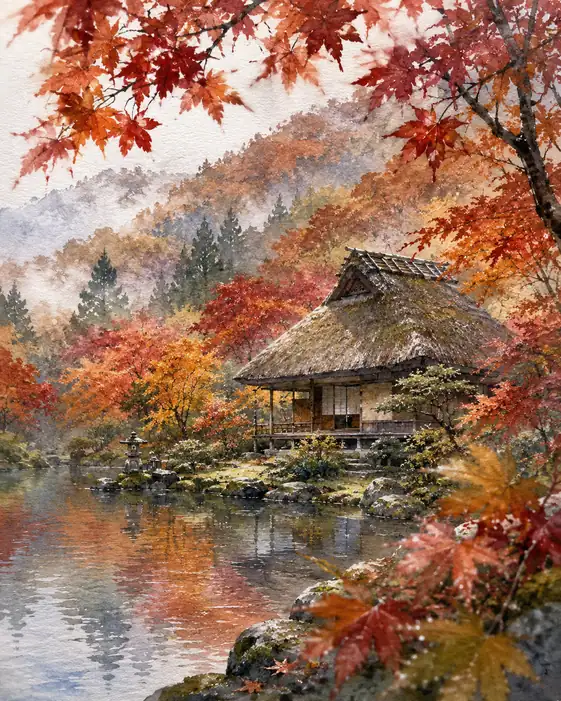 A House Where Autumn Returns
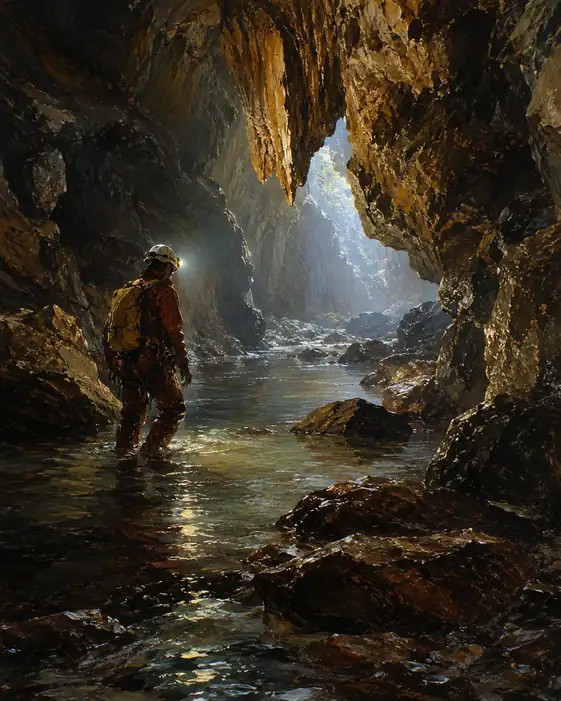 Beyond the Reach of My Small Light
Similar Artworks
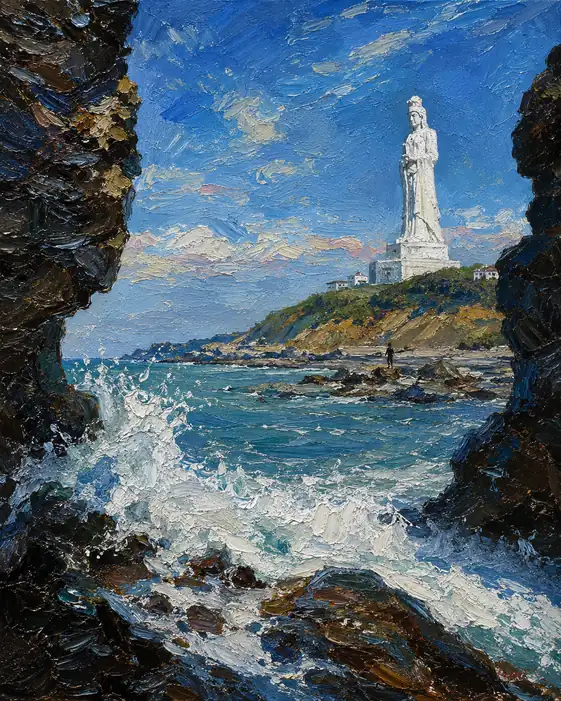 The Watcher Beyond the Tide
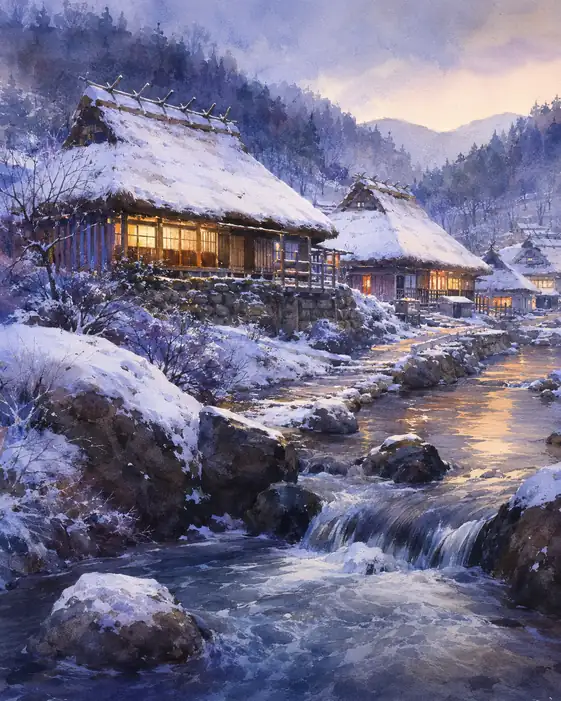 Windows of Winter, Hearts of Home
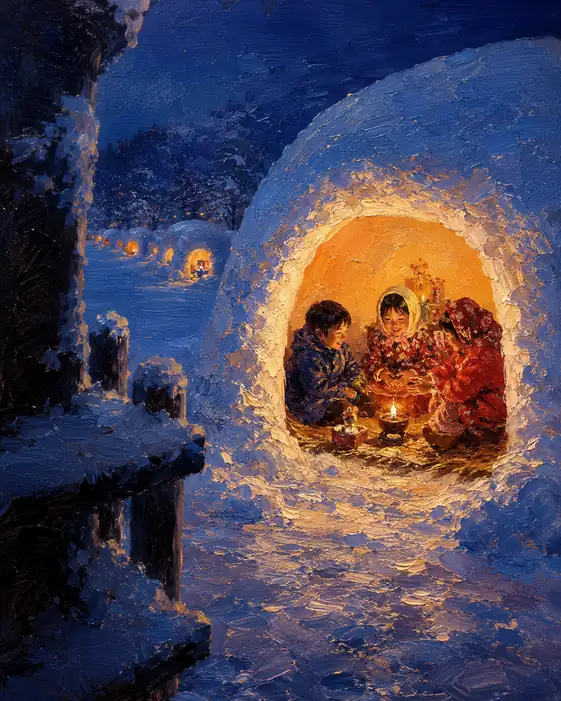 Children Keeping the Night Warm
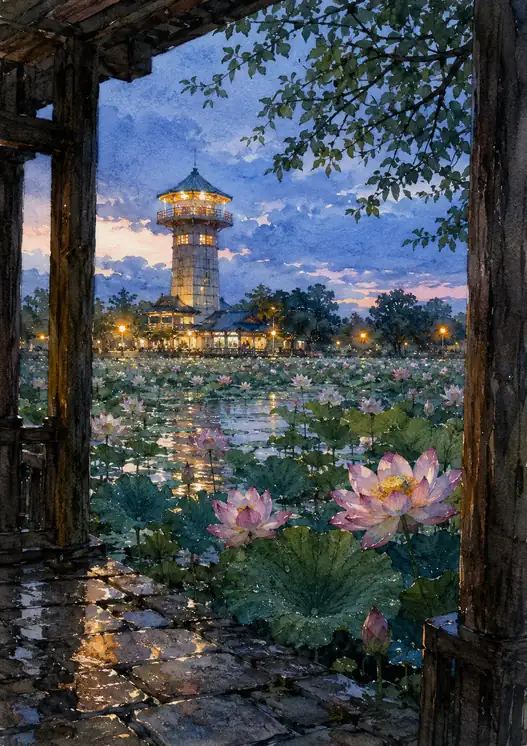 Lotus Light Calls Across the Water
 Before the Ocean, We Become Small
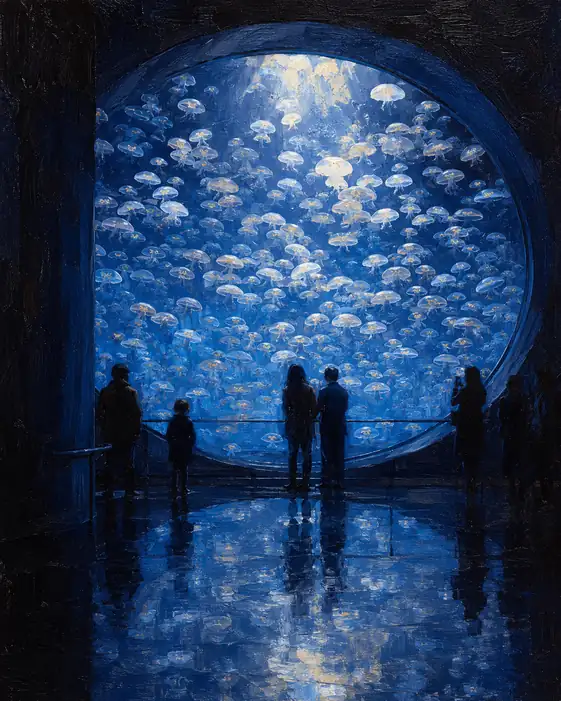 A Moon of Living Light
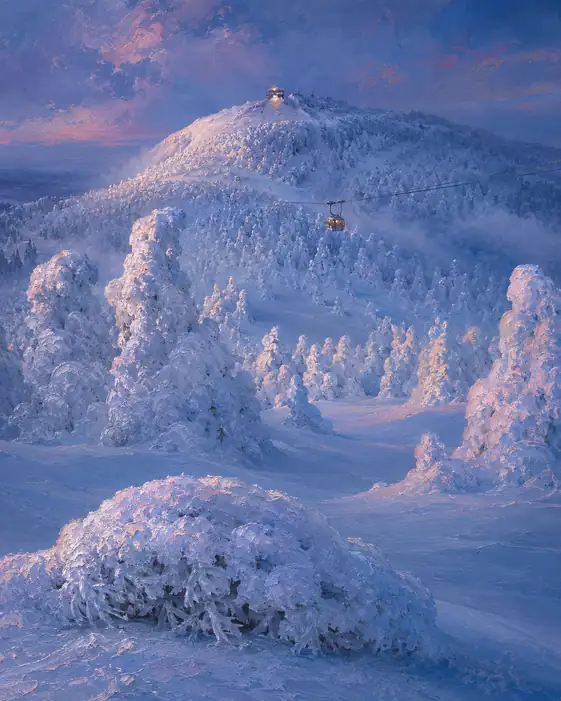 A Small Light Crossing the Snow Kingdom
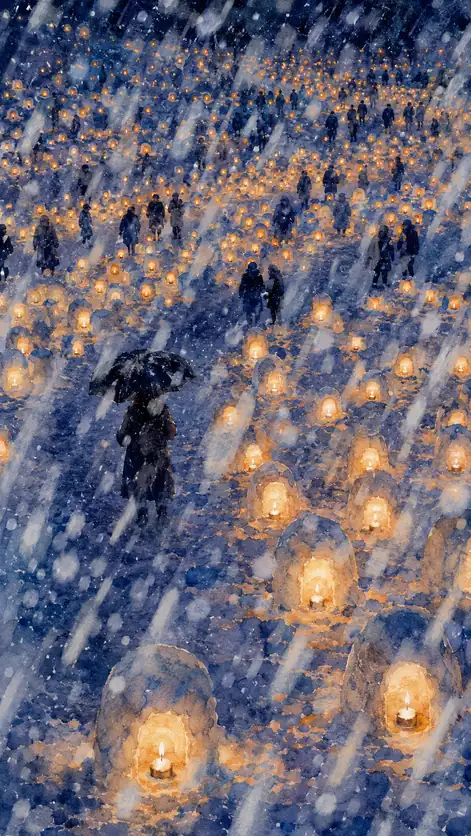 Through the Snow, Toward the Gathering Light
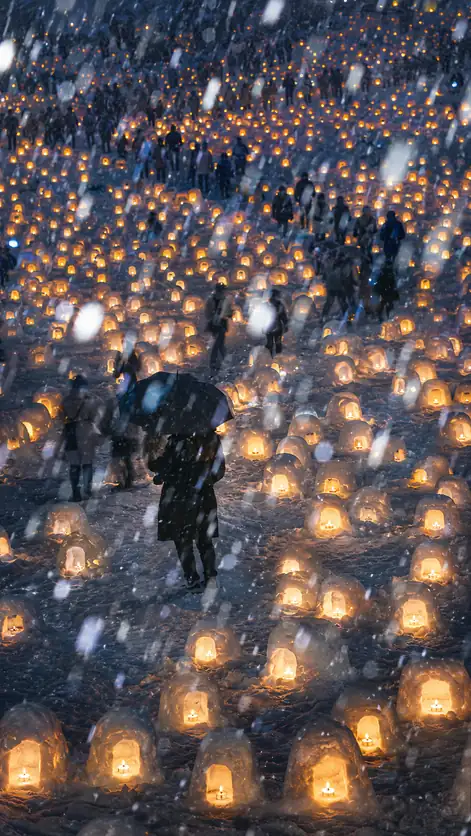 The Lights Wait Through the Storm
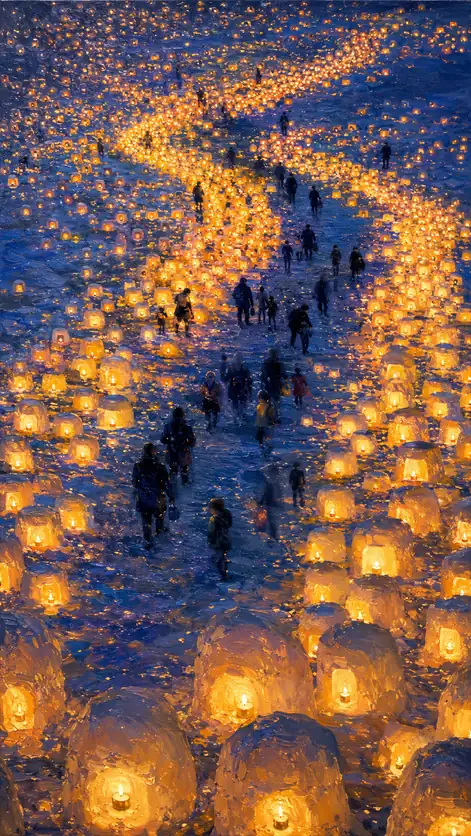 We Dissolve into the River of Light