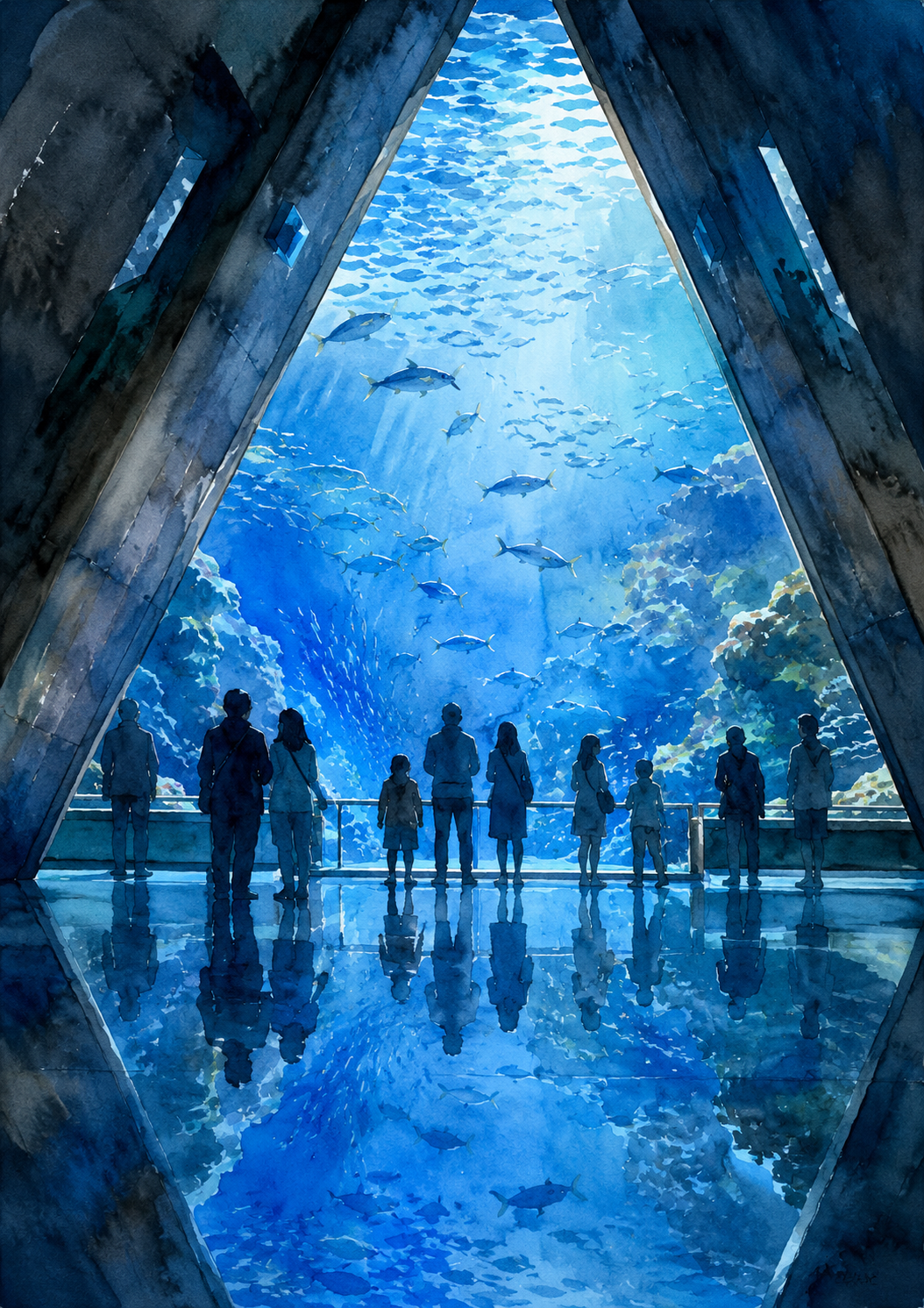
Before the Ocean, We Become Small
Critique
Introduction This painting arranges visitors before a triangular aquarium in deep blue reflection. Sloping architecture and bright water form a gateway into the sea. Fish, rays, and silhouettes overlap at different scales, giving shared wonder grandeur and order. Description Dark navy walls incline inward and create a triangular opening that reaches the visible water surface. Large pelagic fish and schools of smaller fish swim beneath white beams. About ten adults and children stand in a line behind a foreground rail. The polished floor reverses people, aquarium, and architecture, forming a second underwater field below. Analysis Strong wall diagonals converge at the top and lift attention toward light. The horizontal visitor line and railing stabilize the lower section. Changes in fish size and density establish depth, while floor reflection extends that depth into human space. A limited shift from dark ultramarine through cyan to white remains clear. Simplified figures emphasize communal viewing over individual identity. Interpretation and Evaluation Visitors stand at a boundary, yet blue light and reflection have already absorbed them into the oceanic environment. Adults and children share one floor while fish move far above, suggesting awe beyond age. Artificial walls also resemble a submarine canyon or opening gate. The integration of architecture, water, life, and people within one geometry is distinctive. Conclusion Bright blue and the giant triangle overwhelm initially, but evenly spaced figures supply human rhythm. Reflection turns the floor into water and invites the viewer to join their line. Sparse large fish and dense small schools reveal different marine tempos. Transparent watercolor and bold architecture transform collective observation into a passage toward the sea.
Same Subcategory
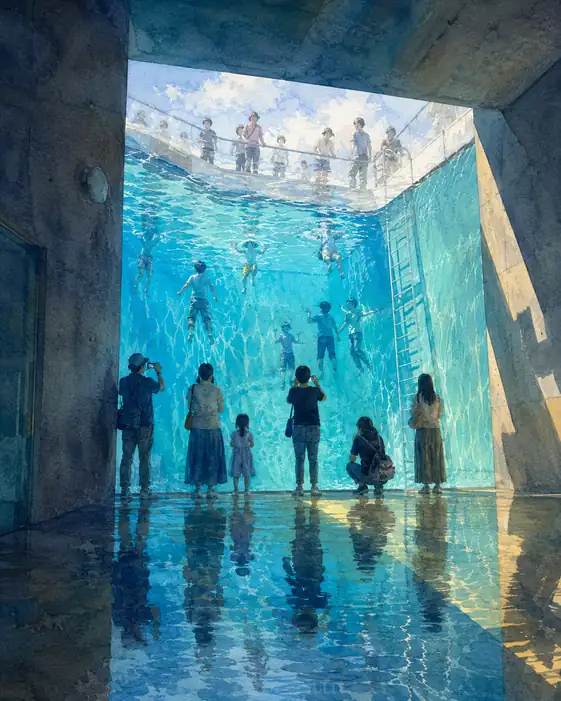 Between Those Who Watch and Those Who Float
Similar Artworks
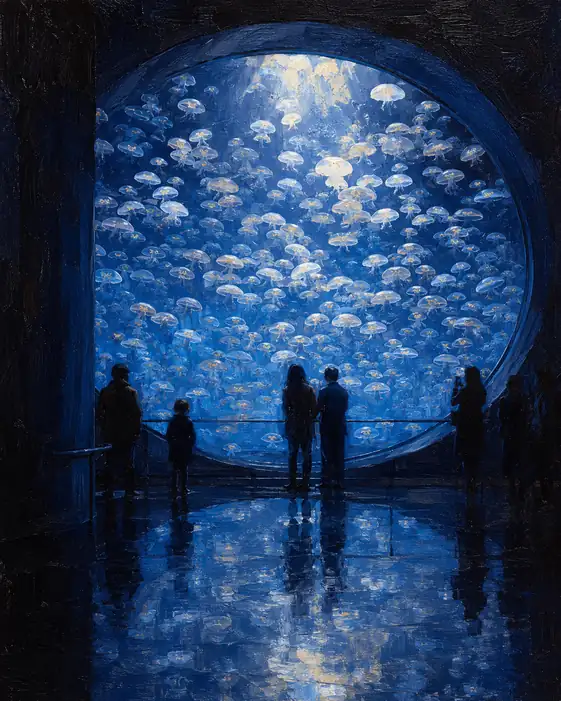 A Moon of Living Light
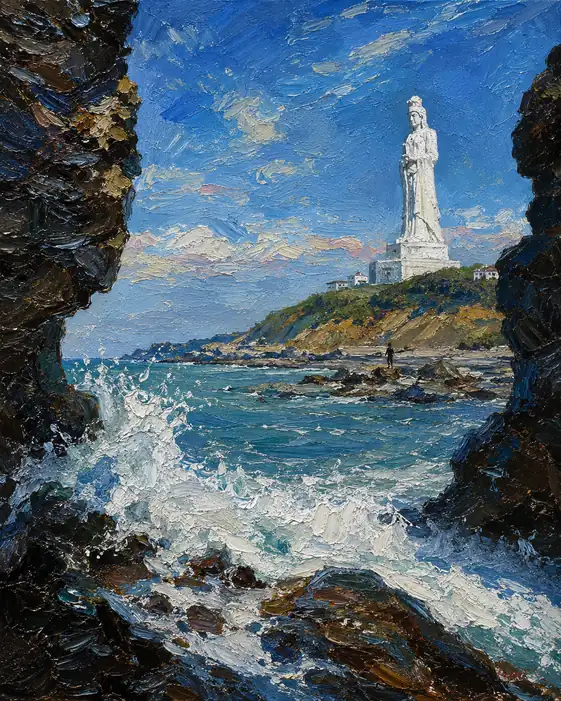 The Watcher Beyond the Tide
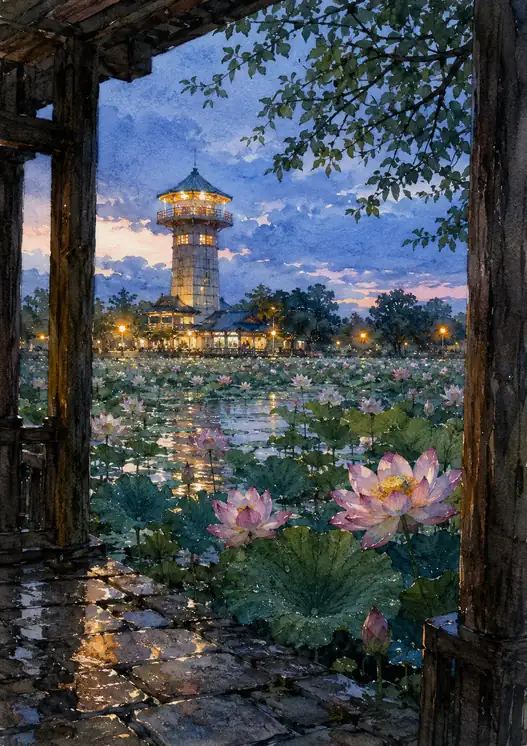 Lotus Light Calls Across the Water
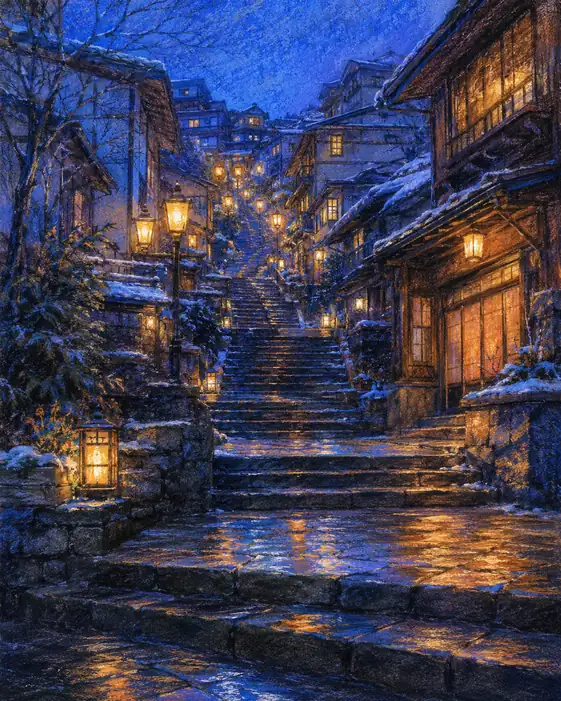 Every Lamp Knows the Way Home
 Windows of Winter, Hearts of Home
 A Small Light Crossing the Snow Kingdom
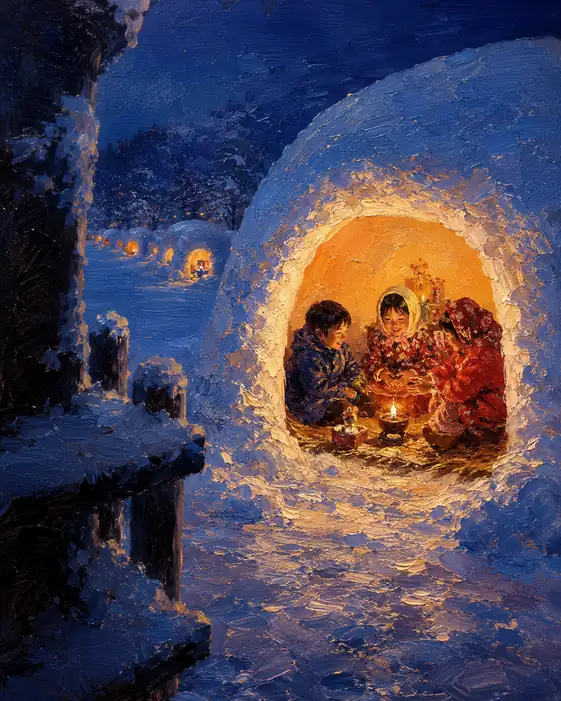 Children Keeping the Night Warm
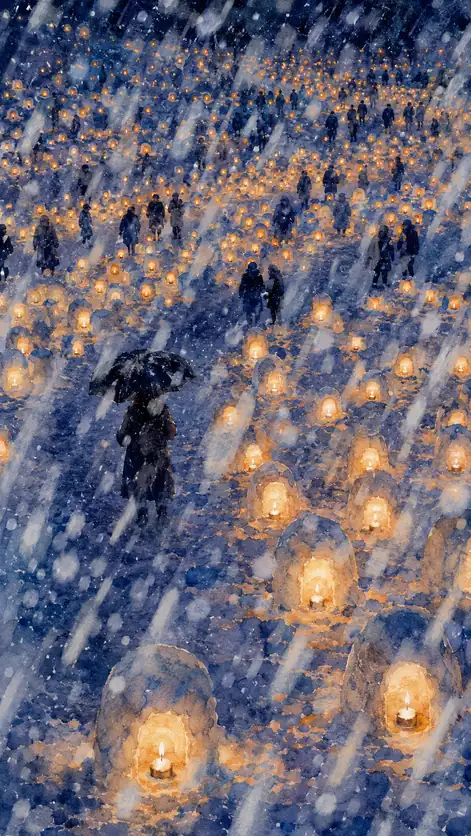 Through the Snow, Toward the Gathering Light
 The Lights Wait Through the Storm
 We Dissolve into the River of Light