The Stone Hall Keeps Its Silence
Critique
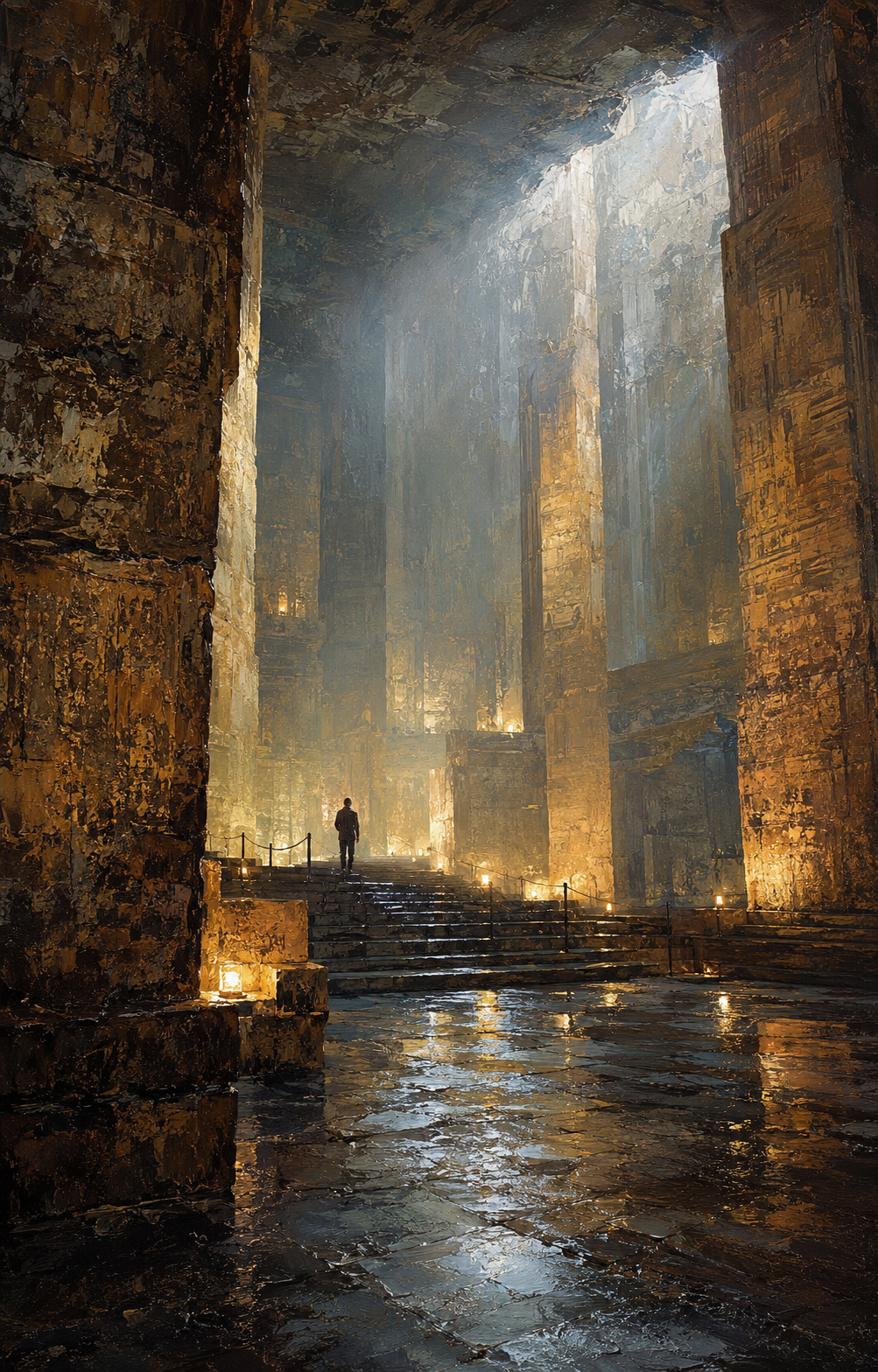
Introduction This painting places one person inside a monumental stone chamber lit by cool daylight and warm floor lamps. Vast pillars, wet paving, and haze give the quarry-like interior grandeur. Within restricted brown and blue-gray, the figure becomes the center of exploration. Description Massive square columns and sheer walls continue beyond the frame. Broad steps rise through the center, where a dark-clothed visitor walks alone. Small lamps follow low railings beside the route. White-blue light enters through an upper-right opening and strikes one pillar. The wet foreground floor reflects orange lamps and cool sky light in broken shapes. Analysis Repeated vertical pillars create overwhelming height, while stair edges measure recession. The extremely small figure makes architectural scale immediately legible. Thick, scraped marks describe scars and layers in stone; across the floor, lateral strokes suggest wet smoothness. Cool upper light and warm lower points establish direction and hierarchy within extensive darkness. Interpretation and Evaluation The visitor appears not as owner but as a temporary witness to traces of long duration. Natural light confirms an outside world, yet its opening remains remote, while small lamps mark a safe human route. Grid-like wounds in the stone suggest labor and lost purposes without fixing one narrative. Scale and illumination alone effectively express fear of the unknown alongside the desire to understand it. Conclusion Pillars and darkness overwhelm at first, but the person and lamp sequence ultimately provide measures for reading the chamber. Wet paving spreads light downward and adds a wavering layer to heavy masonry. The large asymmetric wall at left makes the viewer feel positioned in an entrance shadow. Tactile surfaces and disciplined illumination transform solitary exploration into quiet awe rather than horror.
Same Subcategory
 Windows of Winter, Hearts of Home
Similar Artworks
 Cathedral of the Quarry
 A Wind of Seven Blessings over Ryumon Falls
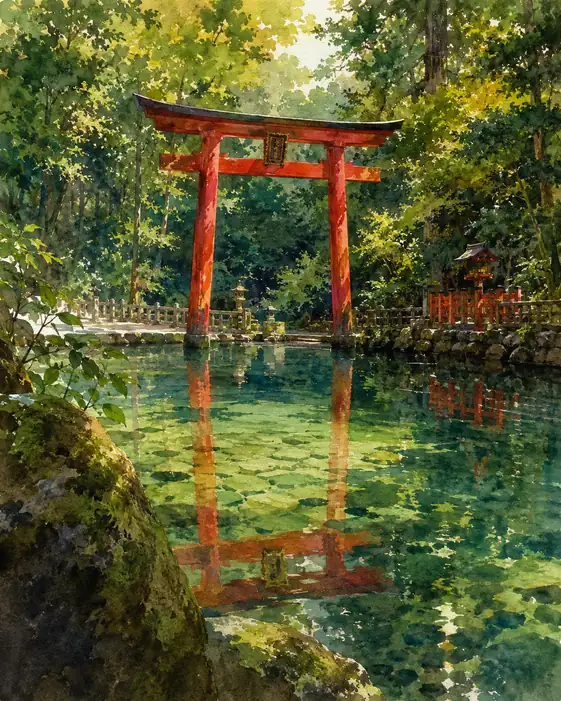 A Gate Reflected Inward
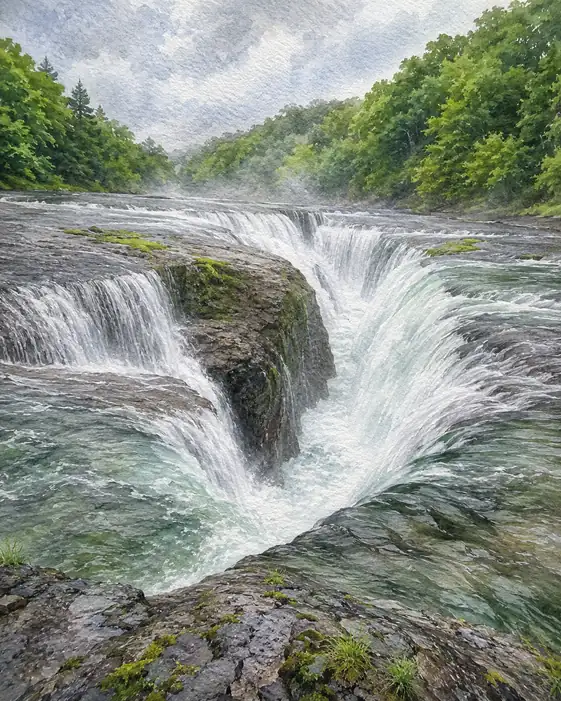 Where Water Carves Its Own Name
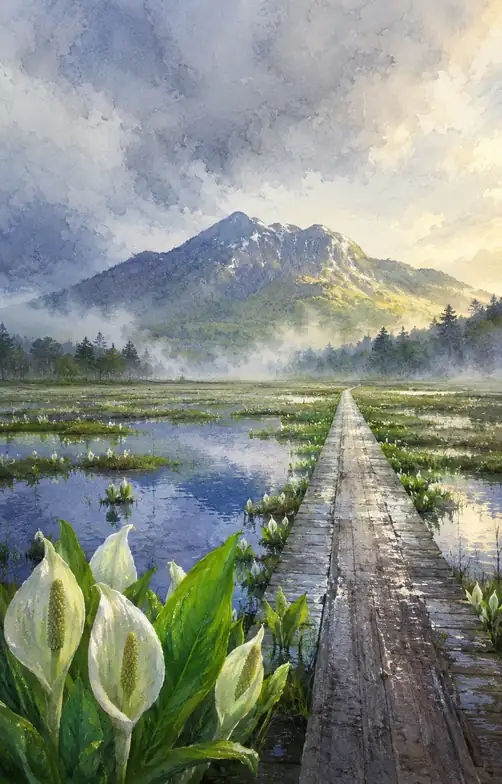 The White Flowers Guide My Steps
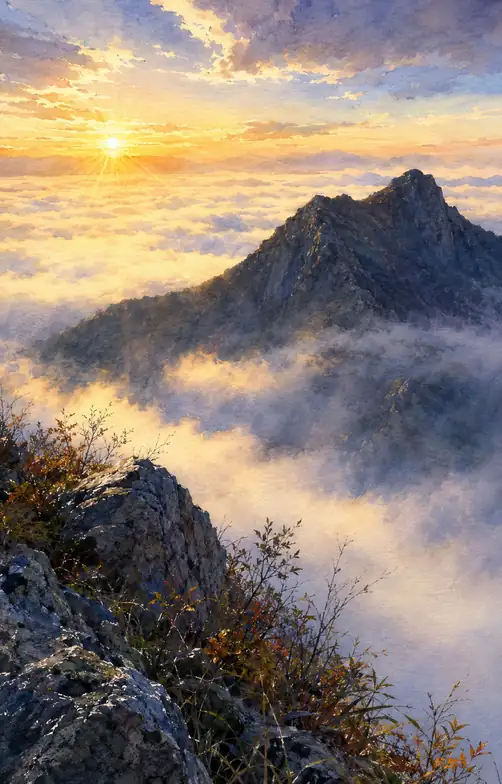 Morning Poured Across the Clouds
 Beyond the Reach of My Small Light
 Two Journeys Through the First Snow
 The Gate Beneath the Water
 The Float Passes Through Rain