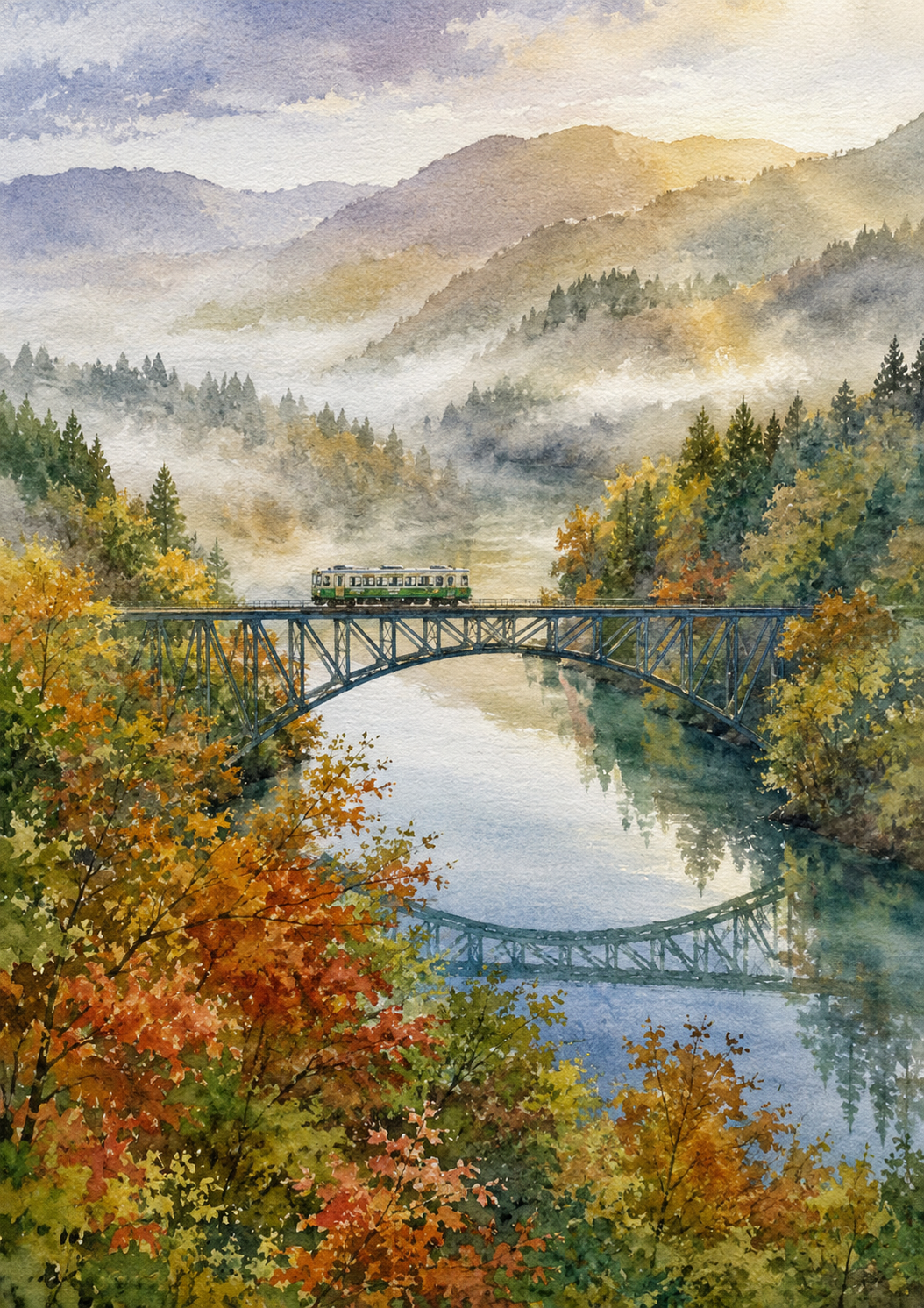
One Carriage Through a Sea of Mist
Critique
Introduction This watercolor depicts a single railcar crossing a steel bridge through a misted mountain valley, accompanied by quiet reflection. Though small, the white-and-green vehicle separates clearly from the autumn woods and supplies human scale. Soft mountain layers, precise metalwork, and vivid foreground foliage gently connect nature, technology, and season. Description A blue-gray arch bridge runs horizontally across the center with one railcar above it. The river below is nearly still and reflects the arch and conifers along the right bank. Red, orange, yellow, and green trees crowd the lower half. Above, successive ridges disappear into white mist. Pale gold light enters from upper right and illuminates selected fog bands. Analysis Bridge and reflection form two opposing arcs that enclose an oval of open water. This geometric framework contrasts with irregular blooms of leaf and mist. Saturated foreground color, muted middle distance, and pale violet mountains produce deep aerial perspective. Repeated train windows echo smaller truss members, creating related orders at different scales. Interpretation and Evaluation The solitary railcar does not dominate the landscape; it appears as a modest container for mountain life. Fog conceals its destination and makes a routine crossing momentarily exceptional. Reflection doubles the structure but transforms engineering into a wavering image resembling memory. Concentrating color below while restraining the distance keeps seasonal pleasure compatible with quiet grandeur. Conclusion Autumn woods initially appear dominant, yet bridge and train ultimately measure the valley's immense distance. Open river gives the dense leaves breathing room, while the reflected arch returns attention upward. Reserved paper white conveys both moisture and light. Transparent layering joins still water, a moving vehicle, and seasonal change into travel poetry without excessive drama.
Same Subcategory
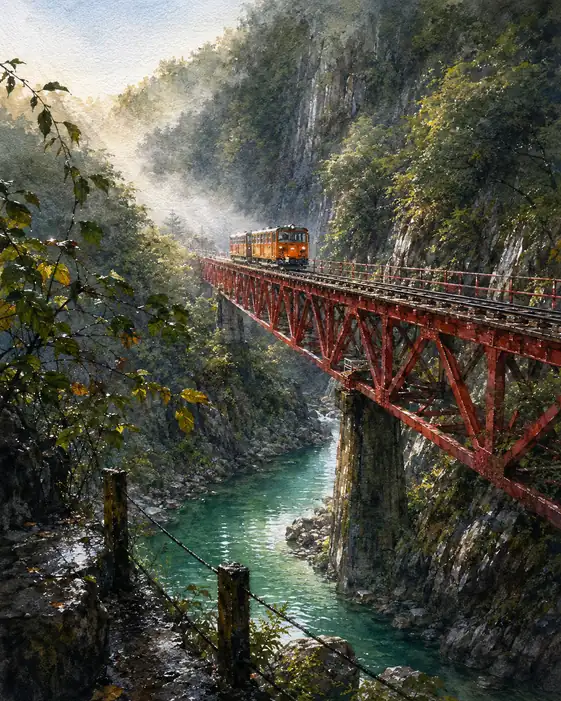 The Red Rail Above Emerald Water
Similar Artworks
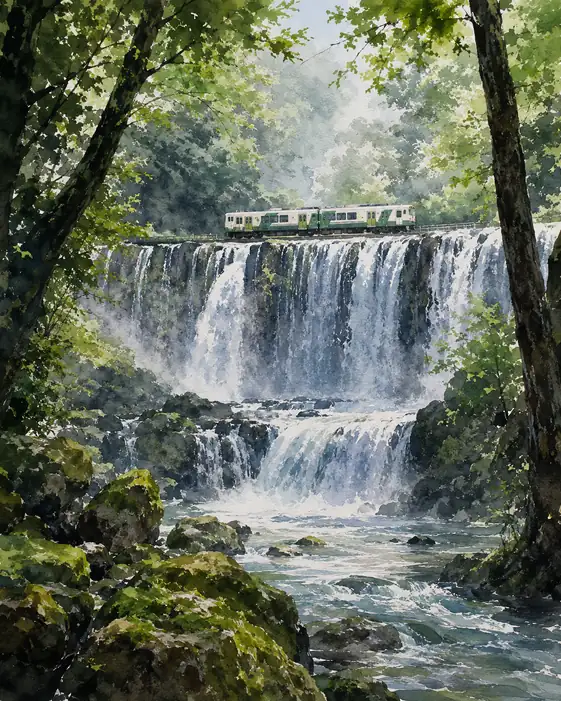 The Train at the Edge of Falling Water
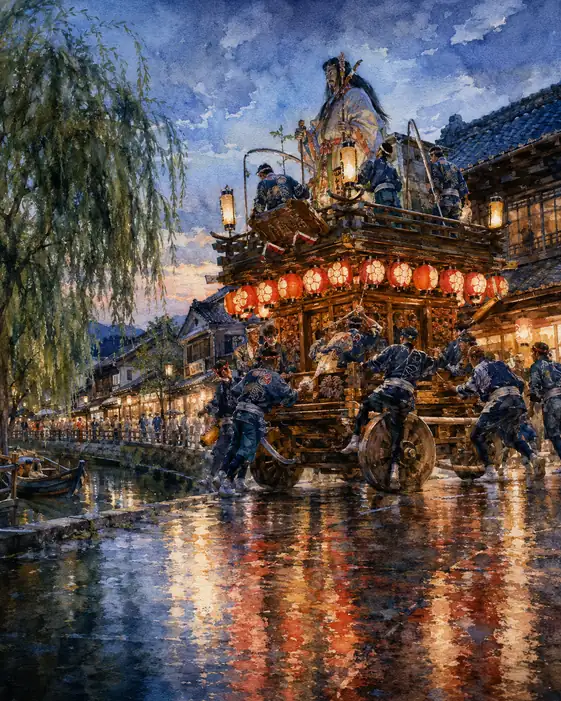 The Float Passes Through Rain
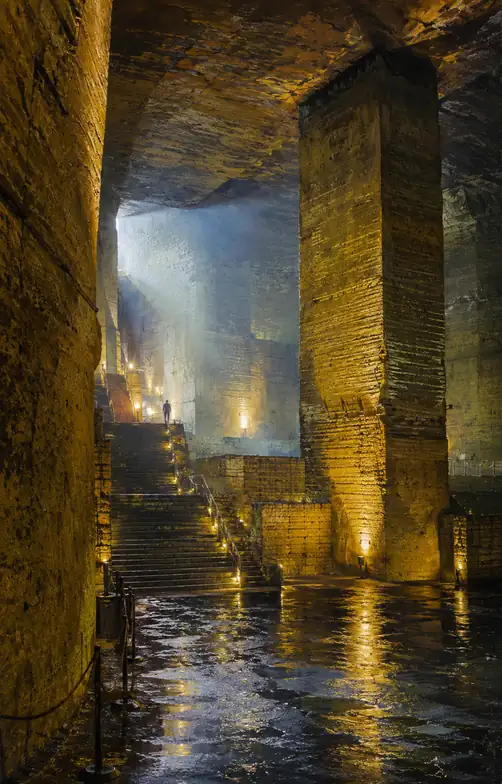 Cathedral of the Quarry
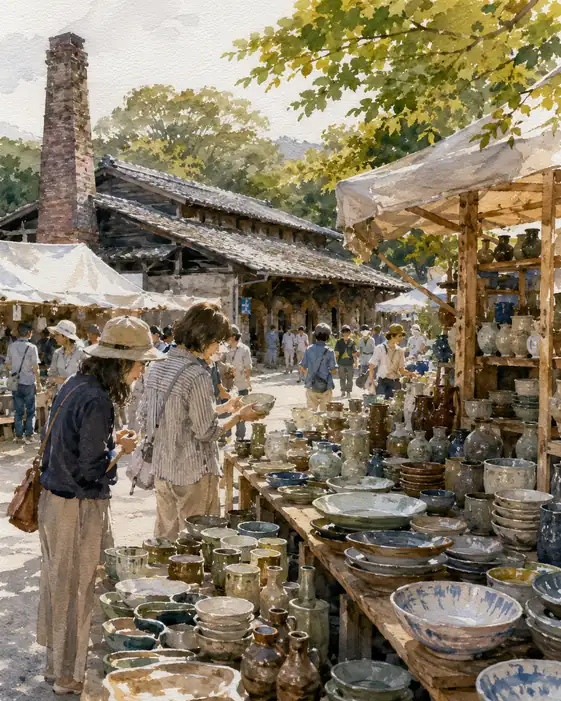 Hands Choosing the Memory of Fire
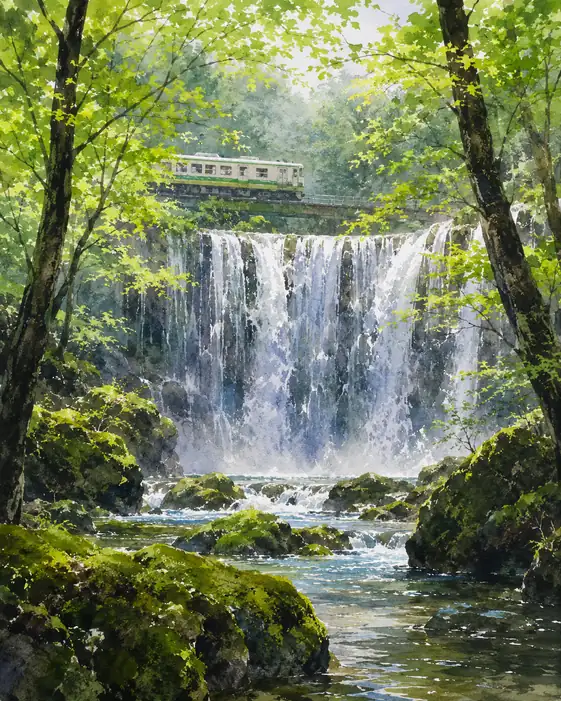 A Wind of Seven Blessings over Ryumon Falls
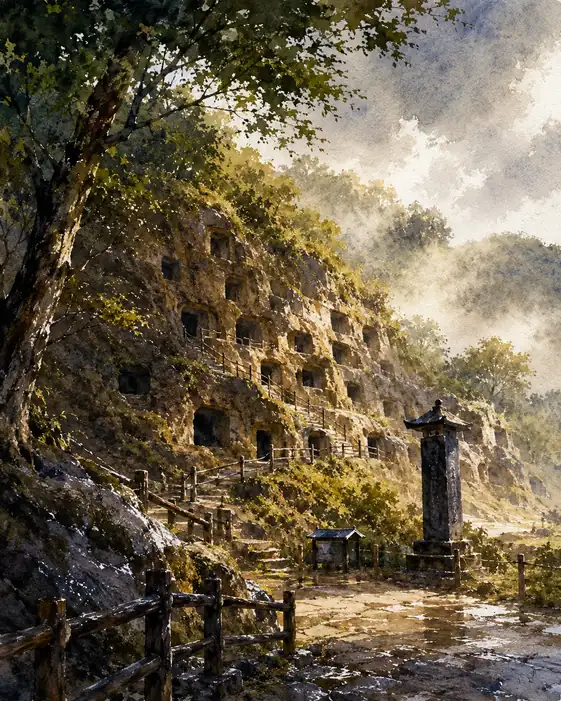 Caverns of Borrowed Light
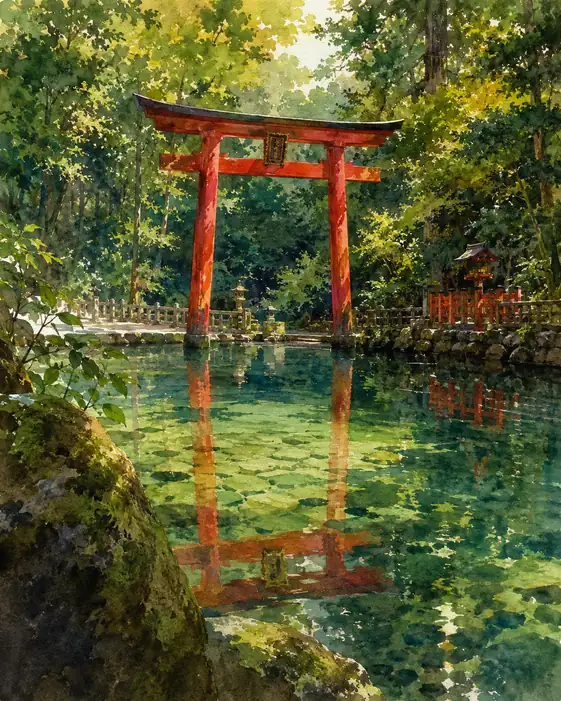 A Gate Reflected Inward
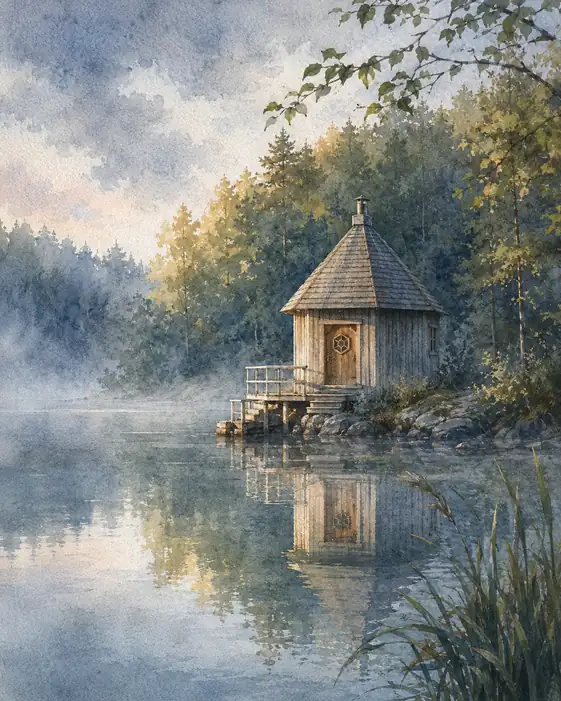 The Locked Door of the Lake
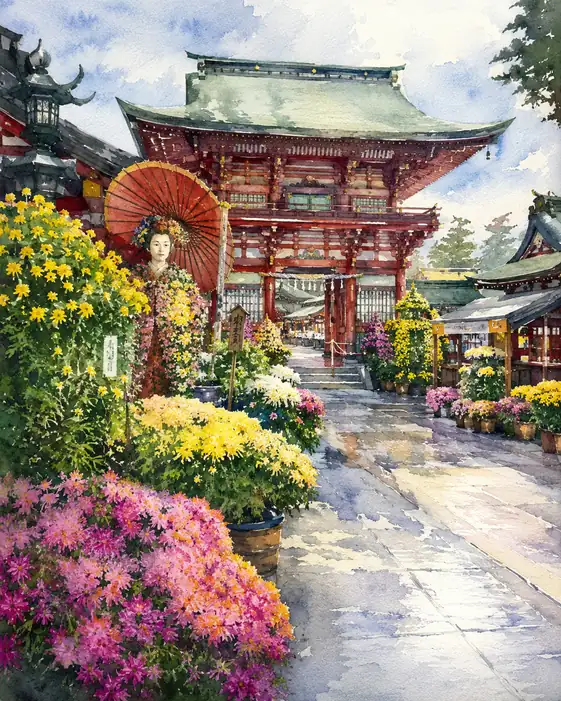 She Waits Where Prayer Blooms
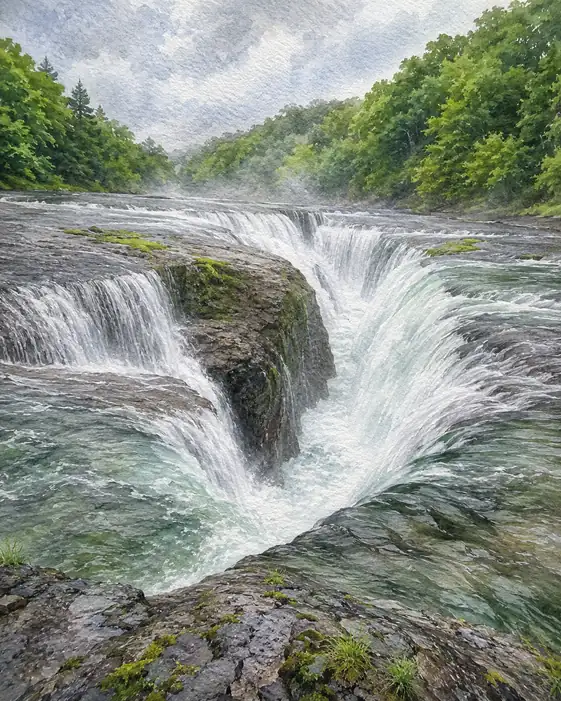 Where Water Carves Its Own Name