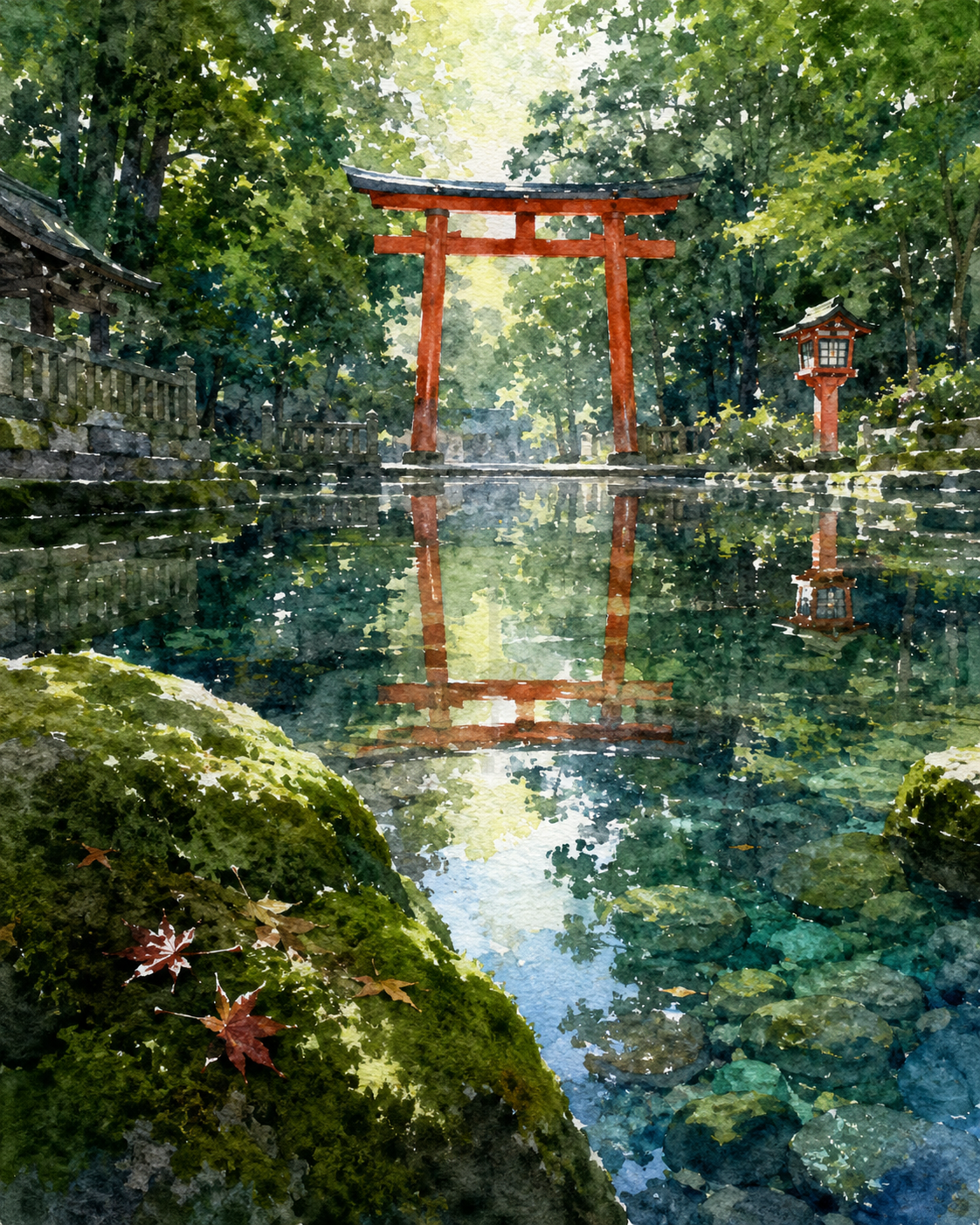
The Gate Beneath the Water
Critique
Introduction This vertical watercolor depicts a vermilion torii and clear forest pool in a frontal view. Gate and lantern are repeated in the water, balancing the physical precinct with its reflection. A mossy foreground boulder and visible submerged stones add tactile nature to the sacred geometry. Description The torii stands at upper center, its dark top beam and red posts enclosing a luminous opening in the trees. A matching lantern appears at right, while masonry and part of a wooden structure occupy the left. The pool fills the middle and lower sections with slightly disturbed reflections. Fallen maple leaves rest on the mossy rock, and rounded stones remain visible underwater. Analysis Verticals and horizontals establish a strong central order, extended downward by the reversed image. The diagonal foreground rock breaks symmetry and locates the viewer at the bank. Deep green, blue-green, and gray dominate, with vermilion restricted to architectural accents. Layered transparency, reserved white, and small marks separate leaf, moss, bottom stone, and reflection. Interpretation and Evaluation The torii marks a boundary, yet its reflection opens that boundary vertically and lets architecture waver into forest. Moss and fallen leaves join long natural duration with brief seasonal change. Symmetry, transparency, and restrained color remain controlled without losing visual tension. Showing bottom and reflected canopy in one surface demonstrates particular technical sensitivity. Conclusion At first the red gate and orderly reflection attract attention, but longer viewing reveals foreground moss and submerged stone as carriers of time. The bright forest beyond creates an exit from closed symmetry. Without figures, small changes of water and light become more apparent. Transparent technique and stable composition express passage through stillness.
Same Subcategory
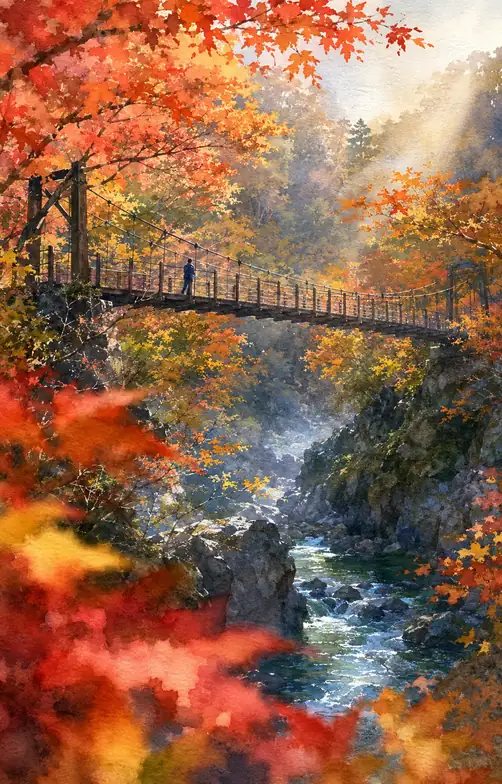 One Pause Above the Burning Valley
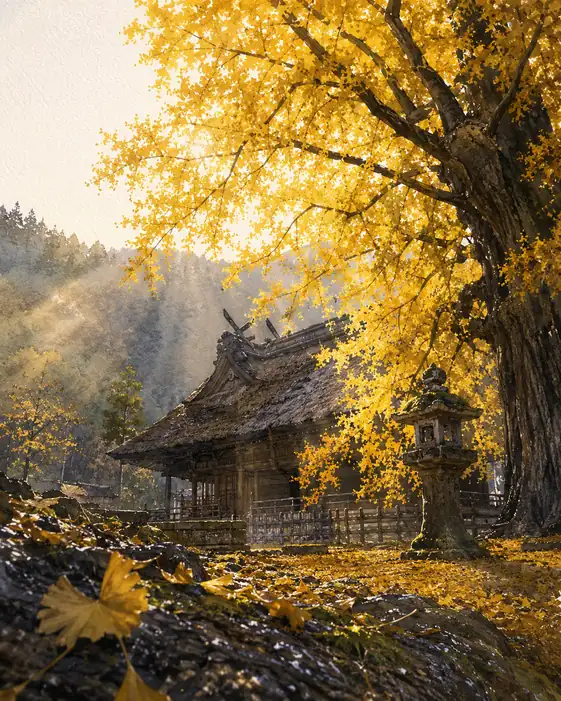 Beneath the Golden Guardian
Similar Artworks
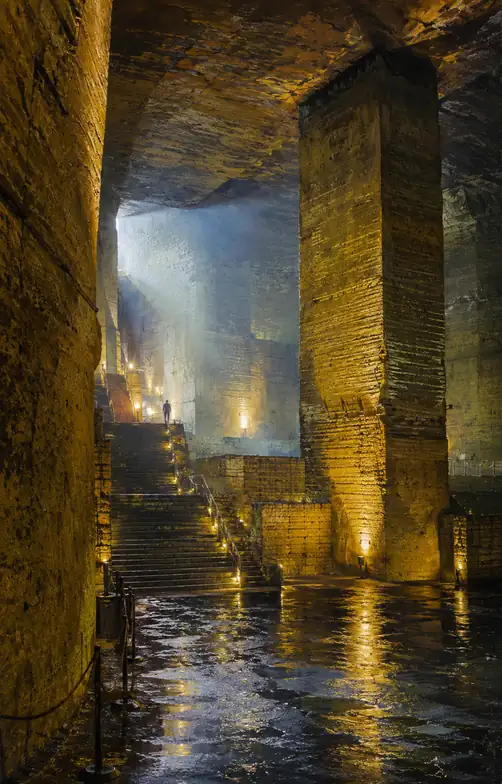 Cathedral of the Quarry
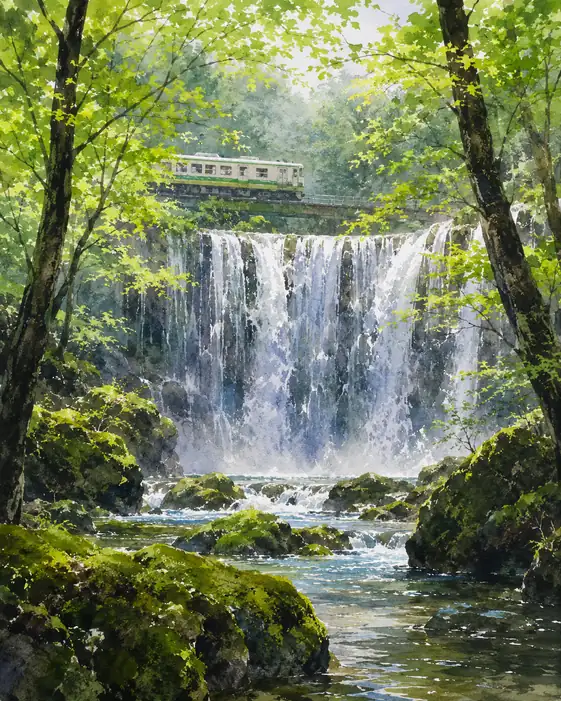 A Wind of Seven Blessings over Ryumon Falls
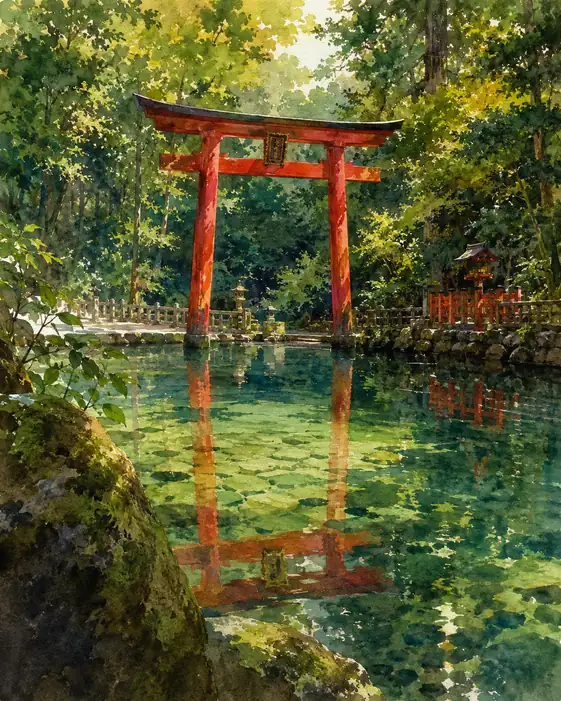 A Gate Reflected Inward
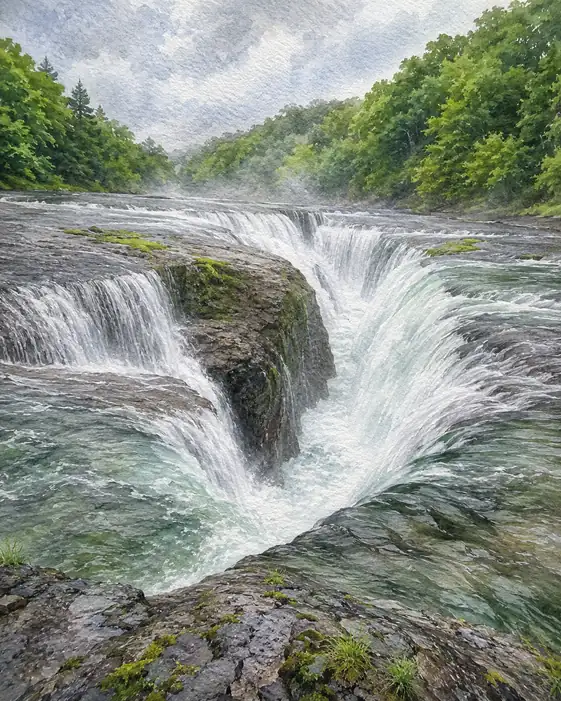 Where Water Carves Its Own Name
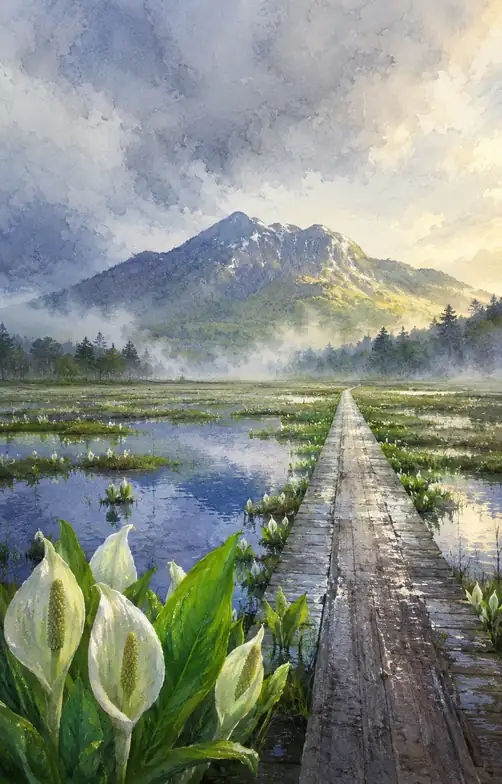 The White Flowers Guide My Steps
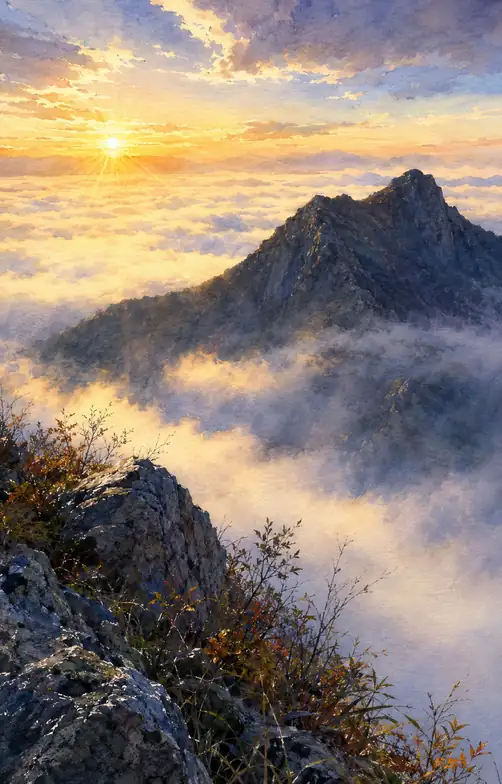 Morning Poured Across the Clouds
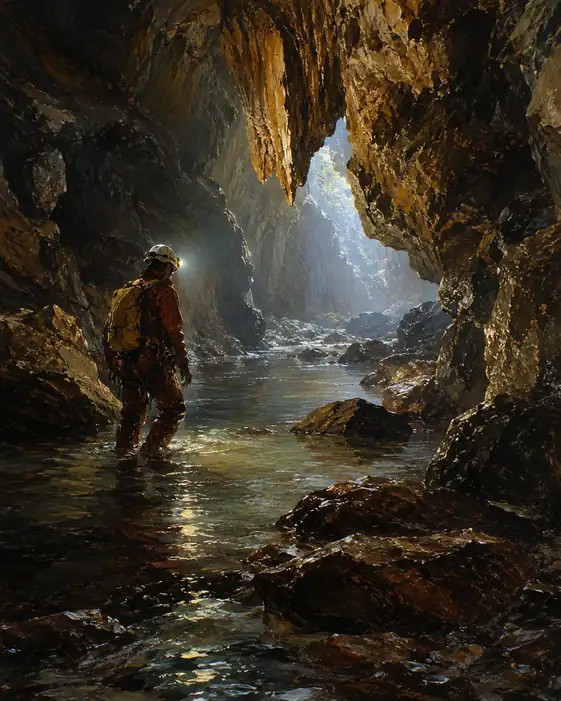 Beyond the Reach of My Small Light
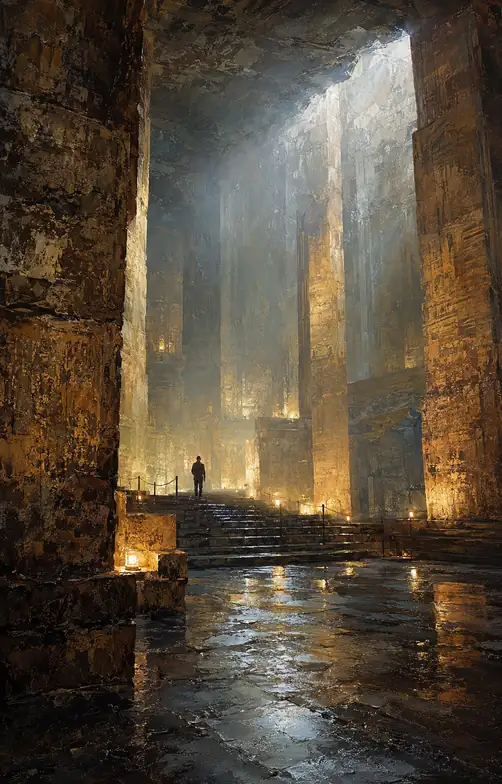 The Stone Hall Keeps Its Silence
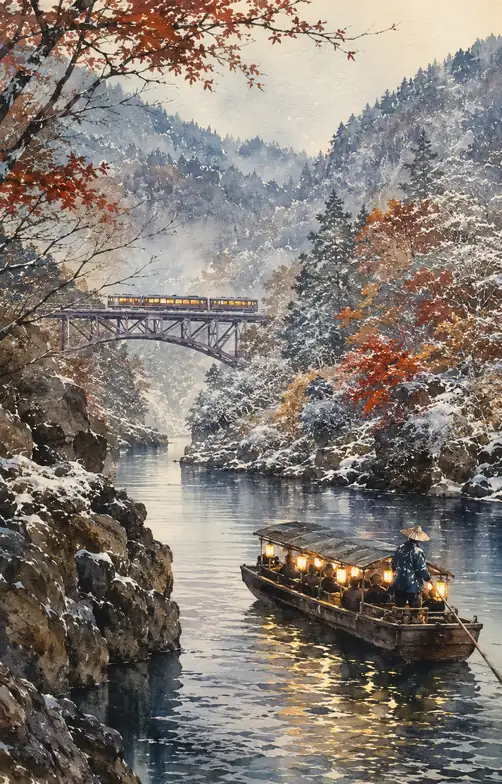 Two Journeys Through the First Snow
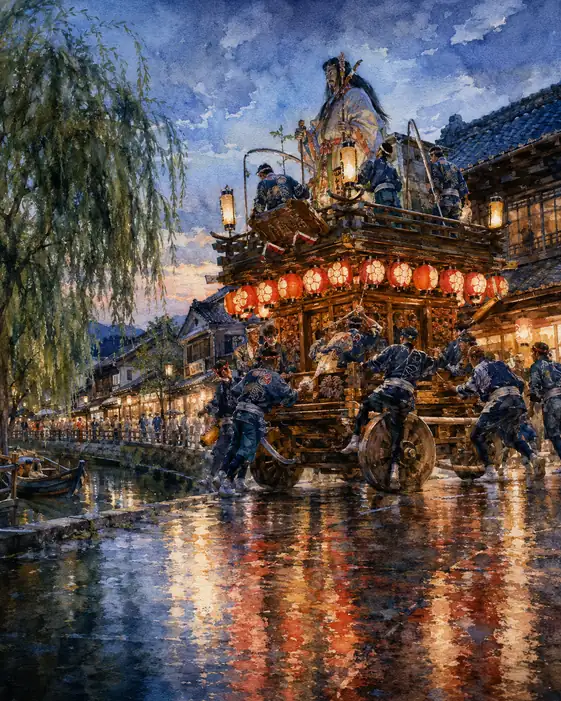 The Float Passes Through Rain