The Street Learns the Festival's Pulse
Critique
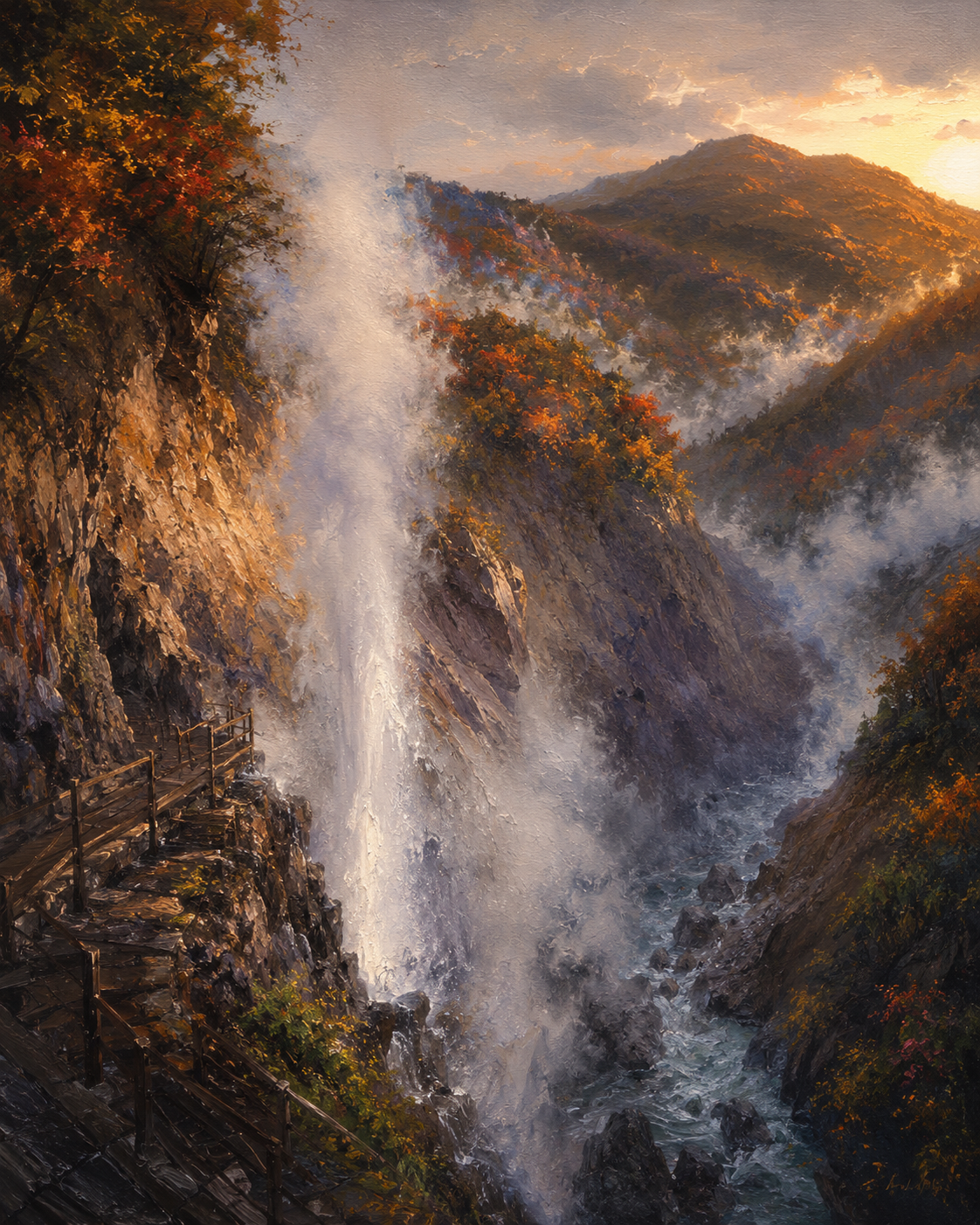
Introduction This vertical oil painting depicts a large waterfall and mountain stream under warm evening light. The falling white column, central cliffs, and receding channel oppose rapid water to geological weight. A small walkway provides human scale and defines how closely the landscape may be approached. Description Water drops from a high cliff at left and becomes dense spray among the rocks below. Wooden stairs and railings bend along the foreground slope toward the base. A stream continues between jagged walls into the right distance, threading around dark boulders. Autumn trees punctuate the mountains, while golden light reaches ridge, mist, and cloud. Analysis The waterfall's vertical and the stream's diagonal intersect near the center, clarifying the route from descent to onward flow. Angular walkways create a separate rhythm and guide attention toward the plunge pool. Thick white strokes, dry rock surfaces, and thin veils of mist distinguish several states of water. Warm foliage and sky recur across a dark brown foundation. Interpretation and Evaluation The walkway signals intervention but remains visually fragile beside the waterfall. Spray both conceals the gorge and makes its humidity and depth visible through light. Dynamic composition, tactile surface, and balanced warm-cool color are handled with assurance. Treating waterfall, river, mountain, and path as one continuous environment gives the scene individuality. Conclusion At first the waterfall's height overwhelms, but sustained viewing reveals the stream as the carrier of time. Evening light unites spray and autumn leaves, adding calm to forceful movement. The path fixes the viewer's physical position. Impasto and firm construction express both natural power and cautious human approach.
Same Subcategory
 Where Past and Present Lights Intersect
Similar Artworks
 The Float Passes Through Rain
 Cathedral of the Quarry
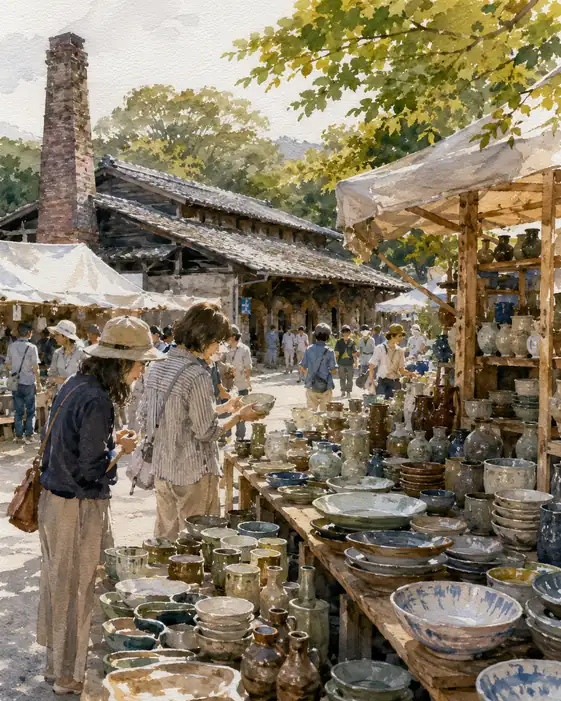 Hands Choosing the Memory of Fire
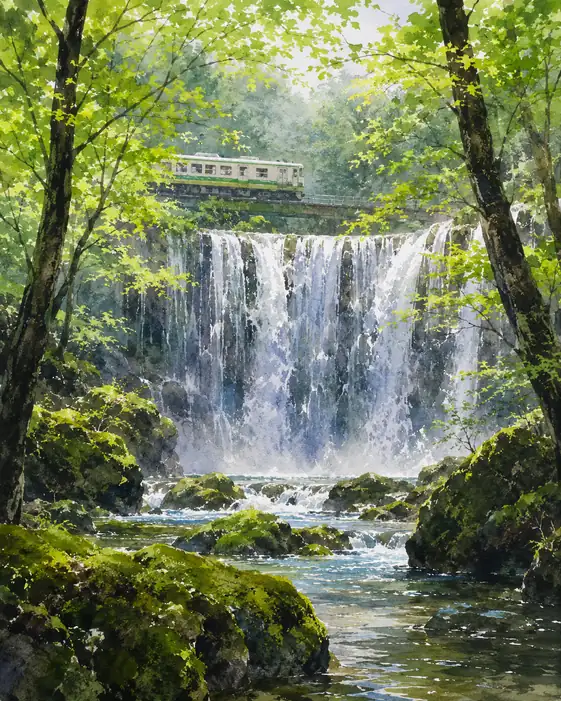 A Wind of Seven Blessings over Ryumon Falls
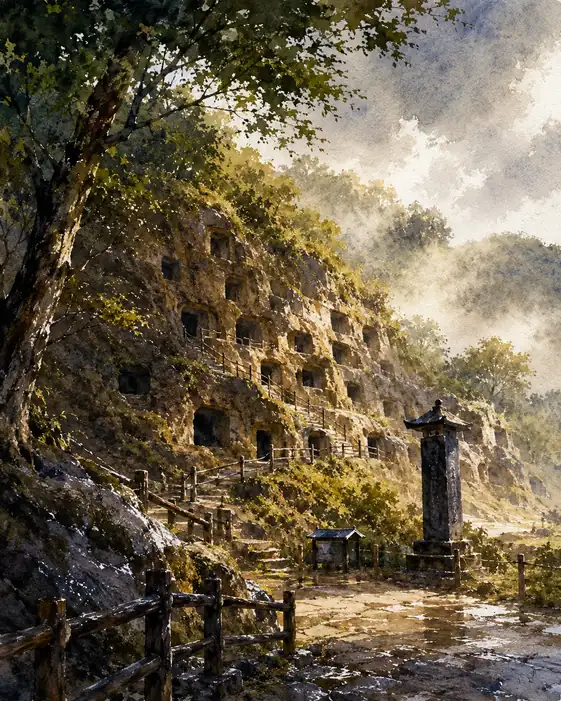 Caverns of Borrowed Light
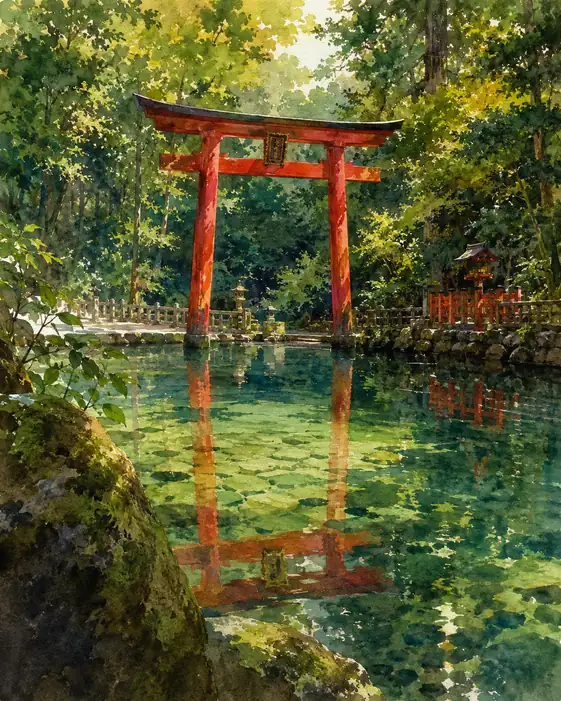 A Gate Reflected Inward
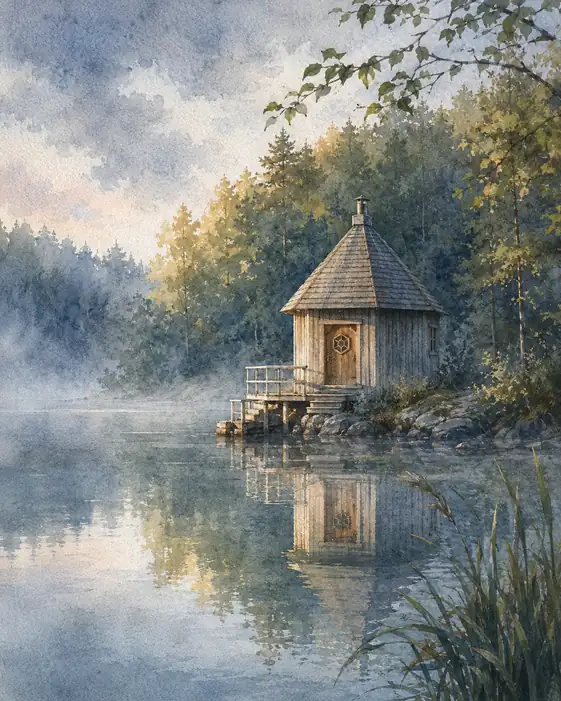 The Locked Door of the Lake
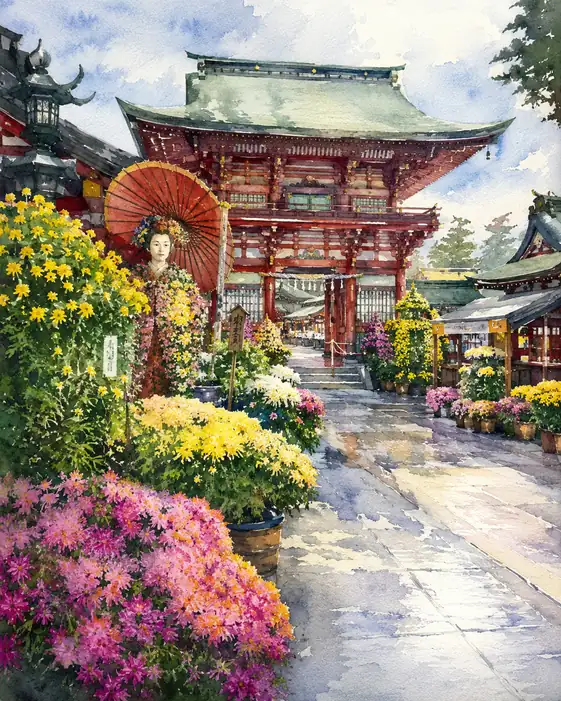 She Waits Where Prayer Blooms
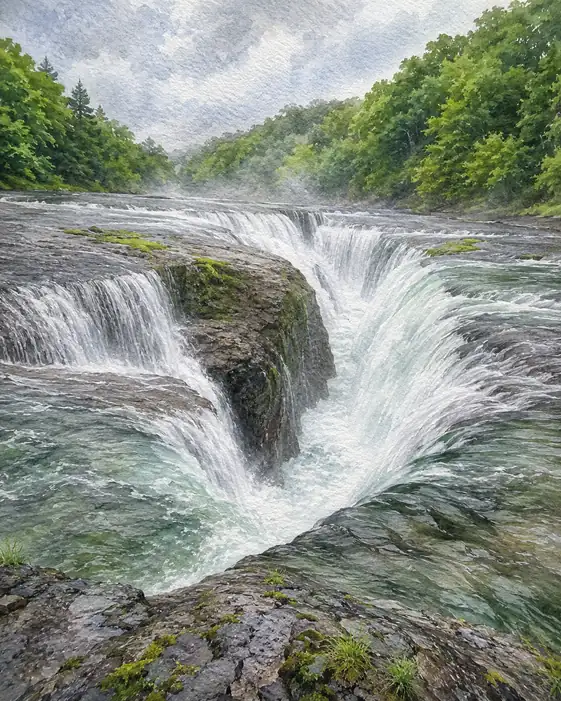 Where Water Carves Its Own Name
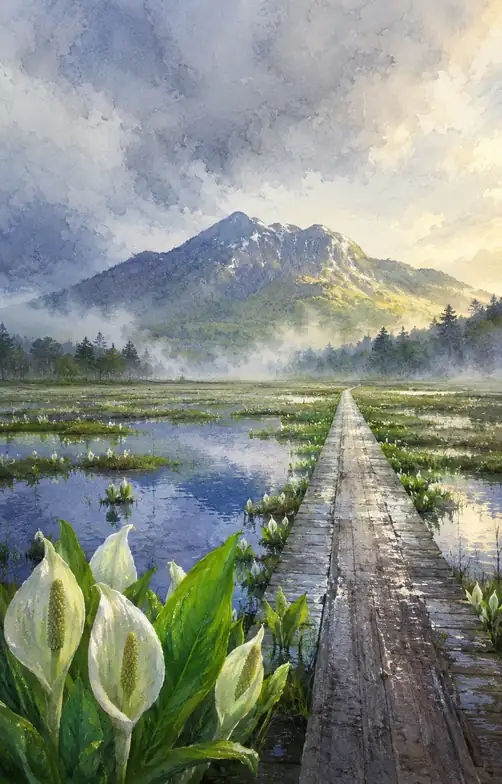 The White Flowers Guide My Steps