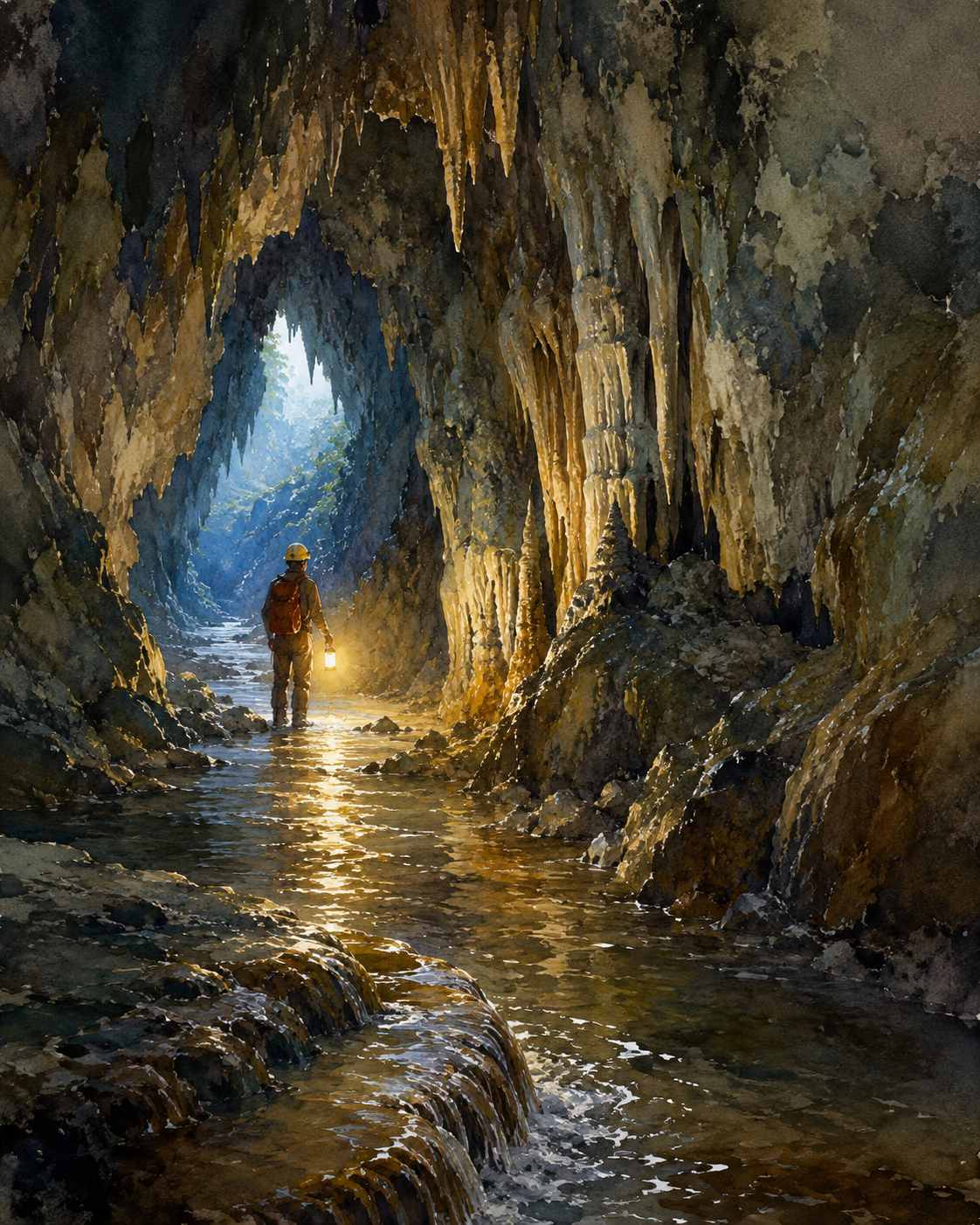
At the Edge of the Lantern's Knowing
Critique
Introduction This vertical watercolor depicts an explorer in a flooded cavern. Dark rock, warm lantern light, and daylight define the route. The figure provides scale and joins geological observation with tension. Description Stalactites of varied lengths descend from the ceiling, while layered mineral folds and rising formations crowd the right wall. The explorer wears a helmet and backpack and holds a lantern close to the water. A shallow underground stream extends from the foreground, breaking into small cascades over stone ledges. Blue-white light and a trace of vegetation appear at the distant opening. Analysis The curving channel and narrowing walls create a vanishing point that leads from the figure toward the brighter distance. Lantern light repeats across clothing, rock, and water, revealing only a limited area. Blue, brown, and ocher maintain a controlled warm-cool opposition and convey damp depth. Blooms, layered washes, and sharp marks distinguish solid rock, wet mineral surfaces, and transparent current. Interpretation and Evaluation The explorer may be read as a temporary presence within a much longer geological duration. The lamp does not conquer the darkness; it defines the careful limits of immediate knowledge. Spatial depth, consistent lighting, and tactile rock description are handled with assurance, while the route remains legible within abundant detail. The pairing of daylight and artificial light gives the scene originality and balances adventure with silence. Conclusion At first the pointed formations and darkness appear dominant, but sustained viewing reveals that connected reflections quietly organize the cavern. The paused posture suggests observation and judgment as much as forward movement. The broad foreground water places the viewer within the same passage. Drawing, color, and illumination combine to express exploration with measured tension.
Same Subcategory
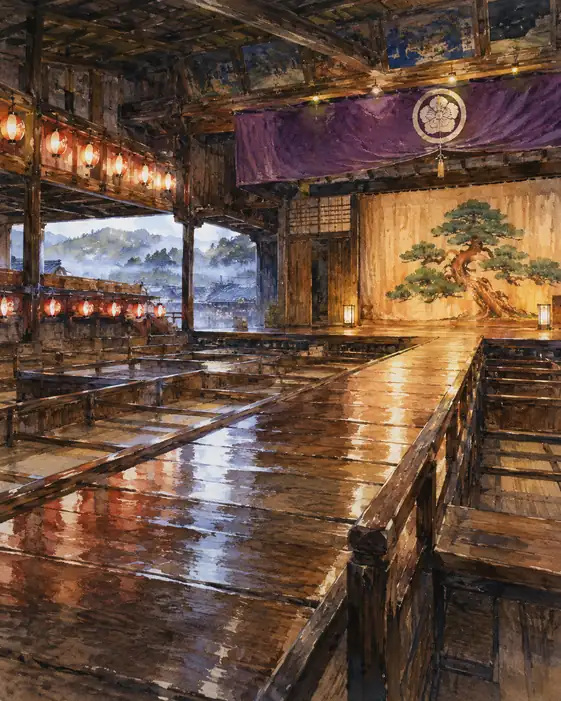 The Curtain Still Waits for Memory
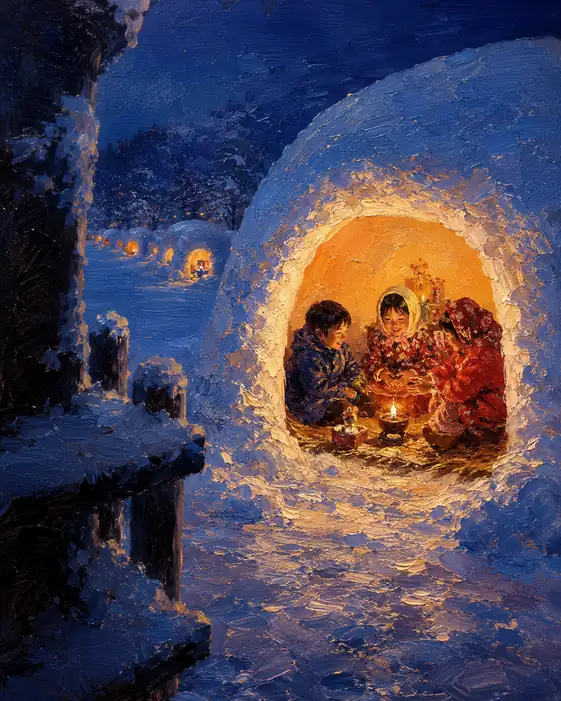 Children Keeping the Night Warm
Similar Artworks
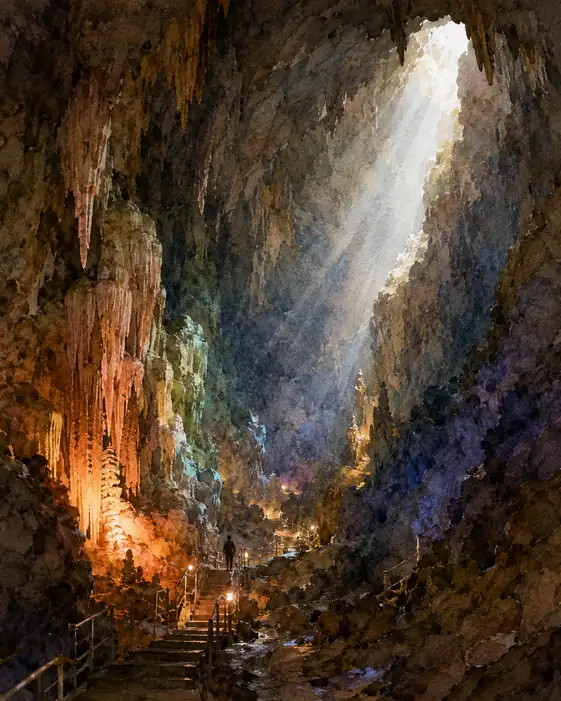 Daylight Finds the Underworld
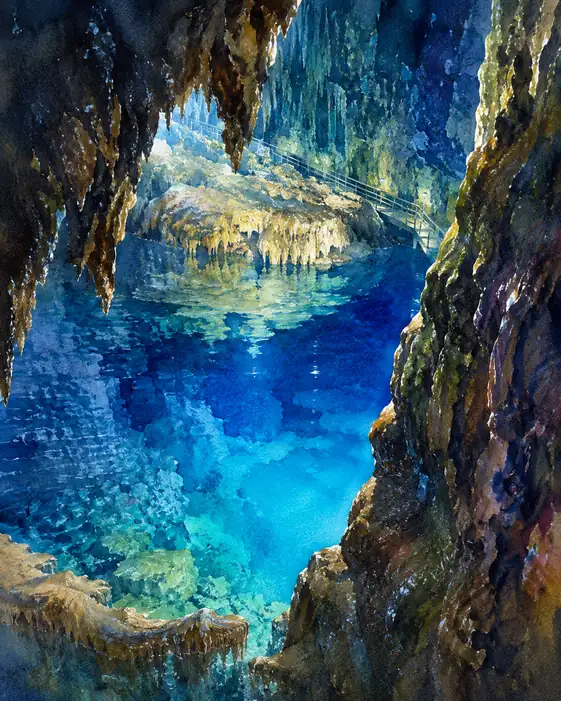 Luminous Depths: The Azure Sanctuary
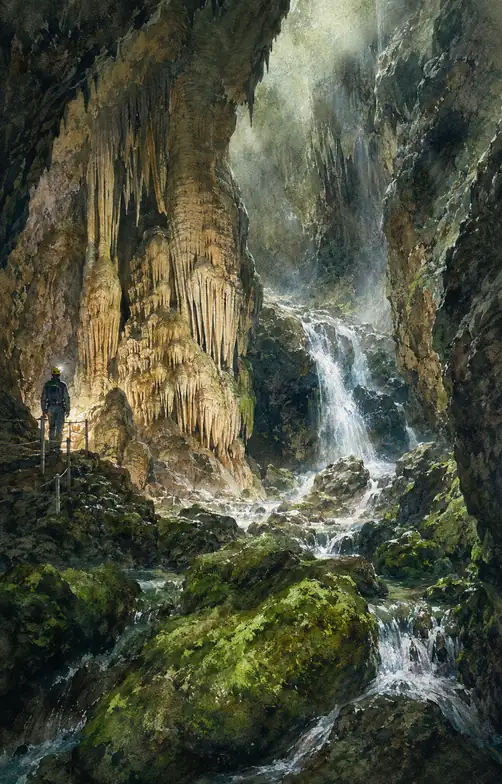 The Earth Builds a Cathedral of Water
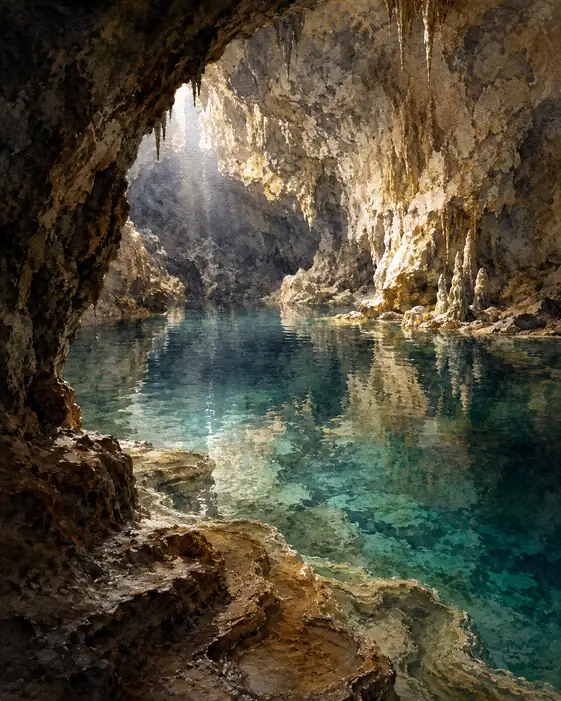 Echoes in the Crystal Void
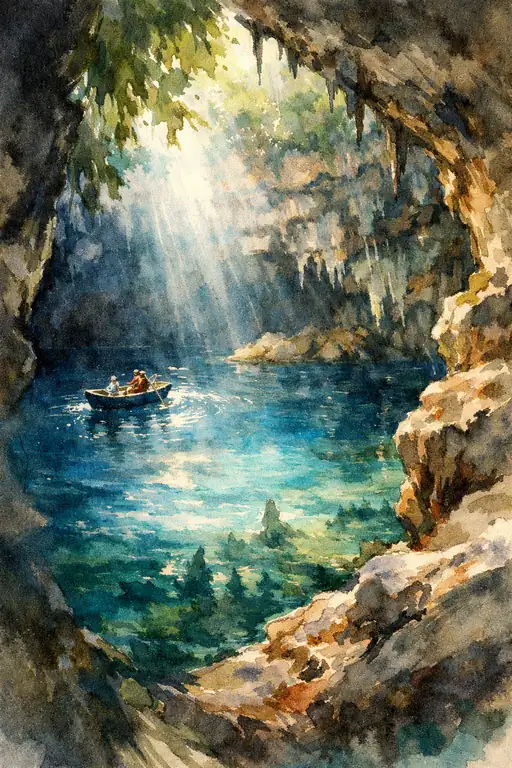 Light Through the Cave
 Light Found in Hidden Halls
 The Golden Cathedral of Subterranean Time
 The Cathedral of Stone
 Sailing Towards the Whispering Light
 Whispers of the Sunlit Gorge