The Curtain Still Waits for Memory
Critique
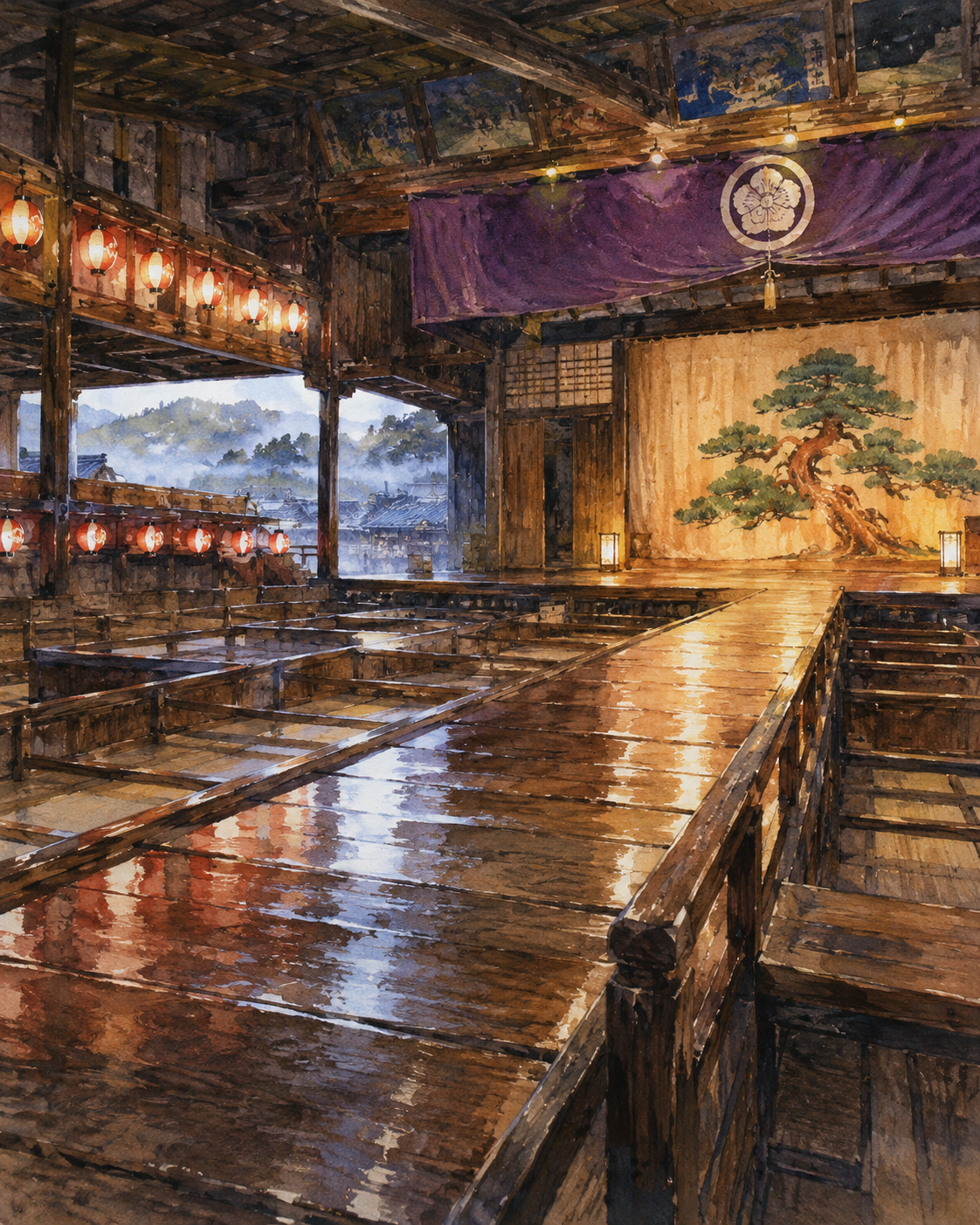
Introduction This vertical watercolor depicts an old wooden theater, viewed along a glossy runway toward an empty stage. Lanterns, painted panels, beams, and a pine backdrop establish a layered performance space. The absence of actors shifts attention from spectacle to architecture, memory, and expectation. Description The runway begins near the lower center and rises toward the stage at right, dividing recessed seating areas on both sides. Rows of red-and-white lanterns illuminate dark timber galleries, while a purple curtain bearing a crest spans the upper stage. Beyond an open side wall, pale mountains and clustered roofs appear through mist. Reflections stretch across the wet or polished boards. Analysis Strong one-point perspective gives the runway both structural and dramatic force. Warm browns, amber light, muted red, and deep violet dominate, balanced by the cool exterior opening. Repeated beams, rails, and lanterns create rhythm, while irregular reflections prevent the geometry from becoming rigid. Dry textures describe aged wood, and transparent washes soften distant scenery. The bright pine screen serves as the principal visual destination. Interpretation and Evaluation The empty theater can be read as a repository of performances no longer visible but embedded in its surfaces. The runway implies movement, yet its vacancy prolongs anticipation. Precise perspective, coherent color, and differentiated wood textures reveal strong control. The misty town beyond expands the subject from a stage building to a cultural space connected with communal life. Conclusion At first the illuminated stage commands attention, but sustained viewing makes absence itself increasingly significant. Architecture becomes the carrier of memory, and reflected light suggests activity without depicting it. The painting combines disciplined construction with atmospheric handling to create a persuasive stillness before or after performance.
Same Subcategory
 The River Carries the Lights Home
 At the Edge of the Lantern's Knowing
Similar Artworks
 After the Applause Became Rain
 The Empty Stage Remembers Every Voice
 Waiting for the First Act
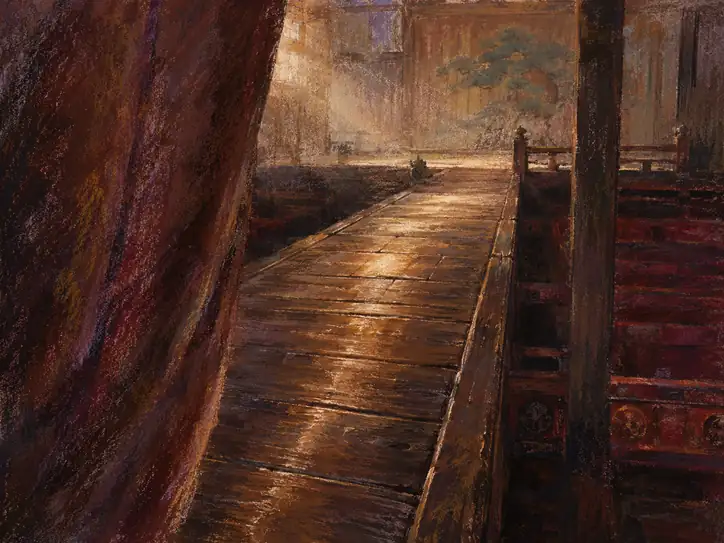 The Golden Bridge of Yugen
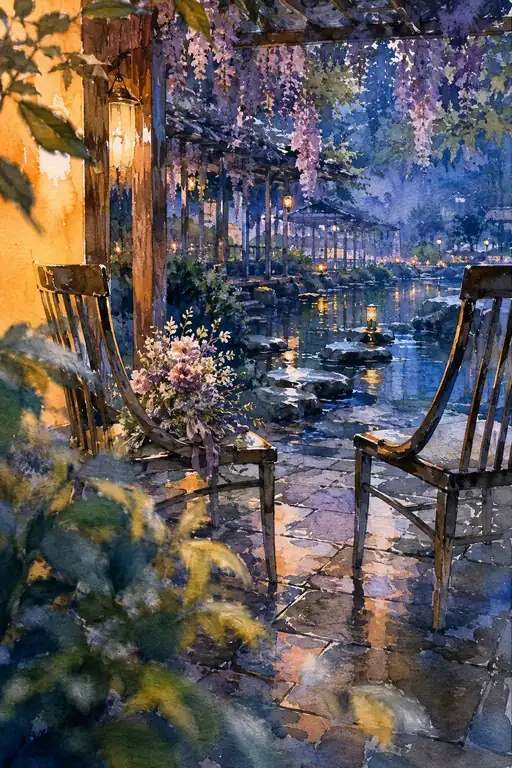 Two Empty Chairs Await the Wisteria Night
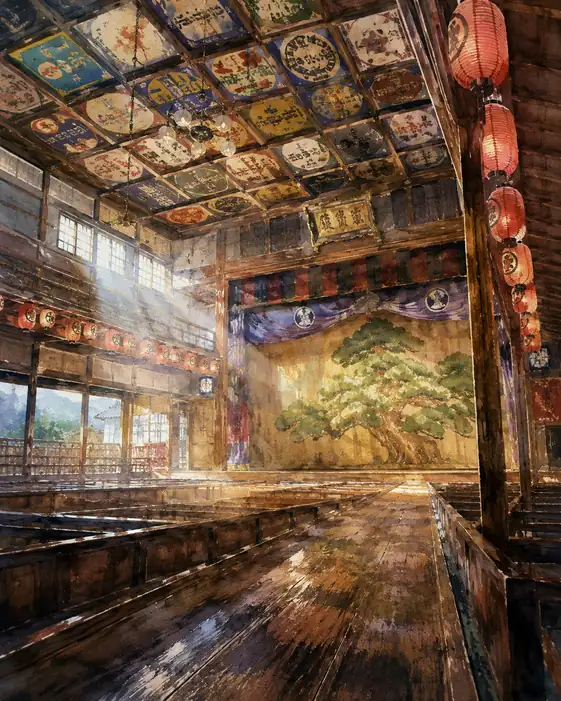 The Stage Still Dreams of Applause
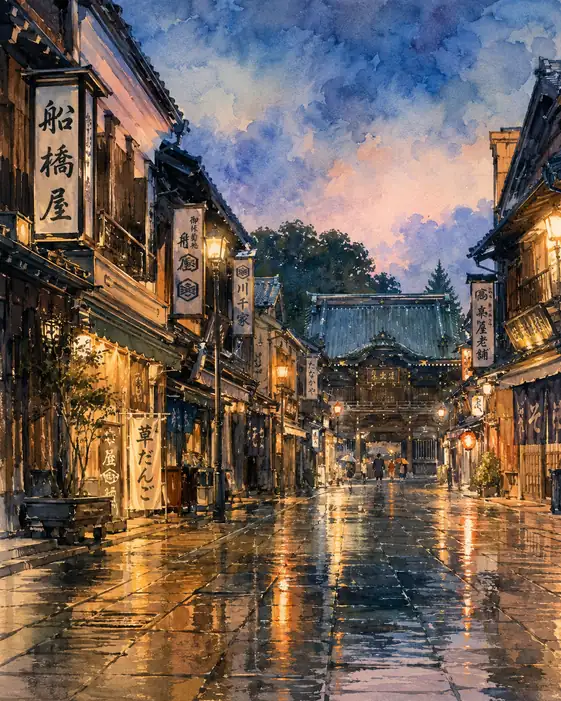 Rain Writes the Old Approach
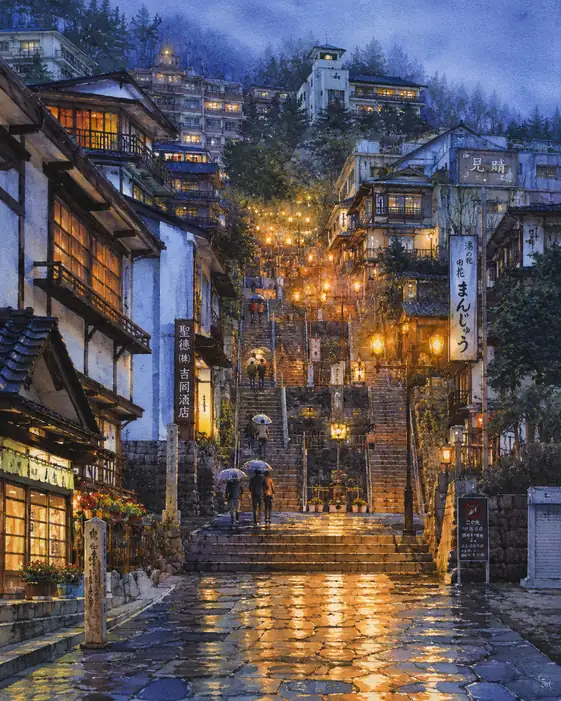 The Long Climb Through Rainlight
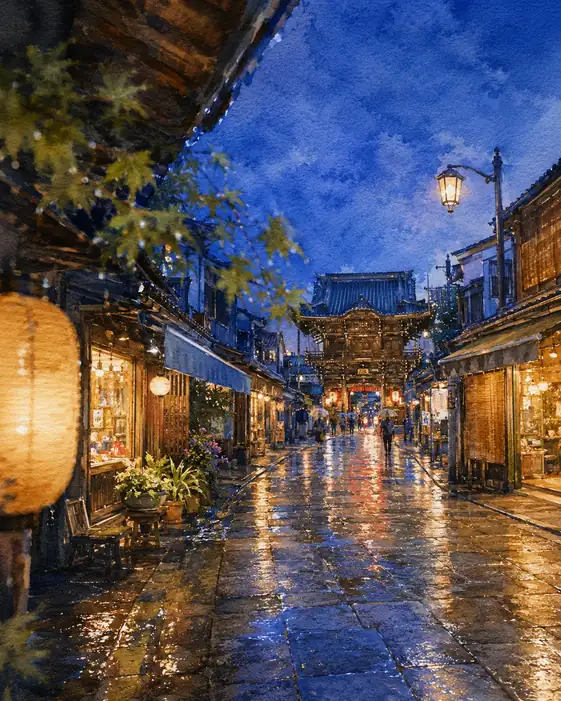 Lamps Lead Toward the Temple
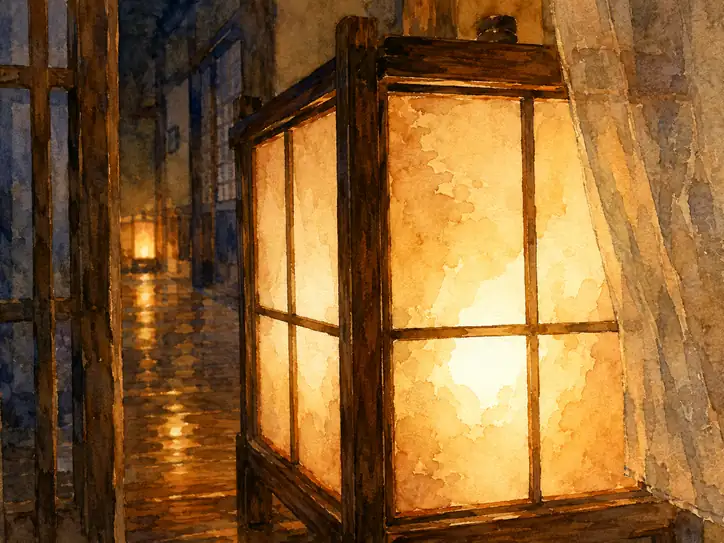 The Glow of Silent Memories