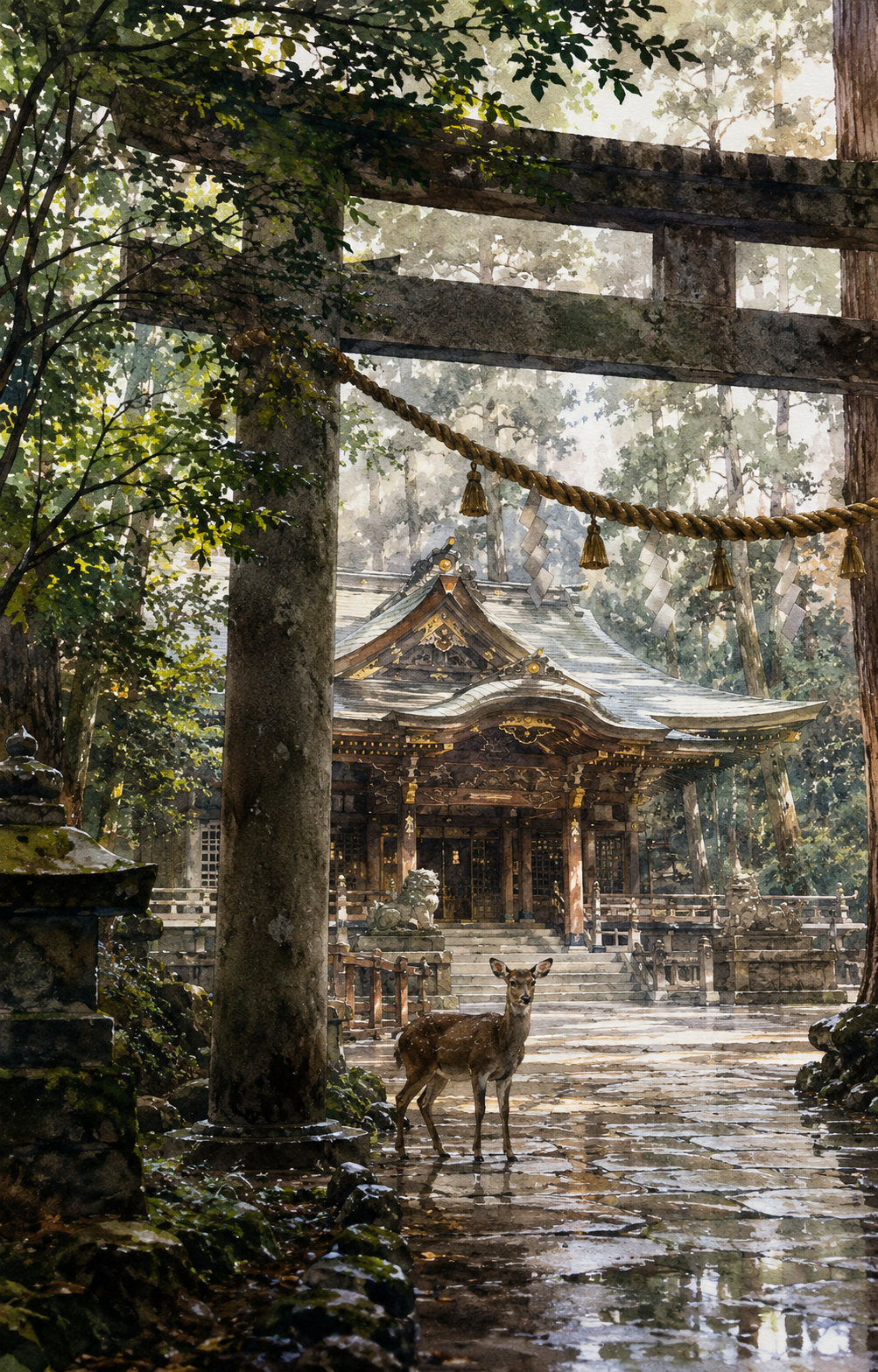
Where the Forest Meets My Gaze
Critique
Introduction This vertical watercolor depicts a forest shrine seen through a massive stone torii, with a deer standing on the rain-darkened approach. The work joins architecture, animal life, and changing weather in a carefully ordered sacred setting. Its restrained naturalism establishes a mood of alert quiet rather than ceremonial grandeur alone. Description Dark foliage encloses the upper and left edges, while the torii pillars divide the view into deep spatial layers. A thick sacred rope crosses the middle distance above the deer, and the timber shrine rises beyond wet paving and shallow steps. Small reflections, mossy stones, guardian figures, and filtered daylight clarify texture and scale. Analysis Strong verticals give the composition weight, but the sagging rope and curved roofs soften their rigidity. Brown, gray, and deep green dominate, with muted gold ornament and pale reflected light providing controlled emphasis. Transparent washes, broken edges, and darker dry-brush passages distinguish damp stone, aged wood, leaves, and misty air. The deer forms a compact focal point against the open pavement. Interpretation and Evaluation The animal can be understood as a mediator between the cultivated precinct and the surrounding forest. Its direct gaze interrupts the architectural axis and turns formal entry into a moment of encounter. The drawing remains precise without becoming mechanical, while the layered composition, coherent color, and differentiated surfaces demonstrate strong control. The unusual balance between monumental gate and vulnerable animal gives the scene individuality. Conclusion At first the shrine appears to be the sole subject, yet sustained viewing shifts attention toward coexistence, threshold, and watchfulness. The painting succeeds by making weather, architecture, and living presence mutually dependent. Its disciplined watercolor technique preserves both descriptive clarity and contemplative stillness.
Same Subcategory
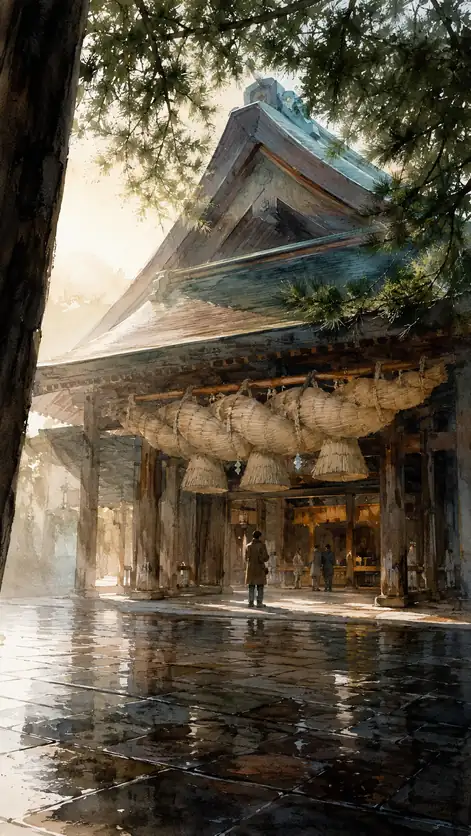 One Prayer Beneath the Great Rope
 A Thousand Wishes Facing Winter
Similar Artworks
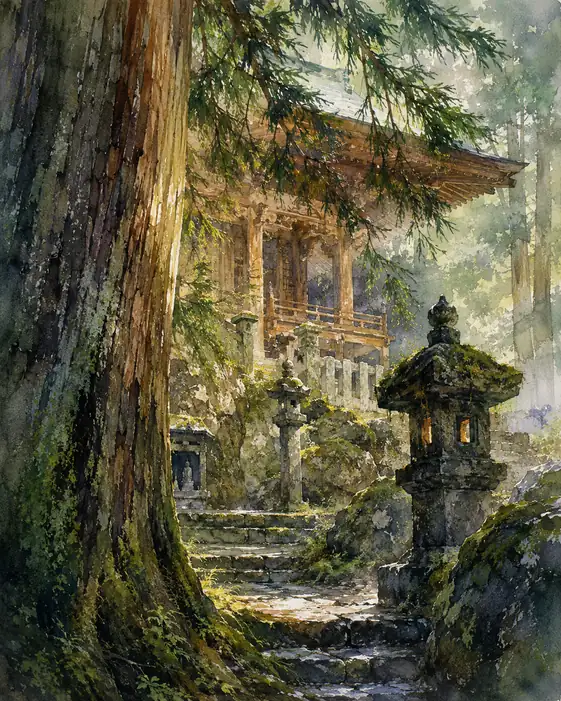 Sanctuary of the Ancient Cedars
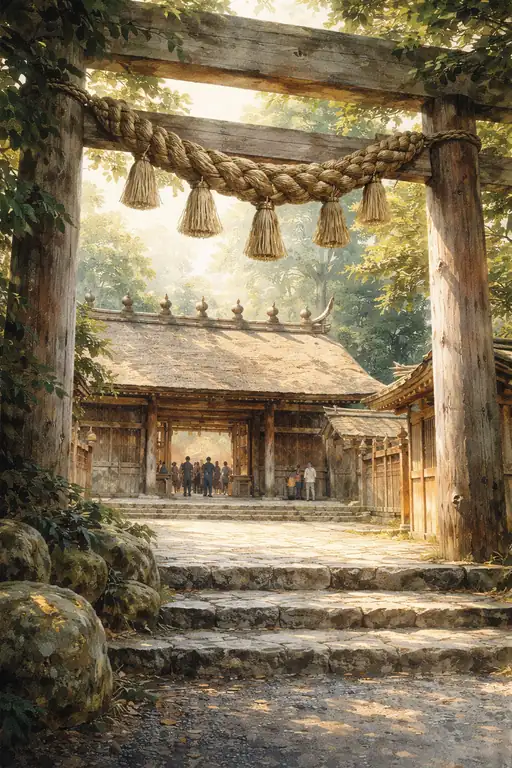 Awakening the Sacred Path
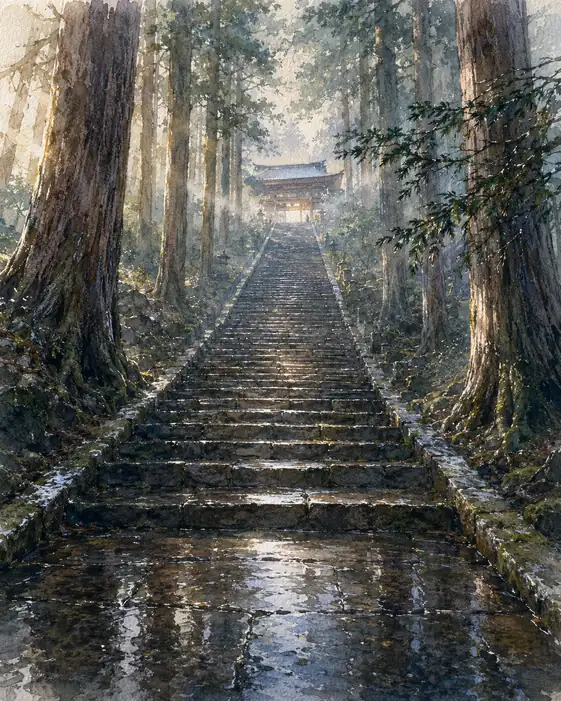 Steps Rising through Cedar Silence
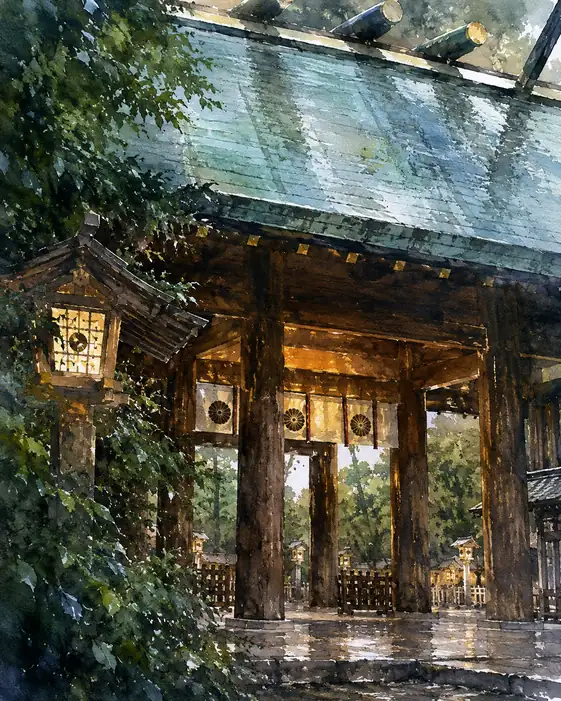 The Silent Breath of the Shrine
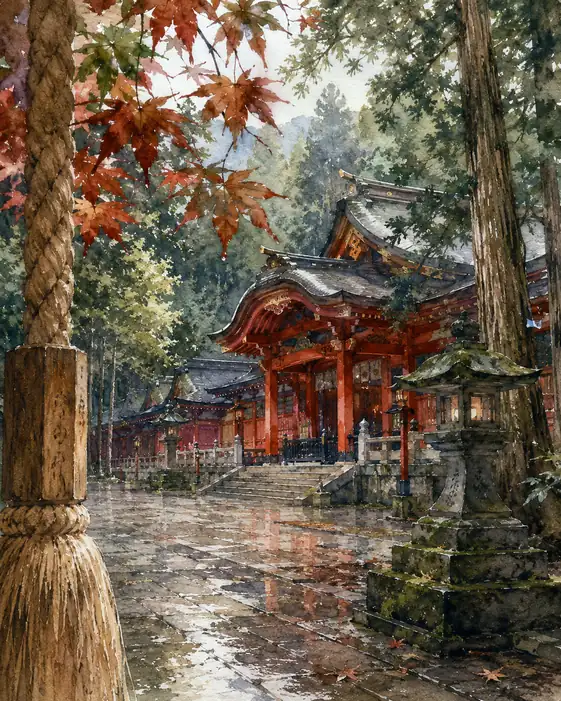 Serenity in the Autumn Rain
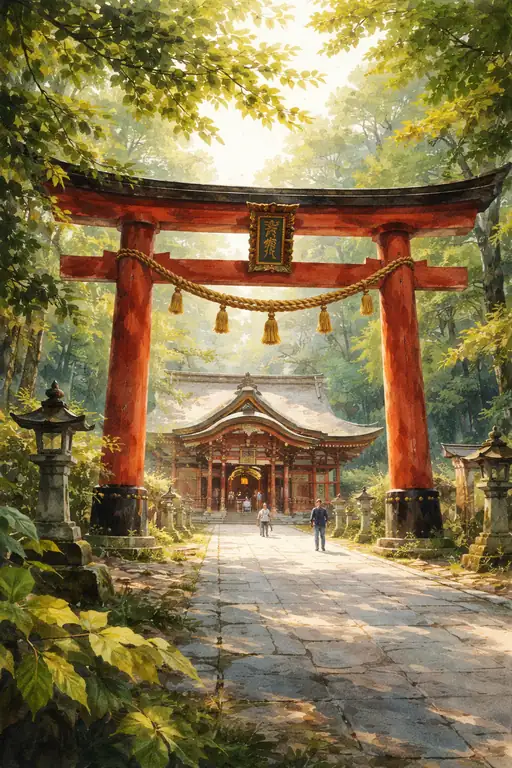 Threshold of the Sacred Sun
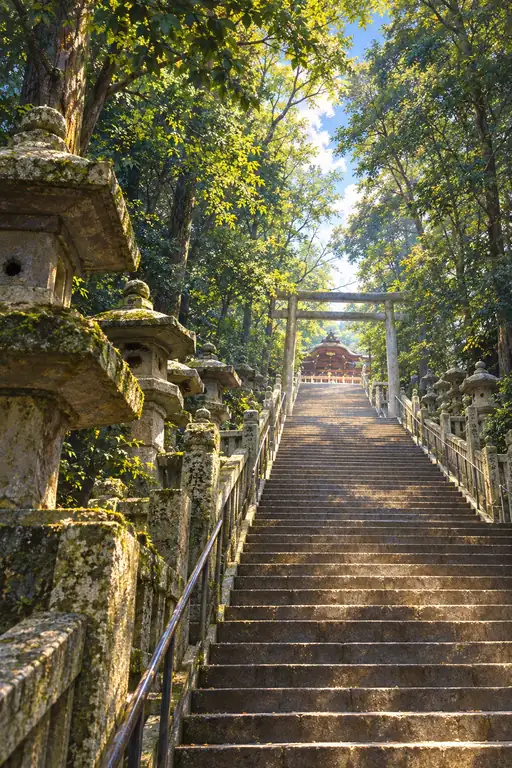 Whispering Lanterns of the Cedar Stair
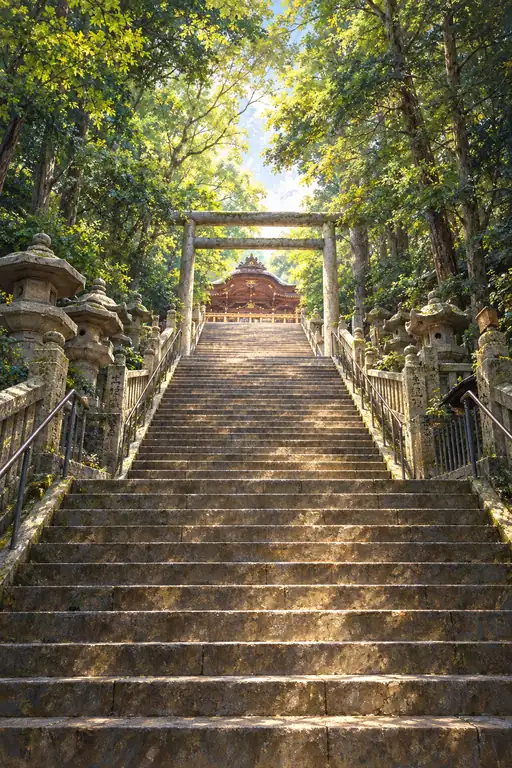 Stairway to the Mountain Shrine
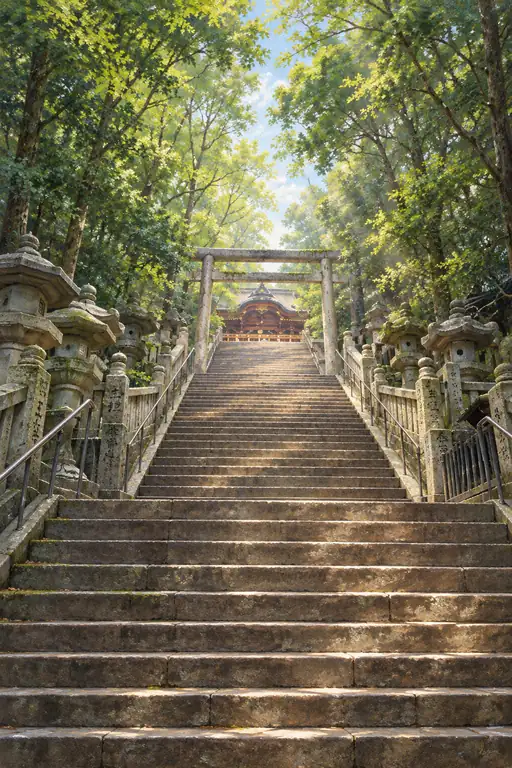 Gateway of Sunlit Devotion
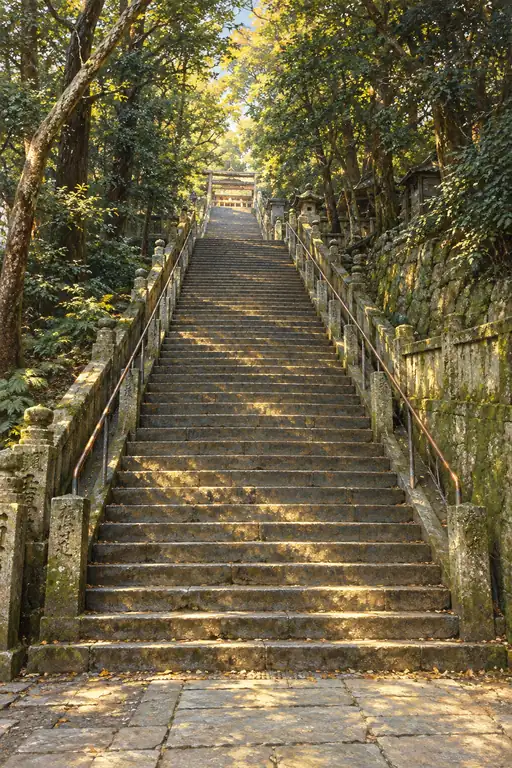 Ascent Through Ancient Sunbeams