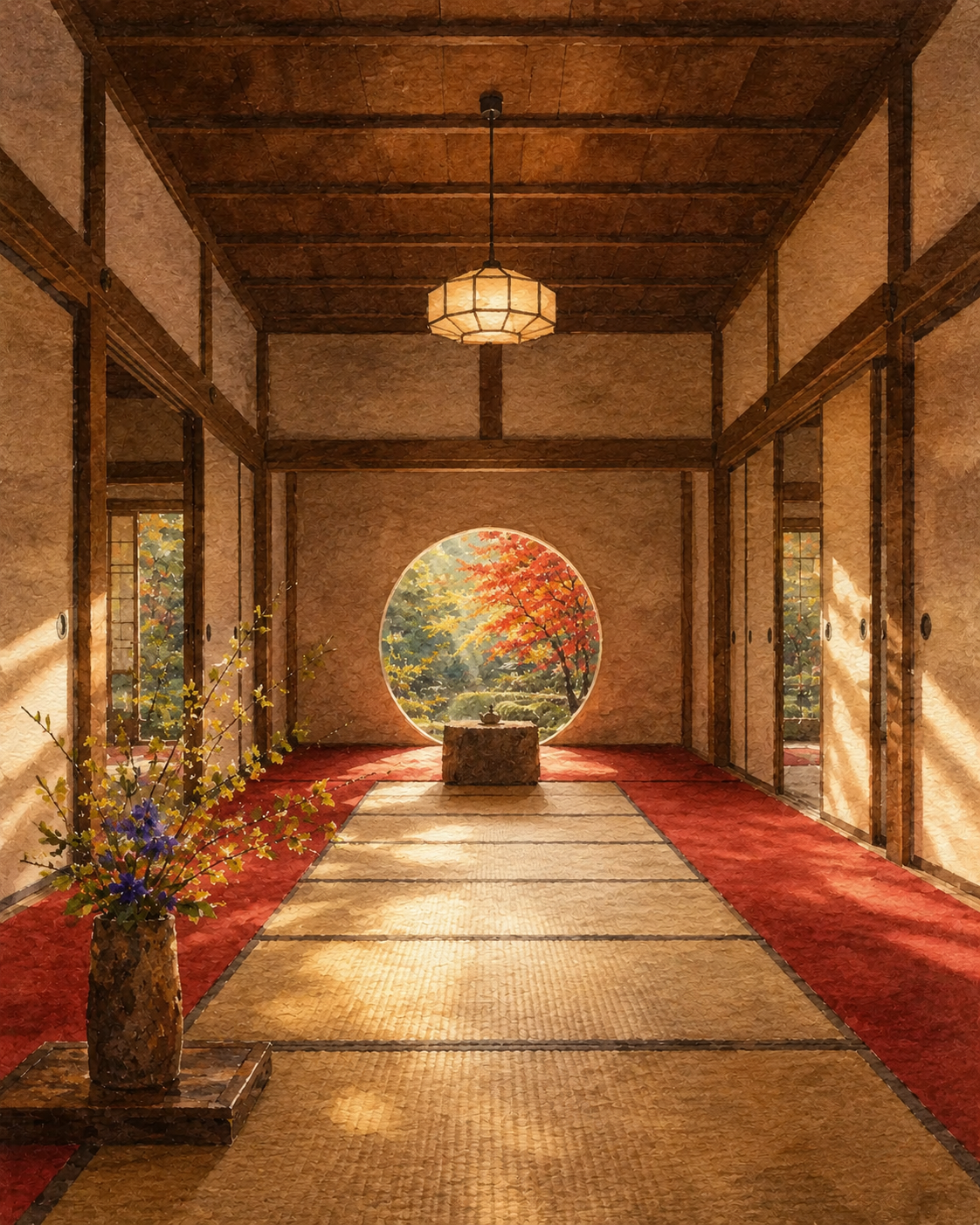
When Autumn Enters the Room
Critique
Introduction This painting depicts a sun-filled tatami corridor centered on a circular view of autumn foliage. Warm wood, cream walls, and red floor bands are crossed by strong diagonal light. The scene combines architectural order with a concentrated burst of seasonal color, producing a calm but vivid atmosphere. Description A polygonal lantern hangs above the central tatami route, while posts and sliding panels repeat along both sides. A large vase of yellow and violet branches stands at the left foreground. Sunlight creates irregular shapes across walls and mats. Beyond a low central pedestal, the round opening frames a bright red tree, green shrubs, and pale atmospheric light. Analysis Perspective lines converge on the circle, and the centered lamp and pedestal strengthen the vertical axis. Diagonal light counters this symmetry and activates the otherwise stable room. Browns and creams establish a warm base, red bands intensify the autumn leaves, and violet flowers supply a small cool accent. Textured strokes soften structural edges, while controlled value changes preserve depth and material distinction. Interpretation and Evaluation The painting treats sunlight as a temporary visitor within a durable architectural order. Autumn appears both outside the window and indirectly inside through reflected color and branching shadows. The composition is assured, the palette is rich without becoming uncontrolled, and the rendering of illumination is a notable technical strength. The coordination of flower arrangement, foliage, and light gives the familiar corridor motif an energetic coherence. Conclusion The first impression of radiant autumn gradually becomes an awareness of time moving through a fixed interior. Precise design, responsive color, and consistent painterly handling allow stillness and change to remain equally present.
Same Subcategory
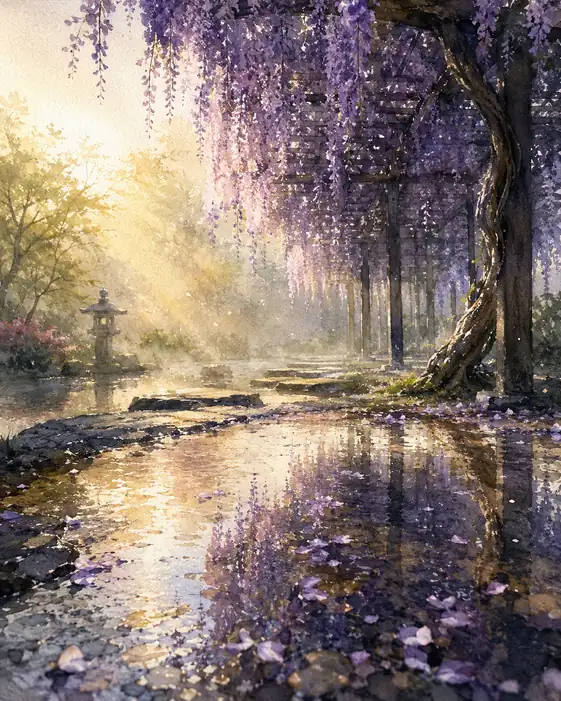 Wisteria Mirrored in Golden Morning Light
Similar Artworks
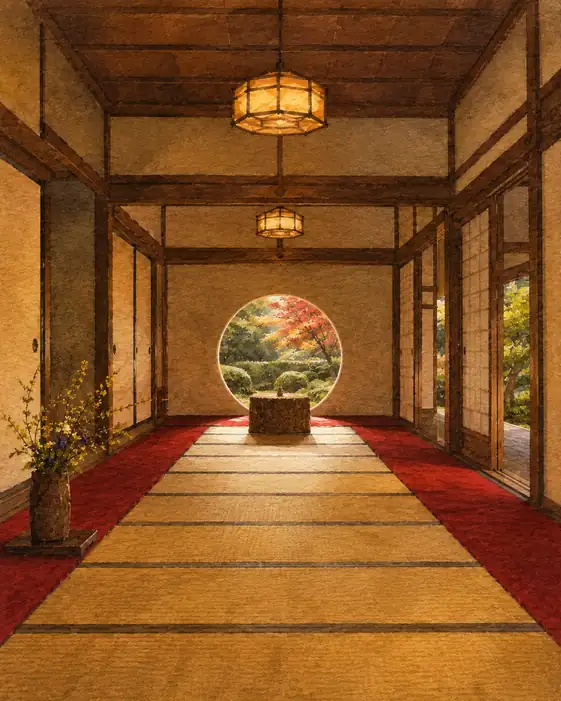 Emptiness Framing a Small Eternity
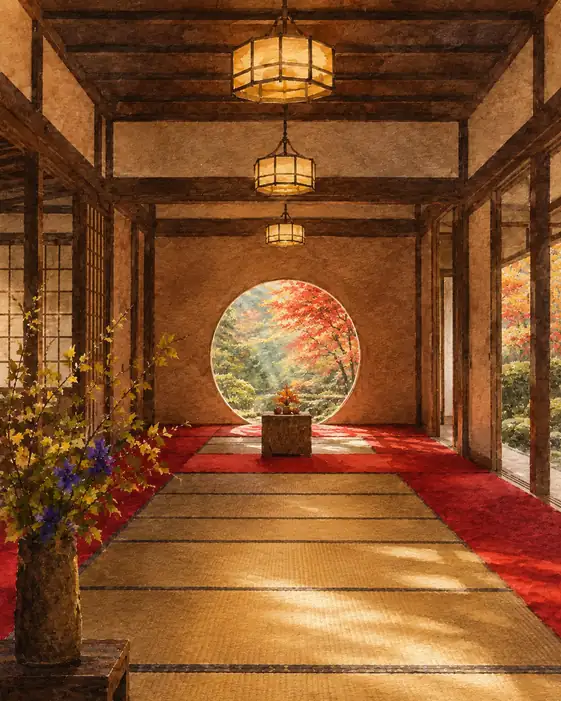 The Season Waits at the End of Silence
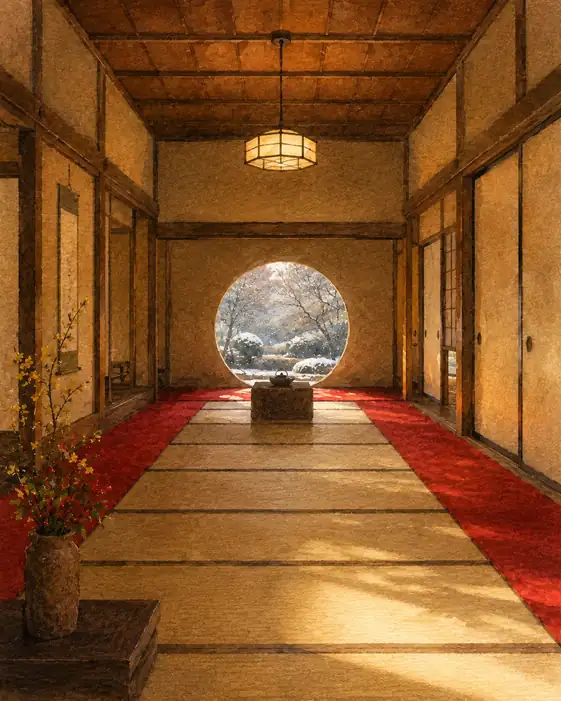 Winter, Warmly Framed
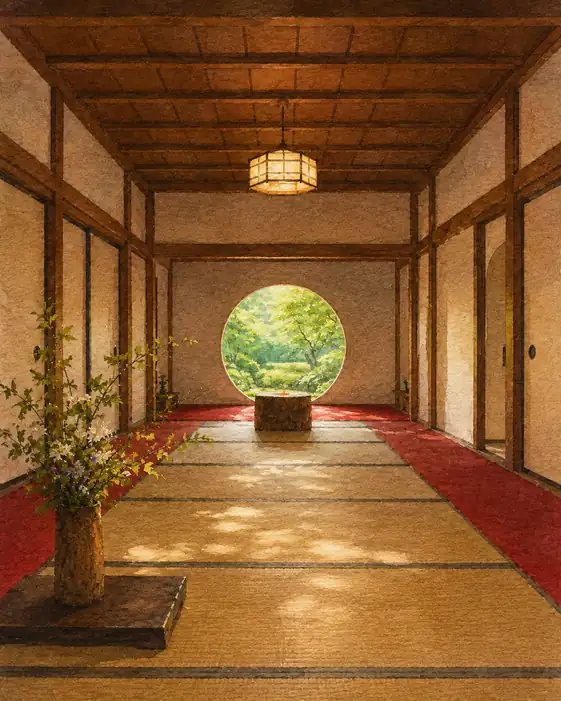 Green Breath Beyond the Circle
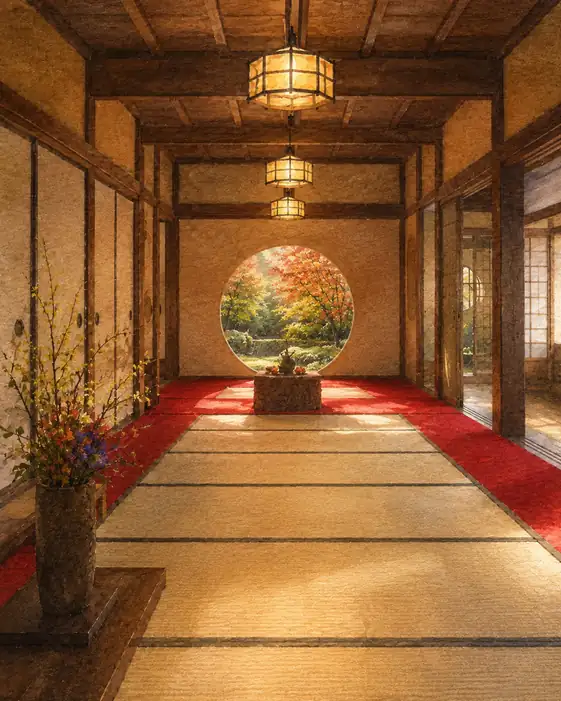 Autumn Held in a Circle
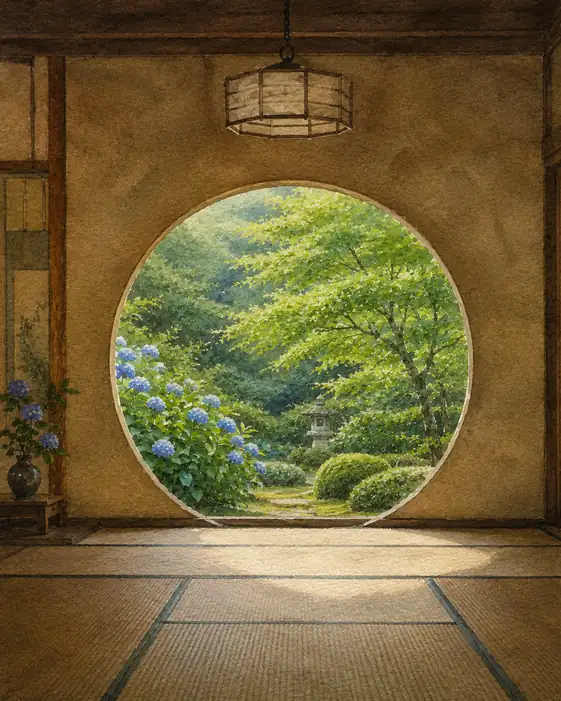 Where Stillness Learns the Light
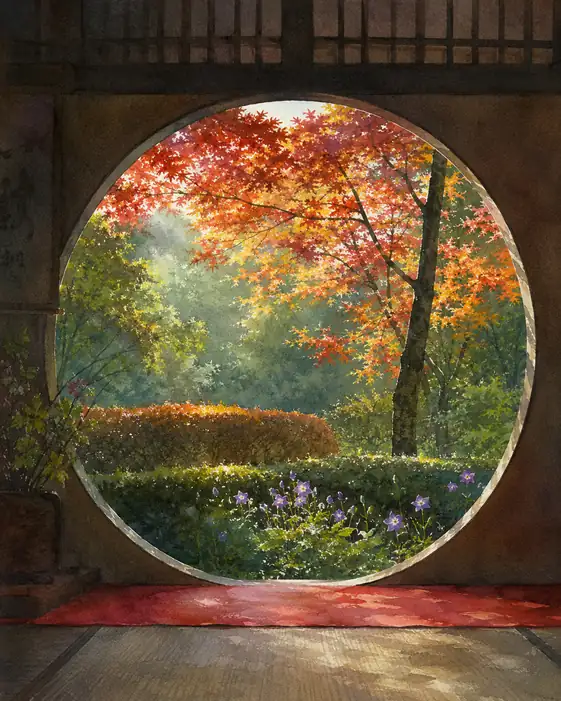 A Round Window for the Returning Sun
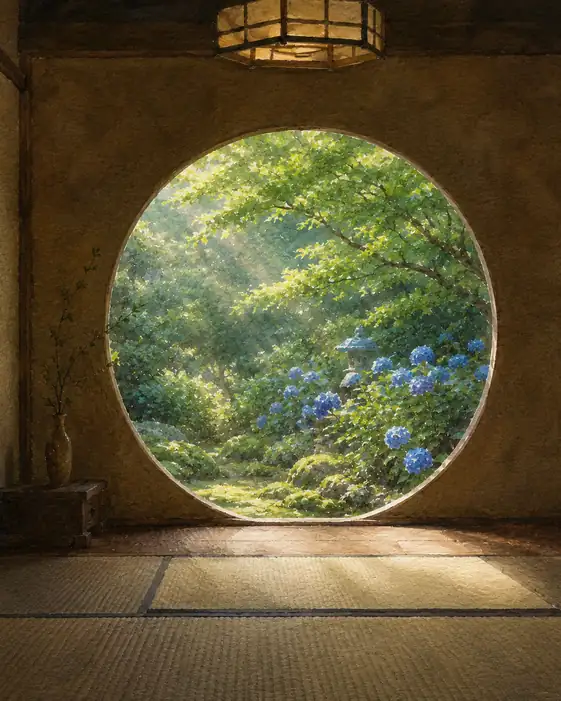 The Circle Holds the Morning
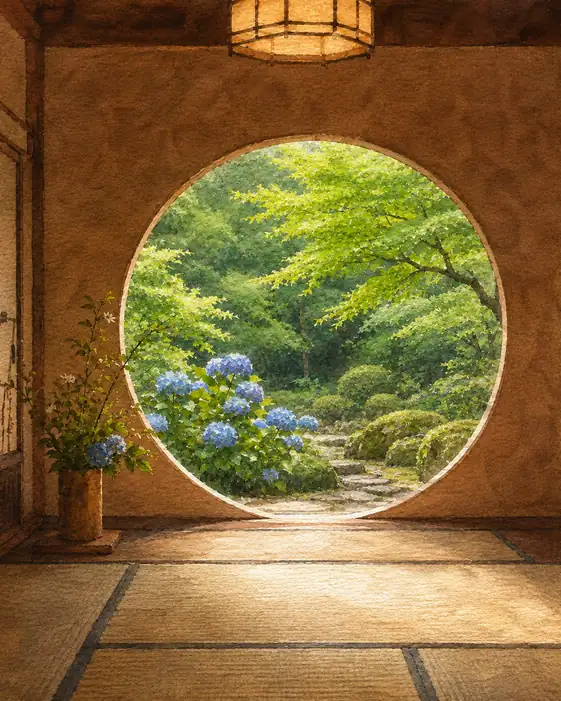 The Garden Breathes Through a Circle
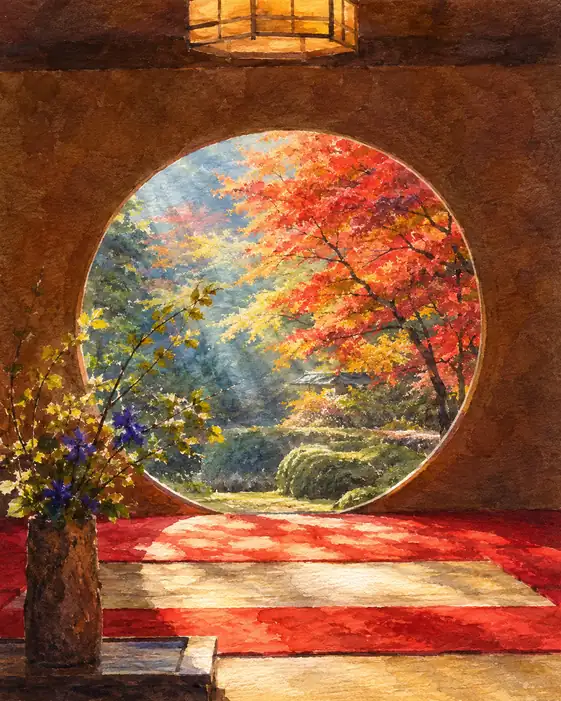 Autumn Held in a Circle of Light