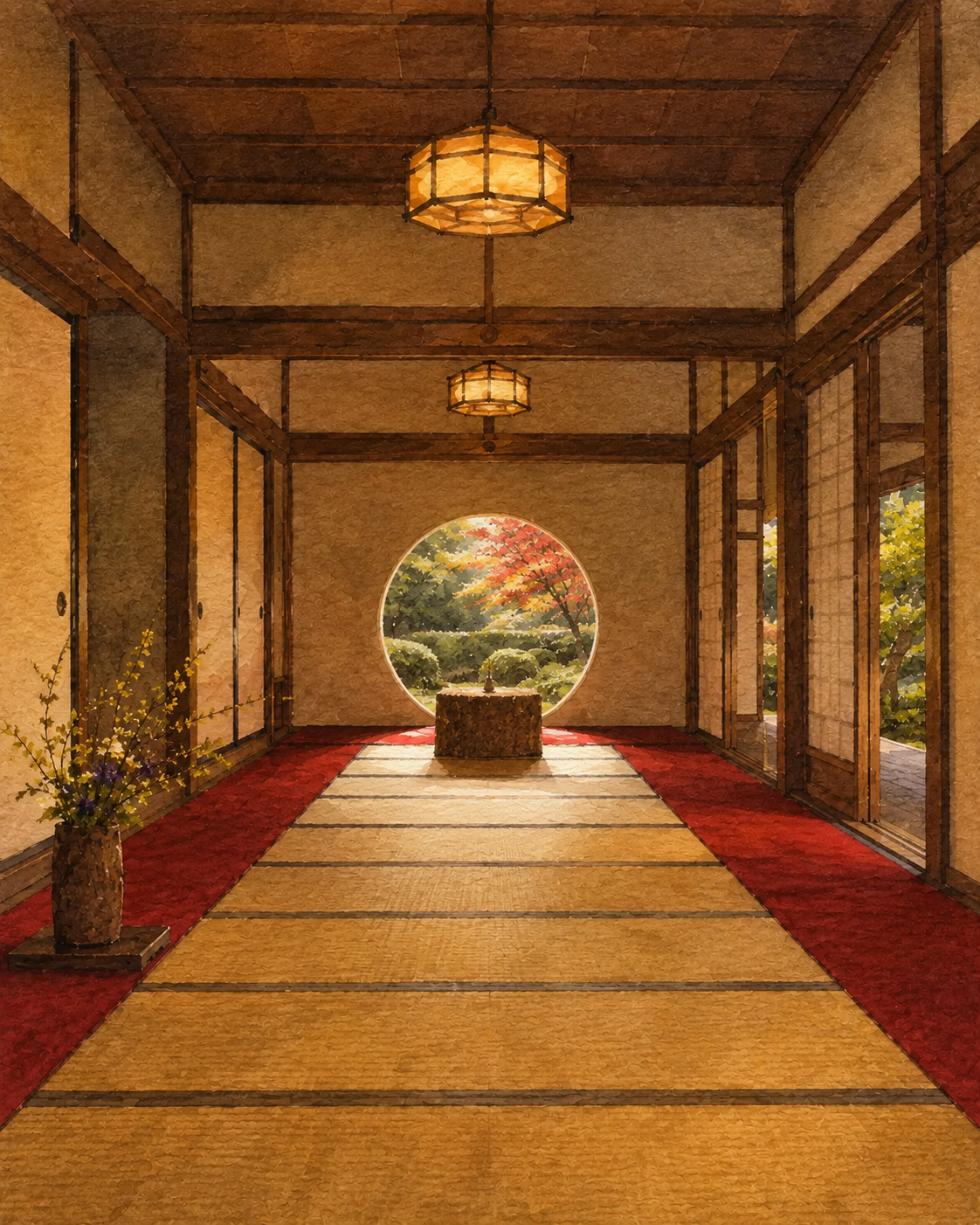
Emptiness Framing a Small Eternity
Critique
Introduction This painting presents a spare tatami corridor focused on a circular window and a restrained autumn garden. Amber interior light, red floor bands, and a small area of red foliage create a quiet seasonal atmosphere. Compared with the broad architecture, the garden view is compact, making concentration itself a central effect. Description Two lanterns occupy the ceiling axis above a sequence of pale mats. Wooden posts and sliding panels line the sides, while a flower arrangement rises from the left red margin. A low rectangular pedestal stands before the opening. Within the circle, rounded shrubs, a red-leaved tree, and muted greenery appear under soft daylight. Analysis The composition relies on repeated rectangles that narrow toward the central circle. Long tatami borders and red bands establish depth, while the pedestal fixes the endpoint. Most of the interior uses closely related browns and ochres, allowing the limited red foliage to register clearly. Textured strokes temper the rigid geometry, and the gradual shift in scale is more important than sharp tonal contrast. The balance remains formal but not inert. Interpretation and Evaluation The small garden image rewards deliberate attention rather than immediate spectacle. Its modest scale suggests that contemplation depends on selection and restraint. The perspective is carefully constructed, the color accents are economical, and the handling of surfaces is consistent across wood, fabric, and vegetation. The work gains distinction by allowing emptiness to carry visual weight alongside the detailed view. Conclusion The first impression of a simple corridor changes into an appreciation of measured distance and purposeful reduction. Precise composition, restrained color, and coherent technique make the limited autumn view feel complete.
Same Subcategory
Similar Artworks
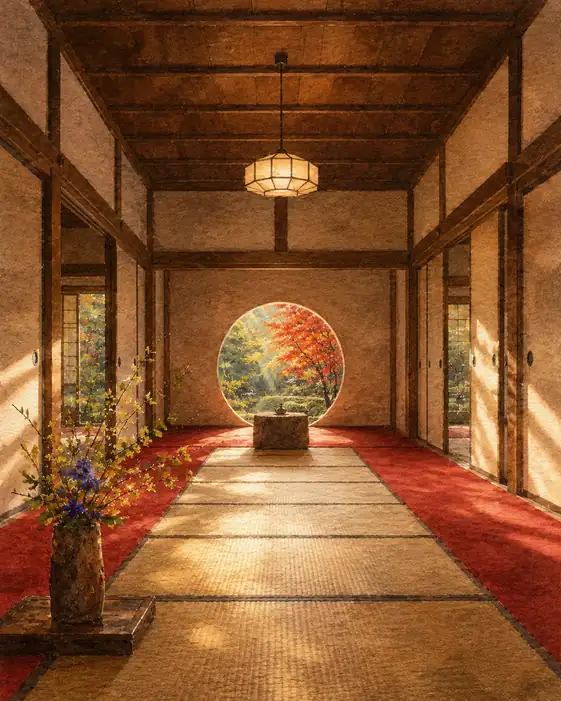 When Autumn Enters the Room
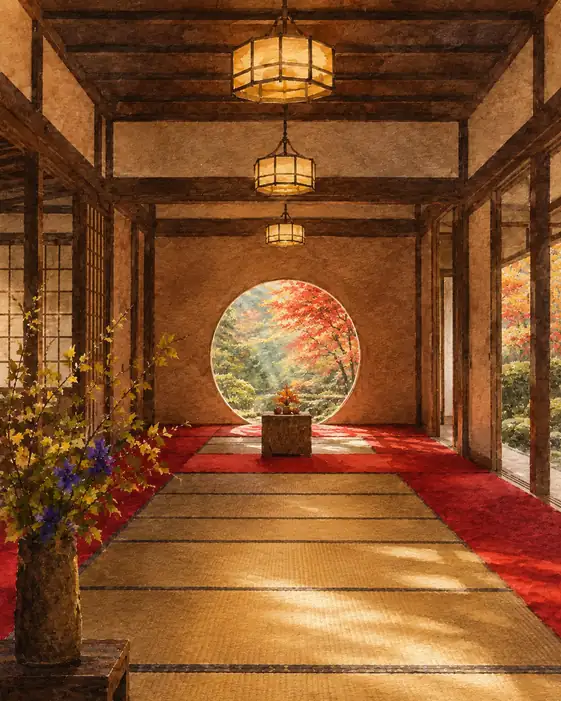 The Season Waits at the End of Silence
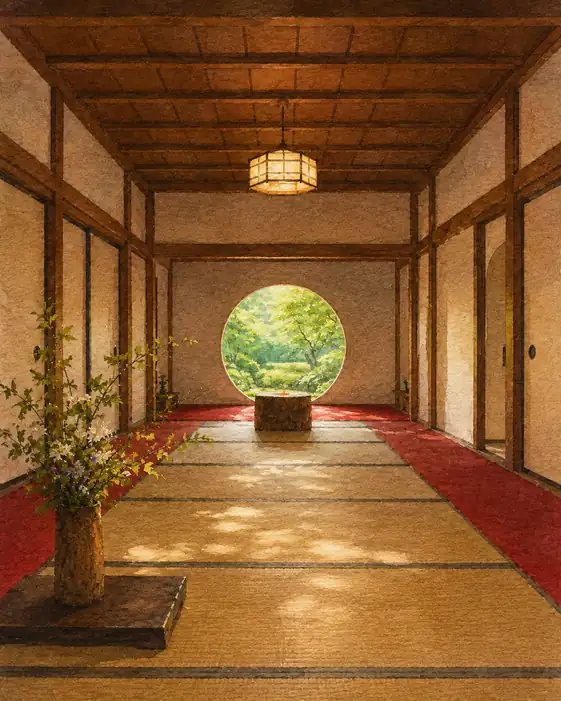 Green Breath Beyond the Circle
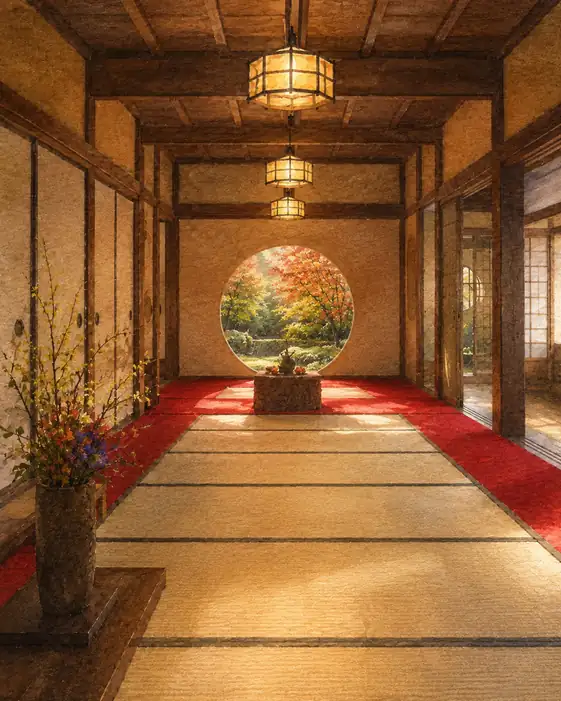 Autumn Held in a Circle
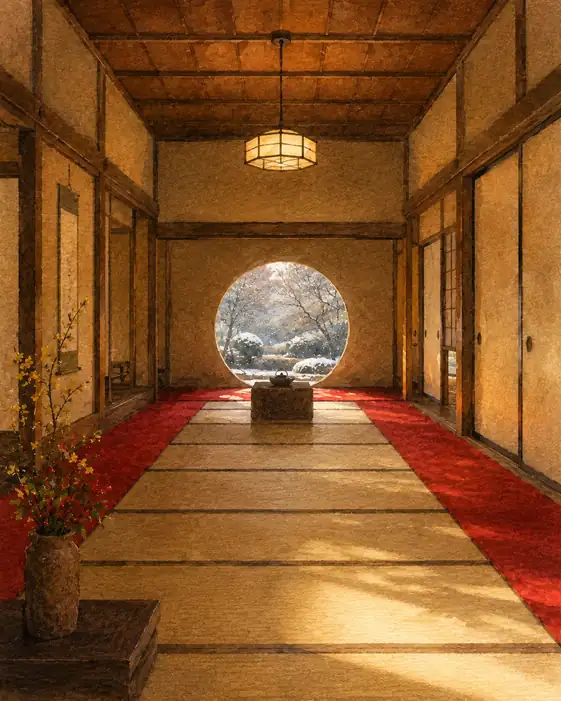 Winter, Warmly Framed
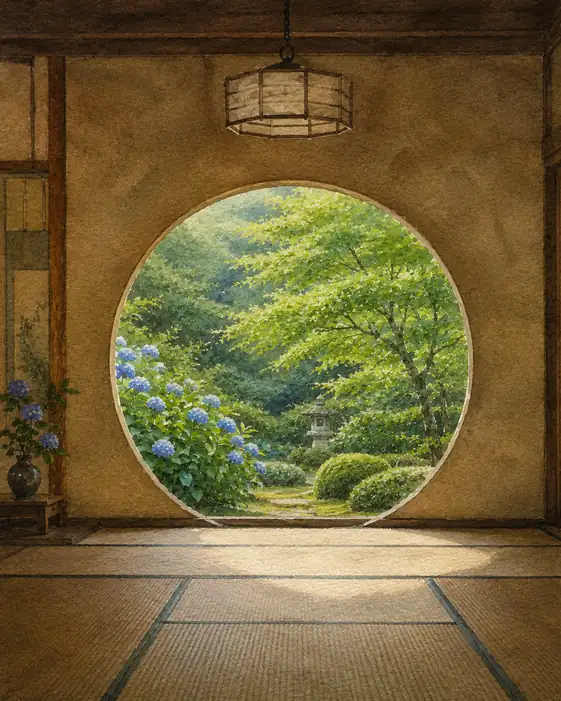 Where Stillness Learns the Light
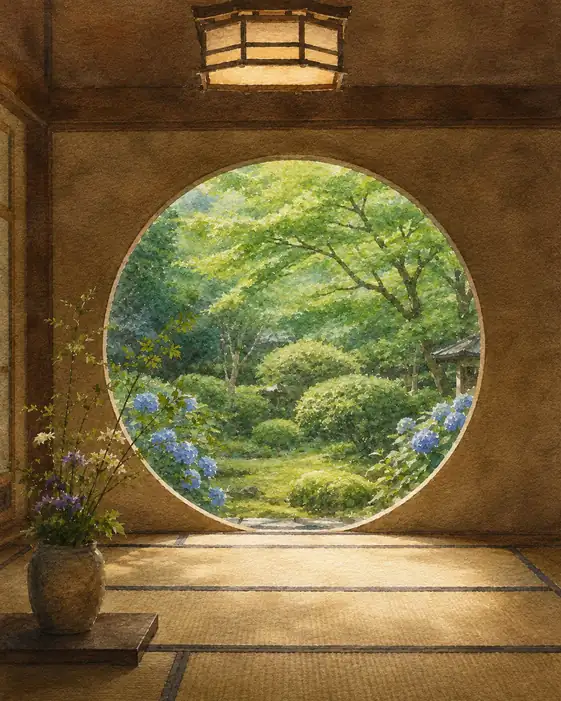 Summer Enters Without Footsteps
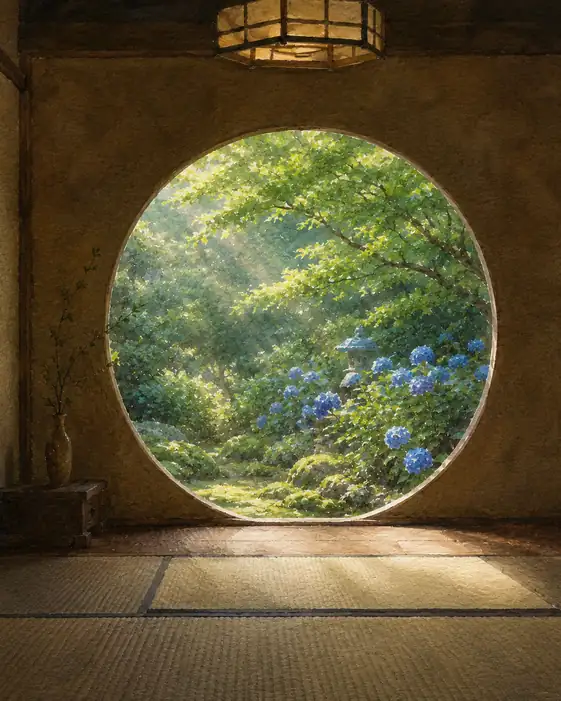 The Circle Holds the Morning
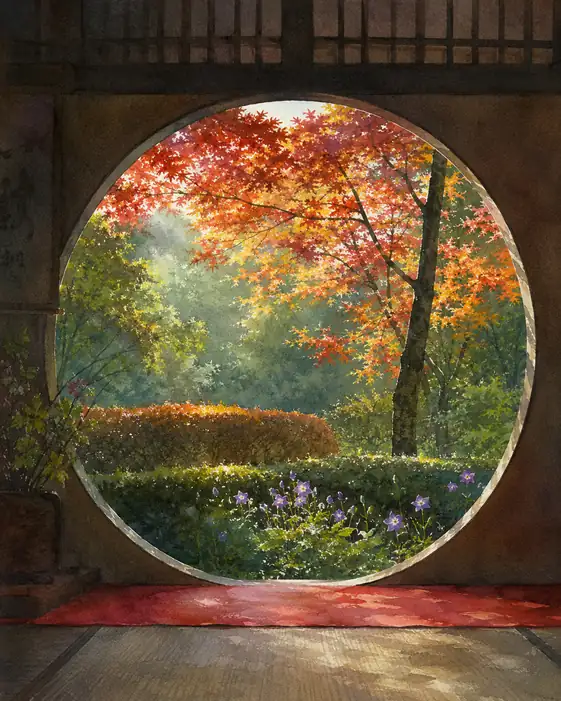 A Round Window for the Returning Sun
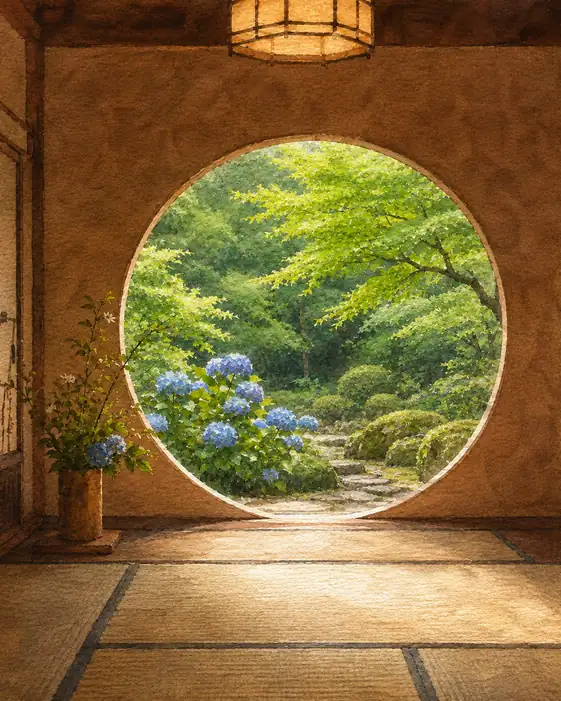 The Garden Breathes Through a Circle