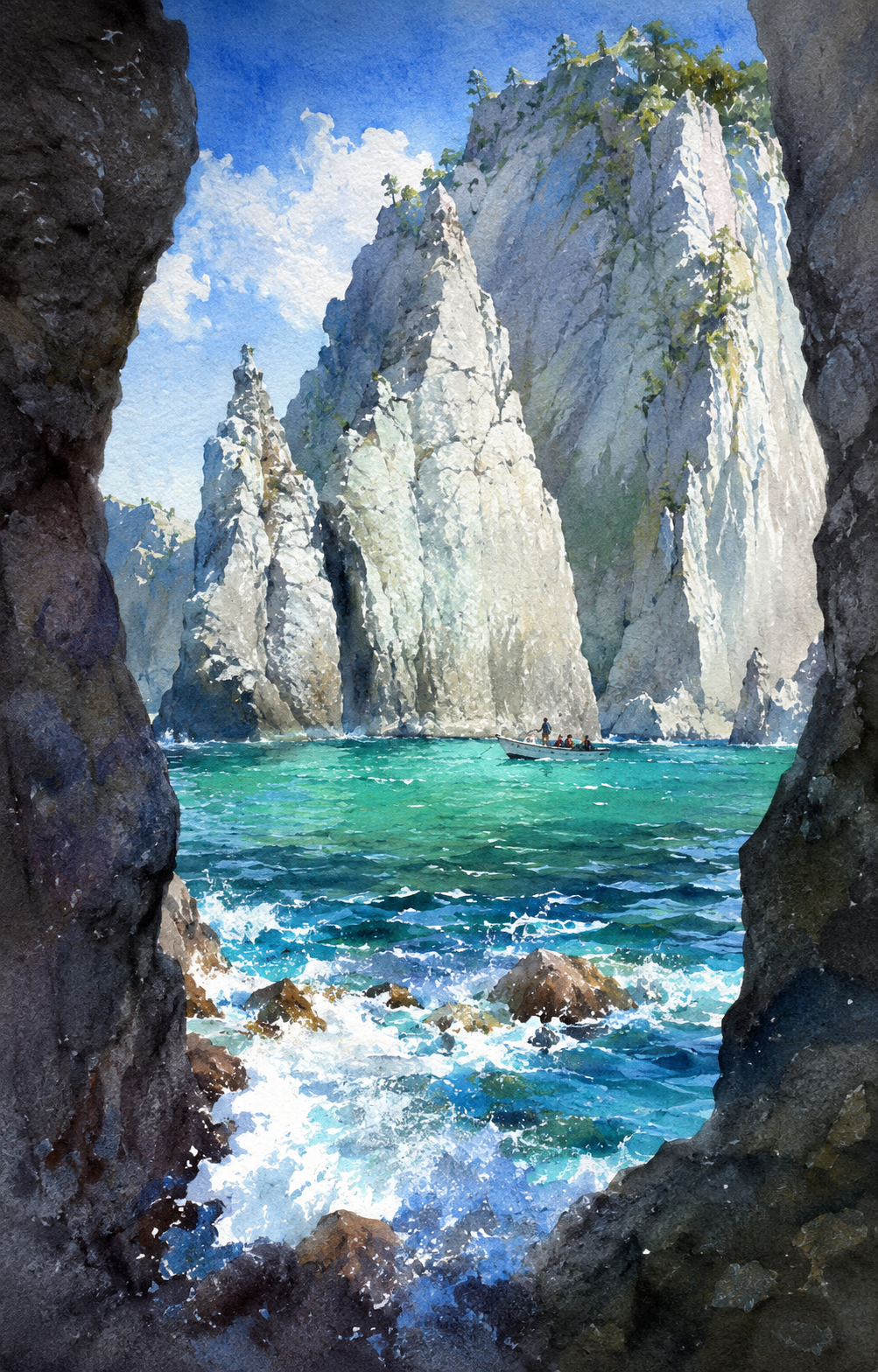
The Sea Opens Its Cathedral
Critique
Introduction This vertical watercolor centers on sea cliffs and a small boat viewed through a rocky opening. The main motif and its surroundings communicate spatial breadth and passing time. Careful observation and translucent washes present marine force and vertical sublimity in a measured register. Description Within the image, dark rock walls form a frame; breaking waves and a tiny boat lead the eye upward to enormous sunlit pale cliffs. Shapes become smaller and edges softer toward the distance, moving the eye naturally to the principal subject. Reflections, foliage, waves, mist, or small structures establish scale. Analysis The composition uses diagonals, repetition, and framing forms to construct depth across the tall format. The palette is based on ultramarine, turquoise, white, and dark brown rock, with the lightest passage or strongest complementary note providing emphasis. Layered washes, dry-brush marks, and preserved paper highlights distinguish solid matter from atmosphere and water. Precise description remains subordinate to broad tonal organization. Interpretation and Evaluation The scene can be interpreted as revealing the overwhelming scale of the coast through the smallness of people. Light, weather, and seasonal change suggest duration rather than merely recording a place. The composition is stable, the colors coherent, and textures differentiated. Its originality lies in joining a cave-like foreground to open sea through forceful tonal contrast, while large color masses keep abundant detail legible. Conclusion The first impression is dominated by color and setting, but sustained viewing reveals relationships between nature and construction, stillness and motion, and near and far. Coordinating these elements gives the work clarity without sacrificing atmosphere. Its transparent technique and disciplined structure make marine force and vertical sublimity rewarding over time.
Same Subcategory
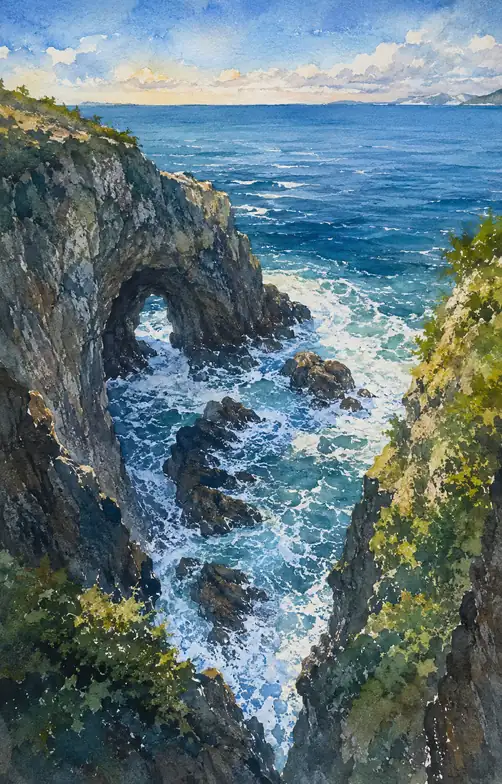 A Doorway Made by the Sea
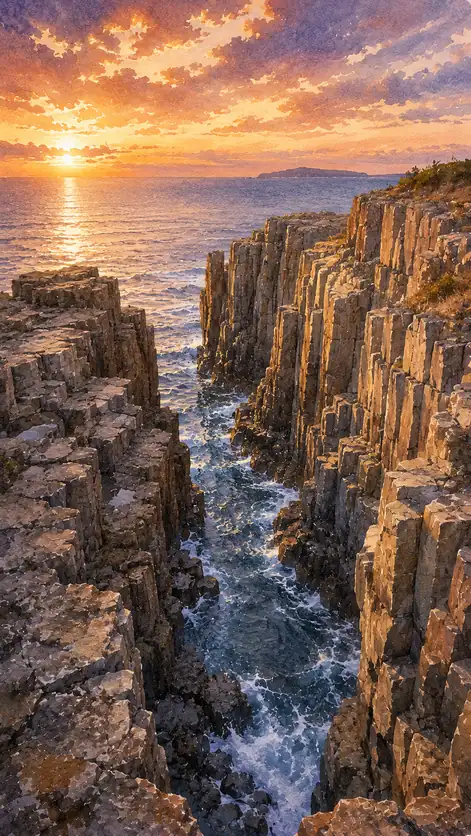 Tojinbo: The Sea Enters the Stone Cathedral
Similar Artworks
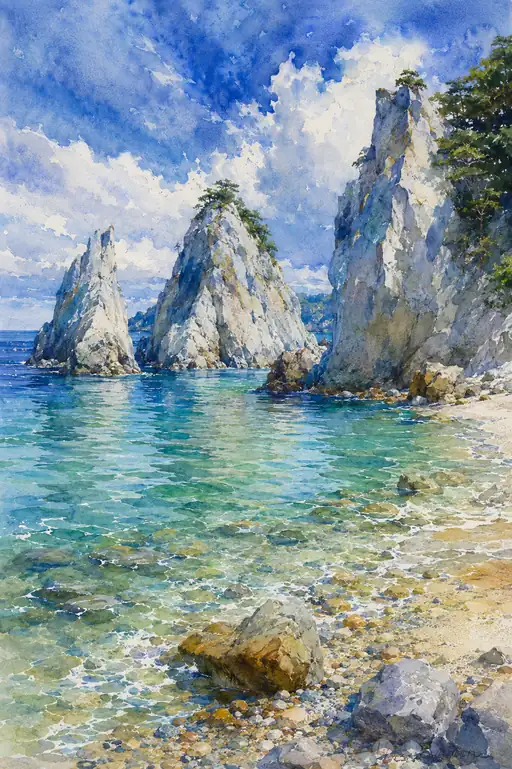 Where Time Stands Still on the Emerald Shore
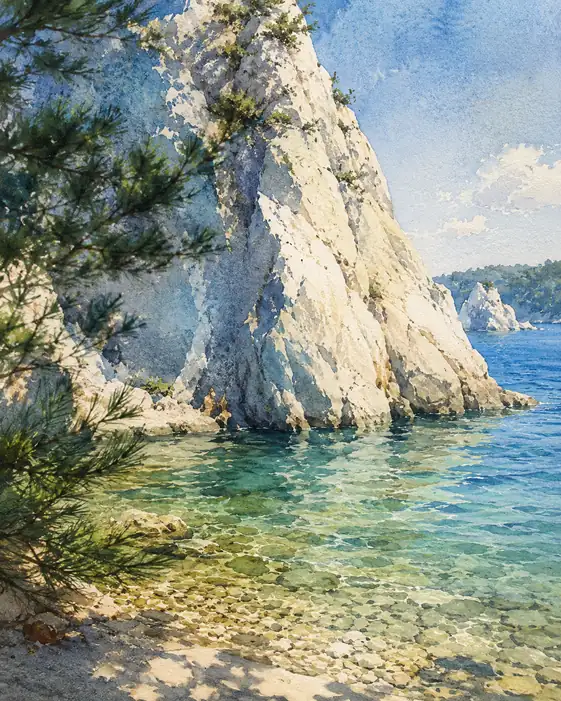 Symphony of the Crystalline Shore
 Where the Highway Meets the Horizon
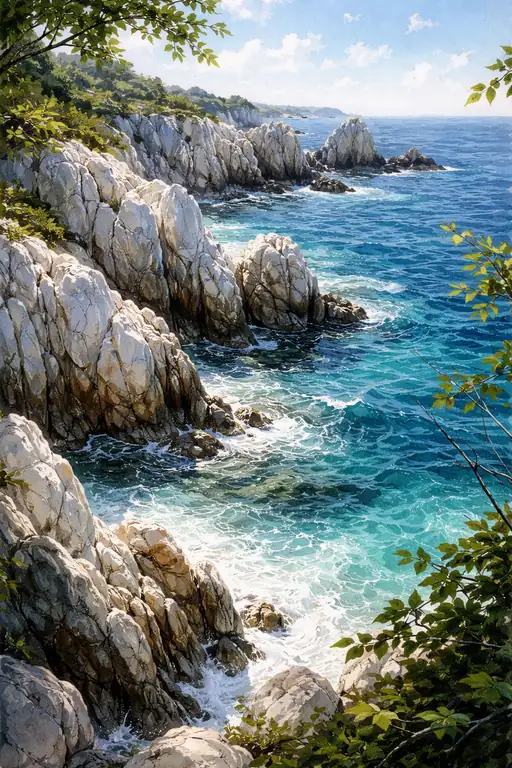 Solitude on the Sunlit Cliffs
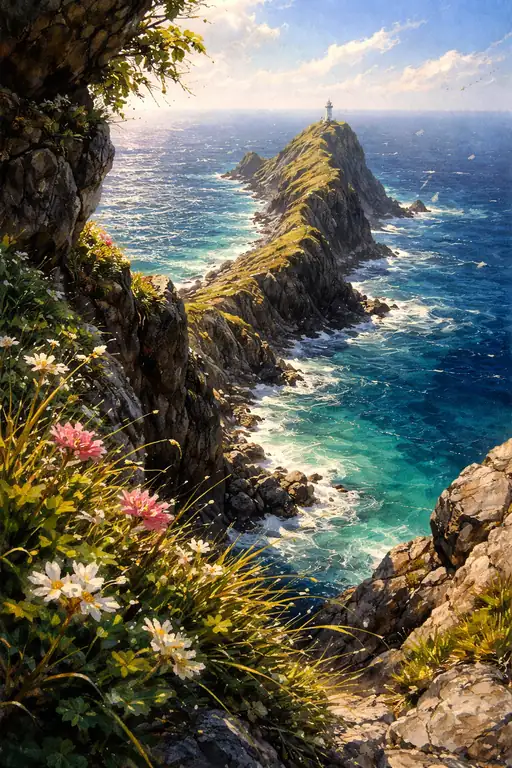 Guiding Light on the Promontory Edge
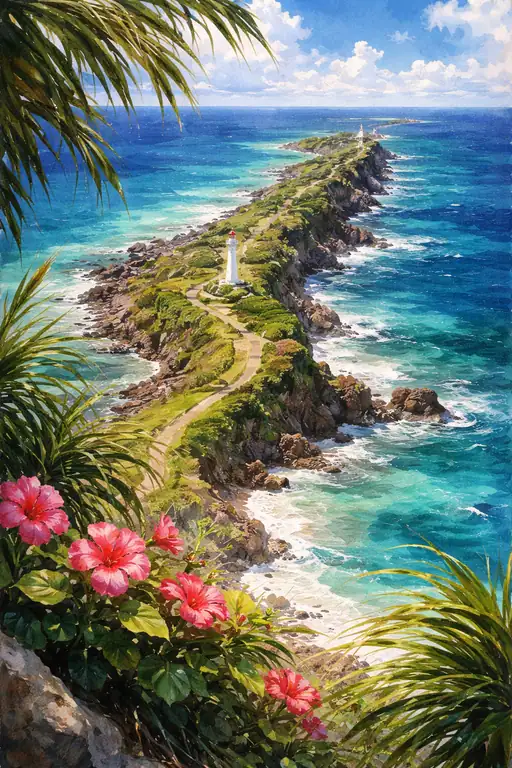 A Lighthouse Bathed in Tropical Dreams
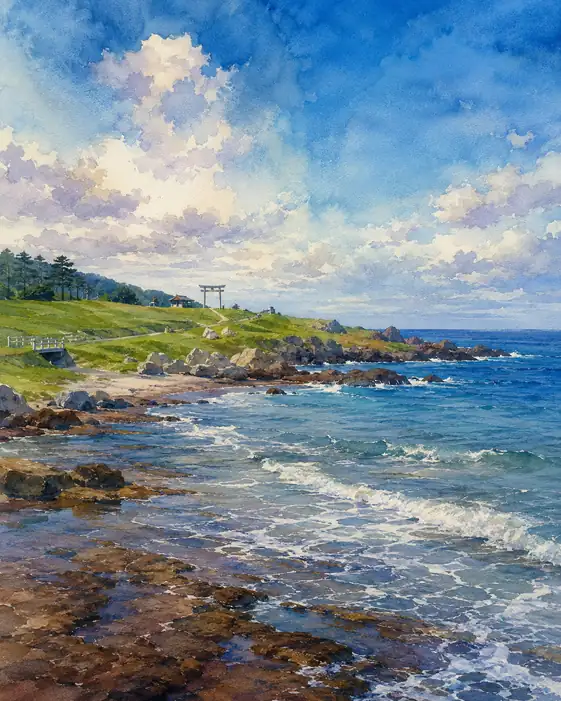 A Small Gate Beneath the Infinite Blue
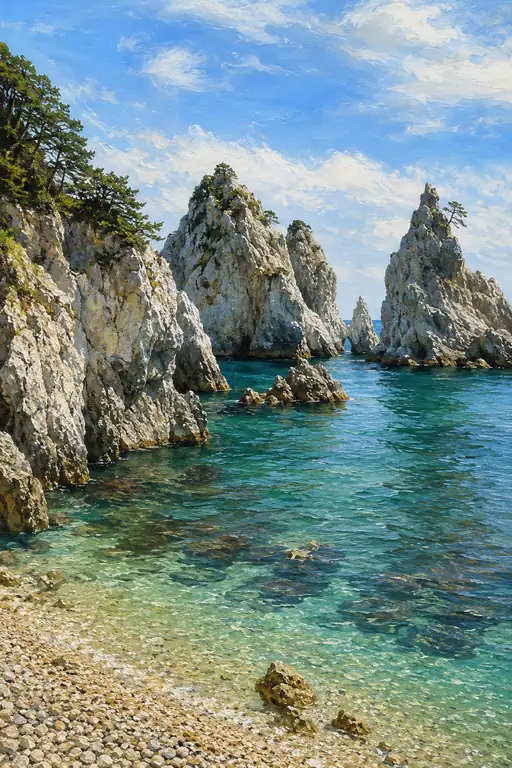 Resilience in the Azure
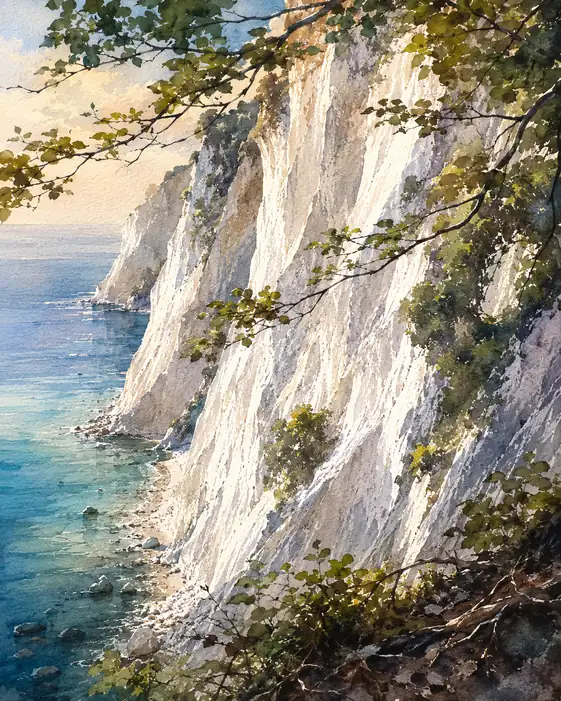 Where the Chalk Cliffs Embrace the Blue
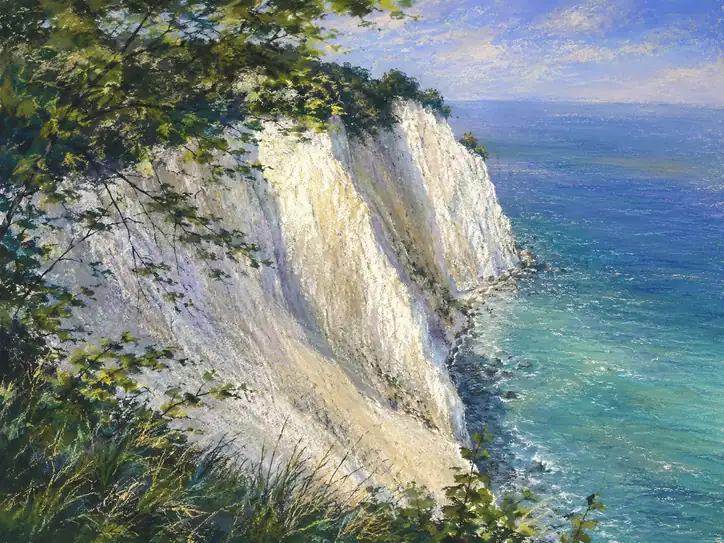 The Silent Giant of the Azure Sea