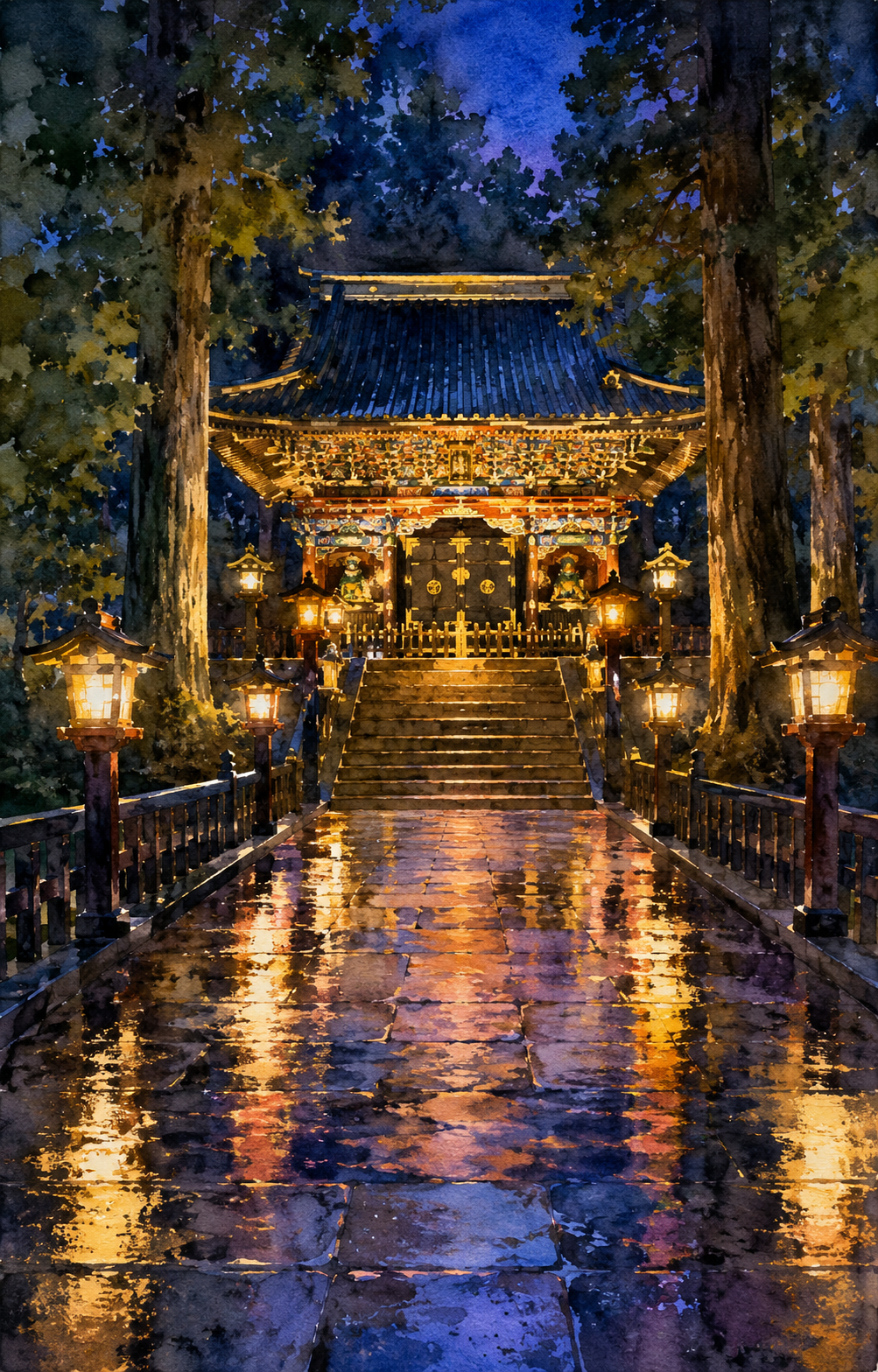
Gold Awakened by Rain
Critique
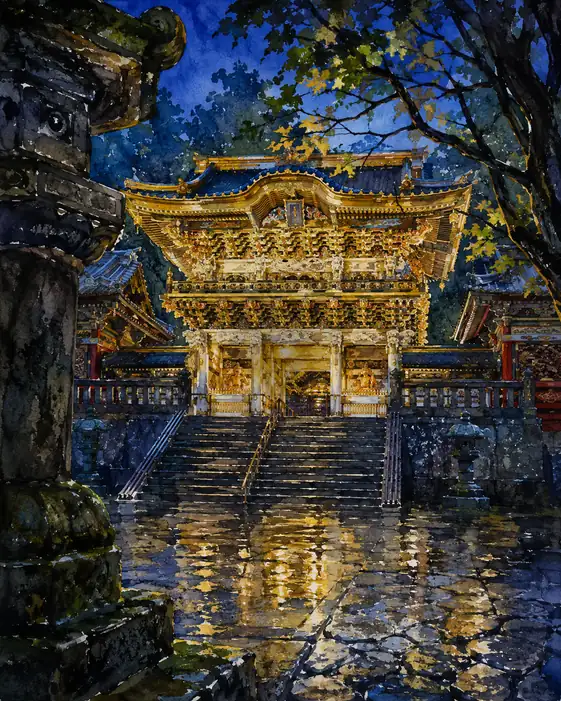
Introduction This vertical landscape painting presents Zuihoden glowing at the end of a rain-darkened cedar approach. The ornate mausoleum and reflecting path establishes the subject, while shifts of light and distance enlarge the setting. The work treats the view as a study of ceremonial splendor reached through a dark, measured approach. Description In the foreground, wet stone paving carries gold light toward the viewer. Across the middle distance, lanterns and railings guide the eye up steps to the richly colored facade. Farther back, dark cedar trunks enclose a deep blue evening canopy. The palette moves through gold, lacquer black, cobalt, amber, and small reds. Sharp nearby edges and soft distant boundaries clarify the recession. Analysis The composition is organized by strict central perspective intensified by bilateral lanterns and reflections. Firm drawing gives weight to carved facade, stone, and cedar bark, while broader, more transparent passages soften lamplight, wet reflections, and evening air. Directional marks carry the eye toward the principal motif and keep the vertical format balanced. Interpretation and Evaluation The meeting of natural change and enduring form suggests ceremonial splendor reached through a dark, measured approach. Descriptive details remain subordinate to a stable tonal design, so atmosphere never dissolves the structure. Controlled color, assured drawing, and varied surface handling give the scene clarity, while the chosen viewpoint supplies a distinct sense of place. Conclusion The ornate mausoleum and reflecting path brings the major planes into a coherent sequence. What first appears to be a brilliant sacred building gradually becomes an examination of the path converting visual attraction into an experience of reverent arrival. The measured light and disciplined composition sustain visual richness without losing emotional restraint.
Same Subcategory
 Evening Pours Down the Steps
Similar Artworks
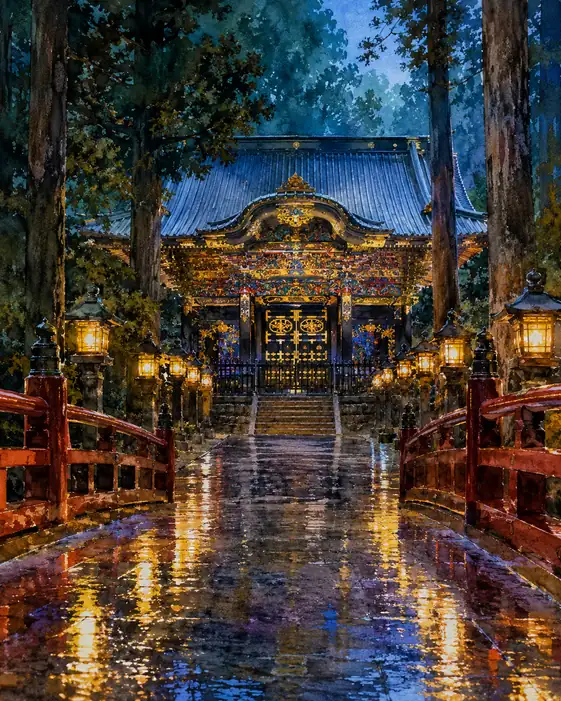 Even the Closed Gate Keeps Shining
 Each Light Knows the Way
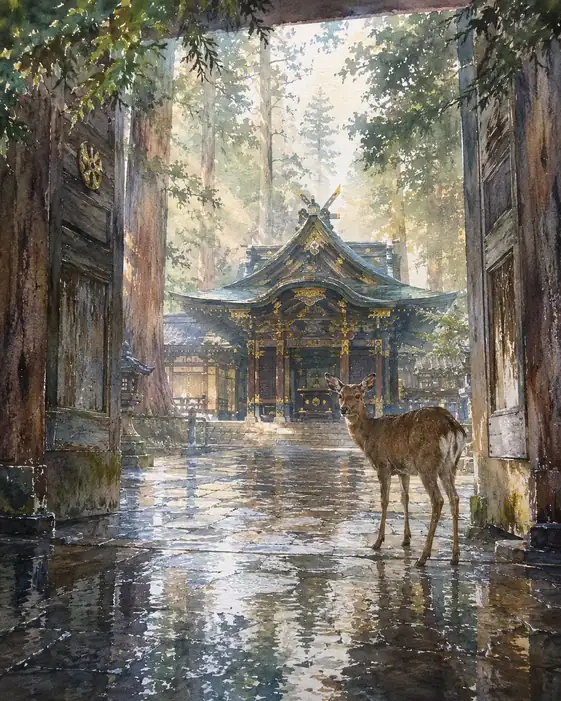 The One Who Waited Beyond the Gate
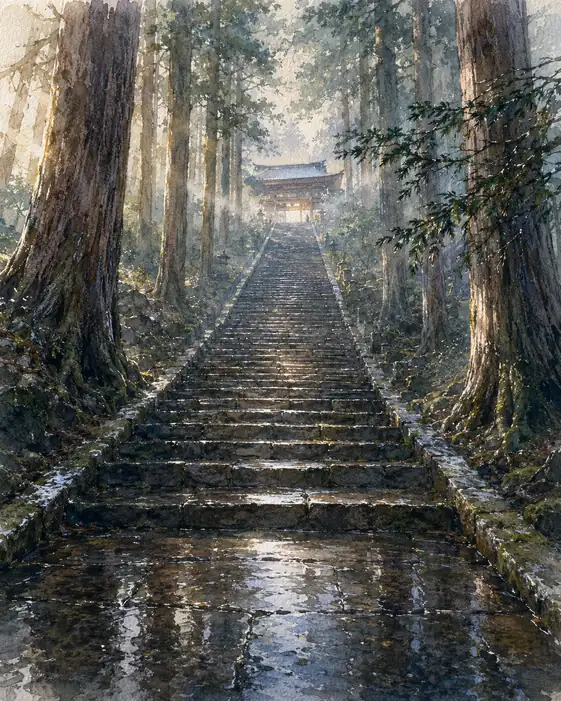 Steps Rising through Cedar Silence
 A Prayer Ascending the Blue
 Gold Awake in the Rain
 The Stairway between Two Silences
 Quiet Guidance in the Indigo Night
 A Silent Oath in the Emerald Mist
 Winter Lanterns Lead Me Home