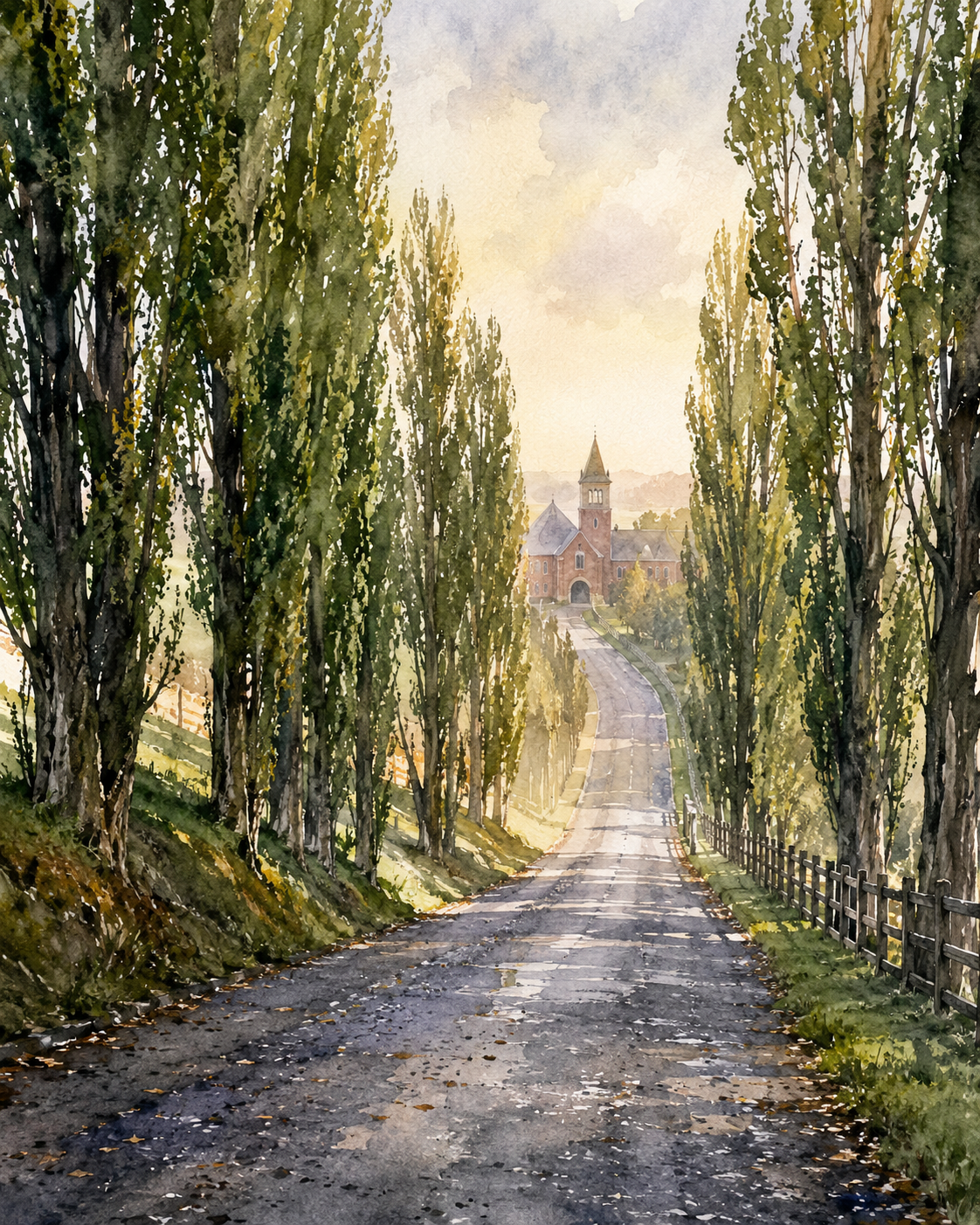
Avenue of the Listening Light
Critique
Introduction This vertical landscape painting presents the poplar road ascending toward the Trappist monastery. The distant church and converging avenue establishes the subject, while shifts of light and distance enlarge the setting. The work treats the view as a study of repeated trees preparing the body for a deliberate approach. Description In the foreground, fallen leaves scatter over the damp foreground road. Across the middle distance, two ranks of tall poplars form a green corridor. Farther back, the monastery towers appear beneath a white opening in cloud. The palette moves through olive, gray, pale yellow, brick red, and cloud white. Sharp nearby edges and soft distant boundaries clarify the recession. Analysis The composition is organized by steep one-point perspective contained by paired vertical rows. Firm drawing gives weight to tree bark, fences, and leaf-strewn road, while broader, more transparent passages soften cloud light and distant architecture. Directional marks carry the eye toward the principal motif and keep the vertical format balanced. Interpretation and Evaluation The meeting of natural change and enduring form suggests repeated trees preparing the body for a deliberate approach. Descriptive details remain subordinate to a stable tonal design, so atmosphere never dissolves the structure. Controlled color, assured drawing, and varied surface handling give the scene clarity, while the chosen viewpoint supplies a distinct sense of place. Conclusion The distant church and converging avenue brings the major planes into a coherent sequence. What first appears to be a calm monumental avenue gradually becomes an examination of distance turning destination into an object of sustained attention. The measured light and disciplined composition sustain visual richness without losing emotional restraint.
Same Subcategory
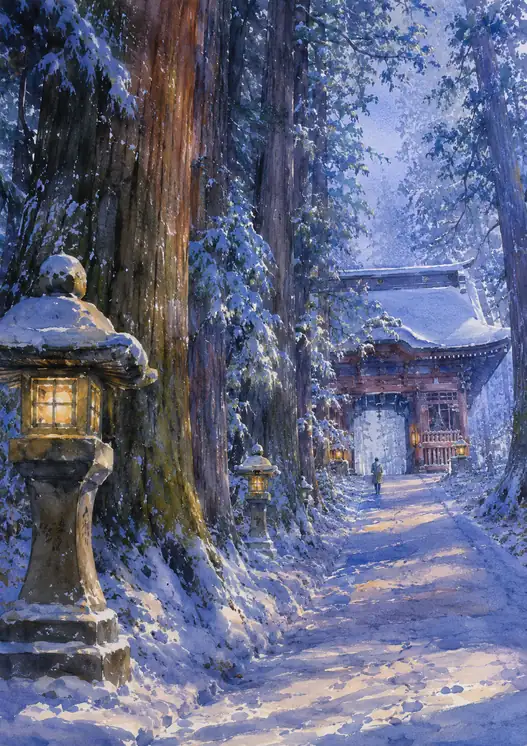 One Footstep Through the Blue Silence
Similar Artworks
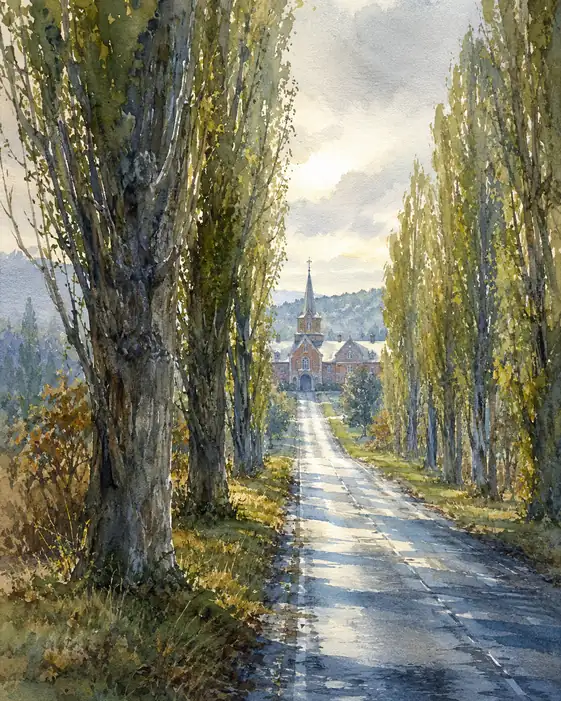 At the End of the Poplar Light
 The Pinwheel Left to the Wind
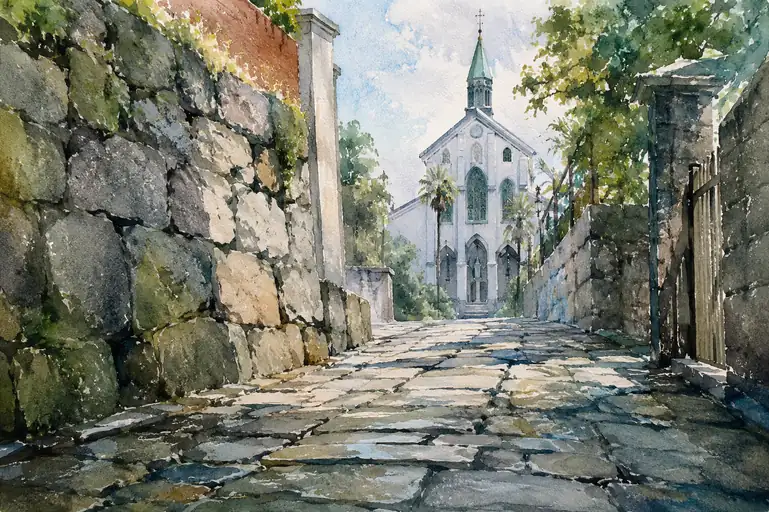 Stones That Remember the Light
 Path Across the Sacred Waters
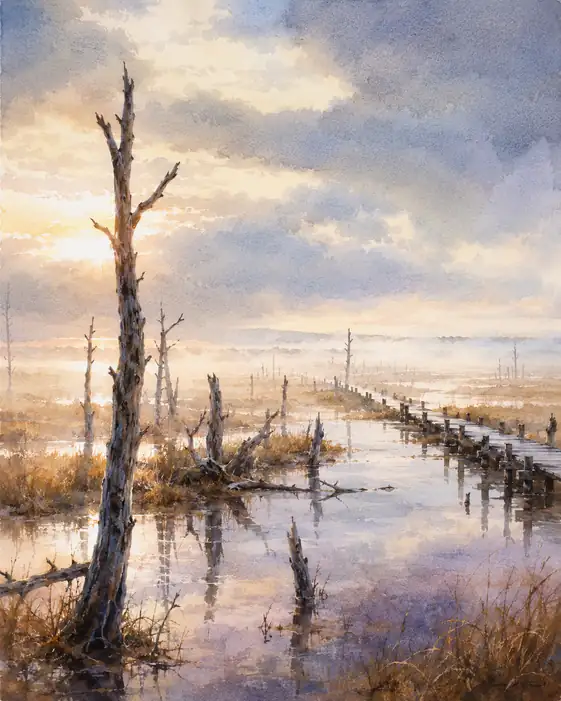 The Wetland Keeps Its Quiet Dead
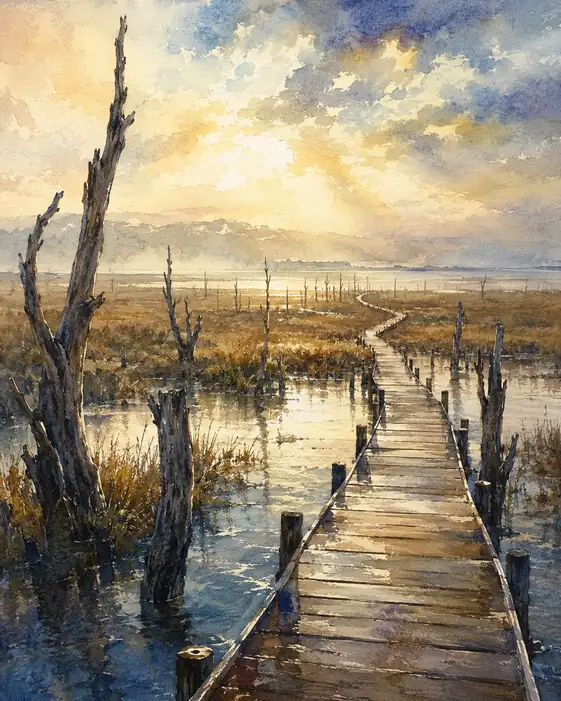 The Boardwalk Outlives the Trees
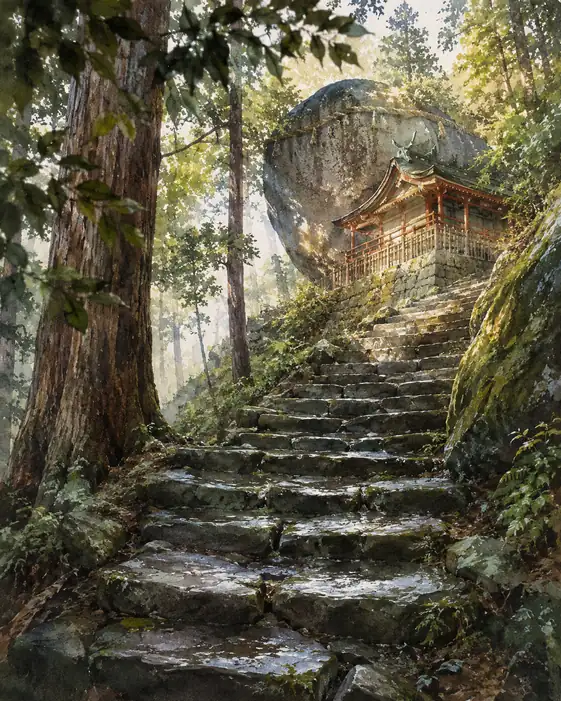 The Sacred Stillness of the Rock
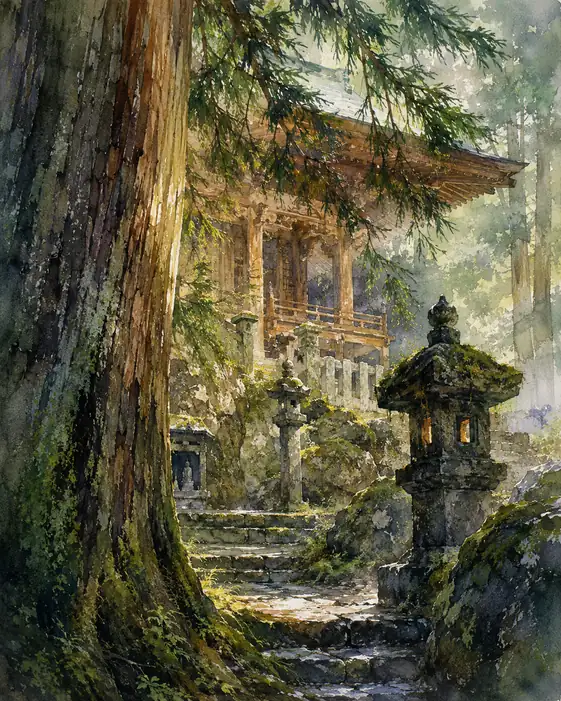 Sanctuary of the Ancient Cedars
 Threshold of the Sacred Sun
 Golden Echoes in the Ancient Forest