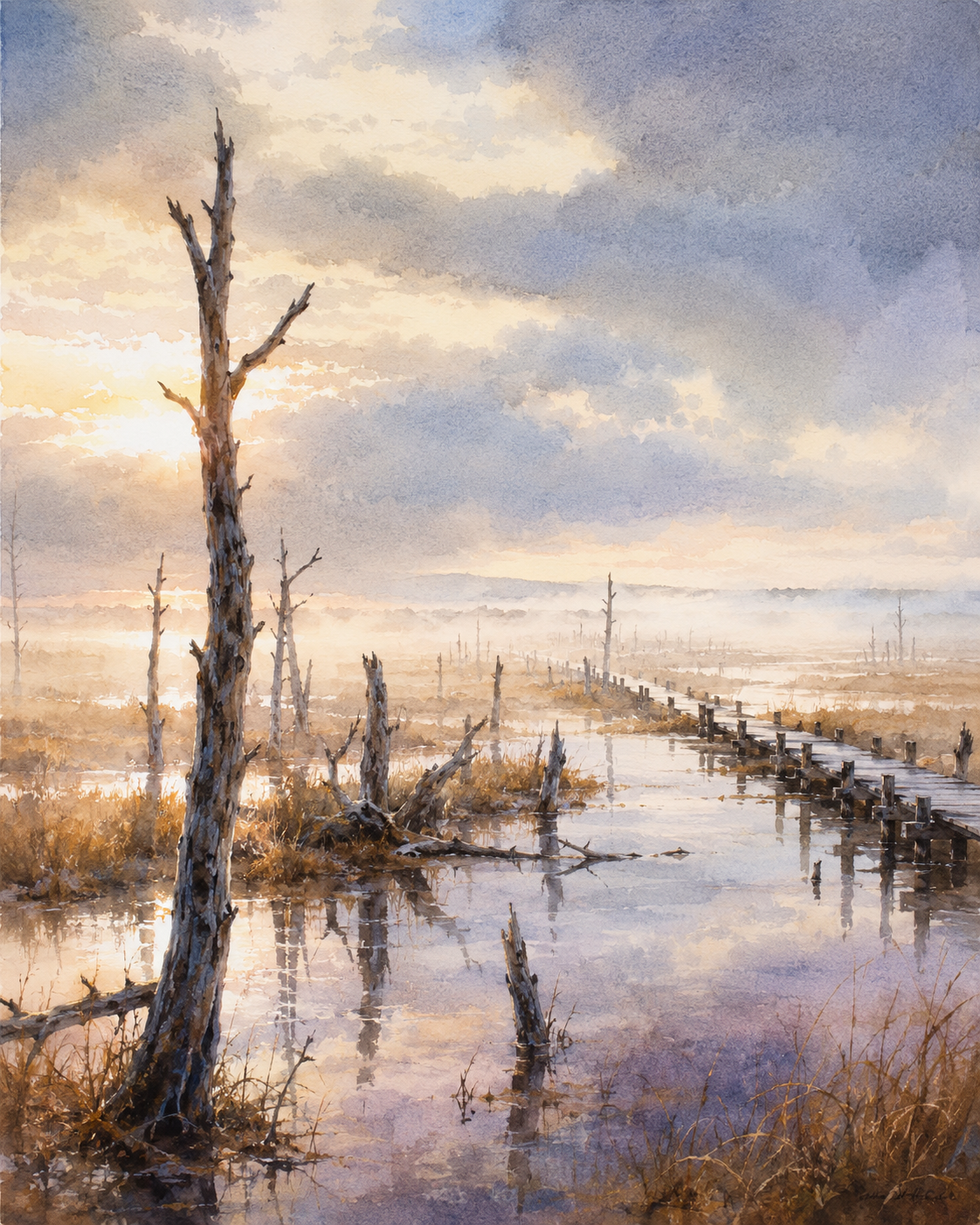
The Wetland Keeps Its Quiet Dead
Critique
Introduction This vertical landscape painting presents the skeletal trees and flooded plain of Todowara. The solitary dead trunk and distant boardwalk establishes the subject, while shifts of light and distance enlarge the setting. The work treats the view as a study of loss becoming a visible structure rather than an absent fact. Description In the foreground, shallow pools and ochre grass spread across the lower field. Across the middle distance, weathered posts and a narrow walkway retreat through the marsh. Farther back, mist erases the boundary between sea-level plain and sky. The palette moves through silver gray, straw brown, pale blue, and charcoal. Sharp nearby edges and soft distant boundaries clarify the recession. Analysis The composition is organized by a dominant vertical trunk crossed by a thin receding boardwalk. Firm drawing gives weight to dead wood, grass, and muddy ground, while broader, more transparent passages soften water, fog, and empty horizon. Directional marks carry the eye toward the principal motif and keep the vertical format balanced. Interpretation and Evaluation The meeting of natural change and enduring form suggests loss becoming a visible structure rather than an absent fact. Descriptive details remain subordinate to a stable tonal design, so atmosphere never dissolves the structure. Controlled color, assured drawing, and varied surface handling give the scene clarity, while the chosen viewpoint supplies a distinct sense of place. Conclusion The solitary dead trunk and distant boardwalk brings the major planes into a coherent sequence. What first appears to be a bleak coastal marsh gradually becomes an examination of the persistence of traces after a landscape has radically changed. The measured light and disciplined composition sustain visual richness without losing emotional restraint.
Same Subcategory
Similar Artworks
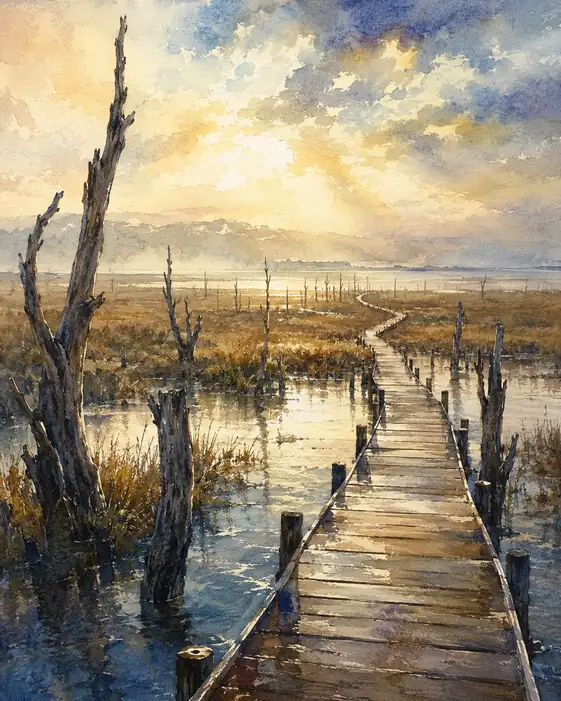 The Boardwalk Outlives the Trees
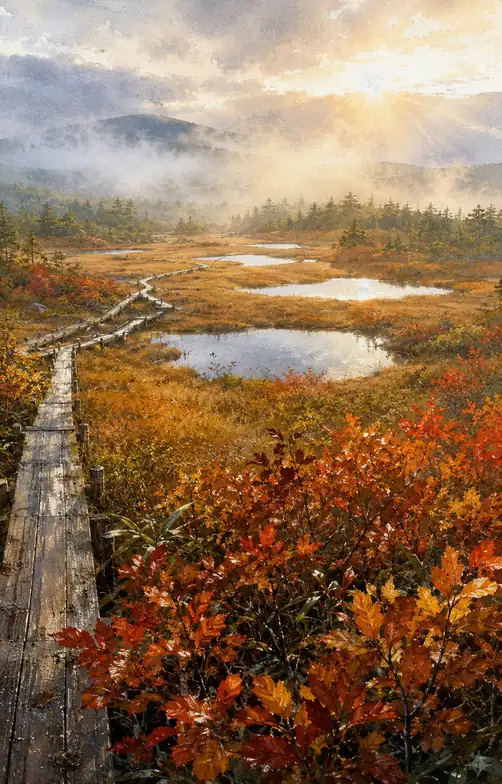 The Boardwalk Keeps Autumn's Secret
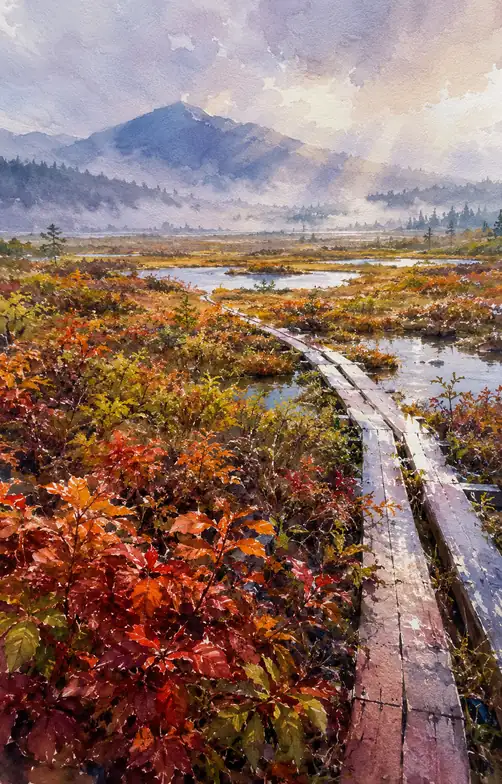 Autumn Lays a Path Across the Marsh
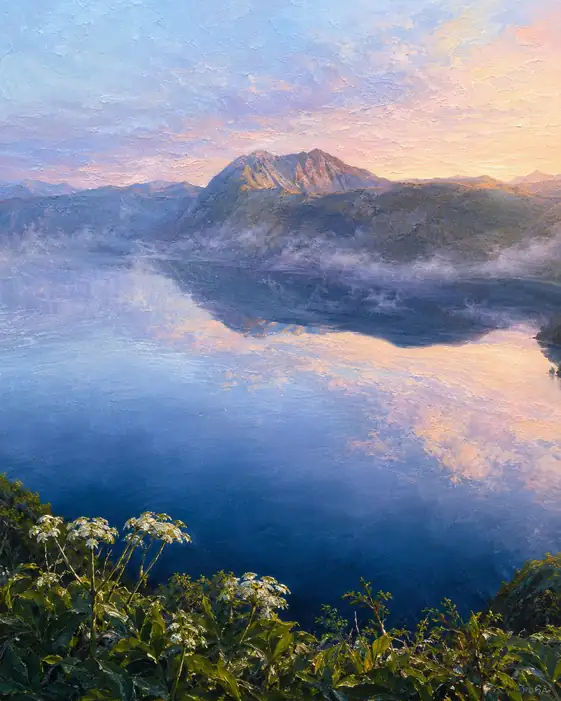 Blue Holds the Mountain's Afterglow
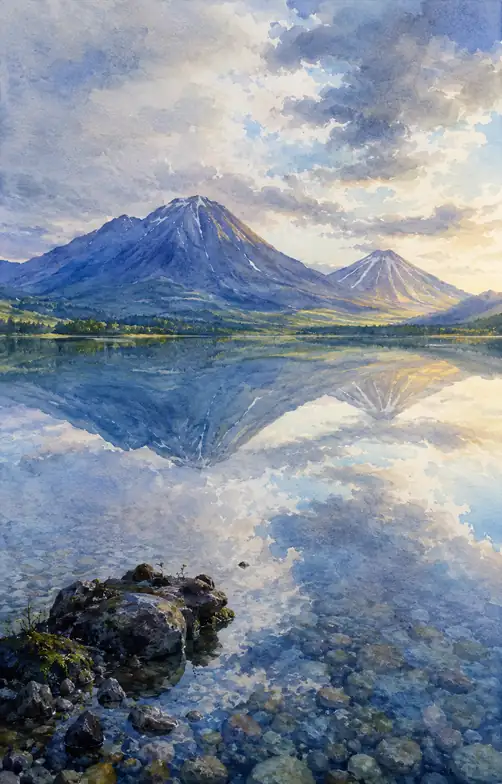 Two Mountains, One Quiet Sky
 The Road Descends Into Light
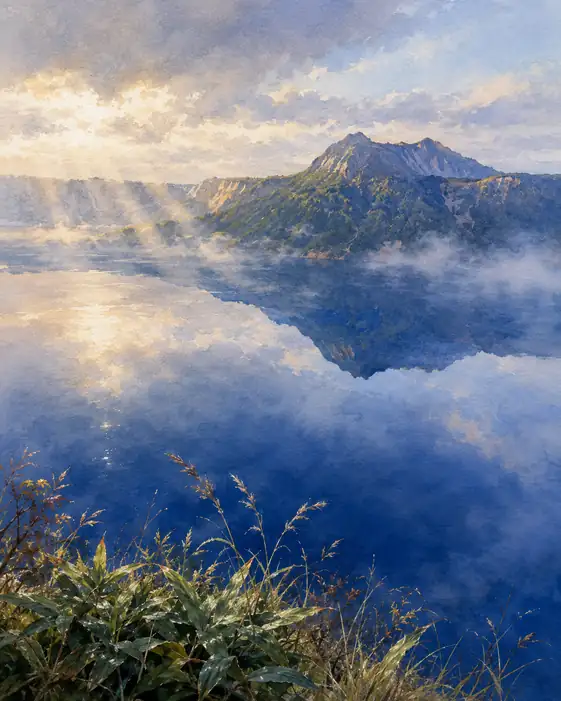 The Mountain Dreams Beneath the Blue
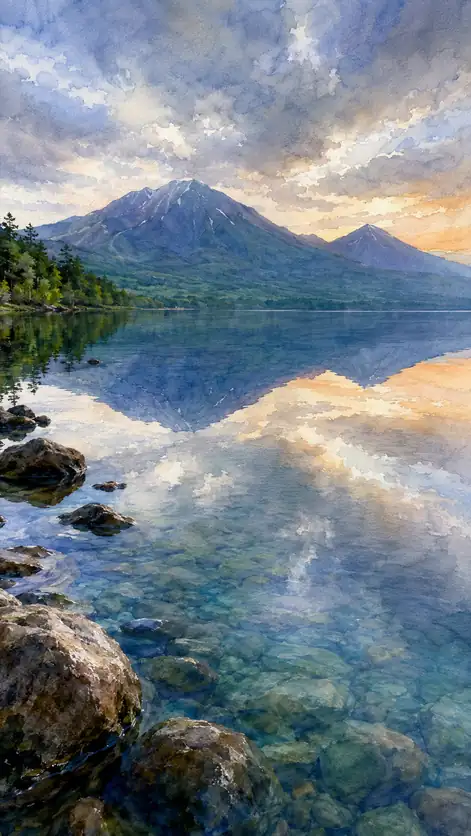 The Mountain Descends to Meet Its Reflection
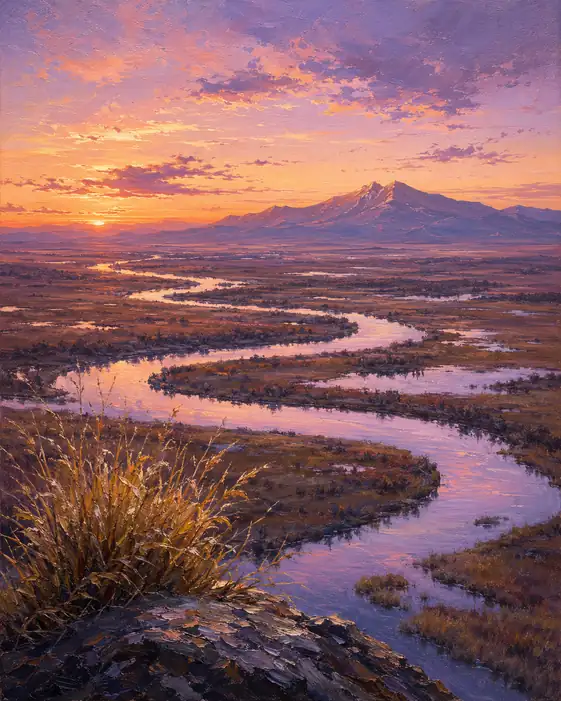 The River Writes the Sunset Home
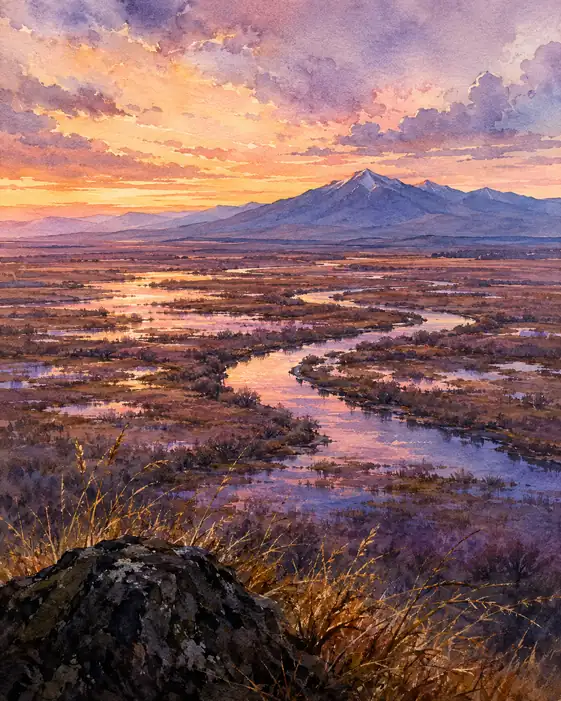 The River Gathers the Dying Rose