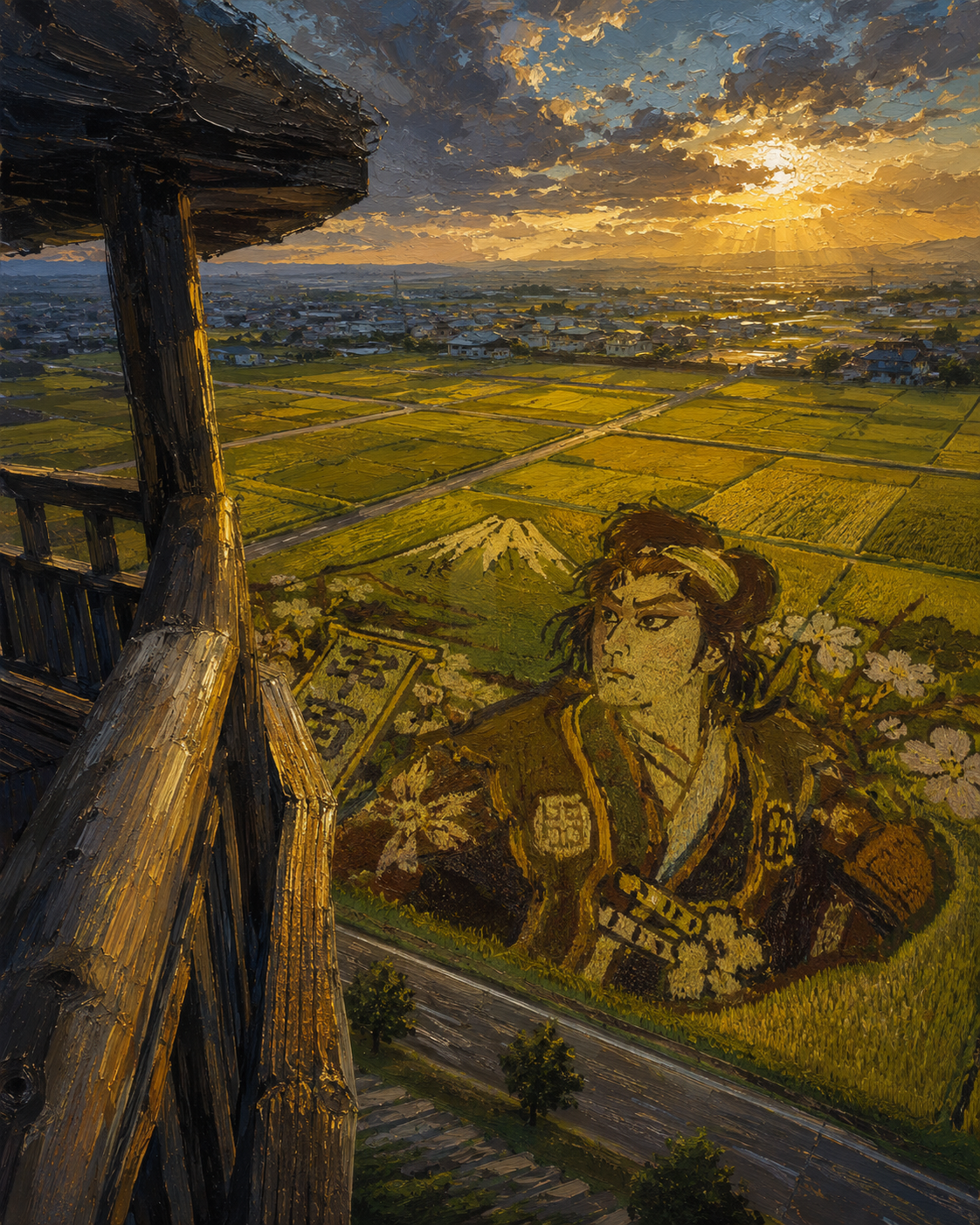
The Warrior Sleeps Beneath the Harvest
Critique
Introduction This vertical landscape painting presents rice-field art viewed from the tower at Inakadate. The enormous figure patterned in rice establishes the subject, while shifts of light and distance enlarge the setting. The work treats the view as a study of agricultural labor becoming a public image readable only from height. Description In the foreground, dark timber posts frame the high viewpoint. Across the middle distance, gold and green fields form a sharply legible portrait. Farther back, rectangular farmland and a low town reach toward mountains. The palette moves through harvest gold, dark green, earth brown, and sunset orange. Sharp nearby edges and soft distant boundaries clarify the recession. Analysis The composition is organized by a frontal figurative pattern embedded within receding field geometry. Firm drawing gives weight to rice rows, paths, and timber frame, while broader, more transparent passages soften distant plain and sky light. Directional marks carry the eye toward the principal motif and keep the vertical format balanced. Interpretation and Evaluation The meeting of natural change and enduring form suggests agricultural labor becoming a public image readable only from height. Descriptive details remain subordinate to a stable tonal design, so atmosphere never dissolves the structure. Controlled color, assured drawing, and varied surface handling give the scene clarity, while the chosen viewpoint supplies a distinct sense of place. Conclusion The enormous figure patterned in rice brings the major planes into a coherent sequence. What first appears to be a surprising monumental portrait gradually becomes an examination of the dependence of representation on viewpoint, season, and collective care. The measured light and disciplined composition sustain visual richness without losing emotional restraint.
Same Subcategory
Similar Artworks
 Sunlit Promise of the Harvest
 Summer's Grandeur: The Village Under the Clouds
 Sunset Fills the Fields One Mirror at a Time
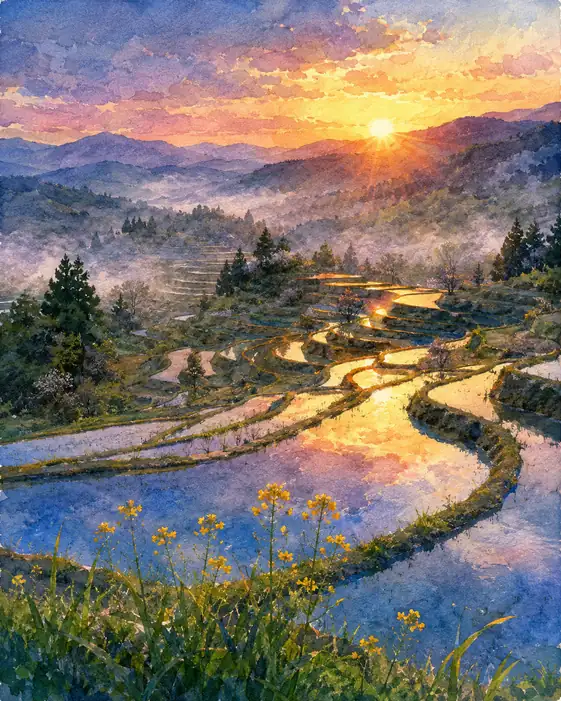 Sunset Flows through the Rice Terraces
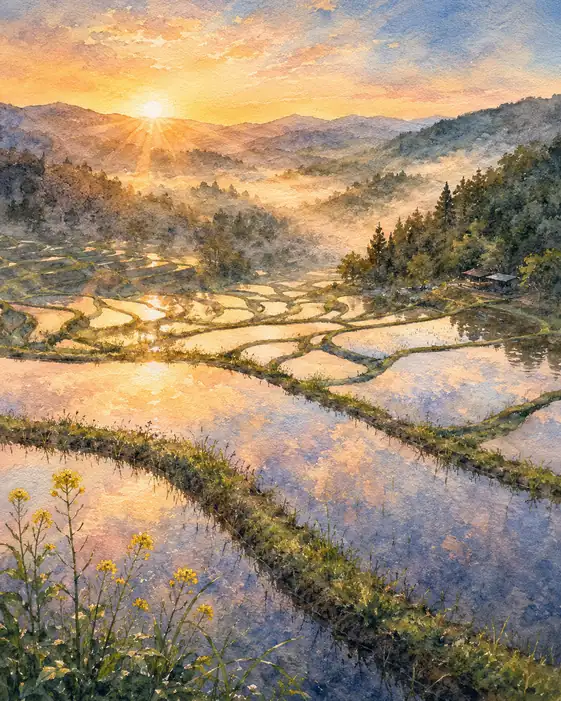 Dawn Sleeps in a Thousand Fields
 A Warrior Sown into the Earth
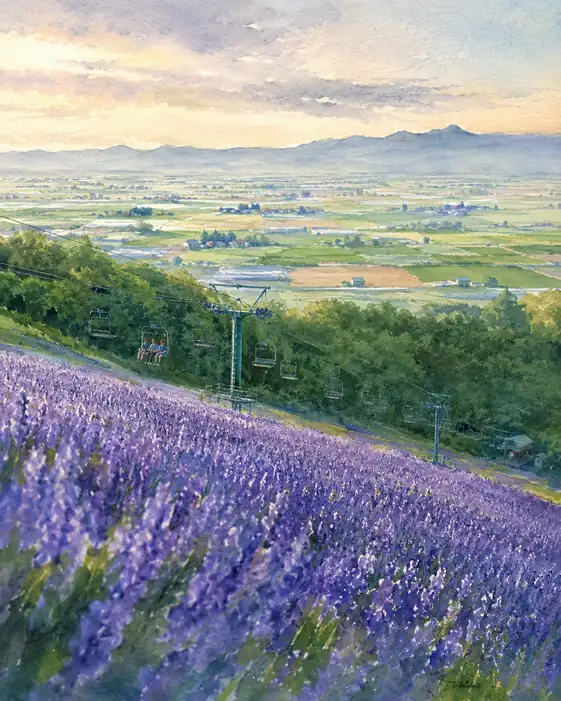 Above the Lavender, the World Widens
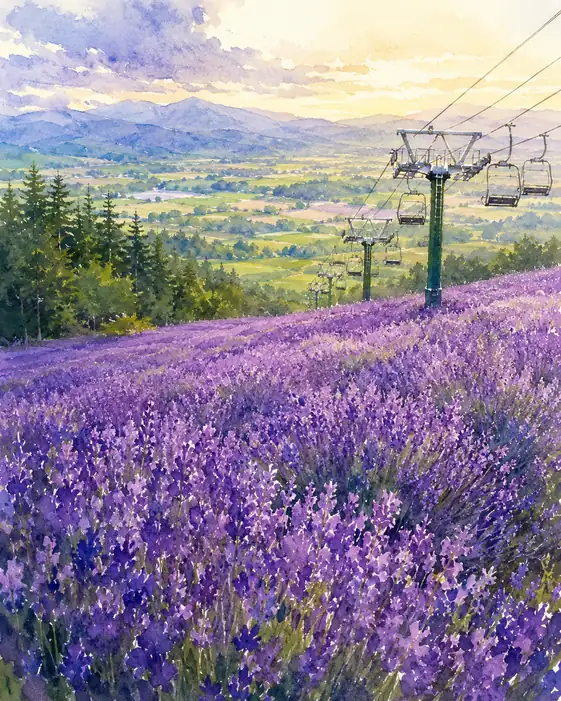 The Valley Wears a Violet Wind
 The Golden Mirror of the Hills
 Golden Harvest in the Serene Countryside