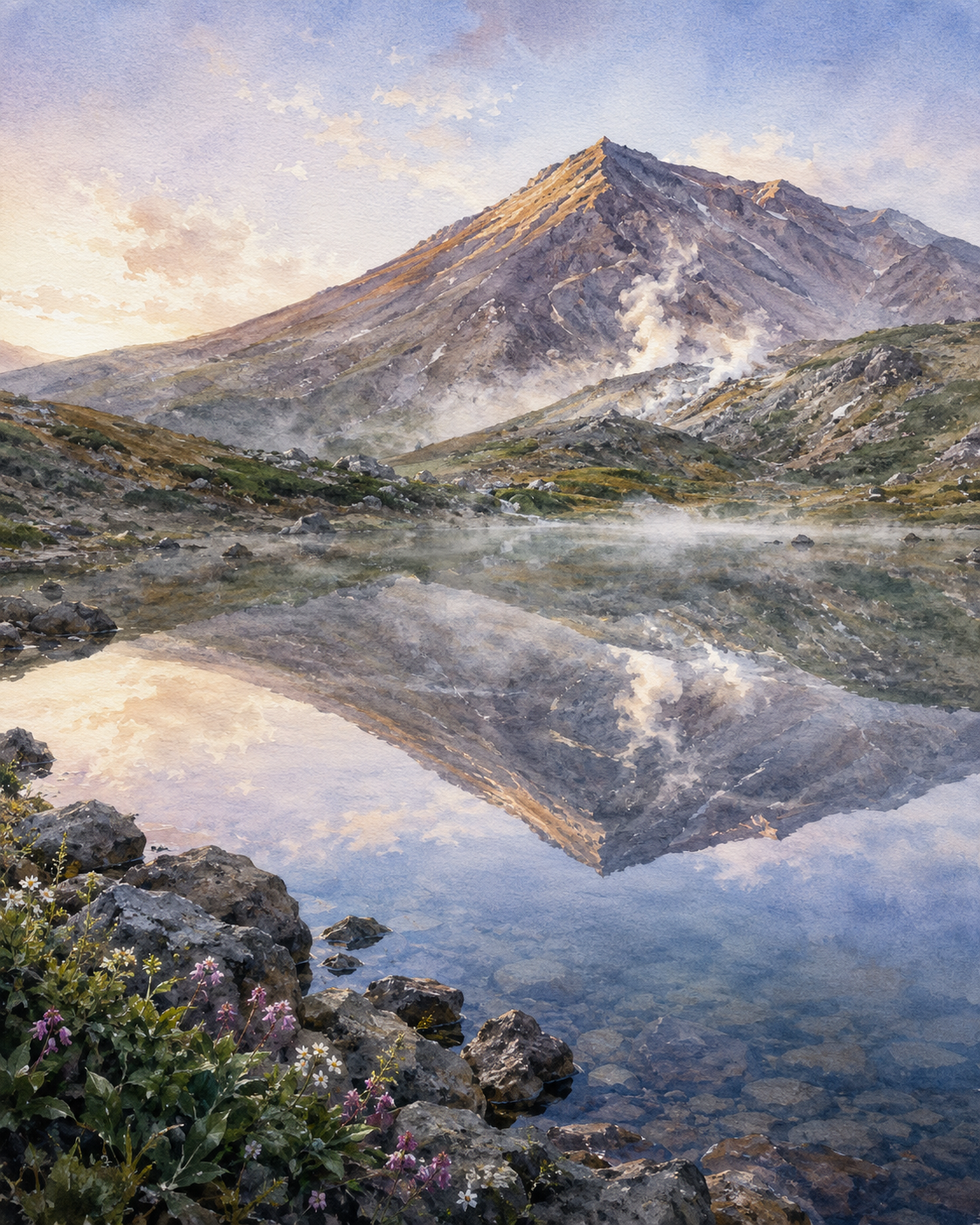
The Mountain Doubles Its Breath
Critique
Introduction This vertical landscape painting presents Mount Asahidake reflected in Sugatami Pond. The volcanic peak and its reflection establishes the subject, while shifts of light and distance enlarge the setting. The work treats the view as a study of the mountain appearing simultaneously solid, active, and optically doubled. Description In the foreground, black stones and small alpine flowers edge the clear pond. Across the middle distance, the mountain rises in warm light above streaks of steam. Farther back, a pale rose sky extends beyond the rugged summit. The palette moves through slate violet, rose, mineral gray, and clear blue. Sharp nearby edges and soft distant boundaries clarify the recession. Analysis The composition is organized by a central triangular reflection stabilized by a low dark foreground. Firm drawing gives weight to volcanic rock, scree, and summit planes, while broader, more transparent passages soften pond, steam, and sky. Directional marks carry the eye toward the principal motif and keep the vertical format balanced. Interpretation and Evaluation The meeting of natural change and enduring form suggests the mountain appearing simultaneously solid, active, and optically doubled. Descriptive details remain subordinate to a stable tonal design, so atmosphere never dissolves the structure. Controlled color, assured drawing, and varied surface handling give the scene clarity, while the chosen viewpoint supplies a distinct sense of place. Conclusion The volcanic peak and its reflection brings the major planes into a coherent sequence. What first appears to be a pristine alpine reflection gradually becomes an examination of the tension between geological force and a moment of surface calm. The measured light and disciplined composition sustain visual richness without losing emotional restraint.
Same Subcategory
Similar Artworks
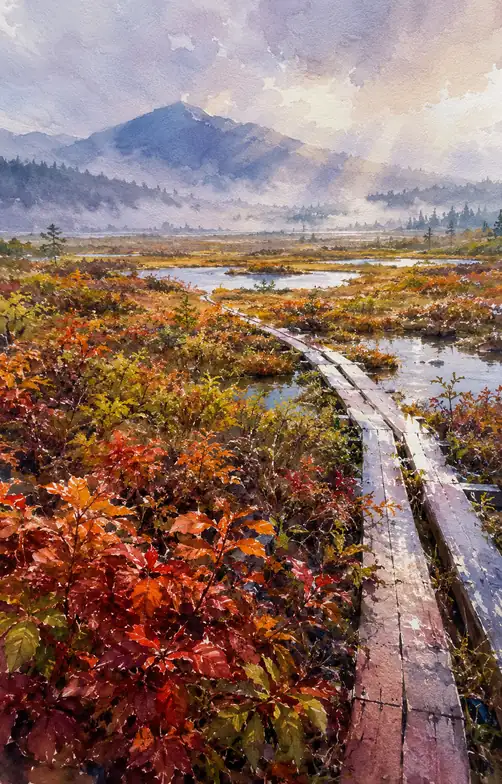 Autumn Lays a Path Across the Marsh
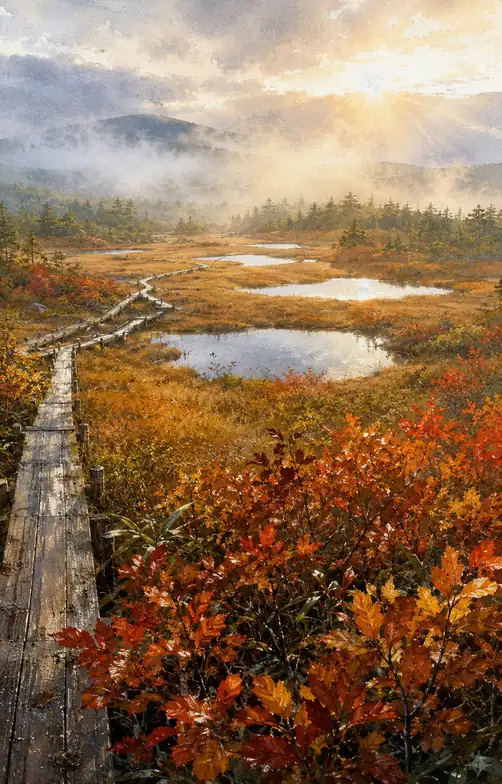 The Boardwalk Keeps Autumn's Secret
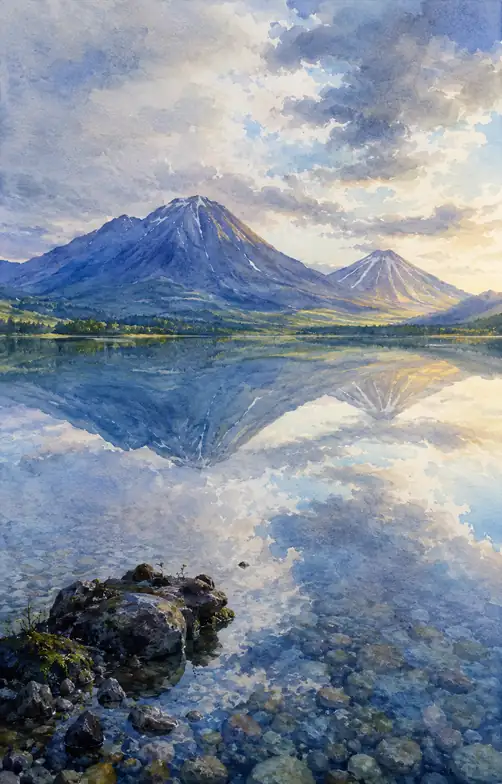 Two Mountains, One Quiet Sky
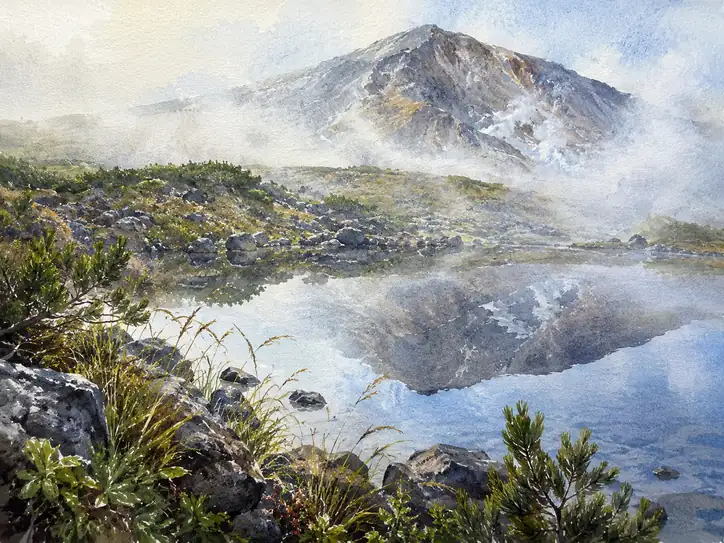 Whispering Mist and the Mirroring Peak
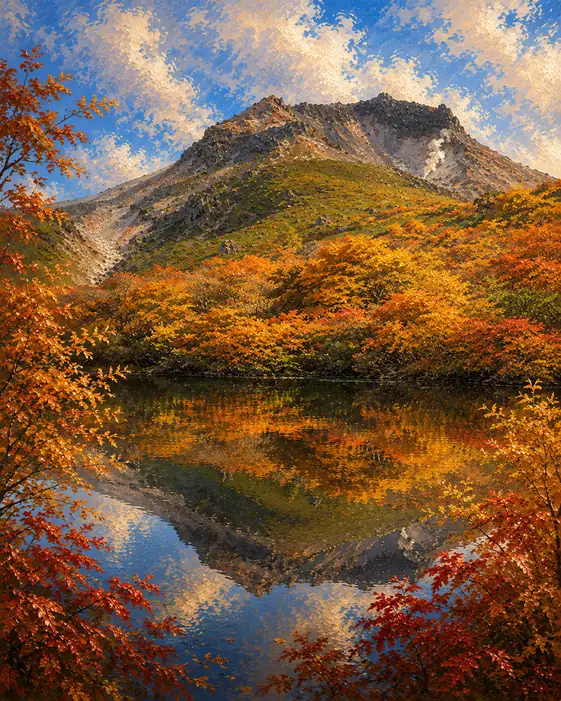 Smoke Above, Fire Below
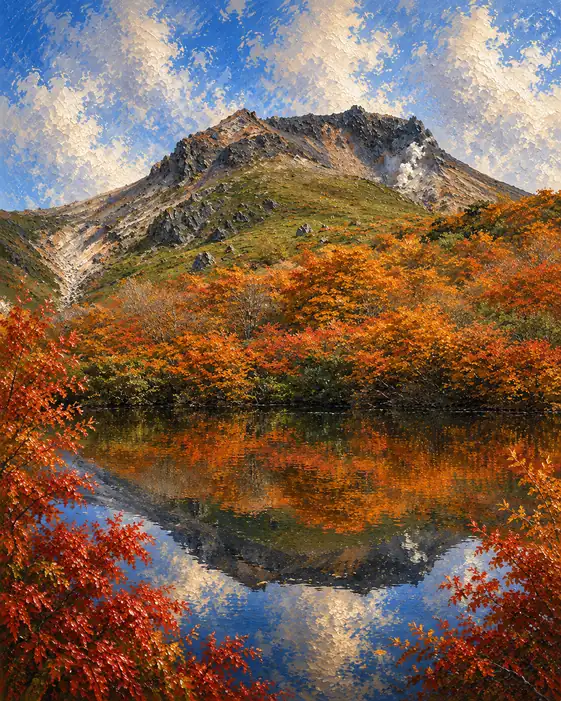 A Second Mountain Beneath the Leaves
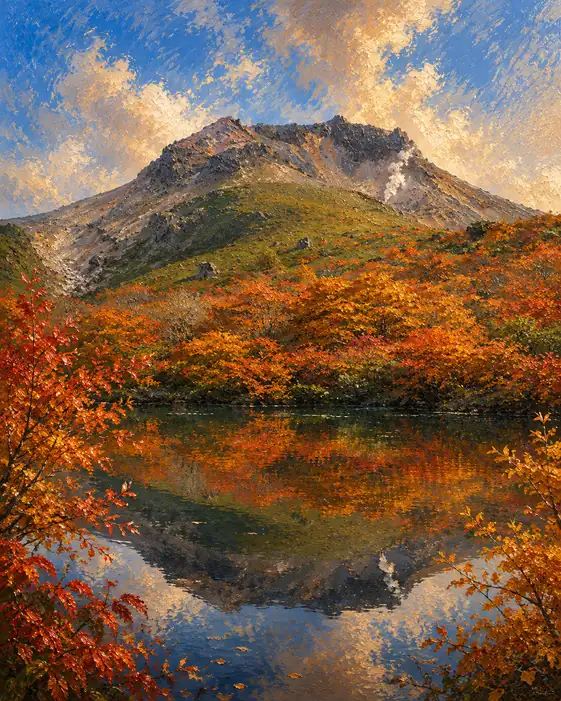 The Mountain Dreams in Autumn Fire
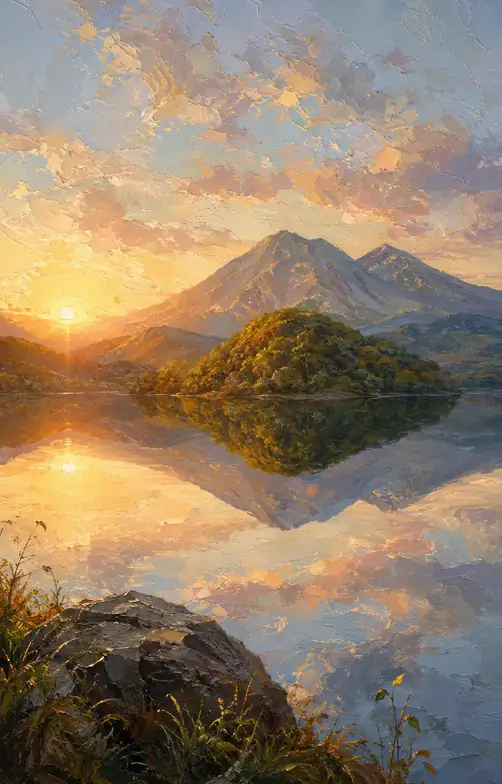 Golden Sunrise over Lake Toya and Nakajima Island
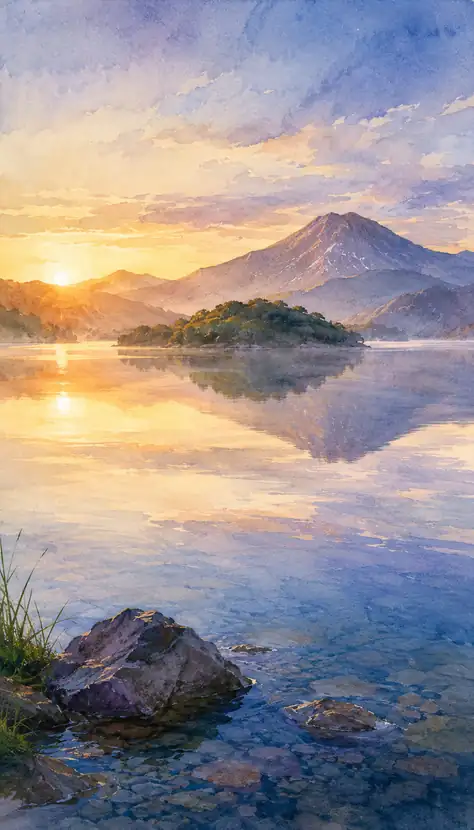 Reverse Reflection of Mount Yotei on Lake Toya
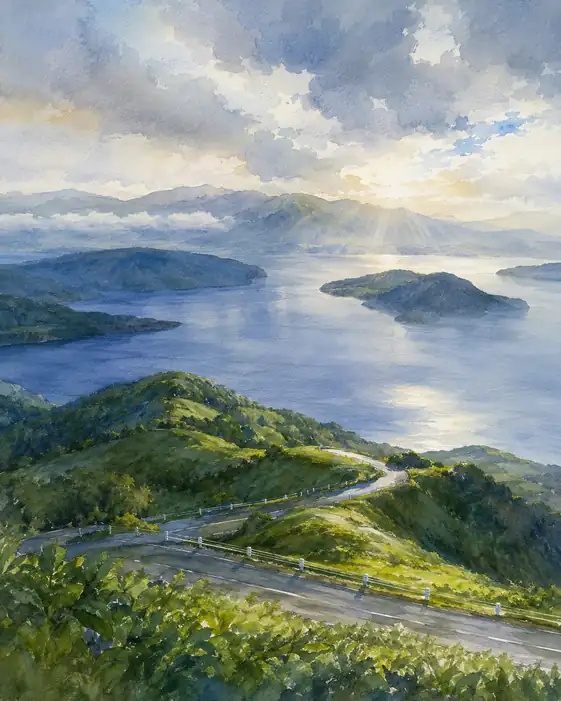 The Road Curves Toward Morning